Best time to visit
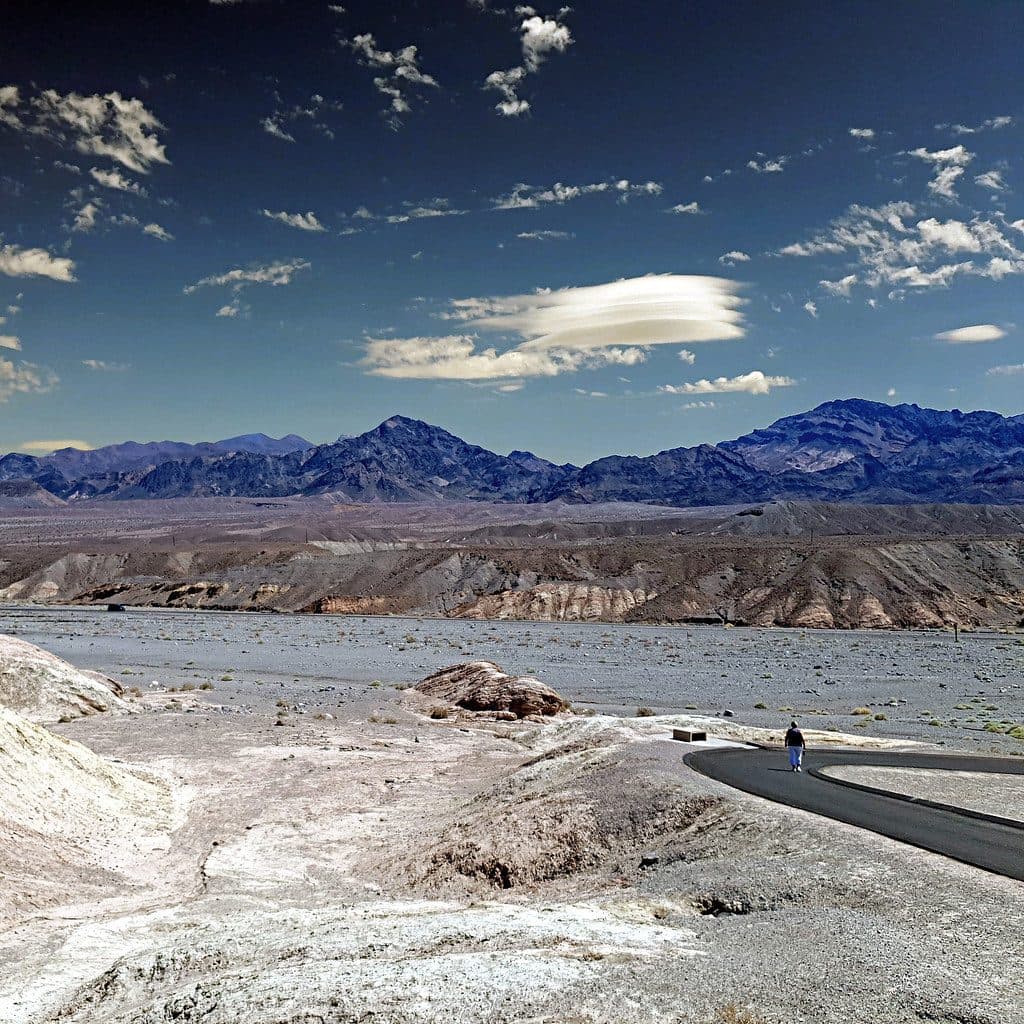
Because the site is exposed with no shade or services, early or late in the day is most comfortable. It’s an easy add-on when you’re already driving Emigrant Canyon Road; crowding isn’t typically an issue, and visits are brief.
Sight · Death Valley National Park
Roadside gold-mill ruins with big tanks and a quick history hit
Overview
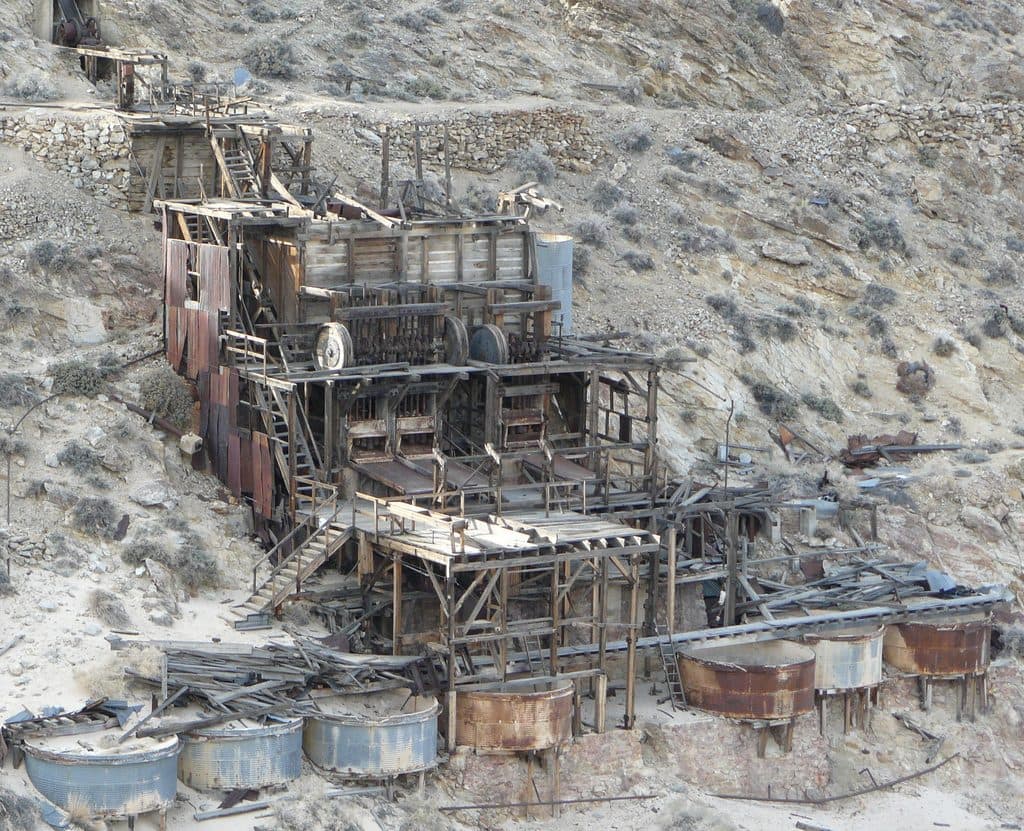
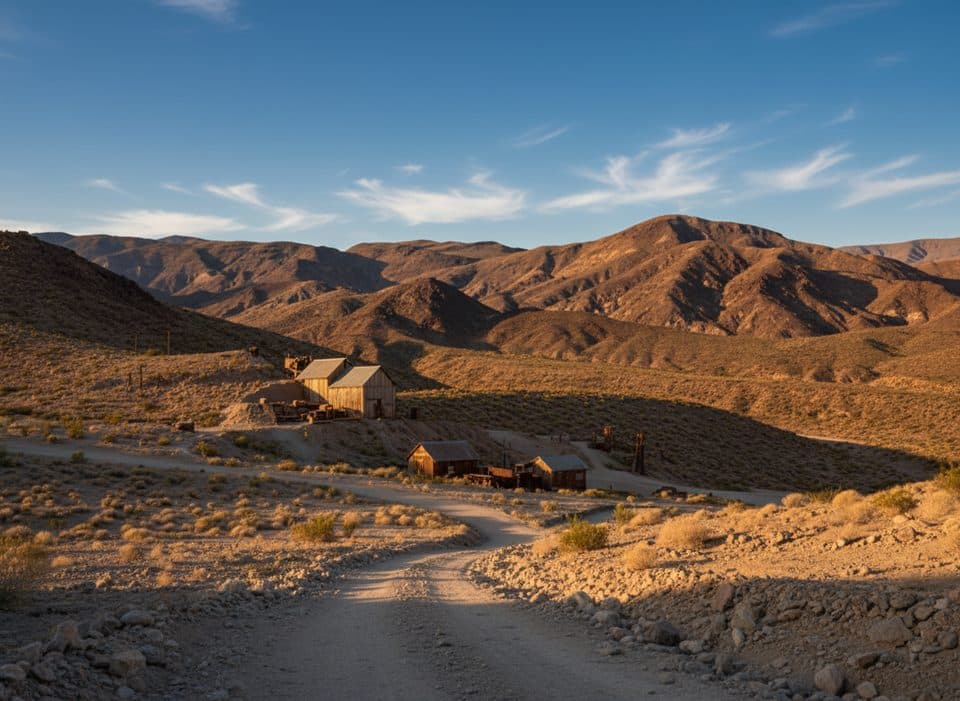
Journigan’s Mill is a quick, no-hike roadside stop where Death Valley’s gold-mining past is laid out in concrete pads and hulking steel tanks. It’s not a ghost town—think foundations and relics rather than intact buildings—but it’s one of the park’s most visible mill ruins and makes an easy add to any Emigrant Canyon drive.
Map
Local know-how
Bring plenty of water and sun protection—the site is fully exposed.
Don’t touch or disturb mill tailings or structures; they’re hazardous and protected.
Wear sturdy shoes for uneven, rubble-strewn footing.
Plan this as a short add-on while driving Emigrant Canyon Road.
Plan your stop

The highest, rockiest slopes around here are a summer buffet for grizzly bears.
Death Valley Tour Guide
Parkwolf is a GPS audio tour guide for Death Valley National Park. As you drive, it chimes in with what’s ahead: hidden gems, upcoming stops, history, geology, and wildlife, right through your car’s speakers.
See the Death Valley audio tourRecorded for this place
Journigan's Mill: A Roadside Gold Mill Ruin“The ruins you're seeing right by the road are what's left of Journigan's Mill. This was a 1930s gold processing plant, considered the best-equipped in this part of the park.”
Plays as you drive up to Journigan’s Mill in the Parkwolf Death Valley Tour Guide.
More stories near here in the app
“Fantastic app with many points of information… It’s great to just turn on while you’re driving and it gives you an audio tour of the national Park. We love it!!!!”


Guide
The mill’s modern incarnation dates to 1937, when Roy Journigan built a new plant after the Gold Reserve Act renewed interest in area mines. It’s considered the best-equipped and longest-used mill in the Wildrose area, with earlier, smaller mills likely operating here before that. During its busier years in the late 1930s, capacity is reported at about 25 tons of ore per day. Water for processing was piped from nearby springs like Green, Burro, Willow, and Burns.
This is a protected historic site with old infrastructure and tailings tied to past cyanide processing. Don’t disturb structures or artifacts, and avoid touching tailings. The ground is uneven and fully exposed; bring water, sun protection, and sturdy shoes.
Expect a short, satisfying pause for history buffs: photogenic tanks, clear mill layout, and wide-open desert context. If you’re after big, intact ruins, temper expectations—what’s here is about process and footprint rather than architecture.
Wildlife
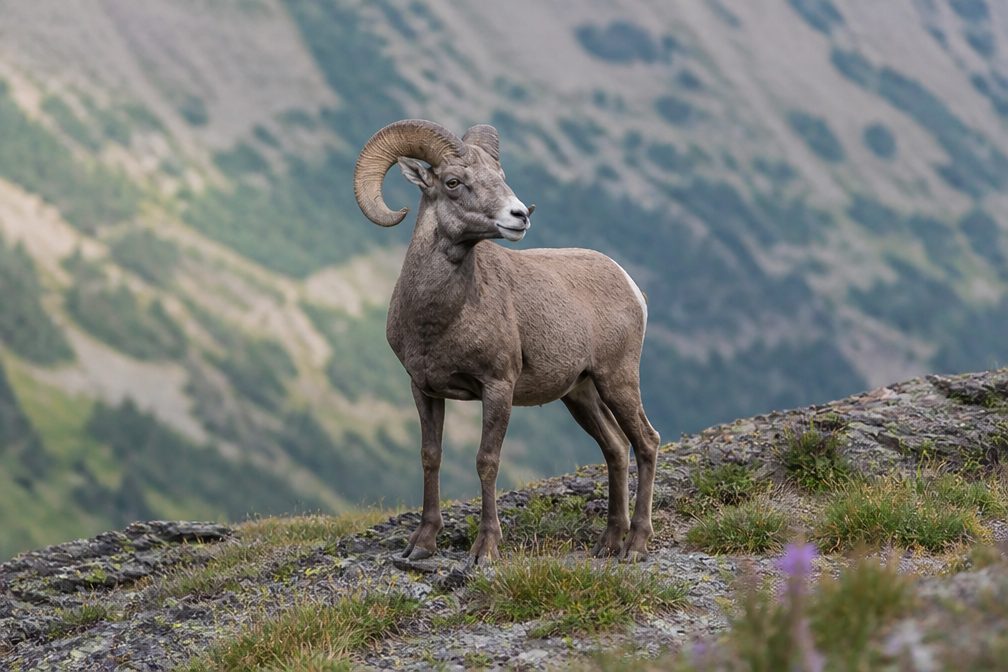 71 sightingsBighorn SheepMost seen around 6 PMSighting map
 101 sightingsDesert TortoiseMost seen around 8 AMSighting map
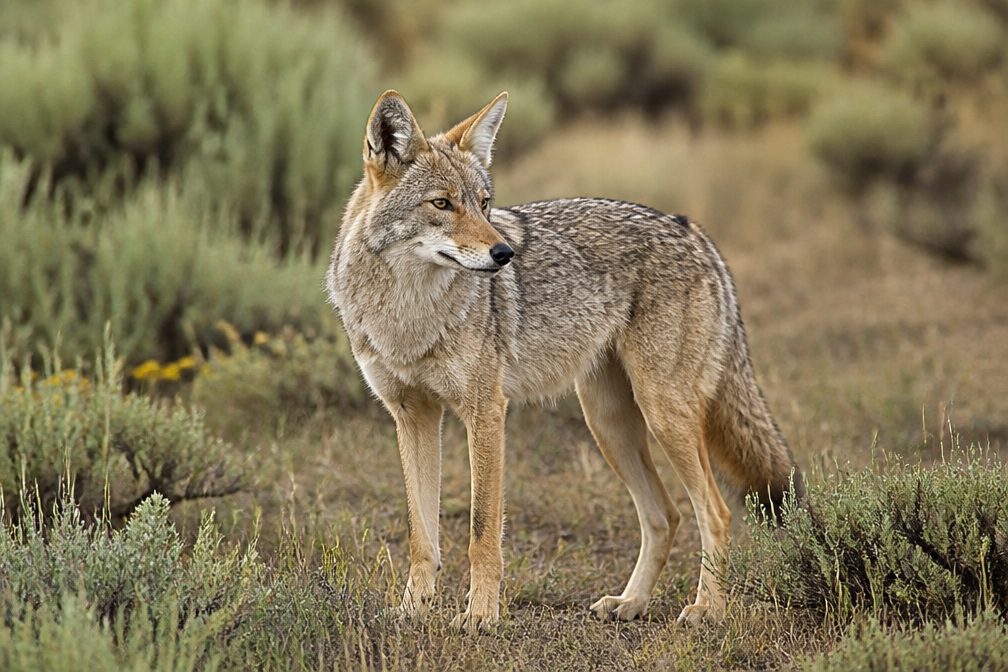 458 sightingsCoyoteMost seen around 6 PMSighting map
 28 sightingsFeral BurroMost seen around 5 PMSighting map
 30 sightingsMule DeerMost seen around 7 PMSighting map
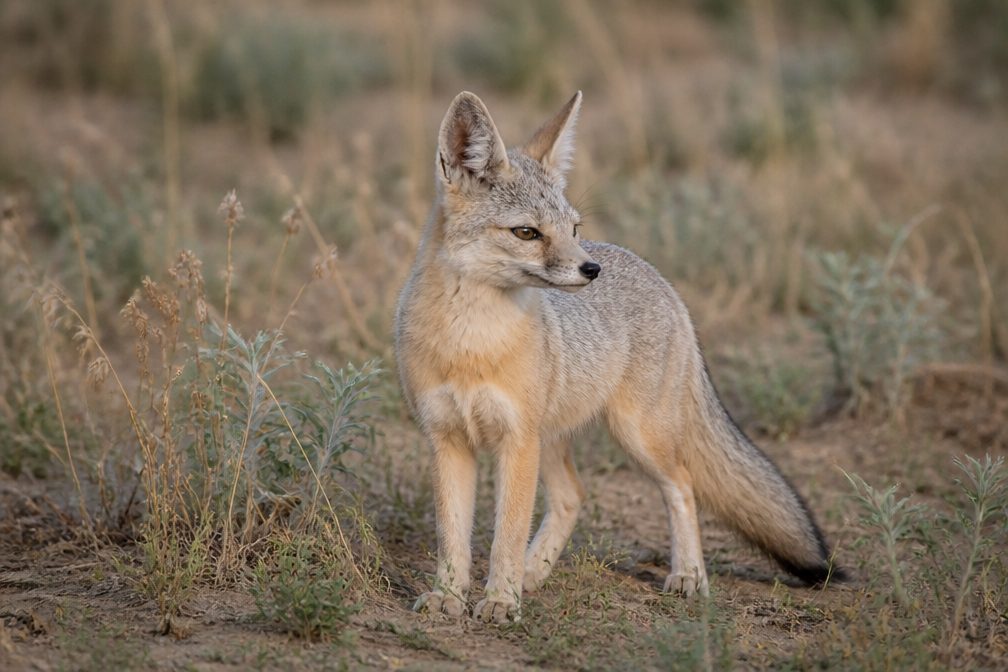 62 sightingsKit FoxMost seen around 7 PMSighting map
Sighting maps show where each species has been reported across Death Valley. Wildlife moves, so no sighting is guaranteed.
Keep exploring
Parkwolf’s Death Valley ranking

The audio tour guide for the drive, plus offline maps, trails, and wildlife heatmaps for when the signal drops.