
Place · 2.4 mi away
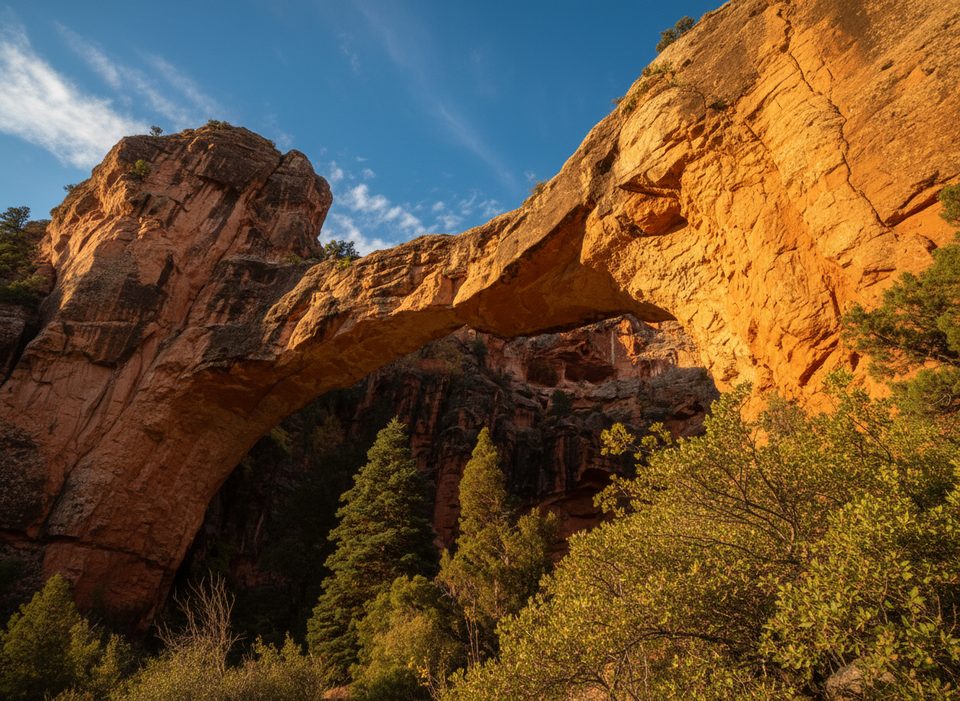
Hartman Natural Bridge is a striking rock span tucked deep in the North Rim backcountry. It’s the kind of place you visit for wilderness and discovery, not convenience. If you’re after a rarely seen geologic showpiece with serious solitude, this is it.
General orientation puts the bridge roughly 1.75 miles south of Roosevelt Point (on the Cape Royal Road) and about 1.5 miles east of the road. It’s remote and not signed; you won’t stumble onto it from a roadside overlook. The feature appears on Trails Illustrated Map 207 for Grand Canyon National Park.
The bridge spans about 130 feet—making it one of the largest known natural bridges in the canyon—and frames rugged side‑canyon scenery. It’s far from the crowds and offers that rare “you and the rock” experience that’s getting harder to find.
There’s no maintained trail. One detailed description notes that it’s not readily accessible from the road due to tortuous terrain; instead, a practical approach is to boat the Colorado River to the mouth of Lava Canyon and then hike up Lava Creek/Canyon for many hours, with additional off‑trail navigation on talus and shelf systems near the Redwall Limestone to reach the span. Routes from the rim can take many days or involve extremely difficult route‑finding and climbing. This is recommended only for experienced canyoneers and backcountry travelers.
There are no posted hours and almost no crowds—timing is dictated by your backcountry plan. Build in ample daylight for the approach and return, and plan conservatively.
It’s a natural bridge formed by erosional processes in the canyon’s sedimentary layers. In this quiet backcountry, expect a wilderness feel; you may encounter canyon birds and other typical desert fauna, but sightings aren’t the point here—the landscape is.
Incredible, remote, and demanding. If you’re an experienced navigator chasing uncommon Grand Canyon formations, Hartman belongs on the list. For most visitors, it’s more “good to know it exists” than a practical stop.
Place · 2.4 mi away
Place · 2.5 mi away
Place · 3.4 mi away
Place · 3.9 mi away
Easy · 2.4 mi away
Easy · 3.5 mi away
Easy · 4.4 mi away
Easy · 5.1 mi away

Parkwolf Tour Guide
