
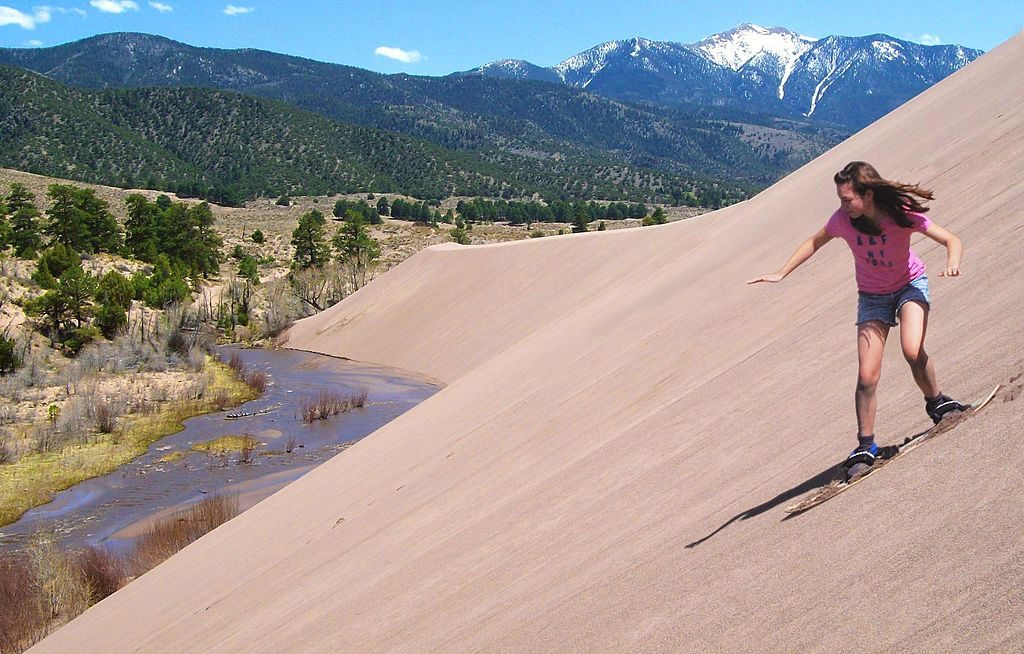
Place · 1.3 mi away
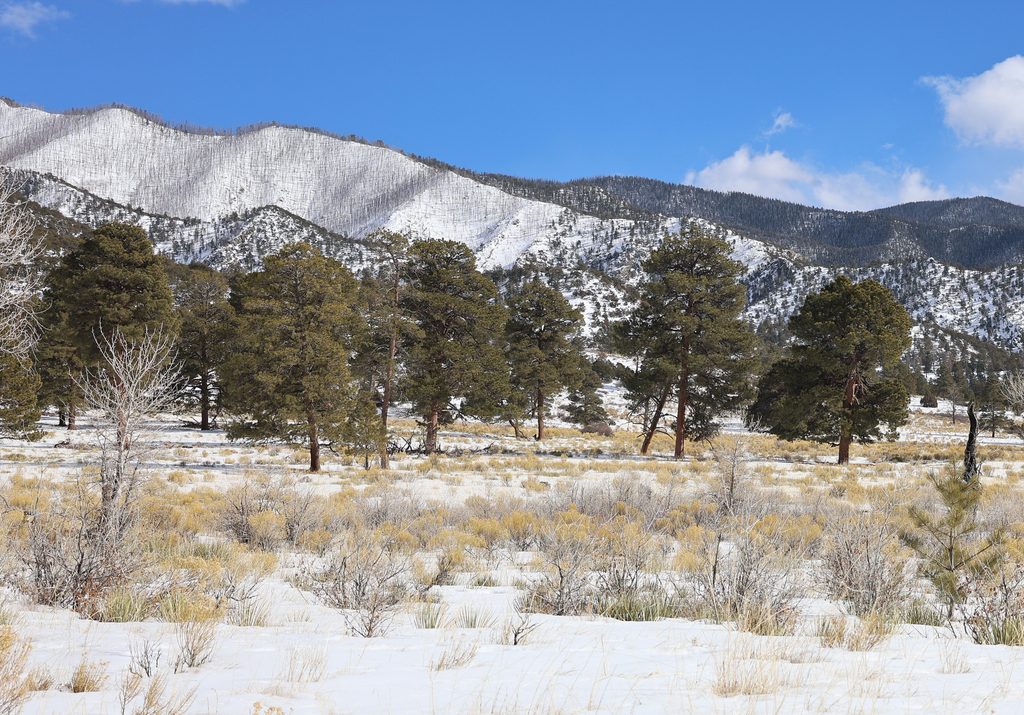
Indian Grove is a rare blend of history and wilderness camping: a stand of roughly 200 ponderosa pines tucked against the Sangre de Cristo foothills, with 72 trees bearing distinctive bark-peel scars from Indigenous use in the 1800s. It’s the only stand of culturally modified trees listed on the National Register of Historic Places. Expect a quiet, shaded grove with dune-and-mountain views and very little development.
Ute, Apache, and other Indigenous peoples peeled ponderosa for inner bark (food), pitch and sap (medicinal), and materials. Many scars date from about 1815–1846, and you can still read the history in the tall, straight trunks—peel scars averaging around four feet long by seventeen inches wide. The grove sits near the route of the Old Spanish National Historic Trail and within a landscape long known to Native peoples.
Indian Grove doubles as a designated backcountry campsite along the Sand Ramp Trail. Permits are issued on a rolling basis (three months out). Set up your tent within 50 feet of the metal arrowhead post, use the on-site privy, and pack out all trash—including toilet paper. Gas stoves are fine; campfires are not (Indian Grove is not one of the fire-allowed sites). Bear-resistant containers or proper hangs are strongly recommended.
Approach via forested trail on the mountain side of the dunefield. Signage is intentionally minimal—this is a protected cultural site. The Sand Ramp Trail lives up to its name: deep, hot afternoon sand makes it a grind. Shade and trees in camp help knock down wind during storms, and a nearby creek can be a water source (filter or treat).
A serene ponderosa grove with visible historical bark-peel scars, filtered views over the dunefield, and the sound of seasonal creek flow. You’re in mixed conifer/pinyon-juniper habitat, so expect a variety of birds and small mammals; store food carefully and give wildlife space.
Spring and fall offer cooler hiking and mellower conditions for backpacking. Summer brings hot sand and typical afternoon thunderstorms—start early. Winter can be beautifully quiet but prepare for cold and changeable weather.
Place · 1.3 mi away
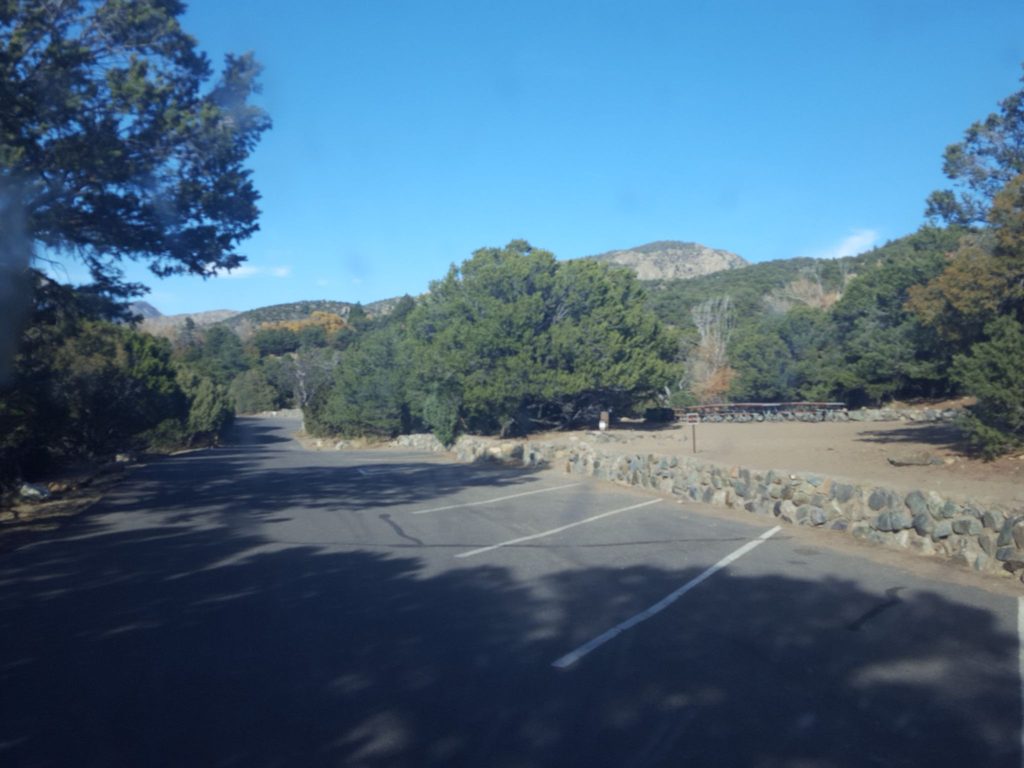
Place · 1.9 mi away
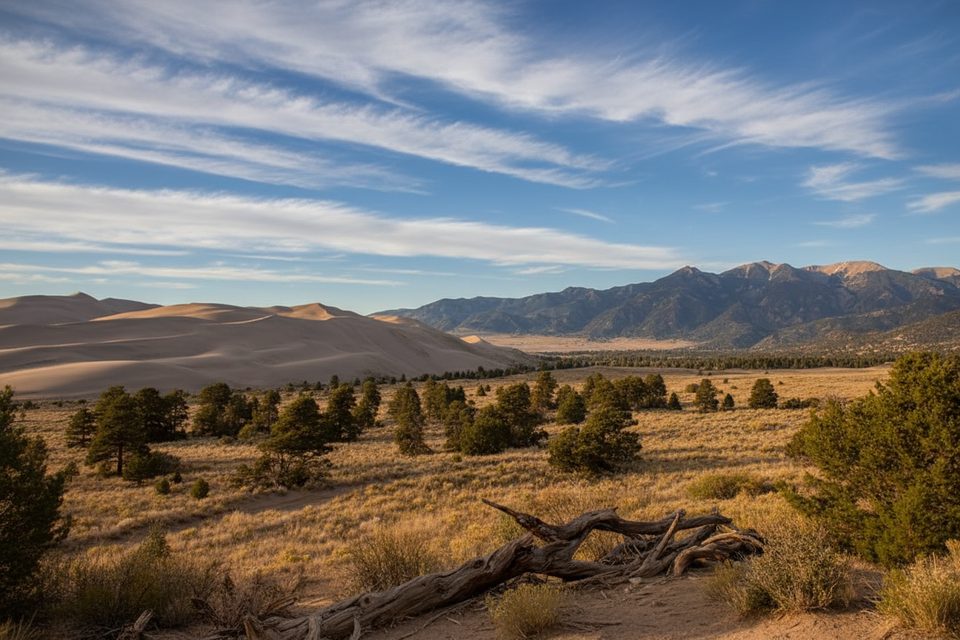
Place · 2.2 mi away
Place · 2.5 mi away
Challenging · 2.2 mi away
Challenging · 2.2 mi away
Easy · 3.2 mi away

Challenging · 3.5 mi away

Parkwolf Tour Guide
