
Place · 0 mi away
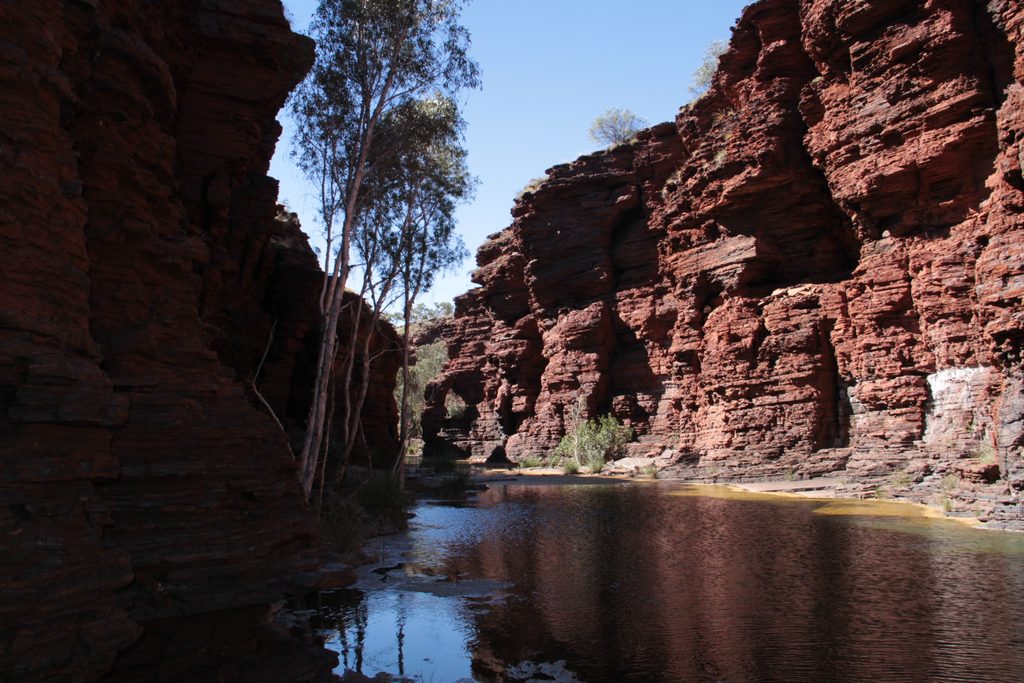
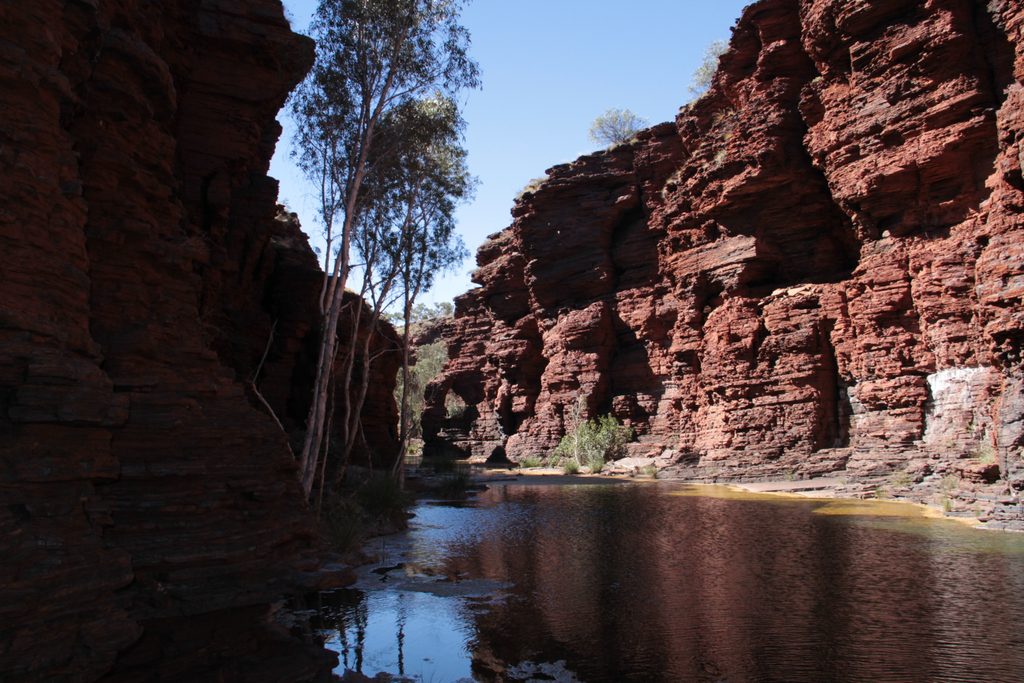
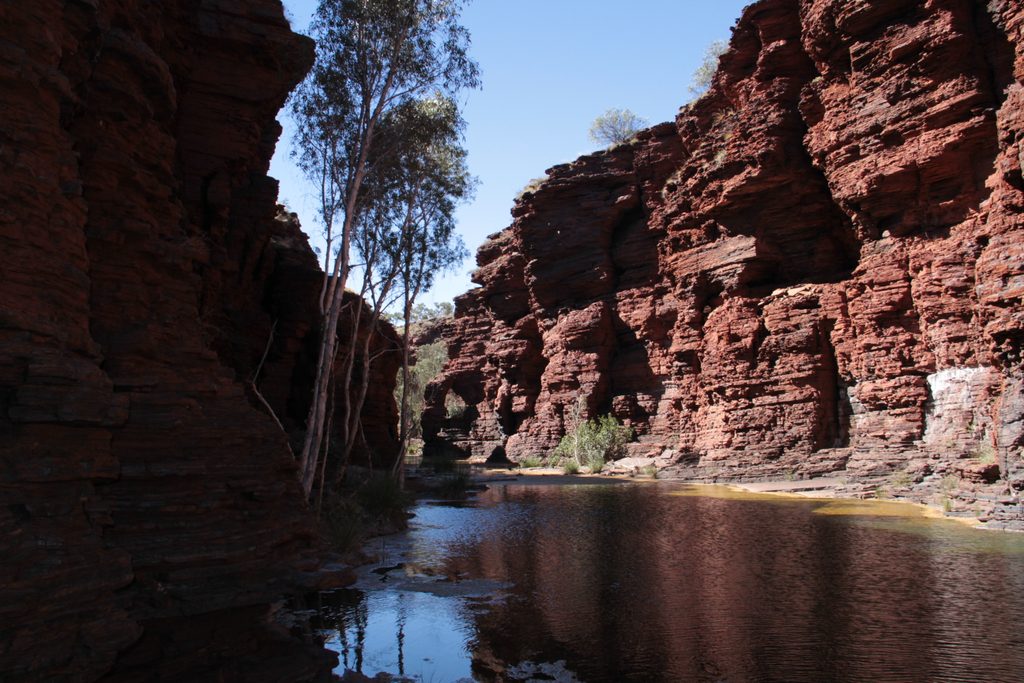
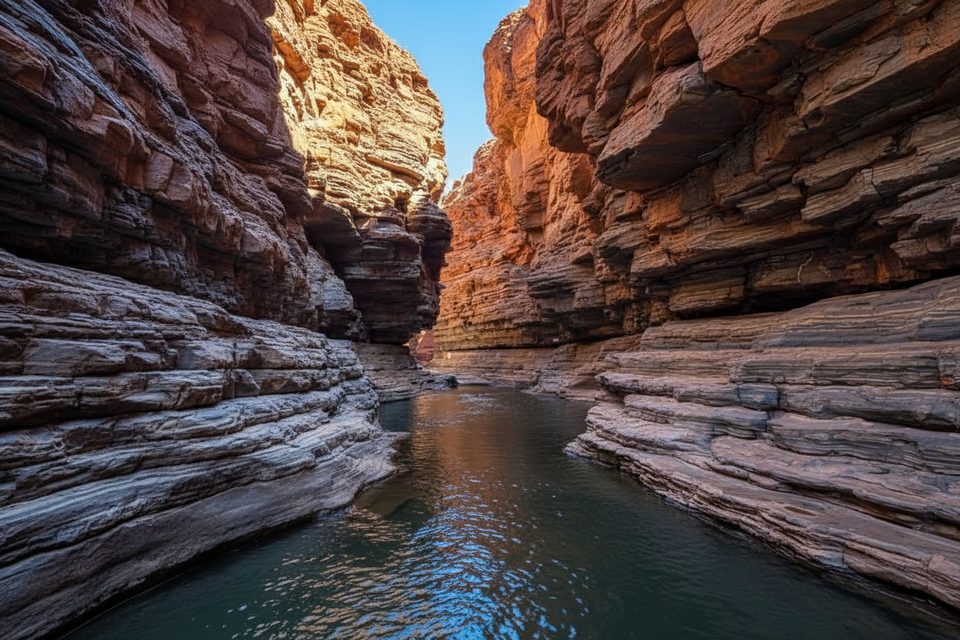
Also known as Nhamurrunha, Kalamina Gorge is the park’s quiet achiever—serene, scenic, and a great "first gorge" to get your bearings. Expect classic red banded rock, a small permanent pool, and a seasonal waterfall set in a tranquil creek line. The rock here exposes a story billions of years in the making, with layered cliffs carved by eons of erosion.
From the Kalamina car park lookout, descend roughly hewn steps to the gorge floor and a small permanent pool. Continue along the creek past reflective rock pools and orange-hued walls toward Rock Arch Pool. The full out-and-back is about 3 km (Grade 4), typically up to 3 hours depending on photo stops; some visitors take less. Terrain includes shallow stream crossings on stepping stones and short sections of narrow ledges—fine for most with sure footing.
You can swim at the end pools and by the waterfall, but the water is brisk—particularly from April to September. Many hikers love the return leg against the flow, hopping mini-falls and slabs as you make your way back.
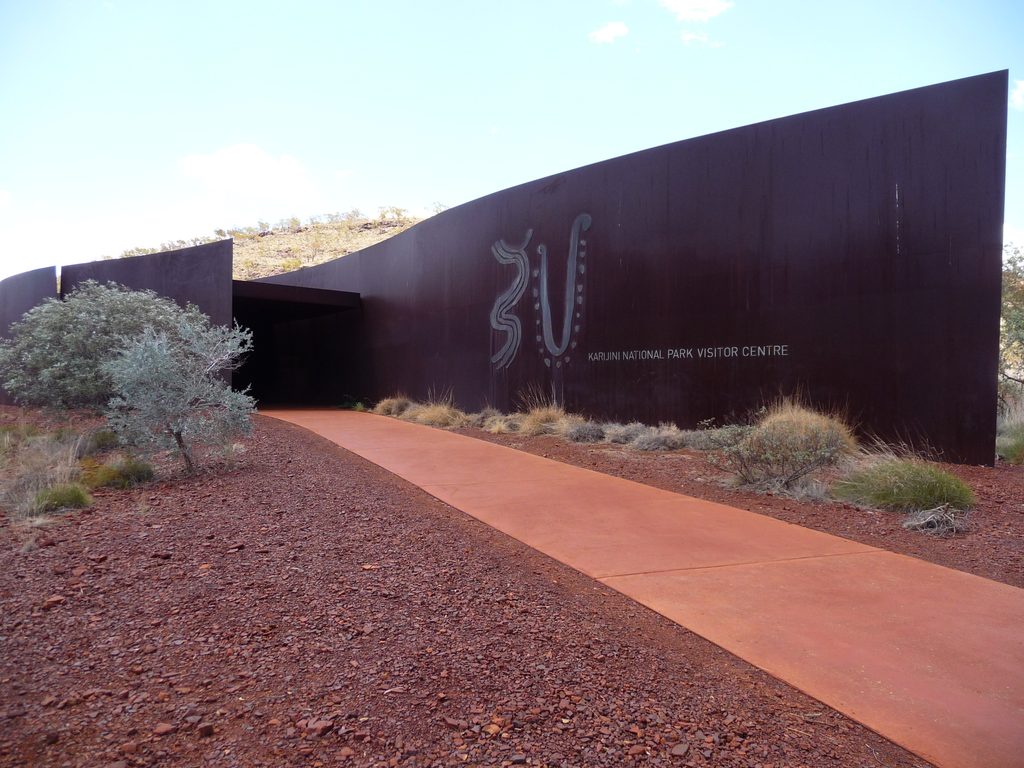
There’s a signed gravel car park with an information shelter, drinking water, and a drop toilet. The access road is unsealed and can be corrugated; allow extra time and consider a 4WD/AWD. Kalamina sits between Weano and Hancock Gorges, roughly 24 km from the visitor centre and about 96 km from Tom Price.
Expect slippery rocks, ledge walking, and creek crossings—take it slow. Don’t dive or jump into pools. Flash floods do occur; avoid gorges when rain is forecast and exit immediately if rain starts. Summer days can top 40°C, so carry plenty of water and sun protection. Dingoes are common—don’t feed them, supervise children, and store food in your vehicle. Stay back from cliff edges; rock can be loose.
Kalamina is a gentle sampler of Karijini’s diversity—creekside vegetation, birdlife along the water, and those striking red strata. It’s a good place to soak up the landscape without committing to the more extreme scrambles.
Hit the trail early for softer light on the walls and fewer people; mornings are also cooler for hiking. If you’re here mainly to swim, warmer months make the water more inviting, but plan around heat and start early.
Place · 0 mi away
Place · 0.1 mi away
Place · 5.8 mi away
Place · 6.7 mi away
Moderate · 0 mi away
Challenging · 7.5 mi away
Easy · 8.6 mi away
Challenging · 8.6 mi away

Parkwolf Tour Guide
