Parking
Start at the Knox Gorge Lookout carpark at the end of Joffre Road. A toilet and picnic table are at the site.

#9 of 22 trails in Karijini
Karijini National Park, WA
A short, steep scramble to the red-rock gorge floor.
Overview
Map & elevation
Plan your hike

The highest, rockiest slopes around here are a summer buffet for grizzly bears.
Karijini Tour Guide
Parkwolf is a GPS audio tour guide for Karijini National Park. As you drive, it chimes in with what’s ahead: hidden gems, upcoming stops, history, geology, and wildlife, right through your car’s speakers.
See the Karijini audio tourRecorded for this trailhead
Knox Lookout: Two Gorges Meet“You’re nearing Knox Lookout, where you can trace Knox Gorge to its meeting with Wittenoom Gorge. Allow about fifteen minutes for the lookout walk; this is a good choice if you want the view without a strenuous descent.”
Plays as you drive up to this trailhead in the Parkwolf Karijini Tour Guide.
More stories near here in the app
“Fantastic app with many points of information… It’s great to just turn on while you’re driving and it gives you an audio tour of the national Park. We love it!!!!”


Trail guide
Knox Gorge Trail is a 2 km return, Class 5 scramble from the Knox Gorge Lookout carpark down to the gorge floor and back. It is a proper descent into the layered red-rock chasm, not just a walk to a viewpoint. Allow about three hours and choose it only if you are very experienced, fit and agile. The short distance hides a loose, steep scramble.
The path drops over loose rock from the rim, then the walk changes to rock-hopping around ledges and pools between close-set walls. Fig trees cling to cracks in the rock. Take your time on the descent; the return is the same way, so every steep step you go down has to be climbed back up.
The public walk ends at a stop sign. Turn around there; the canyoning terrain beyond is restricted. If you want the gorge view without the scramble, the separate Knox Gorge Lookout walk is an 800 m return from the same site and takes about 20 minutes. It stays above the gorge and is a very different, much easier outing.
Knox Gorge cuts through banded iron formation, the iron- and silica-rich layers laid down on an ancient seafloor more than 2.5 billion years ago. Water has since cut through those hard bands to make the steep-sided gorge. The walk reaches the point where Knox Gorge meets Wittenoom Gorge; from the floor, the walls and pools keep changing around the bends. Fig trees rooted in the cliff cracks are one of the details to look for.
Morning or late-afternoon light comes in at an angle and brings out the bands in the walls. At the narrow end, frame a little of the rocky floor beneath the tall walls to show how close they stand. Pools may be swum, but the water can be extremely cold, especially from April to September; there is no guarantee of a suitable pool on a particular visit.
Start at the Knox Gorge Lookout carpark at the end of Joffre Road. A toilet and picnic table are at the site, but there is no food or drinking-water supply along the walk, so bring what you need. Heat can be severe in Karijini, and rain can turn a gorge into a flash-flood path: do not enter when rain threatens and leave promptly if it starts. Do not jump or dive into pools. Pets are not permitted; certified or approved assistance animals are the exception.
Wildlife
 44 sightingsDingoMost seen around 6 PMSighting map
 18 sightingsRock WallabyMost seen around 6 AMSighting map
 15 sightingsMulga SnakeMost seen around 7 PMSighting map
 36 sightingsHamersley Rock MonitorMost seen around 9 AMSighting map
 13 sightingsWestern BowerbirdMost seen around 7 AMSighting map
 34 sightingsChildren's PythonMost seen around 8 PMSighting map
Sighting maps show where each species has been reported across Karijini. Wildlife moves, so no sighting is guaranteed.
Keep exploring
 EasyKnox Gorge Lookout Walk0.3 km · 15 min · At the trailheadA short stepped walk to the gorge where Knox meets Wittenoom.
 ChallengingUpper Weano Gorge1.6 km · 45 min · 1.9 km awayA short Class 4 loop to a cold gorge pool.
 ChallengingBilungunha (Hancock Gorge), Kermits Pool1.5 km · 2 hr · 1.9 km awayA short, serious gorge scramble to the Spider Walk and Kermits Pool.
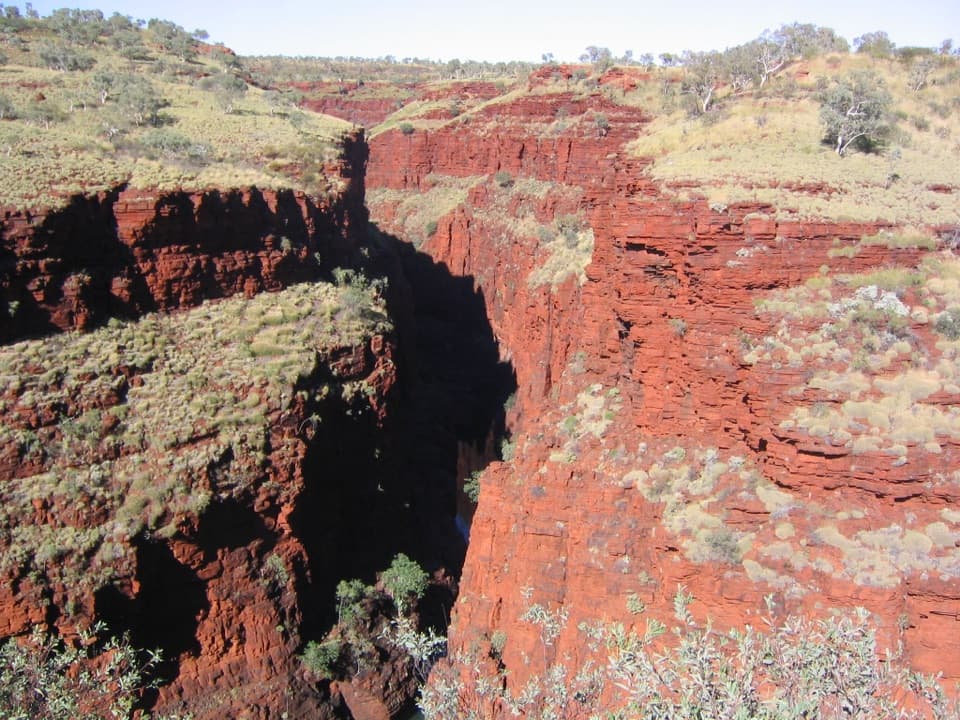 ModerateOxer Lookout Trail1.4 km · 39 min · 1.9 km awayA short plateau walk ends where four gorges meet.
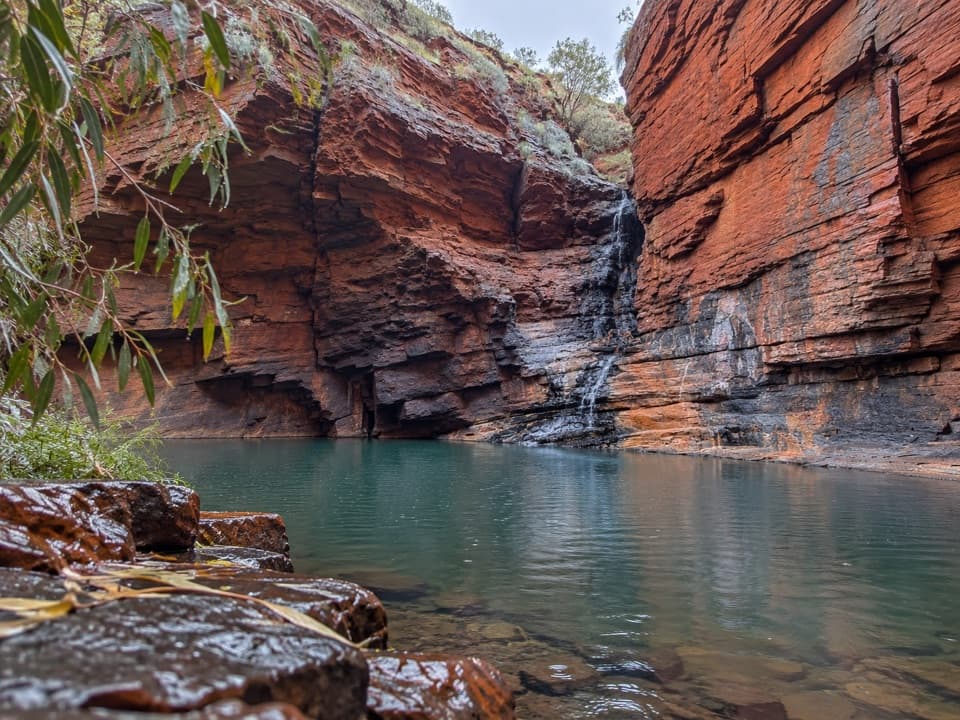 ChallengingLower Weano Gorge, Handrail Pool1.2 km · 1.5 hr · 2 km awayA short walk into a wet, hands-on gorge scramble.
 ModerateLower Weano Gorge Trail2.9 km · 1.5 hr · 2 km awayA steady walk to Weano Gorge’s towering iron walls.
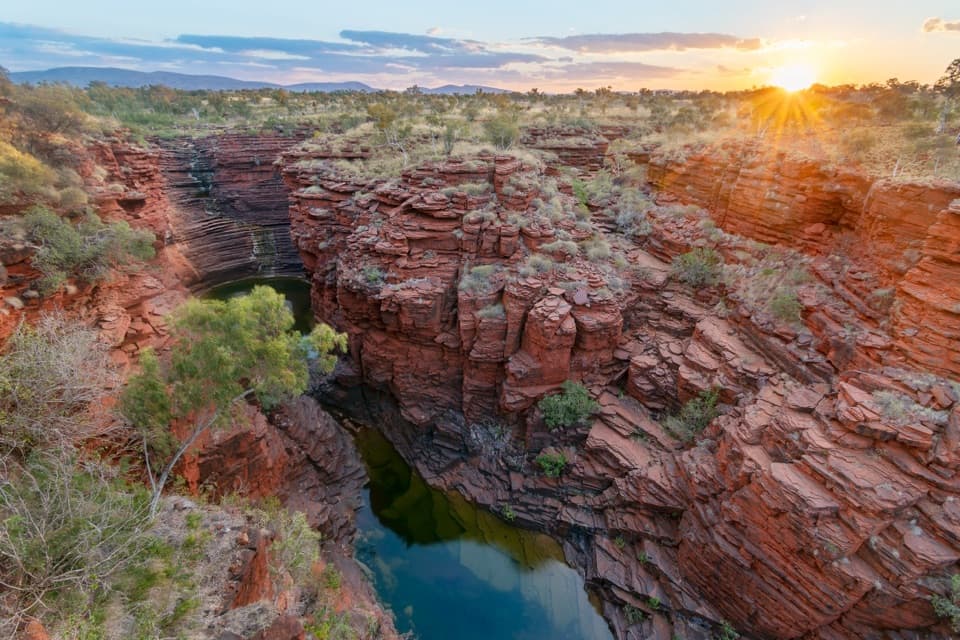 ModerateJoffre Lookout Trail0.2 km · 20 min · 3.5 km awayA short stairway down to Joffre Gorge’s curved amphitheatre.ChallengingJoffre Waterfall Trail1.5 km · 2 hr · 3.6 km awayA steep, rough descent to Karijini’s curved waterfall basin.
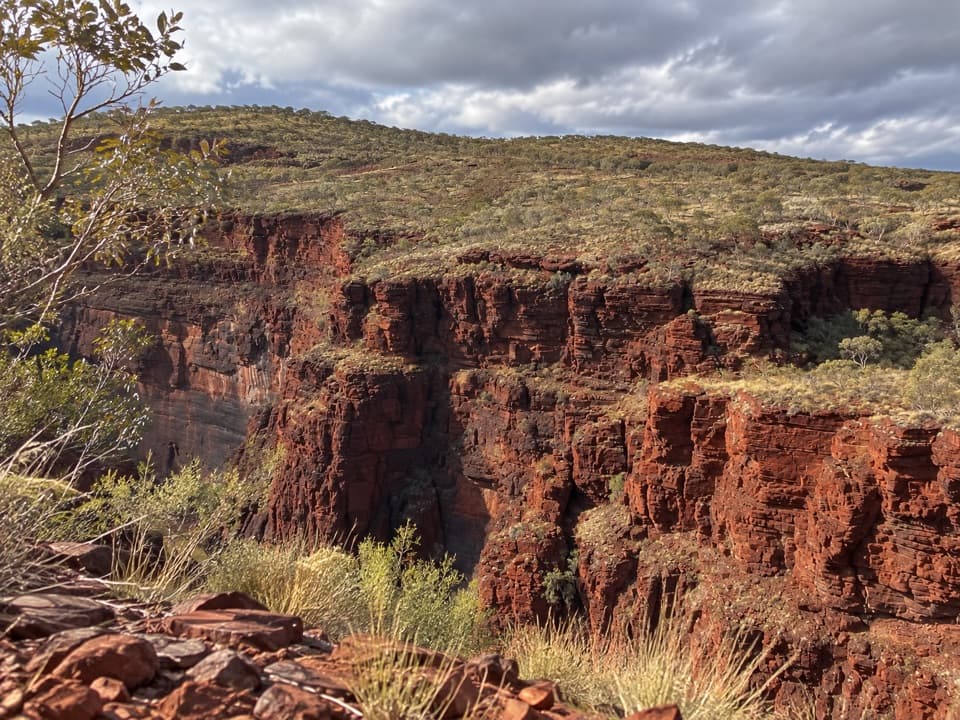 Sight · 0.1 km awayKnox LookoutAn easy, accessible rim walk gives you Knox Gorge from above.Sight · 1.3 km awayOxer LookoutFour gorge heads meet beneath a hundred-metre iron-red drop.
 Sight · 1.4 km awayJunction Pool LookoutOne short walk for high views into Hancock Gorge and Junction Pool
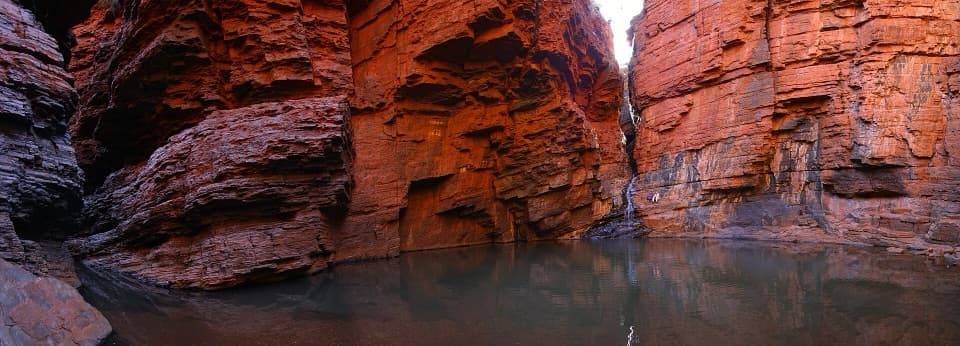 Sight · 1.4 km awayHandrail PoolA gorge walk ends at a pool; the handrail descent is optional.
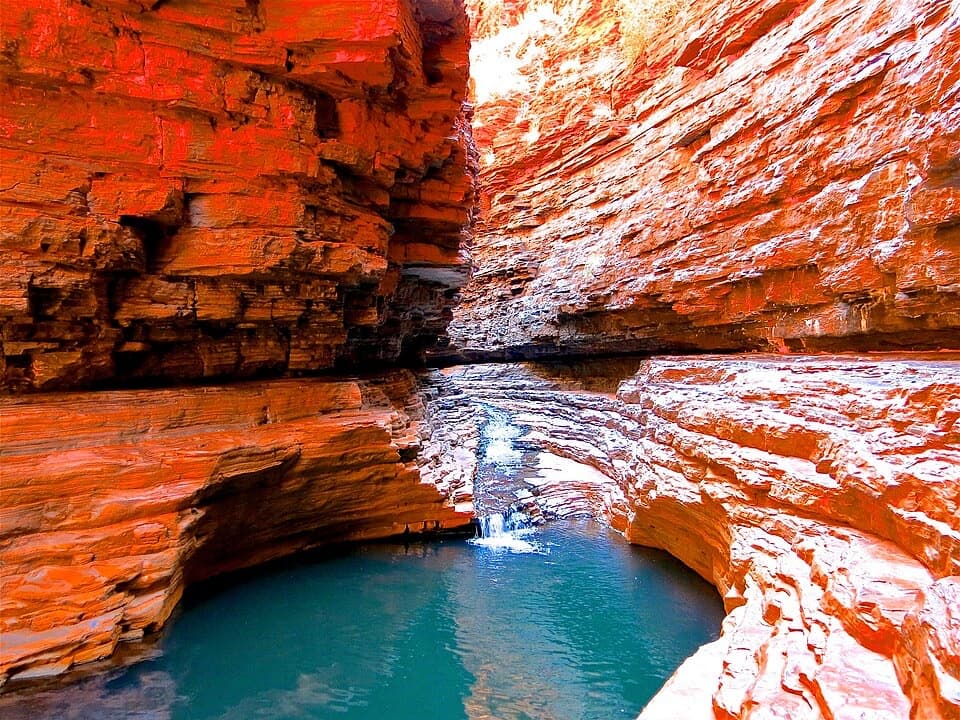 Sight · 1.5 km awayKermit's PoolA Class 5 scramble earns a pool view deep in Hancock Gorge.
 Picnic area · 2 km awayWeano Recreation AreaA shaded picnic base before the tougher gorge walks.Sight · 3.5 km awayJoffre Falls LookoutA short rim walk above a curved gorge and dark pool.Sight · 3.6 km awayJoffre FallsA red-rock amphitheatre worth the rough walk in.
Parkwolf’s Karijini ranking

The audio tour guide for the drive, plus offline maps, trails, and wildlife heatmaps for when the signal drops.


