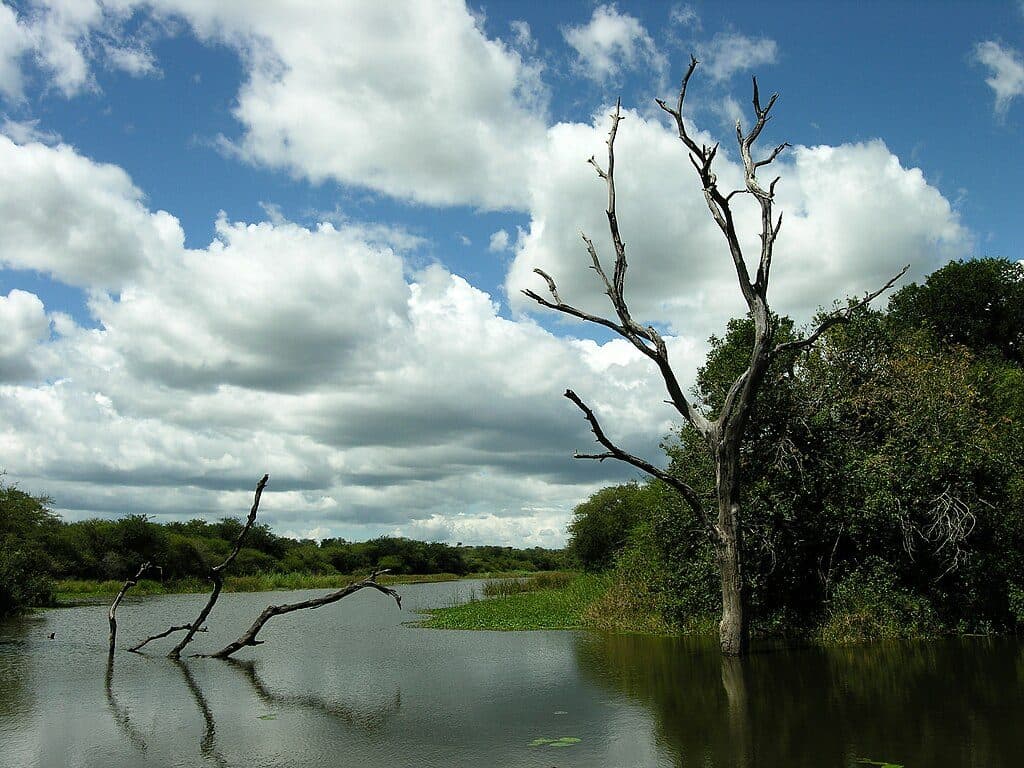
Place · 1.7 mi away

Lanner Gorge slices through Kruger’s far north, carving an 11 km chasm more than 150 m deep where the Luvuvhu River runs wild. It forms the boundary with the Makuleke Concession and feels properly remote—no shops, no loos, just wind and cliff. It’s the kind of place you come for the view and leave a little hushed.
From the rim, you get big, cinematic vistas over layered sandstone and shale walls, the river glinting below, and boulders tumbled by ongoing erosion. Down in the gorge live crocodiles and hippos; rock hyrax, baboons, and even leopard work the cliffs and ledges. Elephant and buffalo are more common at the ends where access is gentler.
This is a wilderness area with tightly controlled access. You typically visit on a guided activity—either via SANParks’ multi‑day Wilderness Trails (notably the Nyalaland Trail) that include walks to Lanner and Levhuvhu gorges, or with guides from the Makuleke side. There’s no public, self‑drive viewpoint at the rim, and there are no facilities at the gorge itself. On SANParks trails, you meet at the departure rest camp (for Nyalaland, Punda Maria) and head to a rustic trail camp; private vehicles aren’t allowed to the camp, and amenities are intentionally basic.
Birders adore this place. The cliffs host raptors like Verreaux’s (black) eagle and the gorge’s namesake lanner falcon. The wider Luvuvhu/Pafuri area is famous for specials, including Pel’s fishing owl (best found on guided night drives), with additional nocturnal owls and sought‑after species in the concession. Keep binoculars handy—thermals here can be raptor‑rich.
The gorge walls stack Triassic–Jurassic sandstones over basal Permian shales, capped in places by Cretaceous gravels. It’s still actively eroding—those fresh boulders in the river tell the story. Finds in the area include dinosaur fossils and desert‑rose crystal formations. The absence of Early Stone Age occupation suggests the gorge might be geologically young, potentially within the last ~2 million years.
Late afternoon is the sweet spot—golden light and long shadows make the cliffs glow, which is why guides love it for sundowners. In the wet season, the river can run higher and faster, and guides may switch from river‑level walks to rim viewpoints. Because access is limited to small guided groups, crowding is naturally low year‑round.
Do not swim—crocodiles and hippos are part of the gorge’s charm and risk. If your walk reaches the river, guides keep to shallow, clear sections and may reroute after rains. Expect heat and sun exposure on the rim; bring water, sun protection, and sturdy footwear.