Overview
About Iliamna Volcano
Why stop
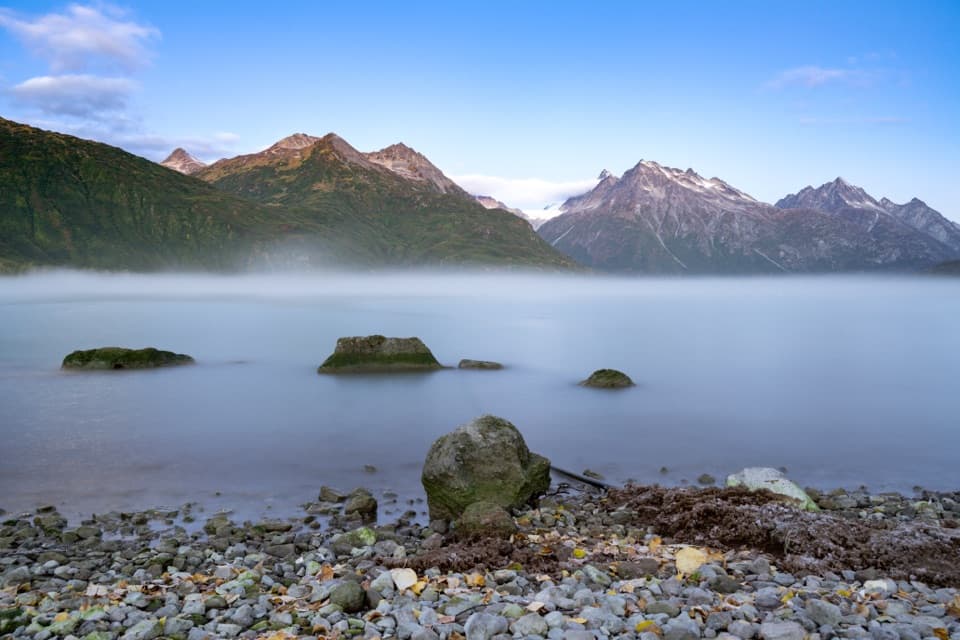
- Glaciers spill from a striking volcanic summit into broad valleys.
Heads up
- No road or designated trail access was identified for a ground visit.
Map
Where it is

The highest, rockiest slopes around here are a summer buffet for grizzly bears.
Lake Clark Tour Guide
Your drive to Iliamna Volcano, narrated.
Parkwolf is a GPS audio tour guide for Lake Clark National Park. As you drive, it chimes in with what’s ahead: hidden gems, upcoming stops, history, geology, and wildlife, right through your car’s speakers.
See the Lake Clark audio tour- 18 audio storiesacross Lake Clark’s roads, triggered by GPS as you drive
- Wildlife heatmapsfor Brown Bear, Bald Eagle, Common Merganser
- Works offlinemaps, 5 trails, 34 places, and audio download before you lose signal
- CarPlay readysimple controls built for the drive
“Fantastic app with many points of information… It’s great to just turn on while you’re driving and it gives you an audio tour of the national Park. We love it!!!!”


Guide
More about Iliamna Volcano
A volcanic landmark to recognizeIliamna is a 10,016-foot active stratovolcano in the Chigmit Mountains, its steep cone draped…
Iliamna is a 10,016-foot active stratovolcano in the Chigmit Mountains, its steep cone draped in glaciers above Cook Inlet. It is a landmark rather than a conventional stop: no road access, designated hiking route, or public landing site was identified. Treat it as a distant view or an airborne landmark, not a summit outing to build a day around.
A cone made of iceTen glaciers radiate from the mountain.
Ten glaciers radiate from the mountain. Tuxedni Glacier, the longest, runs about 16 miles north toward a point within three miles of Tuxedni Bay; Red Glacier extends about 10 miles east toward Cook Inlet. Their deep U-shaped valleys show that ice once reached sea level here during at least one glacial stage.
A summit built by subductionThe summit is flat-topped rather than sharply conical and has no distinct crater.
The summit is flat-topped rather than sharply conical and has no distinct crater. North and South Twin Peaks, lava-dome complexes, sit along a five-kilometer ridge on the south side; another dome complex lies on the northeast flank beneath Johnson Glacier. The volcano is built from andesite lava and fragmented volcanic rock over Jurassic granite. Beneath it, the Pacific Plate moves under North America at about 2.6 inches a year, supplying the magma that builds this steep volcanic arc.
A Dena’ina name for the peakCh’naqal’in, the Dena’ina name for Iliamna, is translated as “one that stands above.”
Ch’naqal’in, the Dena’ina name for Iliamna, is translated as “one that stands above.” Dena’ina people have lived in the Lake Clark region for thousands of years, and their place names describe the volcanoes that shape the landscape.
Ice and rock can move fastLarge ice-and-rock avalanches are part of the mountain’s story as well as its volcanic geology.
Large ice-and-rock avalanches are part of the mountain’s story as well as its volcanic geology. Events in 2016 and 2019 began near the top of Red Glacier and sent debris roughly five miles down-valley at an estimated average speed of about 110 mph. These are glacier-and-rock avalanches, a distinct process from an eruption.
Frame the whole glacier valleyIf you see Iliamna from the air, keep the glacier and the valley floor in the frame with the…
If you see Iliamna from the air, keep the glacier and the valley floor in the frame with the summit. The ice spilling down the cone into broad gray outwash plains shows the scale better than a tight crop of the peak alone.
Wildlife
Wildlife in Lake Clark
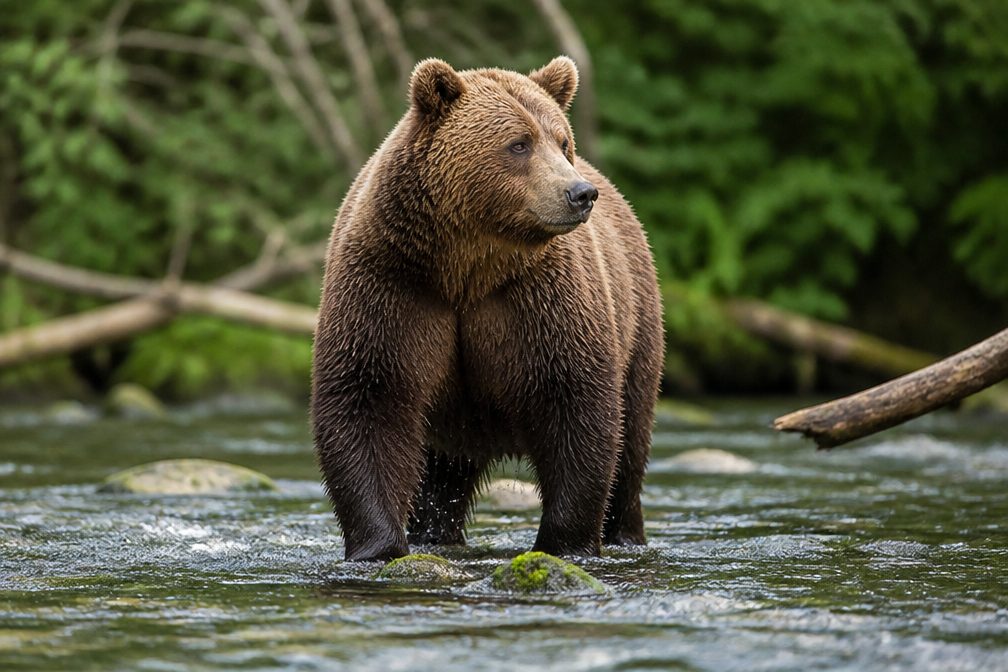 142 sightingsBrown BearMost seen around 8 AMSighting map
 11 sightingsBald EagleMost seen around 6 PMSighting map
 13 sightingsCommon MerganserMost seen around 8 AMSighting map
Sighting maps show where each species has been reported across Lake Clark. Wildlife moves, so no sighting is guaranteed.