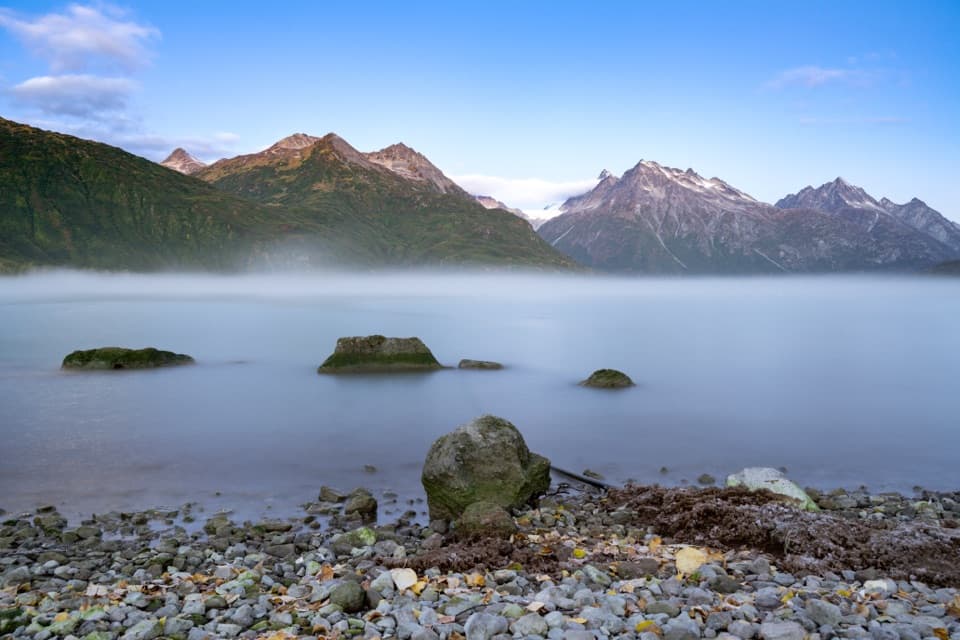
Overview
About Redoubt Volcano
Why stop
- A distinctive glaciated cone with a vivid eruption history.
Heads up
- No documented public road or trail reaches the mountain.
Map
Where it is

The highest, rockiest slopes around here are a summer buffet for grizzly bears.
Lake Clark Tour Guide
Your drive to Redoubt Volcano, narrated.
Parkwolf is a GPS audio tour guide for Lake Clark National Park. As you drive, it chimes in with what’s ahead: hidden gems, upcoming stops, history, geology, and wildlife, right through your car’s speakers.
See the Lake Clark audio tour- 18 audio storiesacross Lake Clark’s roads, triggered by GPS as you drive
- Wildlife heatmapsfor Brown Bear, Bald Eagle, Common Merganser
- Works offlinemaps, 5 trails, 34 places, and audio download before you lose signal
- CarPlay readysimple controls built for the drive
“Fantastic app with many points of information… It’s great to just turn on while you’re driving and it gives you an audio tour of the national Park. We love it!!!!”


Guide
More about Redoubt Volcano
A volcano to look for, not a drive-up stopRedoubt Volcano is a 10,197-foot (3,108 m) active stratovolcano at the head of the Chigmit…
Redoubt Volcano is a 10,197-foot (3,108 m) active stratovolcano at the head of the Chigmit Mountains in Lake Clark National Park and Preserve. If you are near Cook Inlet, it is worth looking for on a clear day; scenic flights are the documented way to get closer. Don't plan a walk-up visit: no public road, trail or landing point is documented, and the map pin marks the summit. No on-site visitor facilities are documented.
A cone carved by iceThe steep cone is about 10 km wide at its base, with alpine glaciers cutting its flanks.
The steep cone is about 10 km wide at its base, with alpine glaciers cutting its flanks. Its summit crater is 1.8 km across and filled with ice. The crater opens north into Drift Glacier, which spreads into the upper Drift River Valley. From a plane, include the glacier valleys around the cone to show the mountain's scale.
It sits over a moving plate boundaryRedoubt began forming about 880,000 years ago.
Redoubt began forming about 880,000 years ago. It sits above the Alaska-Aleutian subduction zone, where Pacific Plate crust moves beneath North American crust at about 2.6 inches a year. The descending plate reaches more than 60 miles beneath the Chigmit Mountains, where melting feeds the volcano.
Two names, with an uncertain connectionThe English name comes from the Russian Sopka Redutskaya, recorded in 1852.
The English name comes from the Russian Sopka Redutskaya, recorded in 1852. A second reported name, Ujakushatsch, means “fortified place,” but its relationship to the Russian name is uncertain.
Eruptions with consequences far beyond the summitRedoubt has erupted at least 30 times in the last 10,000 years.
Redoubt has erupted at least 30 times in the last 10,000 years. The 1989–90 eruption sent ash into the path of an Amsterdam-to-Anchorage Boeing 747; all four engines failed before the crew restarted them and landed safely. In 2009, lahars—fast volcanic mudflows—ran 20.5 miles down Drift River to Cook Inlet, reaching two miles wide and 19 feet deep in places. This is a landmark with a serious eruption history, not just a dramatic shape on the horizon.
Wildlife
Wildlife in Lake Clark
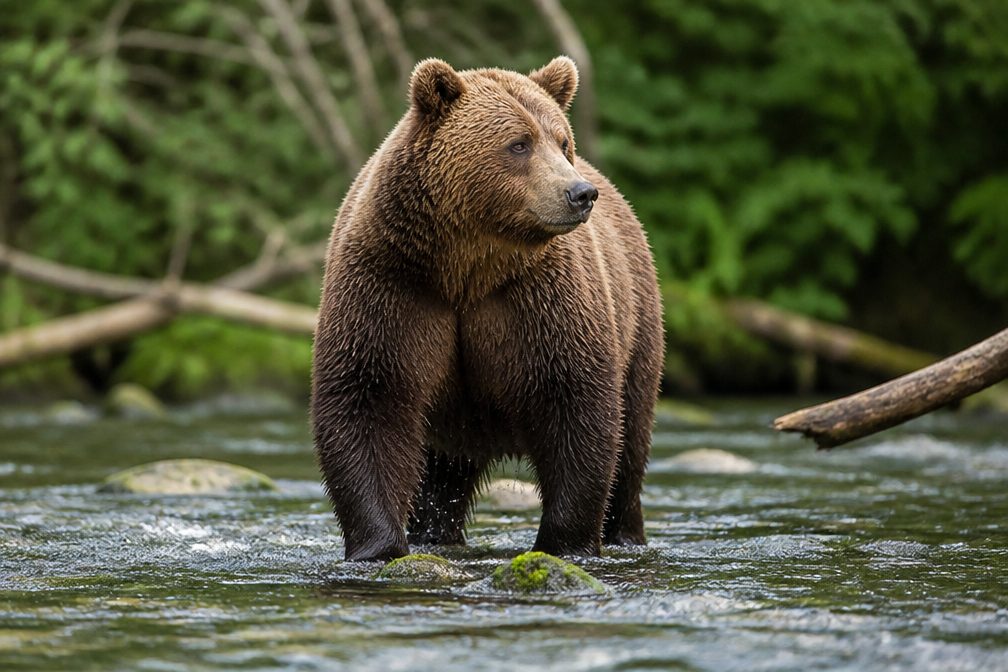 142 sightingsBrown BearMost seen around 8 AMSighting map
 11 sightingsBald EagleMost seen around 6 PMSighting map
 13 sightingsCommon MerganserMost seen around 8 AMSighting map
Sighting maps show where each species has been reported across Lake Clark. Wildlife moves, so no sighting is guaranteed.