Overview
About Garden of Eden Arboretum
Why stop
- Labeled tropical collections, including bamboo and rainbow eucalyptus
- Ocean and waterfall viewpoints within the garden
Heads up
- Admission adds cost to a scenic drive with roadside alternatives
- Steeper gravel paths limit access across the whole garden
Map
Where it is
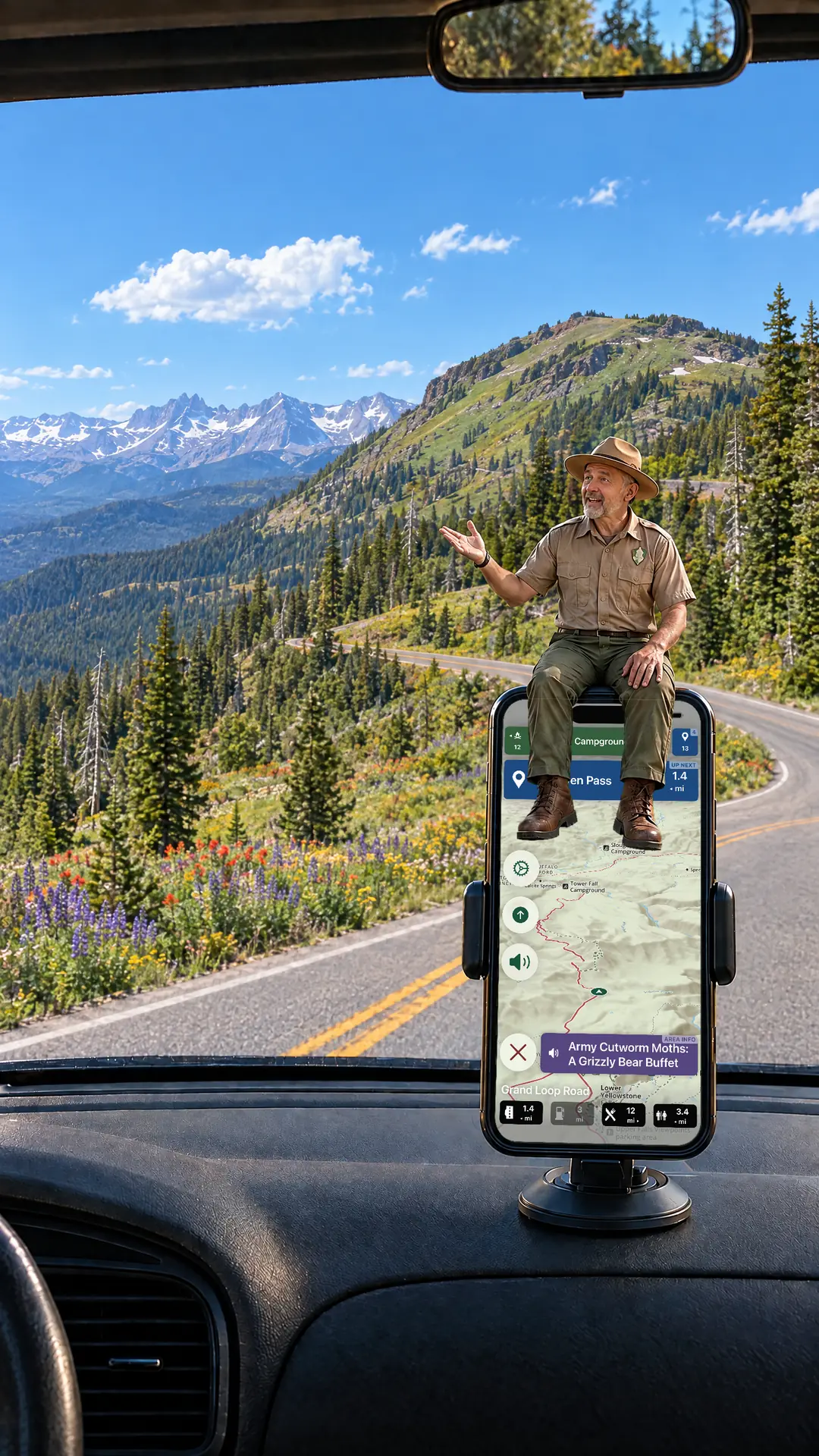
The highest, rockiest slopes around here are a summer buffet for grizzly bears.
Road to Hana Tour Guide
Your drive to Garden of Eden Arboretum, narrated.
Parkwolf is a GPS audio tour guide for Road to Hana. As you drive, it chimes in with what’s ahead: hidden gems, upcoming stops, history, geology, and wildlife, right through your car’s speakers.
See the Road to Hana audio tourRecorded for this place
Garden of Eden’s Plants and Overlooks“Up ahead is the entrance to Garden of Eden Arboretum, a paid garden visit I'd give at least an hour.”
Plays as you drive up to Garden of Eden Arboretum in the Parkwolf Road to Hana Tour Guide.
More stories near here in the app
- Waikamoi Ridge’s Forest Walk
- Kaumahina’s Coastal Outlook
- A Compass Held in Memory
- Understanding a Bowl of Poi
- 48 audio storiesacross Road to Hana’s roads, triggered by GPS as you drive
- Wildlife heatmapsfor Hawaiian Monk Seal, Green Sea Turtle, Frigatebird, and 13 more
- Works offlinemaps, 13 trails, 39 places, and audio download before you lose signal
- CarPlay readysimple controls built for the drive
“Fantastic app with many points of information… It’s great to just turn on while you’re driving and it gives you an audio tour of the national Park. We love it!!!!”


Guide
More about Garden of Eden Arboretum
Give this stop timeGarden of Eden Arboretum is a privately run botanical garden on Hana Highway at mile marker 10.
Garden of Eden Arboretum is a privately run botanical garden on Hana Highway at mile marker 10.5, between Kailua and Keʻanae. It is a paid garden walk with Pacific and waterfall lookouts, not a roadside pullout. Its meandering paths pass labeled tropical plantings and open lawns. Set aside at least 45 minutes; an hour or more gives you time to explore beyond the first viewpoint. If all you want is a quick waterfall glance, this is more commitment than you need.
Choose your wanderThe entrance map helps you choose how much of the grounds to see. There are about 2.
The entrance map helps you choose how much of the grounds to see. There are about 2.5 miles of packed-gravel paths, with a bamboo stand, orchard, pond, broad lawns and planted collections along the way. Some areas can also be driven through, so ask which route fits your time before setting off. You don't need to cover every path to get a good look around.
Look out toward the coastLookouts open toward the Pacific, Puohokamoa Falls and Keopuka Rock, the offshore landmark seen…
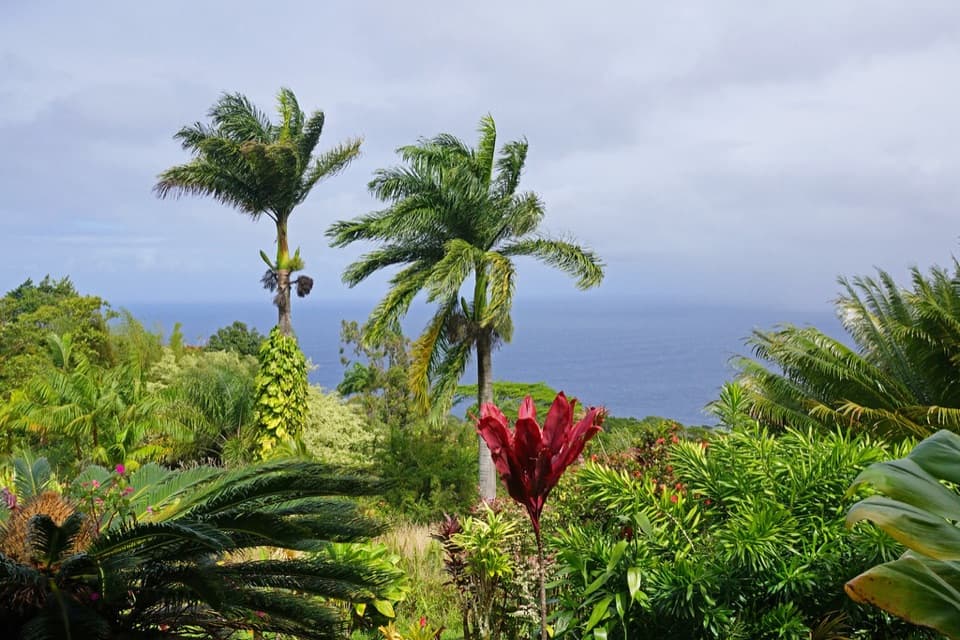
Lookouts open toward the Pacific, Puohokamoa Falls and Keopuka Rock, the offshore landmark seen in the opening sequence of Jurassic Park. The rock is partly screened by the valley from the garden's overlook, so give your eyes a moment to find its outline. The waterfall is viewed from above; the garden paths do not take you to its pools, and swimming is not allowed from the property. For a photo at the ocean overlook, keep some of the palms and planted slope in the foreground so the frame shows the garden opening onto the water.
A collection with a storyMore than 700 plants are labeled across the garden, from Hawaiian native and indigenous species…
More than 700 plants are labeled across the garden, from Hawaiian native and indigenous species to tropical and subtropical varieties. Look for koa, rainbow eucalyptus and bamboo among the trees and flowers. The labels make this more rewarding than a quick pass through pretty landscaping: you can stop on the plants that are new to you and see how the garden mixes native species with plants from elsewhere.
How it became a gardenLandscape designer Alan Bradbury began developing the grounds in 1991, and the garden opened to…
Landscape designer Alan Bradbury began developing the grounds in 1991, and the garden opened to visitors in 1996. He first imagined the property as a retreat for a recording studio, but salt air and rainforest humidity damaged the equipment. When people began wandering in through an open gate, the plan changed to a garden. It was first called Pua Nani Tree Farm; visitors started calling it the Garden of Eden, and that name stuck.
Rain, gravel and wildlifeThis is rainforest country: passing showers are common, mornings tend to be wetter, and…
This is rainforest country: passing showers are common, mornings tend to be wetter, and mosquitoes vary with conditions. Shoes with grip and insect repellent are useful. The gravel paths have different grades, with some gentler sections, but the whole garden is not a consistently level route; ask about the easier paths if that matters for your visit. Peacocks and ducks live on the grounds, and dogs are not allowed.
Food and practical detailsA Garden Cafe food truck is listed at the entrance, and picnic tables and covered pavilions…
A Garden Cafe food truck is listed at the entrance, and picnic tables and covered pavilions give you a place to eat while looking toward the falls, ocean or orchard. Restrooms and parking are on the property. The entry gate is 9 feet 2 inches high; taller vehicles are directed to the cafe parking area by the exit and can walk up the entrance lane. National park passes do not cover this privately run attraction.
Wildlife
Wildlife in Road to Hana
 10 sightingsHawaiian Monk SealMost seen around 11 AMSighting map
 127 sightingsGreen Sea TurtleMost seen around 5 PMSighting map
 86 sightingsFrigatebirdMost seen around noonSighting map
 17 sightingsRed-footed BoobyMost seen around 6 AMSighting map
 73 sightingsNene (Hawaiian Goose)Most seen around 6 AMSighting map
 58 sightingsHawaiian StiltMost seen around 8 AMSighting map
Sighting maps show where each species has been reported across Road to Hana. Wildlife moves, so no sighting is guaranteed.