Overview
About Kahanu Garden
Why stop
- A rare chance to understand Piʻilanihale Heiau and Hawaiian plant traditions in one visit.
- The route ends with a striking coastal view as well as the garden.
Heads up
- The grounds are open and grassy, not a lush ornamental flower display.
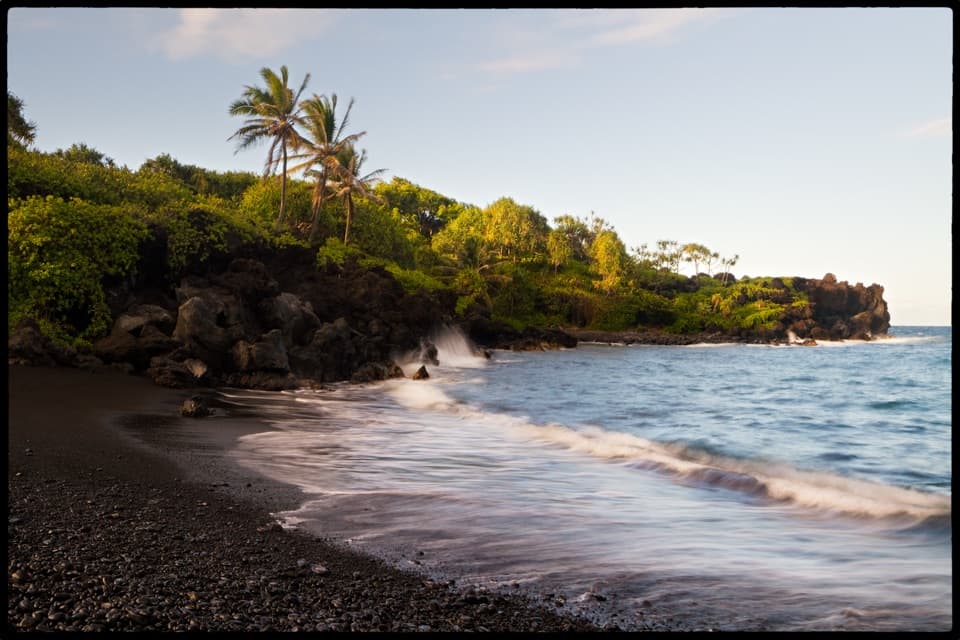
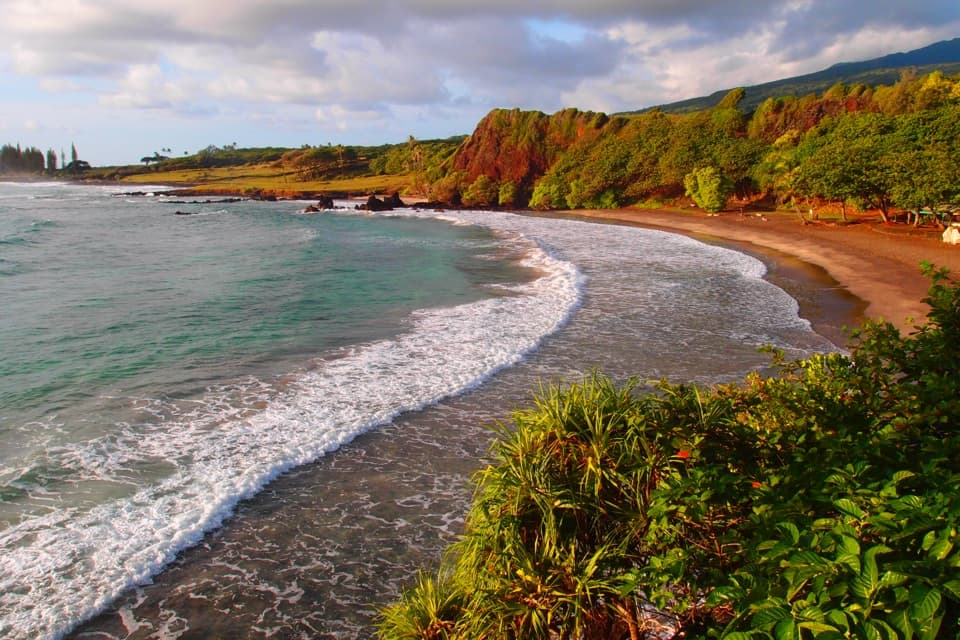
From the garden path, frame the heiau’s dark terraces and palms against the ocean and distant Haleakalā; the scale reads better from the ground than from atop the sacred walls. At the coastal lookout, look for an opening where surf meets the black lava shoreline.
 Parkwolf’s verdictA view worth framing
Map
Where it is
The highest, rockiest slopes around here are a summer buffet for grizzly bears.
Road to Hana Tour Guide
Your drive to Kahanu Garden, narrated.
Parkwolf is a GPS audio tour guide for Road to Hana. As you drive, it chimes in with what’s ahead: hidden gems, upcoming stops, history, geology, and wildlife, right through your car’s speakers.
See the Road to Hana audio tourRecorded for this place
Kahanu Garden and Its Great Heiau“Kahanu Garden is coming up, with Piʻilanihale Heiau, a huge Hawaiian temple built in terraces of dark basalt.”
Plays as you drive up to Kahanu Garden in the Parkwolf Road to Hana Tour Guide.
More stories near here in the app
- Water for the Sugar Fields
- Nāʻhiku Marketplace’s Food and Crafts
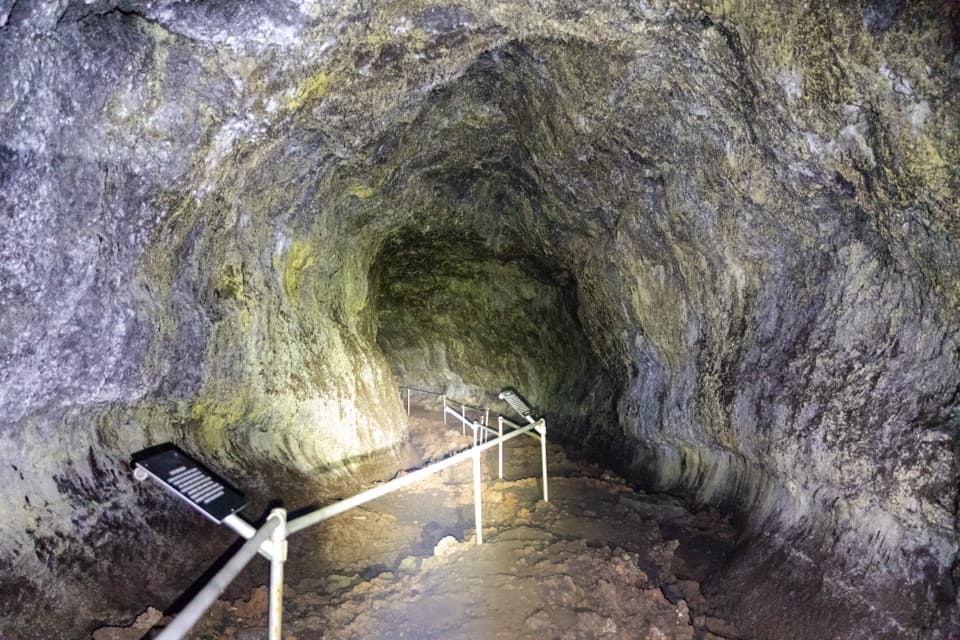
- Hāna Lava Tube’s Rock and Fallout Shelter
- Hāna Farms’ Bakery and Bamboo Hale
- 48 audio storiesacross Road to Hana’s roads, triggered by GPS as you drive
- Wildlife heatmapsfor Hawaiian Monk Seal, Green Sea Turtle, Frigatebird, and 13 more
- Works offlinemaps, 13 trails, 39 places, and audio download before you lose signal
- CarPlay readysimple controls built for the drive
“Fantastic app with many points of information… It’s great to just turn on while you’re driving and it gives you an audio tour of the national Park. We love it!!!!”


Guide
More about Kahanu Garden
A cultural garden, not a flower showKahanu Garden is a 293-acre botanical garden on Maui’s remote Hāna coast, with Pacific Island…
Kahanu Garden is a 293-acre botanical garden on Maui’s remote Hāna coast, with Pacific Island crop collections and Piʻilanihale Heiau at its heart. Go for the cultural history, useful plants and scale of the heiau; it’s an open, grassy garden rather than a dense display of ornamental flowers, and some visitors find it sparse if that’s what they expected. Allow at least an hour, reserve ahead, and check the current schedule before making the stop.
Follow the garden toward the coastThe visitor route passes labeled collections and the Canoe Garden, with Hale Hoʻokipa, a…
The visitor route passes labeled collections and the Canoe Garden, with Hale Hoʻokipa, a welcoming house with interpretive material, on the way. It leads to views of the heiau and onward to a coastal lookout above the hala preserve. The visit is mostly outdoors, across lawns and garden ground, so it feels more like walking through a living cultural landscape than visiting an indoor museum.
The scale of Piʻilanihale HeiauThe heiau is a massive structure of dark basalt laid in stepped terraces.
The heiau is a massive structure of dark basalt laid in stepped terraces. Its upper platform measures 341 by 415 feet, and the front wall rises about 50 feet. You view it from the garden path; don’t climb the walls or disturb the stones. The coastal lookout adds white surf breaking against black lava cliffs, with Haleakalā’s outline across the water on a clear day.
A name without a settled answerPiʻilanihale means “House of Piʻilani.”
Piʻilanihale means “House of Piʻilani.” Archaeology suggests construction in several stages, perhaps beginning in the late 13th century, with basalt carried by hand from as far away as Hāna Bay. The evidence supports religious use, but doesn’t establish that Chief Piʻilani built or lived in the heiau; some scholars have proposed it also served as a royal residence. Its interior is a complex of enclosures, platforms and upright stones, not a structure visitors enter.
Plants that traveled the PacificThe collection is about how plants sustained Pacific communities as well as how they look.
The collection is about how plants sustained Pacific communities as well as how they look. Taro, sweet potato, sugarcane, banana and ʻawa are among Hawaiʻi’s traditional crops; Kahanu’s breadfruit collection is described as the world’s largest. A native hala forest is another part of the landscape. Look for the labeled crop plantings in the Canoe Garden rather than expecting beds of showy blooms.
From Honomāʻele to the gardenThis was a productive agricultural district.
This was a productive agricultural district. Oral history connects Chief Piʻilani with Maui’s unification and Hāna Bay with a royal center. In 1848, King Kamehameha III granted about 990 acres, roughly half of Honomāʻele, to Chief Kahanu. Hāna Plantation began in the early 1860s and closed in 1946; after the sugar fields became cattle pasture, Kahanu descendants and Hāna Ranch deeded 61 acres to the botanical garden in 1974 for the heiau’s restoration and care of family graves. Hāna stonemasons stabilized the walls in 1999 using traditional methods.
Wildlife
Wildlife in Road to Hana
 10 sightingsHawaiian Monk SealMost seen around 11 AMSighting map
 127 sightingsGreen Sea TurtleMost seen around 5 PMSighting map
 86 sightingsFrigatebirdMost seen around noonSighting map
 17 sightingsRed-footed BoobyMost seen around 6 AMSighting map
 73 sightingsNene (Hawaiian Goose)Most seen around 6 AMSighting map
 58 sightingsHawaiian StiltMost seen around 8 AMSighting map
Sighting maps show where each species has been reported across Road to Hana. Wildlife moves, so no sighting is guaranteed.