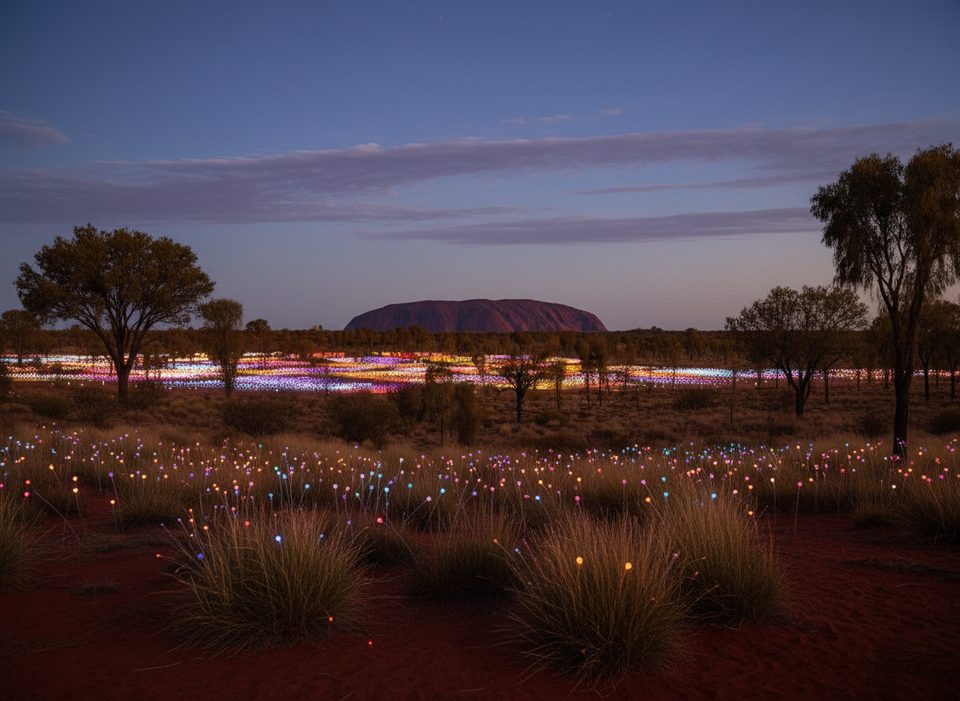
Field of Light

Fifty thousand desert lights under outback stars
Field of Light, Uluru-Kata Tjuta National Park
InsideUluru-Kata Tjuta National Park

Overview

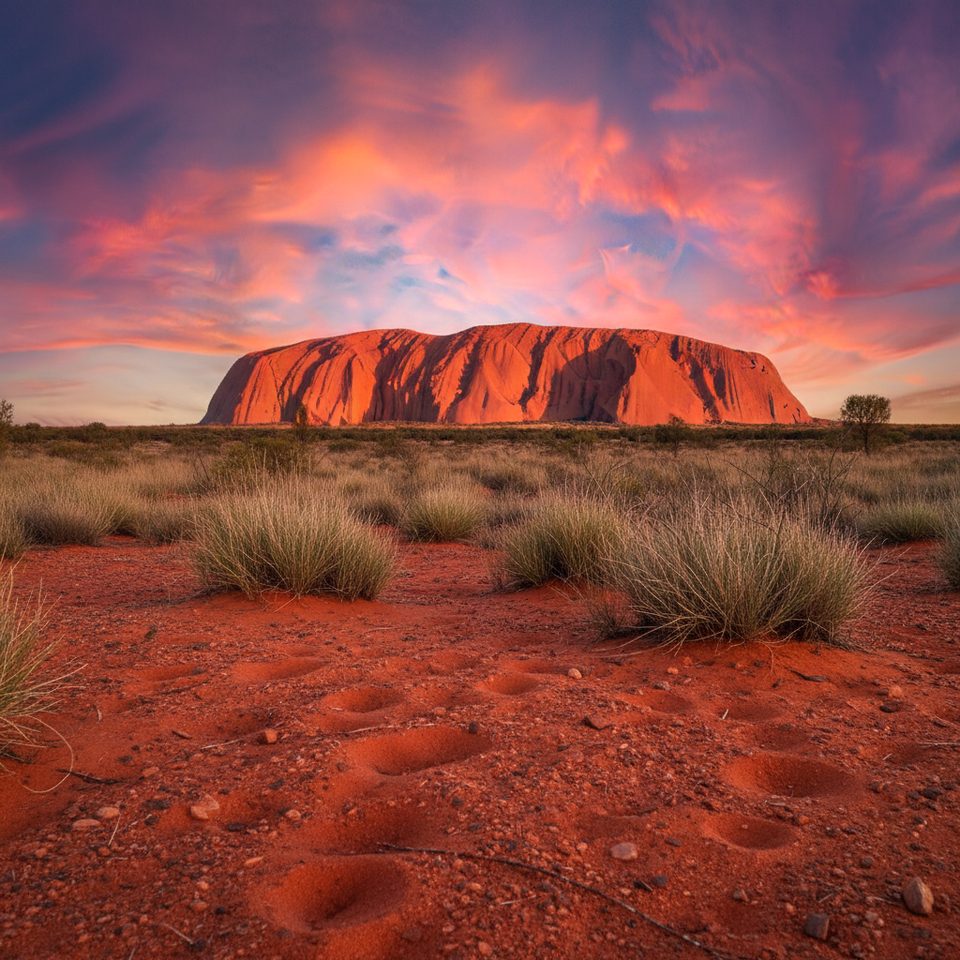
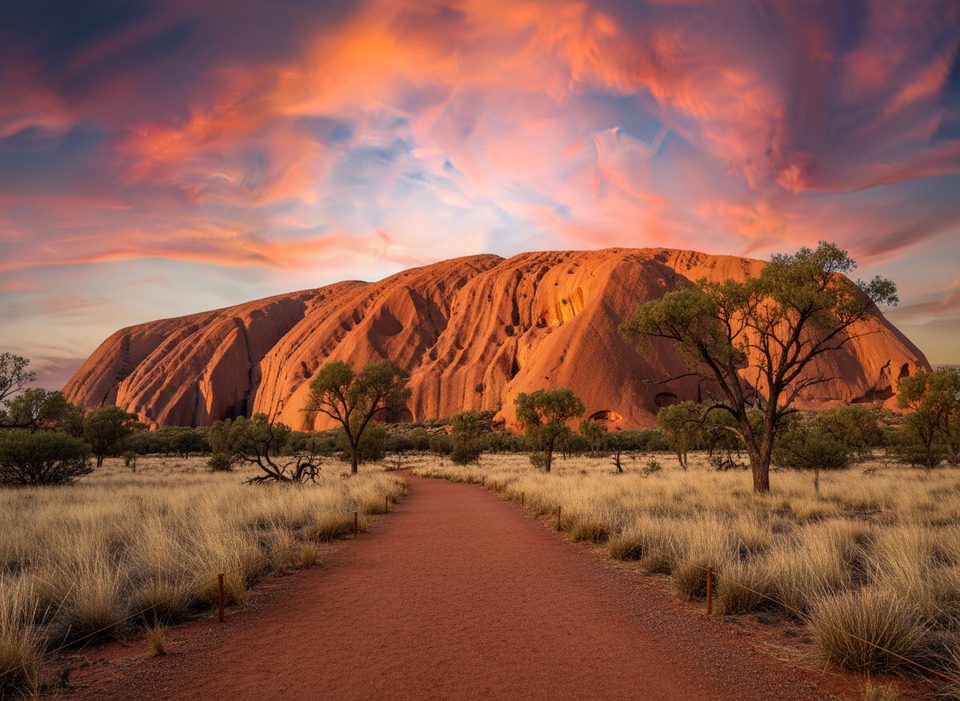
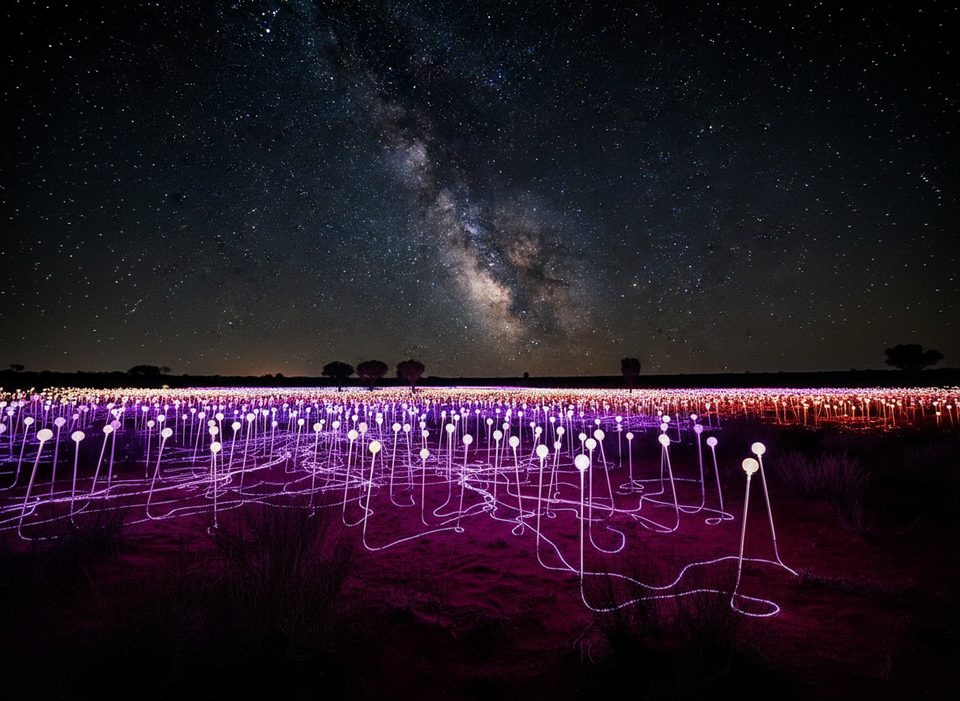
Field of Light (Tili Wiru Tjuta Nyakunytjaku) is Bruce Munro’s sprawling desert installation: 50,000 illuminated stems flowing across an area larger than seven football fields. As darkness settles, Uluru becomes a silhouette while the ground glows in shifting ochre, violet, blue and soft white. It’s art, atmosphere, and a proper sense‑of‑place moment.

Access and how it works

This is a remote, tour‑only experience with coach transfers—no self‑drive or walk‑ins. Standard visits run about 1.5 hours and typically depart around 30 minutes after sunset. Terrain is sandy/uneven and prams aren’t permitted. General Admission is a walk‑through of the artwork; it does not include access to the raised dune viewing area that looks back toward Uluru.

Ticket options (Apr 1, 2025–Mar 31, 2026)

  • General Admission: A$49.50 adult, A$38 child; transfers + walk‑through only.
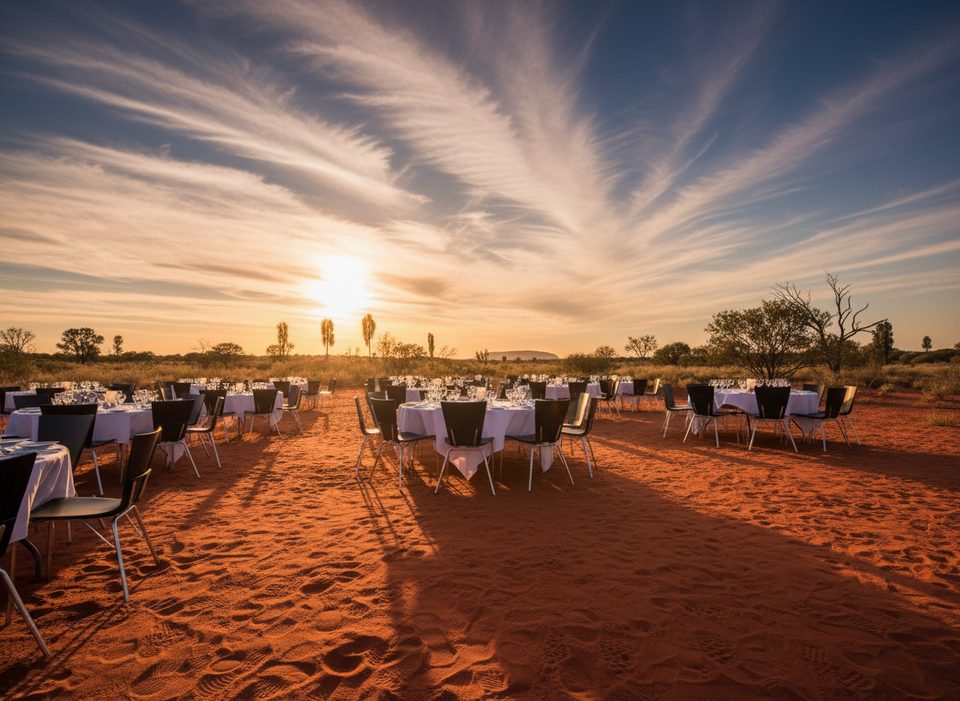
  • Star Pass: Adds outback canapés and Australian sparkling (plus non‑alcoholic options) and access to the dune viewing area.
  • Field of Light Dinner: A longer evening with a bush‑tucker‑inspired dinner, stargazing talk, and time to wander the installation.
  • Sunrise options also run on select mornings (often with hot drinks) if dawn light is your thing.

What you’ll see and photograph

The piece cycles through a desert‑tuned spectrum, best appreciated once the sky is properly dark. Expect set paths through the stems—less free‑roaming, but still great for photos. On clear nights the Milky Way often pops; it’s one of the most memorable parts of the experience.

Best time to visit

Evenings operate roughly 5–10 PM, with departures tied to sunset; sunrise tours offer a quieter, cooler alternative. For fewer people, aim for Sunday–Thursday; Saturdays around 7–8 PM are the busiest. If you want that classic view back toward Uluru, book Star Pass or Dinner—GA won’t get you onto the dune.

Good to know

  • Restrooms are on site (long‑drop/composting with hand‑wash).
  • GA doesn’t include food or drinks; Star Pass and Dinner do.
  • Desert nights can be chilly even in peak season—bring a warm layer, closed‑toe shoes, water, and insect repellent.
  • Tripods may be restricted on busy nights; use a fast lens or brace the camera on a bag/rail.
  • Stay on marked paths and supervise kids; the site is dark and sandy.

Pros

  • Vast desert lightscape of 50,000 solar‑powered stems
  • Memorable stargazing and photo ops on clear nights
  • Multiple ticket tiers from GA to dinner experiences

Cons

  • Tour‑only access; no self‑drive or walk‑in
  • General Admission excludes the raised dune viewpoint

Tips

  • Book early—popular nights and school holidays sell out fast.
  • Wear closed‑toe shoes and bring a warm layer; desert evenings get cold.
  • If you want the dune viewpoint toward Uluru, choose Star Pass or Dinner.
  • Tours typically depart about 30 minutes after sunset—double‑check your pickup time.
  • Tripods may be limited; use a fast lens or steady your camera on a bag/rail.
The Parkwolf tour guide sitting on a phone mounted in a car

Parkwolf Tour Guide

Like a tour guide in your car.

Save the places you found around Uluru-Kata Tjuta, then let Parkwolf guide the drive between them.Download Parkwolf on the App Store