
Place · 0 mi away
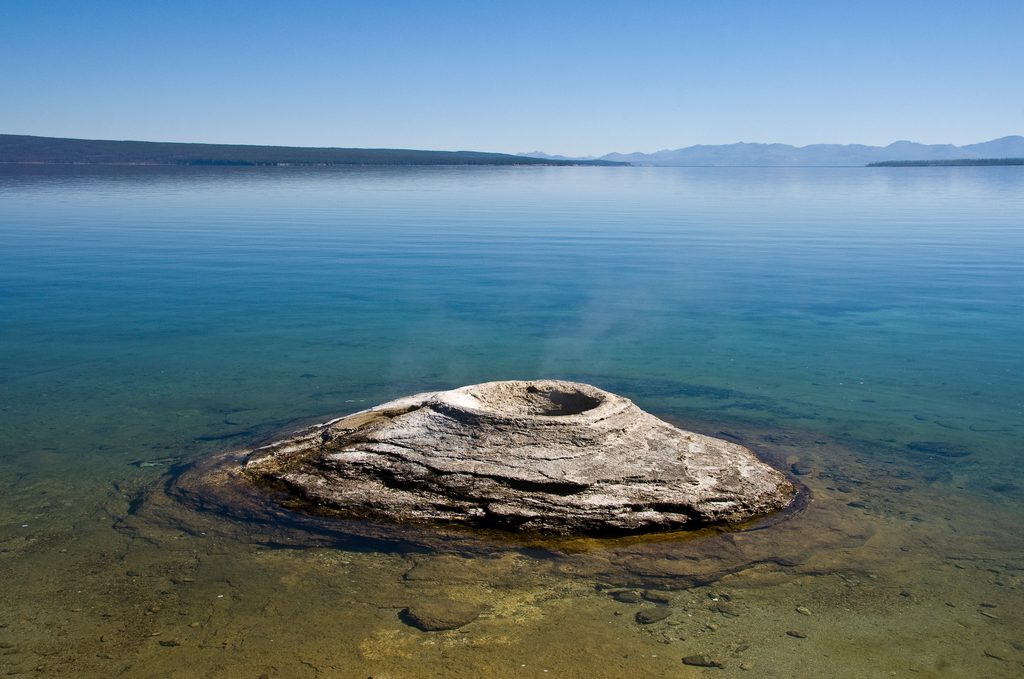
Big Cone Geyser sits just offshore along the West Thumb Geyser Basin boardwalk, rising from the edge of Yellowstone Lake. It’s a true “cone” geyser—more about the sculpted sinter cone and its lakeside setting than dramatic water shows. Eruptions are uncommon and, when they do happen, they’re small (typically under a foot), so don’t plan on a spectacle here.
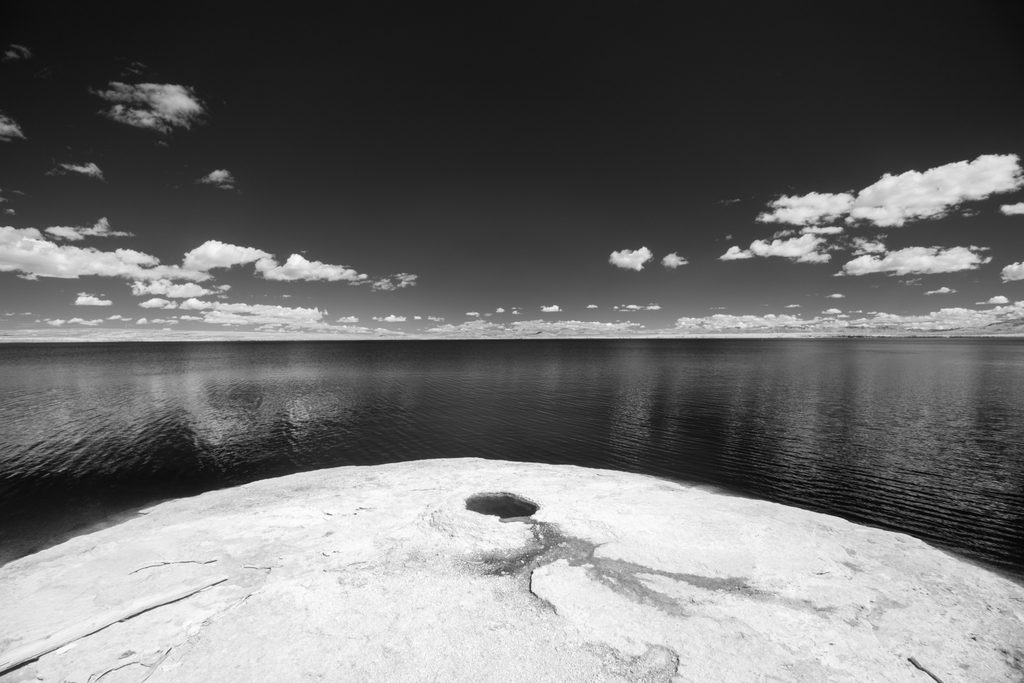
You’re looking at a broad sinter cone in shallow lake water, with the lake and mountains as backdrop. Depending on lake level, the cone can be fully exposed, partly visible, or even completely underwater. It’s a quick, worthwhile pause on the loop if you’re already exploring West Thumb.
Big Cone is a silica (sinter) cone about 23 feet wide with a roughly 31-inch vent. Hot, silica-rich water rising through rhyolite deposits leaves behind sinter, gradually building the cone. That tight, nozzle-like vent makes it a cone geyser—designed for focused jets rather than the splashy bursts of fountain geysers—but Big Cone’s activity is infrequent and low.
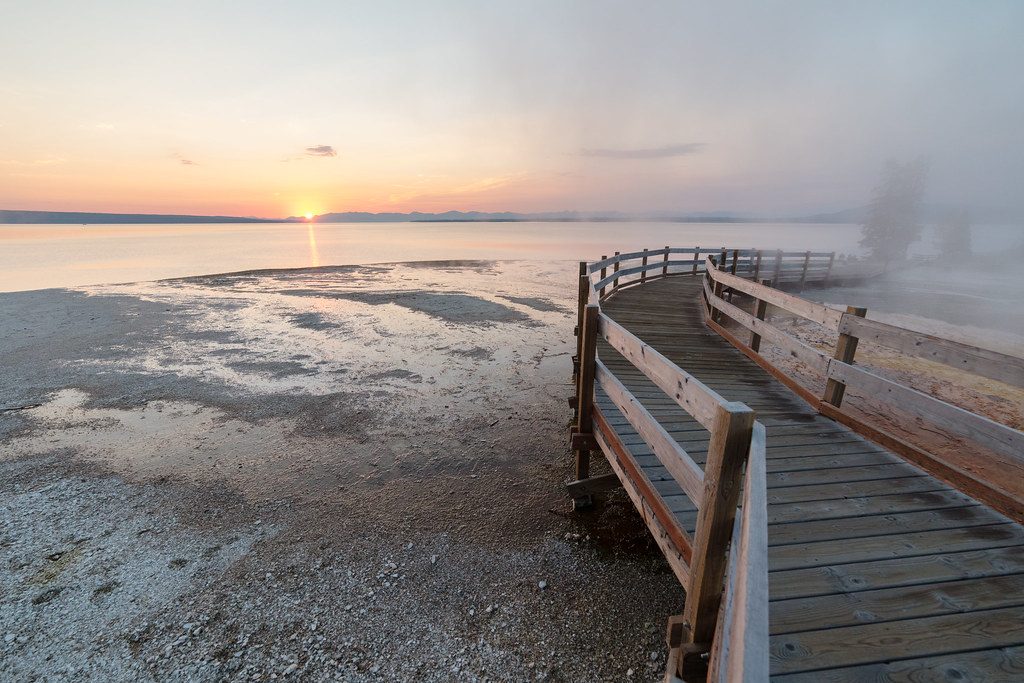
Park at the West Thumb Geyser Basin lot in the Grant Village/West Thumb area and follow the lakeside boardwalk; there’s no separate pullout or trailhead. You’ll find restrooms and a picnic area by the parking, and additional services nearby in Grant Village. Stay on the boardwalk—sinter crusts are thin and the water is dangerously hot.
Don’t wait around hoping for a show—most cone geysers aren’t predicted, and this one rarely performs. A visitor bench near the sign can be handy for group shots, and the spot makes for easy pano photos with the lake.
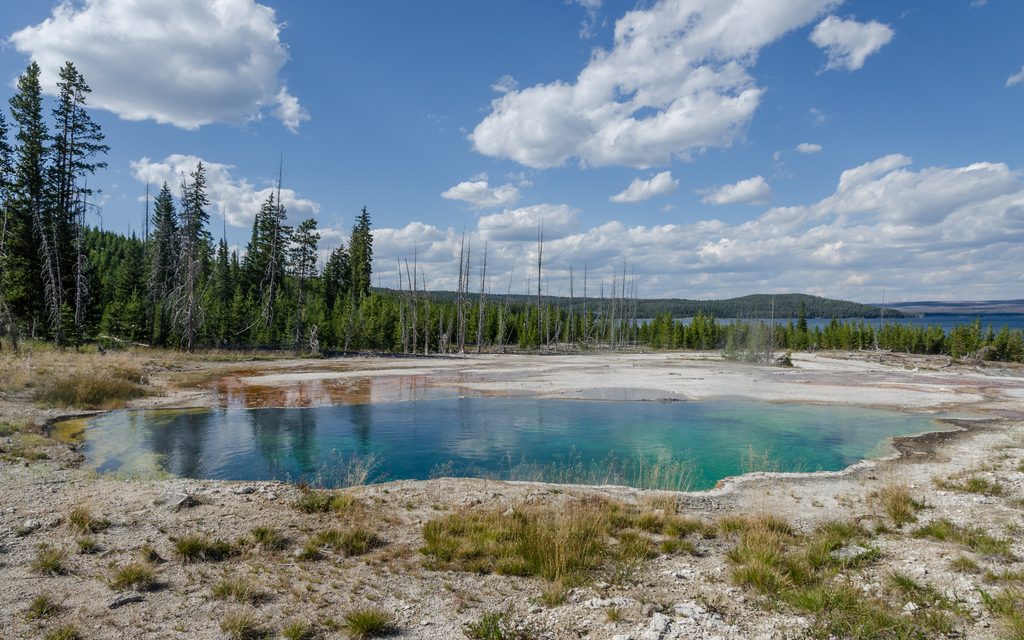
Make this a quick stop while seeing West Thumb’s headliners: deep-blue pools like Abyss Pool, classic lakeshore features such as Fishing Cone, and pastel mud pots. The entire loop packs a lot of hydrothermal variety into a short, easy walk.
Anytime you’re walking the West Thumb boardwalk works. Visibility improves when lake levels are lower; when levels are high, you may see only the cone’s tip or none of it at all.
Place · 0 mi away
Place · 0.1 mi away
Place · 0.1 mi away
Place · 0.1 mi away
Easy · 0.2 mi away
Easy · 0.3 mi away
Easy · 0.3 mi away
Challenging · 1.1 mi away

Parkwolf Tour Guide
