
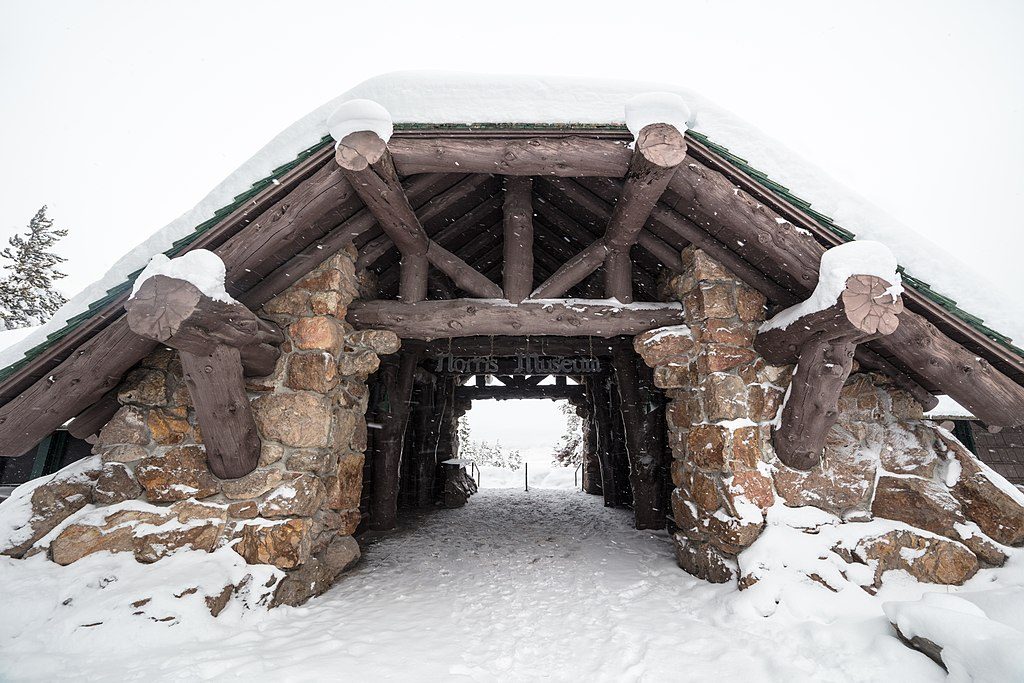
Place · 0.1 mi away
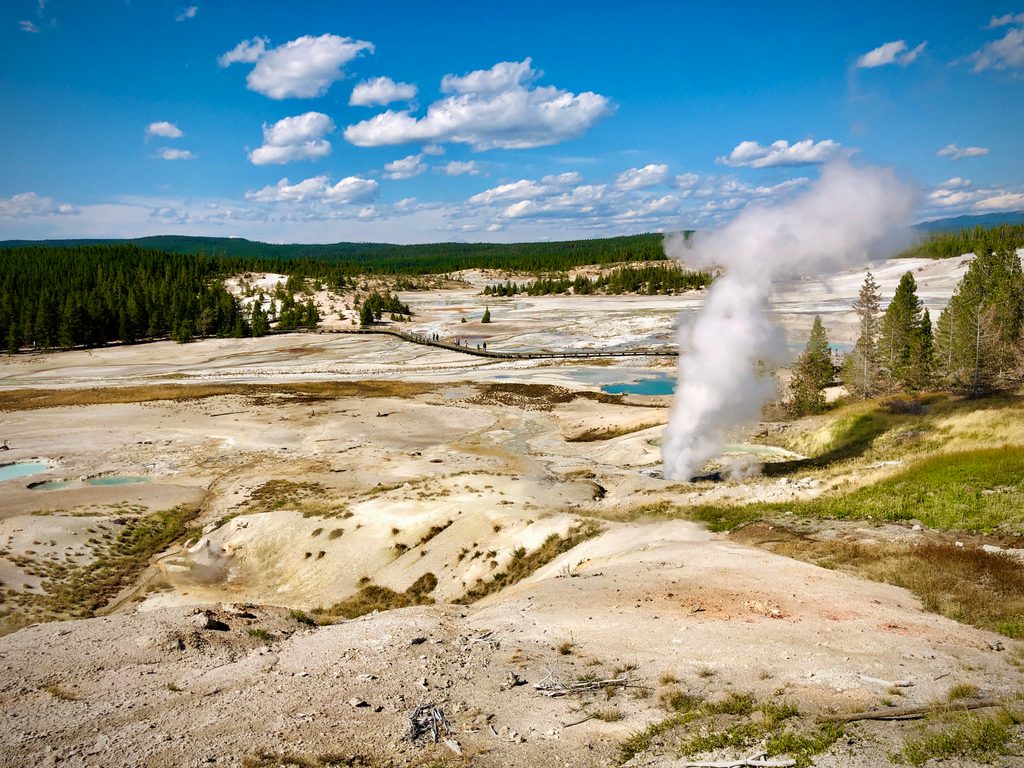
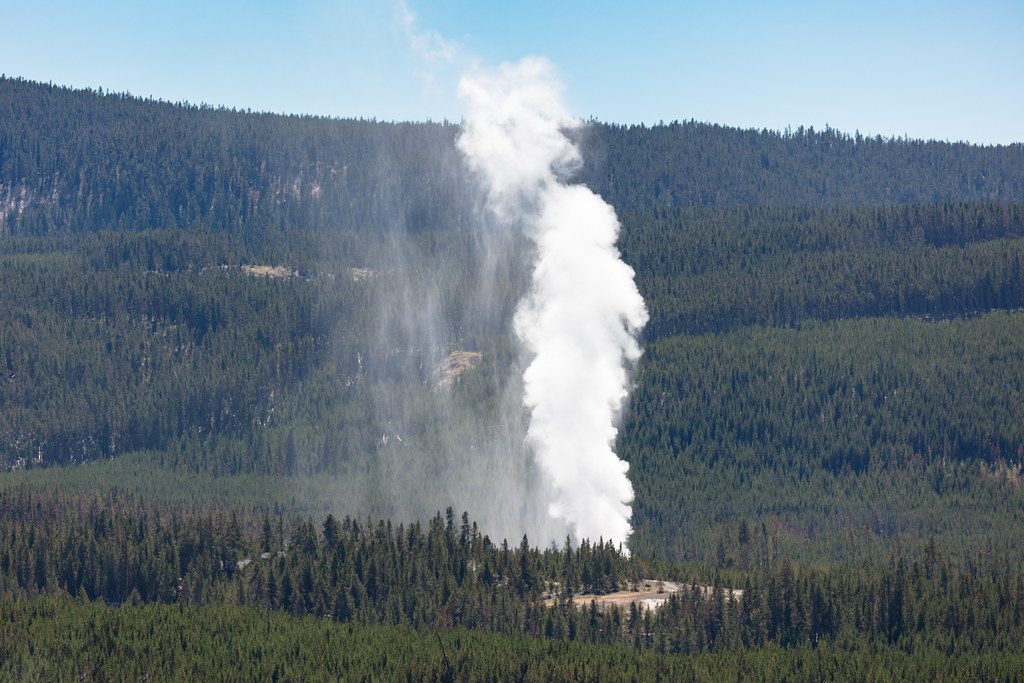
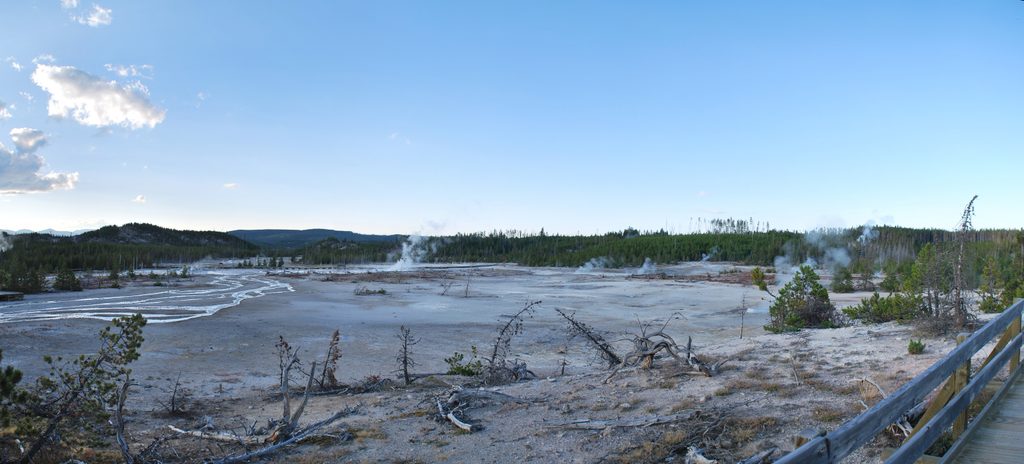
Tucked into the ever-restless Norris Geyser Basin, Ledge Geyser is a forceful, angled spouter that can send water 125 feet into the air and fling spray as far as 220 feet downwind. It’s famously loud—the kind of deep, pressurized roar you feel as much as hear—thanks to steam and hot water squeezing through a narrow opening. It’s the second‑largest geyser in the Norris area and a memorable stop if you catch it in one of its active moods.
Ledge erupts from multiple vents, with a main jet that arches at roughly a 40–45° angle. During a show, secondary vents may join in, tossing water 30–60 feet high. A classic tell: a small vent fills and splashes before the main burst. The headline eruption can go for about 20 minutes and then taper off over the next couple of hours.
Don’t plan your day around it. Ledge is notoriously fickle—periods of dormancy have lasted years, then it has swung to semi‑regular cycles (every 4–6 days in the mid‑1990s, and even ~14‑hour intervals at one point). It went quiet from 1979 to late 1993 and roared back in 2019 after a few years off. If you’re keen, check recent logs from geyser‑activity trackers before you go, but build your visit around the greater Norris experience rather than waiting on a single eruption.
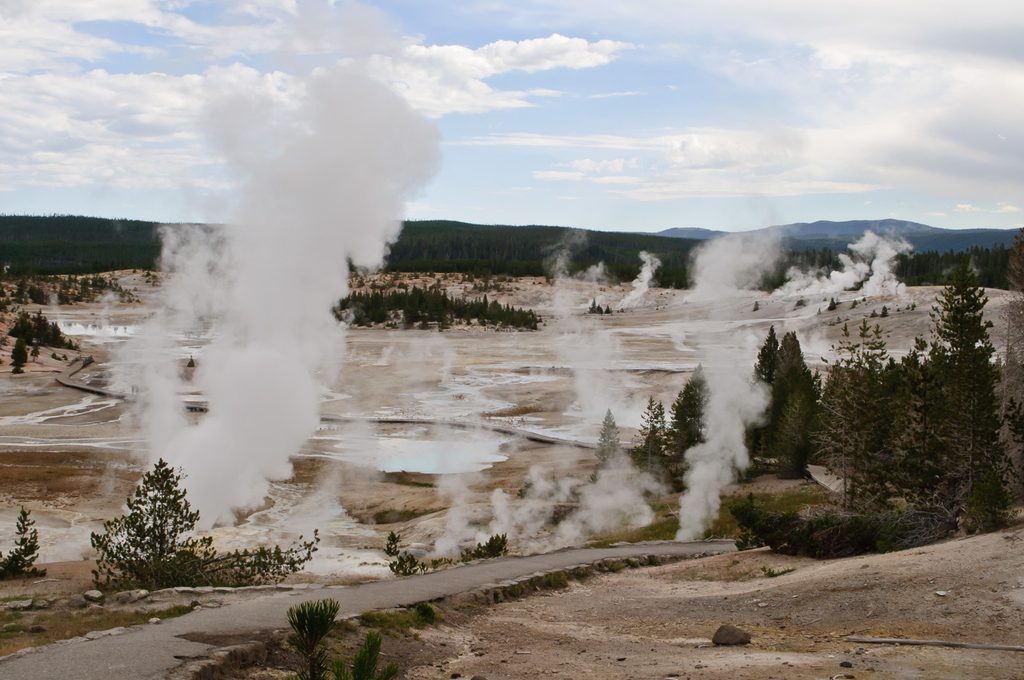
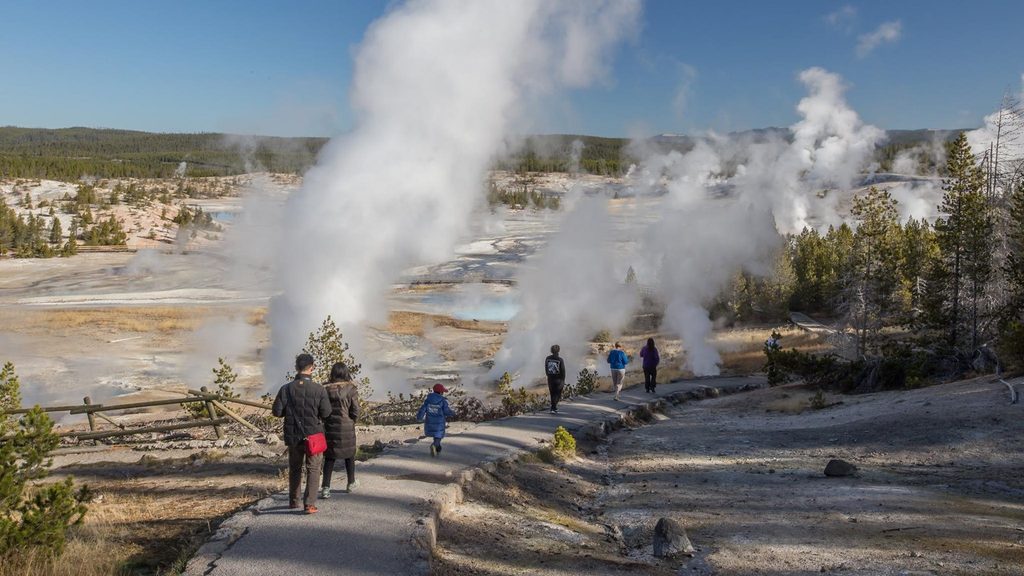
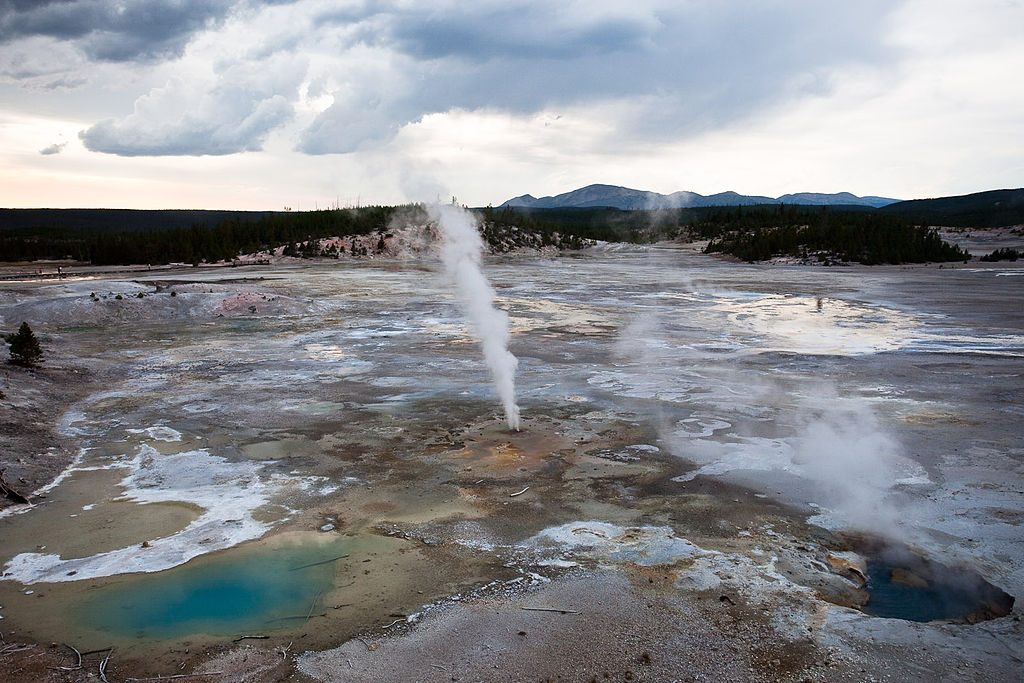
Norris is Yellowstone’s hottest, oldest, and most dynamic basin. Subsurface measurements here have recorded extreme temperatures, and changes in geyser behavior can track with things like seasonal recharge and seismic rumblings. The ground itself has been observed slowly rising on the order of centimeters per year at times. Nearby heavy‑hitters—like the world‑tallest active geyser, Steamboat—underscore just how energetic this neighborhood is.
Bison and other wildlife can and do move through thermal areas. Give them space and right‑of‑way, especially on narrow boardwalks, and be patient if a “bison jam” develops.
The basin is open around the clock, but foot traffic tends to be lighter in the early morning. Crowds can build later in the day, and some evenings—especially on weekends—can get busier. For elbow room, aim for earlier hours; for comfort, also factor in wind direction to keep out of the spray.
Place · 0.1 mi away
Place · 0.1 mi away
Place · 0.1 mi away
Place · 0.1 mi away
Easy · 0.1 mi away
Easy · 0.4 mi away
Easy · 0.7 mi away
Easy · 0.7 mi away

Parkwolf Tour Guide
