
Place · 0 mi away
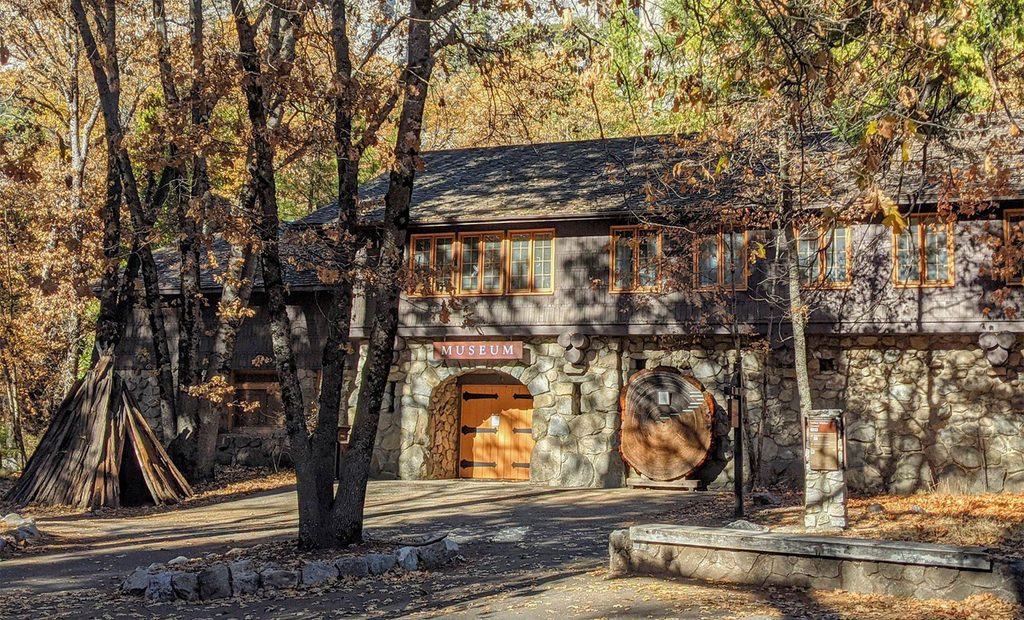
Opened in 1926, this was the first purpose‑built museum in the National Park System, designed by Herbert Maier in the rustic style that set the tone for park architecture nationwide. It’s compact, thoughtful, and a great reset from the hustle of the Valley—more substance than spectacle.
Inside, the Indian Cultural Exhibit anchors the experience with artifacts and stories of Yosemite’s Miwok and Paiute people—think masterful basketry, tools, clothing, photos, and context that grounds the rest of your visit. A gallery hosts changing shows, often photography and art tied to the park.
Just outside the front entrance you can examine a cross‑section of a giant sequoia. Behind the museum, a short, self‑guided walk through the reconstructed Indian Village of Ahwahnee brings traditional structures and plant use into focus. Interpretive rangers are often around to field questions, which elevates the visit.
The Research Library (administered with the museum) focuses on Yosemite’s human and natural history—rare books and pamphlets, early accounts, maps and ephemera, dissertations and unpublished reports, oral histories, and a large historic photo/negative collection. It’s generally open to the public Monday–Thursday, roughly 10 am–4 pm, often with a midday closure; deeper archives access is by appointment.
This is the place in the Valley where the culture, voices, and craft of Yosemite’s first people take center stage. It’s small, yes—but surprisingly rich, and the outdoor village adds dimension you won’t get from overlooks alone.
Place · 0 mi away
Place · 0.1 mi away
Place · 0.1 mi away
Place · 0.1 mi away
Easy · 0.2 mi away
Easy · 0.2 mi away
Easy · 0.5 mi away
Challenging · 0.9 mi away

Parkwolf Tour Guide
