
Place · 2.8 mi away
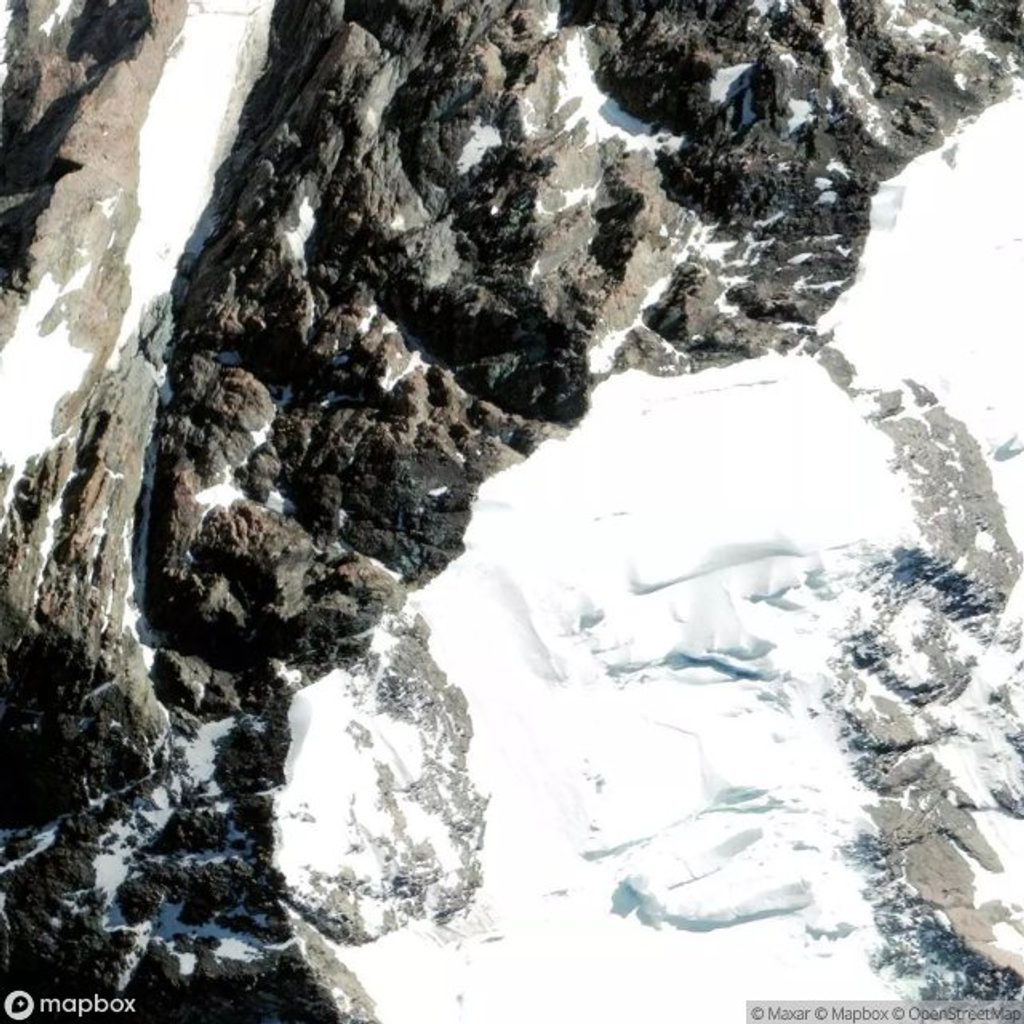
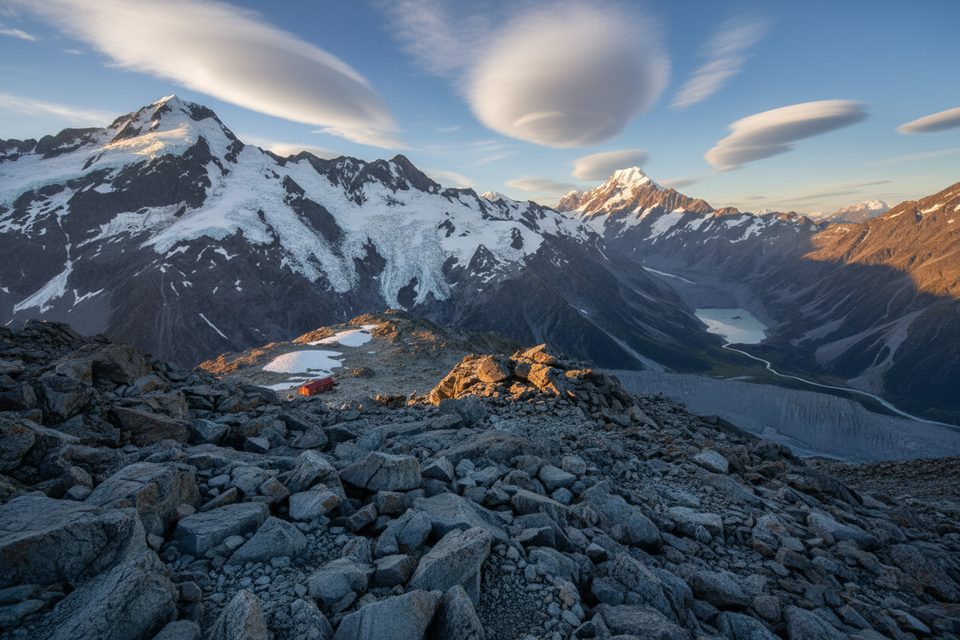
Malte Brun is a serious climber’s peak, rising to roughly 3,199 m above the Tasman Glacier. It’s all about big, exposed ridge climbing and commanding views across the Aoraki massif and the Mackenzie lakes. This is not a hiking destination—think technical mountaineering, complex glacier approaches, and real commitment.
Most guided and independent parties aim for variations of the West Ridge and the North–Northwest Face. Expect a long summit day (often 10–14 hours) from a high bivvy around 2,400 m, with about 800 m of gain from camp and roughly 1,600 m total vertical. A famed knife‑edge section—the Cheval—adds airy, photogenic exposure before the final ridge to the top. Descents commonly retrace the line with multiple abseils.
Teams typically fly onto the upper Tasman Glacier to avoid a punishing moraine slog with heavy loads; from there it’s a multi‑day, self‑supported push with at least two nights in tents or open bivvies. There are no nearby huts on the route—plan to melt snow or treat glacier melt and pack out all waste. Some itineraries may stage a first night at a Tasman Glacier hut, then shift to a high camp for the climb.
Best season is summer when faces are mostly snow‑free—December through April, with January onward often most reliable. You’ll need solid alpine rock and glacier skills: moving efficiently in mountaineering boots (comfortably seconding around US 5.8), competent abseil self‑management, and fitness to carry 8–20 kg over big vertical. Objective hazards in summer are generally low to moderate but include crevasses, rockfall, avalanches, cornices, and whiteouts. Build in spare weather days.
A hut once served this side of the range, but it was closed in 1978 and demolished in 1979. Today there are no hut facilities at Malte Brun—plan to be fully self‑contained.
Around glacier huts and rocky basins you may encounter kea (cheeky alpine parrots) and occasionally rock wren. On ridges you might spot introduced tahr or chamois. Don’t feed wildlife, and secure any food if you pass through hut zones.
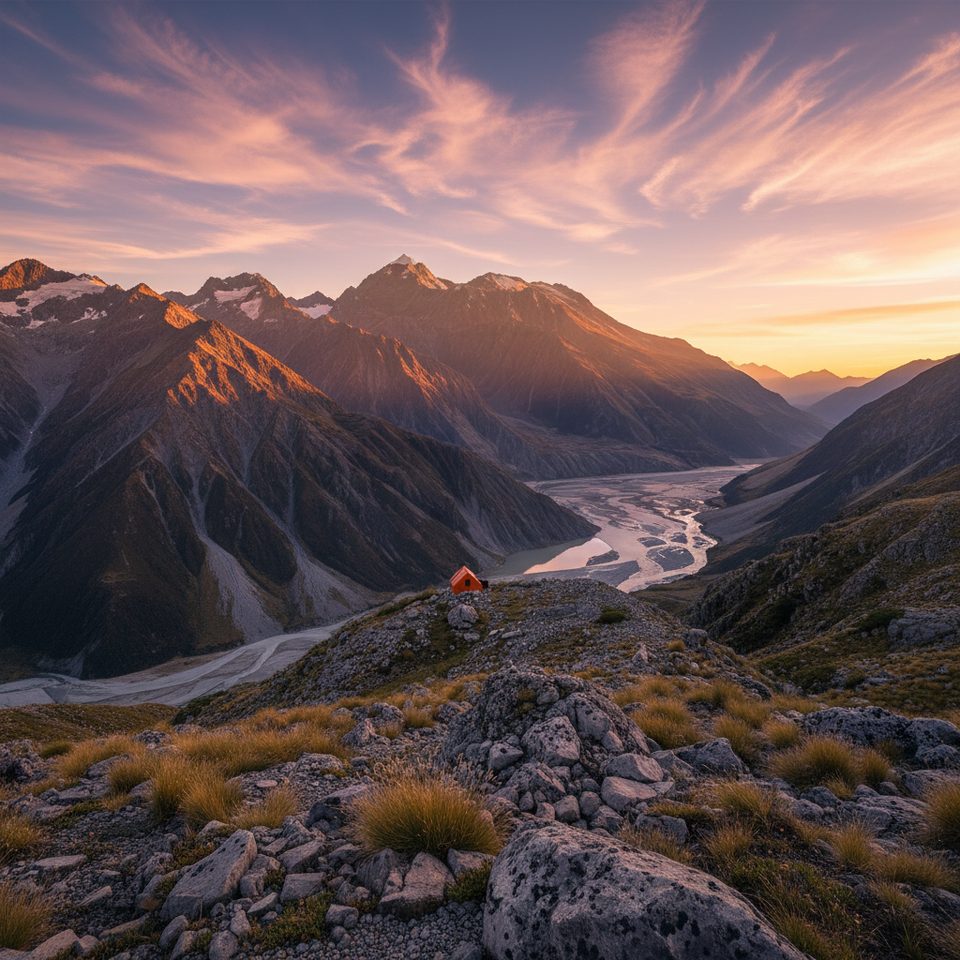
Aim for December–April, with early starts for firm conditions and calmer winds. This is never crowded, but weather rules the schedule—have flexible days. Photographers get the best definition on clear mornings; late‑day light can be superb from high camps when the westering sun rakes the range.
Place · 2.8 mi away
Place · 3.4 mi away
Place · 4.1 mi away
Place · 4.6 mi away
Easy · 11.8 mi away
Easy · 11.8 mi away
Challenging · 15.1 mi away
Challenging · 15.1 mi away

Parkwolf Tour Guide
