
Place
Challenging
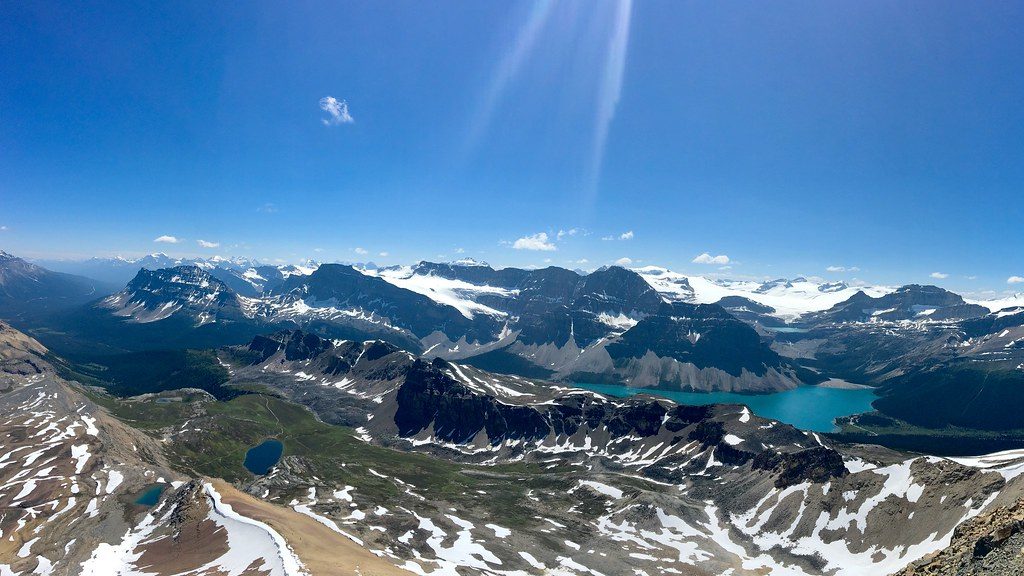
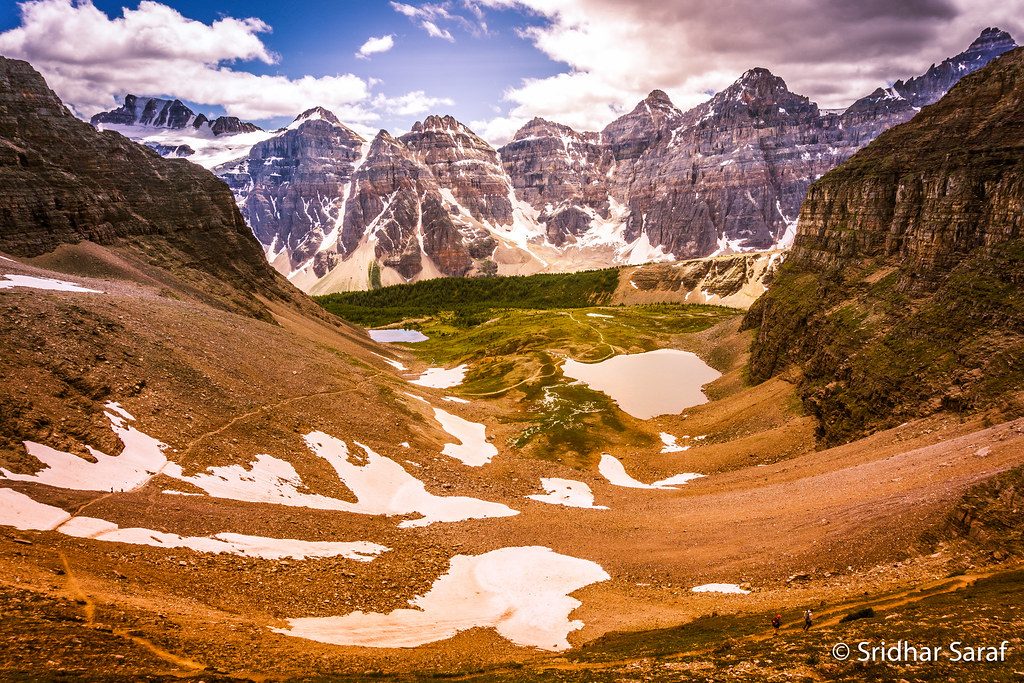
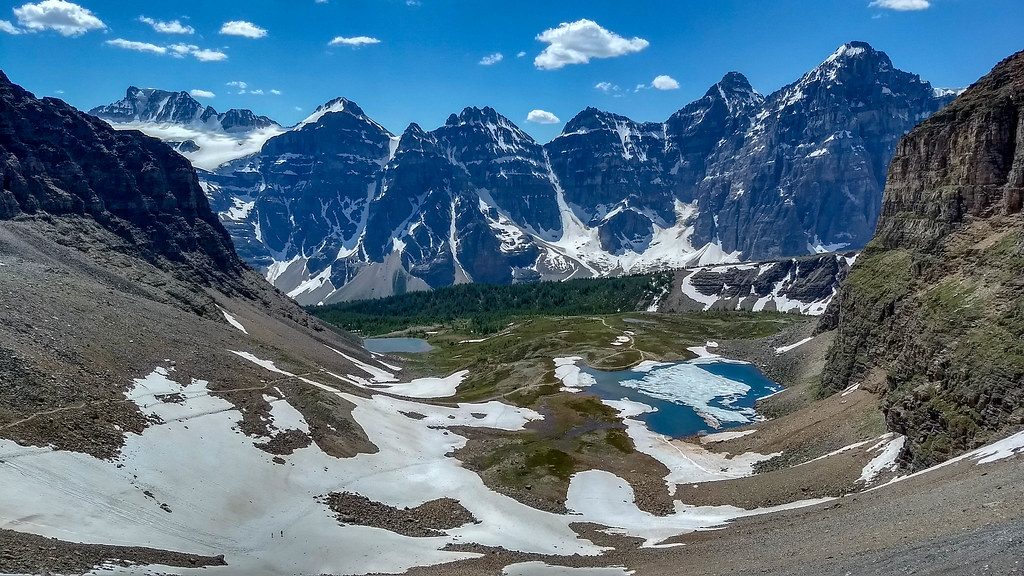
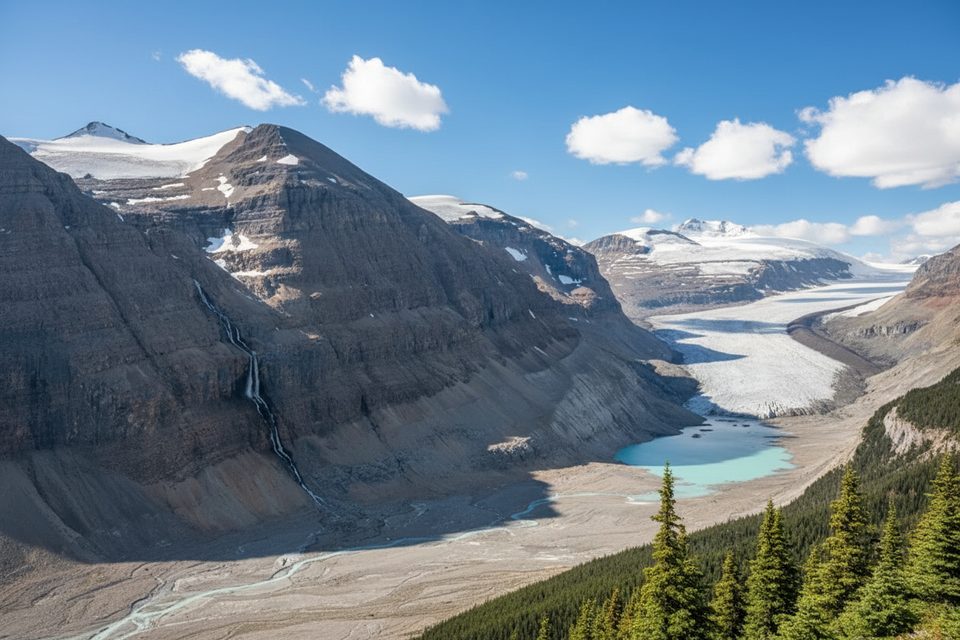
Cirque Peak is a full-value alpine day: lush meadows, a turquoise lake, a high pass, and a true summit with 360° views. It’s widely praised as one of the Parkway’s standout hikes, and on a clear day it delivers big-time—think Peyto Lake, Bow Glacier, and the Wapta Icefields spread out beneath you.
Start from the Helen Lake/Dolomite Pass trailhead on the Icefields Parkway. The well-trodden path climbs through forest to open slopes with early views of Bow Lake and nearby glaciers, then breaks into broad alpine meadows that explode with wildflowers in August. Around 6 km in, Helen Lake makes a perfect rest stop.
From the lake, continue toward Dolomite Pass. Past the pass, the maintained trail trends east while Cirque Peak sits almost due north. Expect the path to fade—this is open alpine with no single marked line. Cross the rocky plain and gain the south ridge, picking a reasonable line. The final mile is steep, loose scree with a short, easy scramble near the top. The summit (2,993 m) is dramatic, with airy drop-offs and huge views. Total is roughly 16.3 km (10.1 miles) round-trip with about 1,076 m (3,531 ft) of cumulative gain.
This is a hard day for fit hikers: long distance, big gain, and loose footing above the pass. It’s a popular route in good weather—an early start helps with both crowds and parking. Up to Helen Lake the trail is obvious; above, basic route-finding helps. Trekking poles shine on the scree.
The peak gets its name from cirques carved by ancient glaciers. You’re walking on layered sedimentary rocks formed in shallow seas and later shoved east during the Laramide orogeny—hence the craggy “Canadian Dolomites” skyline you’ll be staring at.
Prime season is July through October when the upper slopes melt out and meadows are at their best (mid-late summer for flowers). Early or late in the season, snow and ice can turn the final slope into no-go territory—be ready to turn back if conditions sour. Plan 6–8 hours depending on fitness and conditions.
Bottom line: if you’re up for a strenuous, slightly scrambly finish, this is one of the Parkway’s most rewarding summit days.
Park at the Helen Lake/Dolomite Pass trailhead on the Icefields Parkway; permit required and the medium-sized lot fills early.
Steep, loose scree on the final ascent; exposure near the summit; route is less defined past Dolomite Pass; rapid weather changes; snow/ice early and late season can make the upper slope hazardous—turn back if conditions deteriorate.
Place
Place
Place
Place
Easy
Challenging
Challenging
Moderate

Parkwolf Tour Guide
