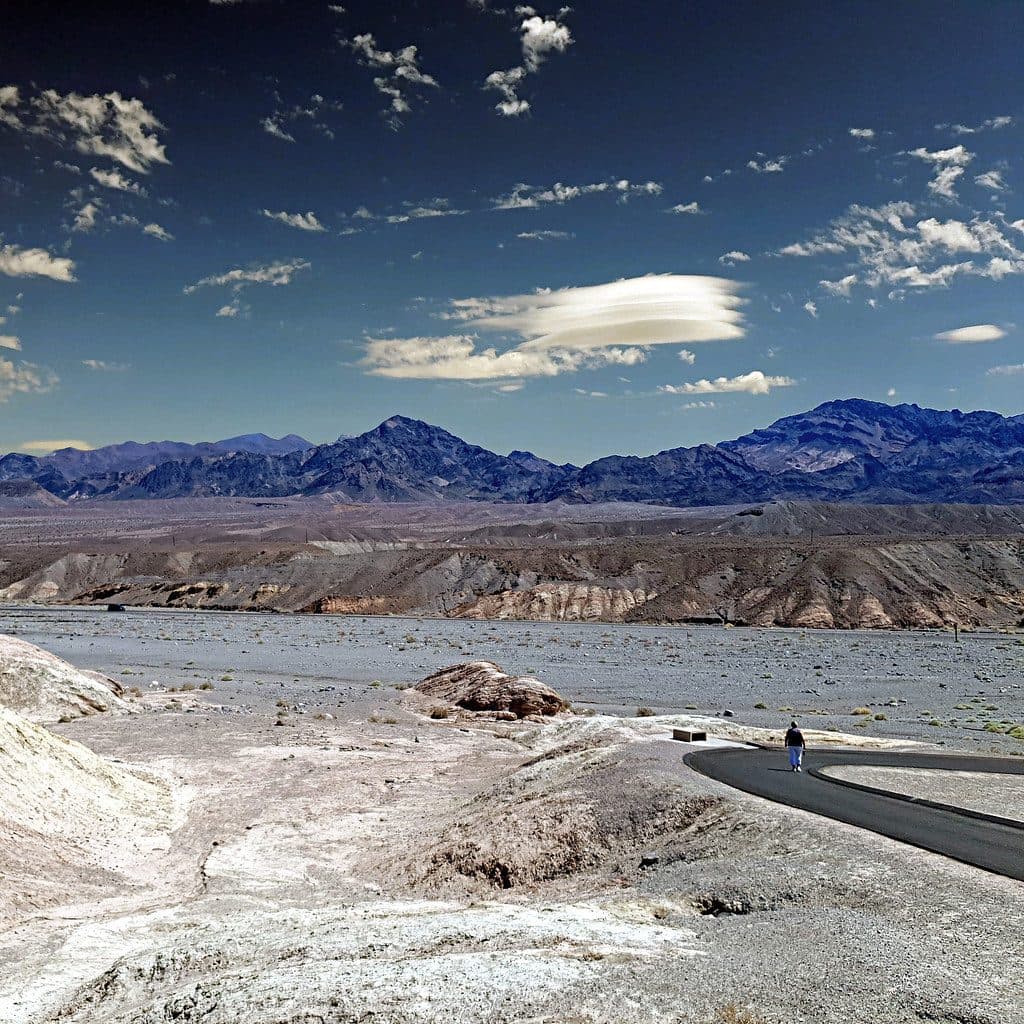
Best time to visit
- Fall through spring is most comfortable. Summer heat makes midday stops punishing.
- Go early or late in the day for softer light, cooler temps, and fewer people. Weekdays are a touch quieter, but this is a quick stop anytime.

Sight · Death Valley National Park
Compact ruins that tell the 20-mule team borax story
Overview
A compact historic site just north of Furnace Creek, Harmony Borax Works distills Death Valley’s mining era into an easy stop. The remains of the 1880s processing plant and well-written panels make the 20‑mule team era feel tangible without demanding much time or effort.
This was the first successful borax operation in the valley (built 1882–1883), a catalyst for opening the region to commercial development. It’s listed on the National Register of Historic Places and highlights the essential role Chinese laborers played in gathering “cottonball” ore and keeping the plant running.
 Parkwolf’s verdictWhy It Matters
Map
Local know-how
Use the Furnace Creek Visitor Center for restrooms and water before you stop.
Bring a hat and sunscreen—there’s virtually no shade on the loop.
Plan 15–30 minutes; read the panels to get the most out of the stop.
Early morning or late afternoon offers better light and cooler temps.
Combine this with nearby Furnace Creek sights to minimize driving back and forth.
Plan your stop

The highest, rockiest slopes around here are a summer buffet for grizzly bears.
Death Valley Tour Guide
Parkwolf is a GPS audio tour guide for Death Valley National Park. As you drive, it chimes in with what’s ahead: hidden gems, upcoming stops, history, geology, and wildlife, right through your car’s speakers.
See the Death Valley audio tourRecorded for this place
Harmony Borax Works: The 20-Mule Team Story“The ruins coming into view are the Harmony Borax Works. This is a really quick but important stop if you want to understand the whole 20-mule team story.”
Plays as you drive up to Harmony Borax Works in the Parkwolf Death Valley Tour Guide.
More stories near here in the app
“Fantastic app with many points of information… It’s great to just turn on while you’re driving and it gives you an audio tour of the national Park. We love it!!!!”


Guide
Expect a very short loop (about 0.4 miles) on hard-packed gravel around the ruins. It’s flat, easy, and designed for a quick, self-guided visit. Most people spend 15–30 minutes here.
At its peak, Harmony produced roughly three tons of borax per day before shutting down in 1888. The site’s story ties directly to the iconic 20‑mule team wagons and to the broader Pacific Coast Borax legacy.
This is not a wildlife stop. You might catch a lizard, a raven, or a passing coyote, but the attraction here is history, not critters.
Side‑light at sunrise or late afternoon brings out textures in the brickwork and salt‑washed equipment. Take a moment to frame the ruins with the distant ranges for context.
Yes—especially if you’re near Furnace Creek. It’s a fast, enlightening look at the valley’s human story and a perfect add‑on between bigger scenic stops.
Wildlife
 71 sightingsBighorn SheepMost seen around 6 PMSighting map
 101 sightingsDesert TortoiseMost seen around 8 AMSighting map
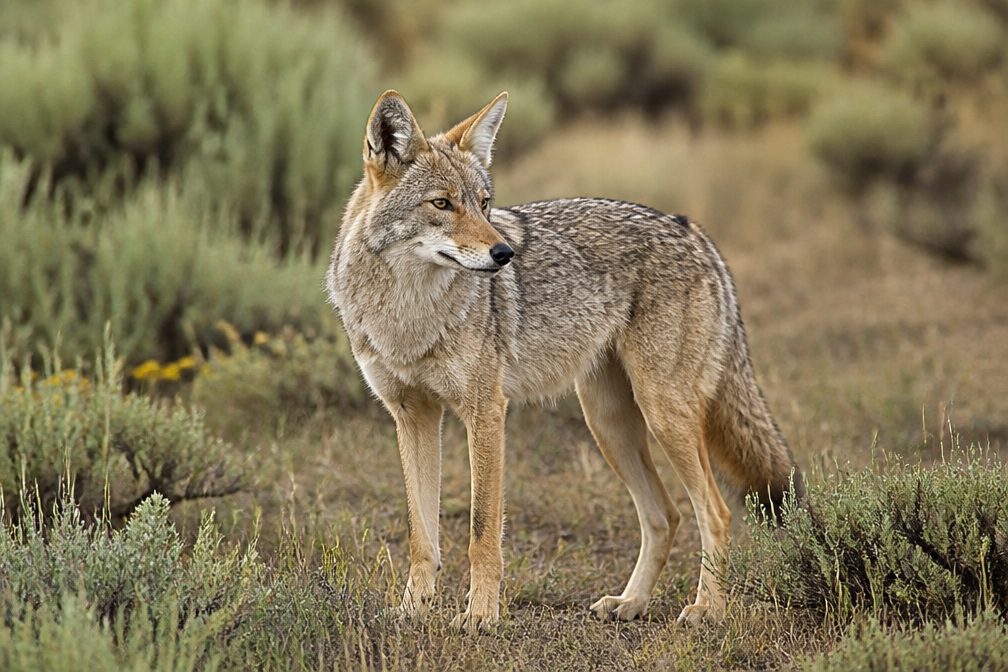 458 sightingsCoyoteMost seen around 6 PMSighting map
 28 sightingsFeral BurroMost seen around 5 PMSighting map
 30 sightingsMule DeerMost seen around 7 PMSighting map
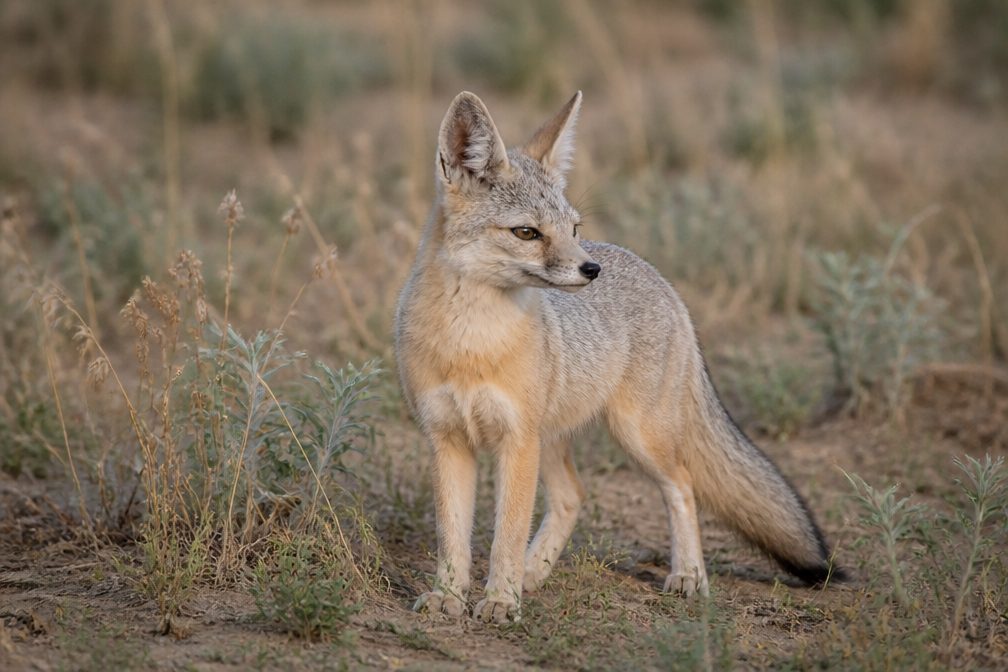 62 sightingsKit FoxMost seen around 7 PMSighting map
Sighting maps show where each species has been reported across Death Valley. Wildlife moves, so no sighting is guaranteed.
Keep exploring
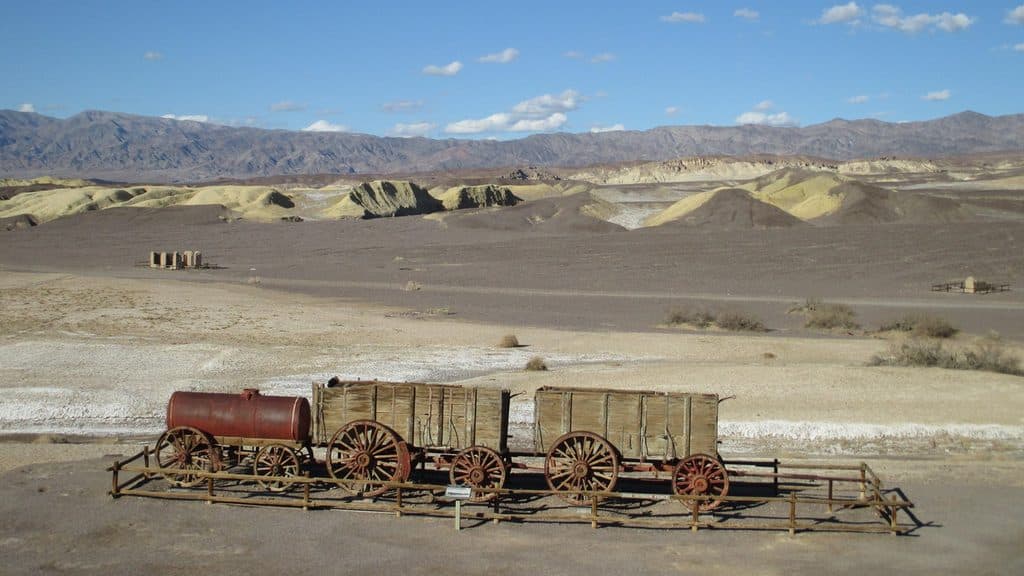 EasyHarmony Borax Works Interpretive Trail0.4 mi · 30 min · At the trailheadA short paved loop through the ruins and stories of Death Valley’s Harmony Borax Works.
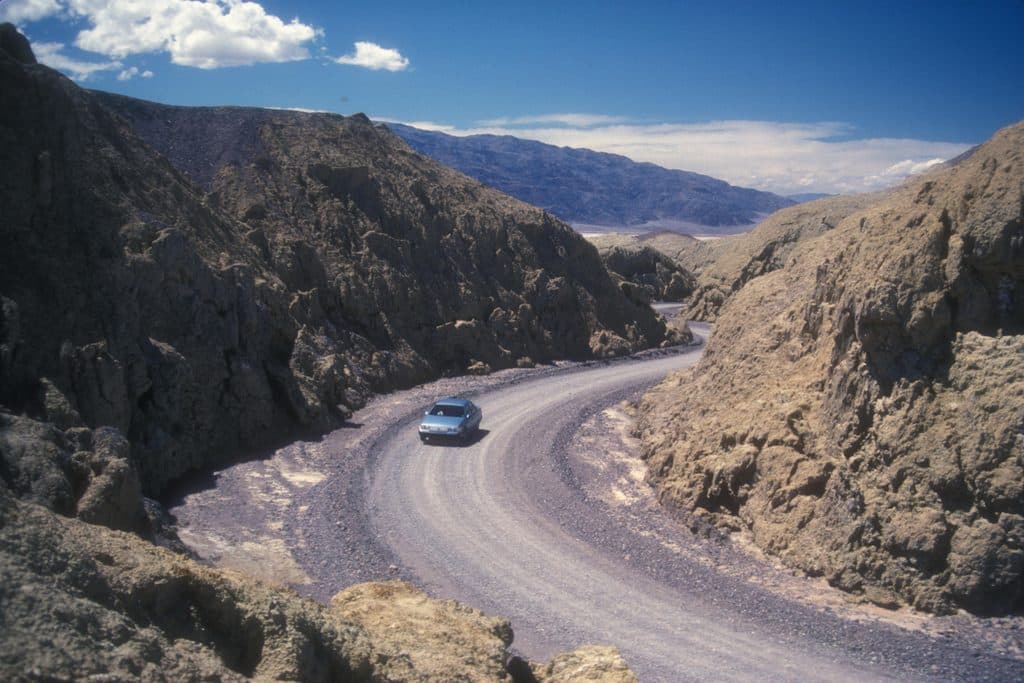 EasyMustard Canyon Loop1.3 mi · 30 min · 0.2 mi awayOne-way drive through mustard-colored badlands from Harmony Borax Works to CA-190
 ModerateGolden Canyon to Red Cathedral3 mi · 1.8 hr · 4.4 mi awayA 3-mile Golden Canyon out-and-back to the red walls of Red Cathedral.
 ModerateGolden Canyon and Gower Gulch Loop4.3 mi · 2.5 hr · 4.4 mi awayModerate badlands loop linking Golden Canyon and Gower Gulch
 Sight · 1.1 mi awayBlink24/7 Level 2 EV charger near Furnace Creek
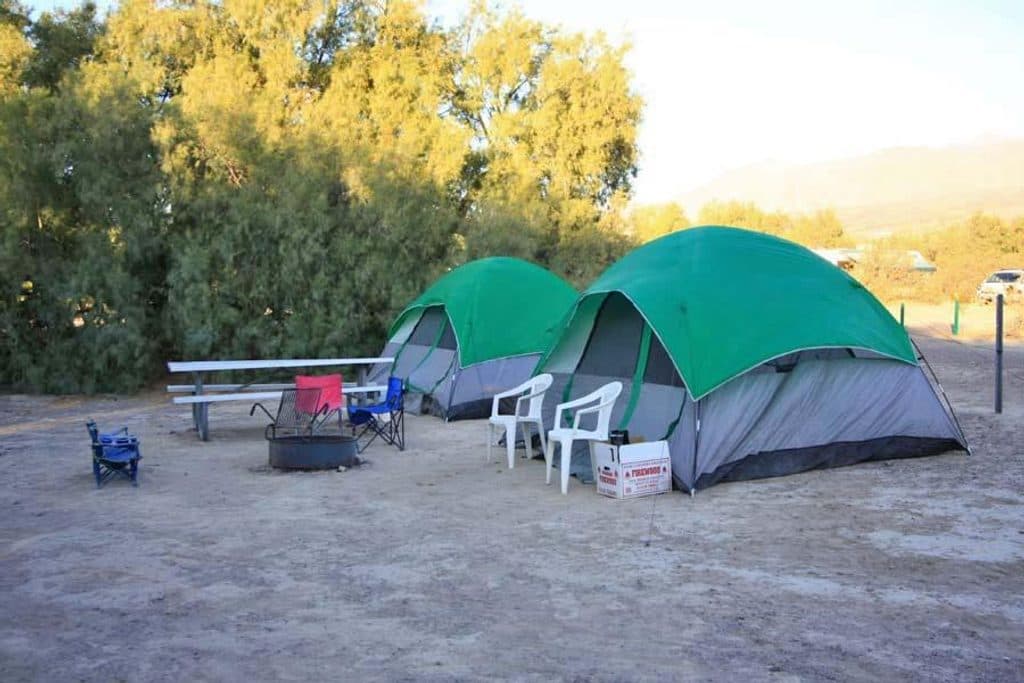 Campground · 1.2 mi awayFurnace Creek CampgroundCentral, reservable base camp with hookups at -196 feet
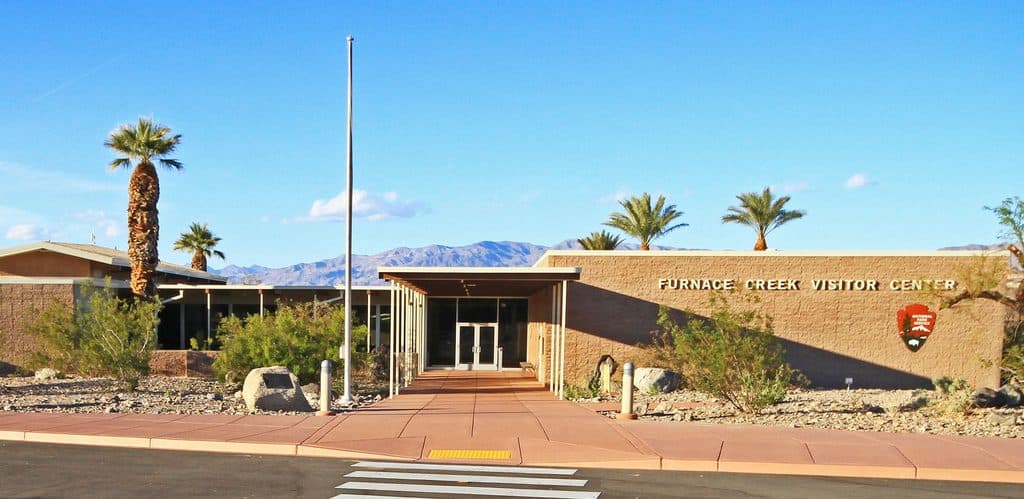 Visitor center · 1.4 mi awayDeath Valley National Park Visitor CenterHub for rangers, exhibits, AC, and the giant thermometer
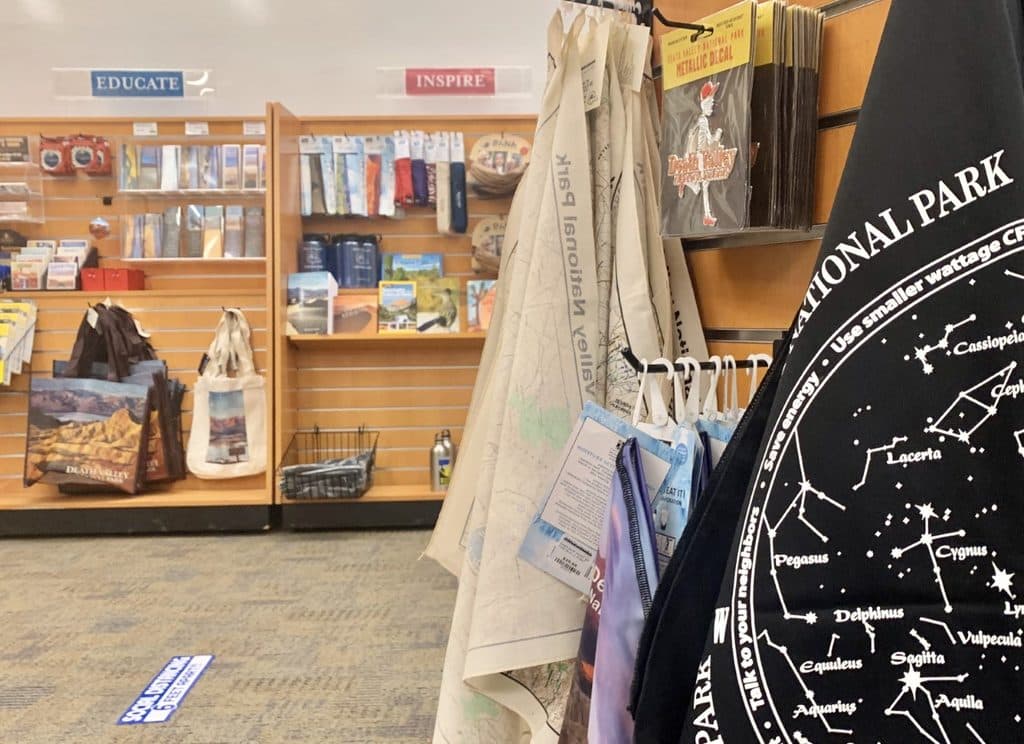 Store · 1.4 mi awayDeath Valley Natural History Association Park StoreOfficial shop for DEVA books and souvenirs that fund the park
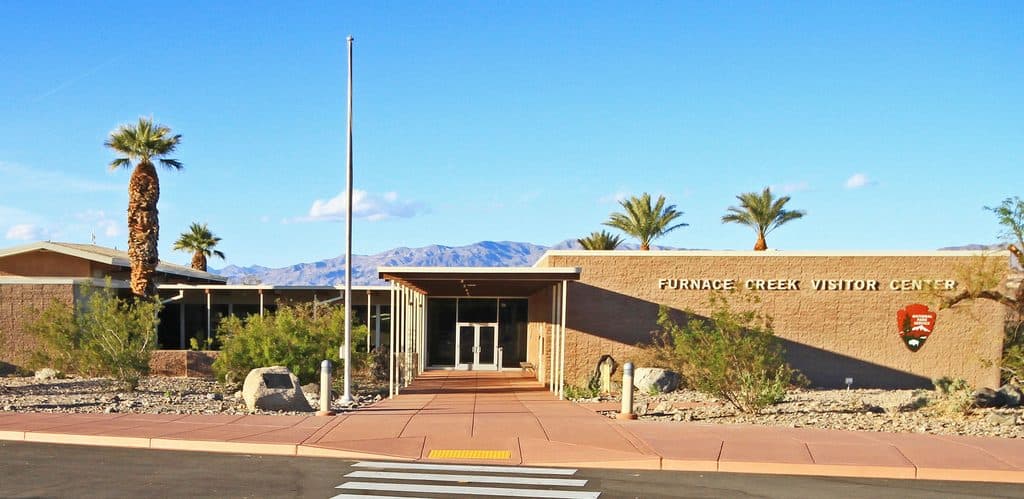 Sight · 1.4 mi awayFurnace Creek Visitor Center SignQuick photo stop with the famous giant thermometer out front
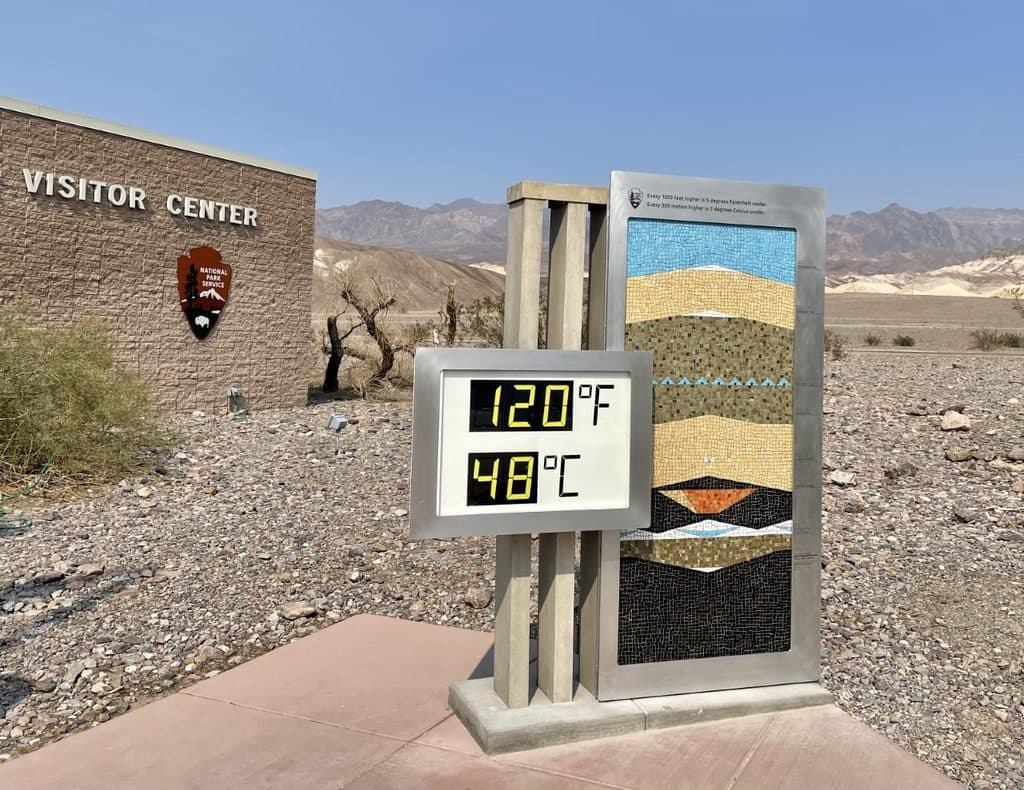 Sight · 1.4 mi awayFurnace Creek ThermometerClassic photo-op thermometer for extreme heat bragging rights
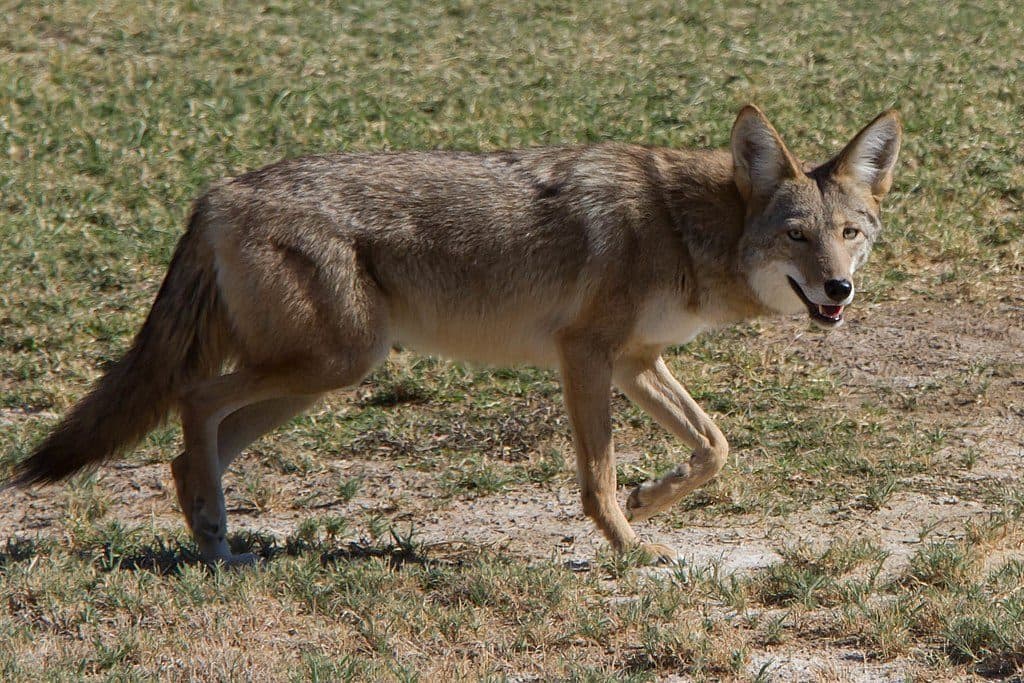 Sight · 1.4 mi awayThe Furnace Creek Golf Course at Death ValleyAn oasis round at the world’s lowest-elevation golf course
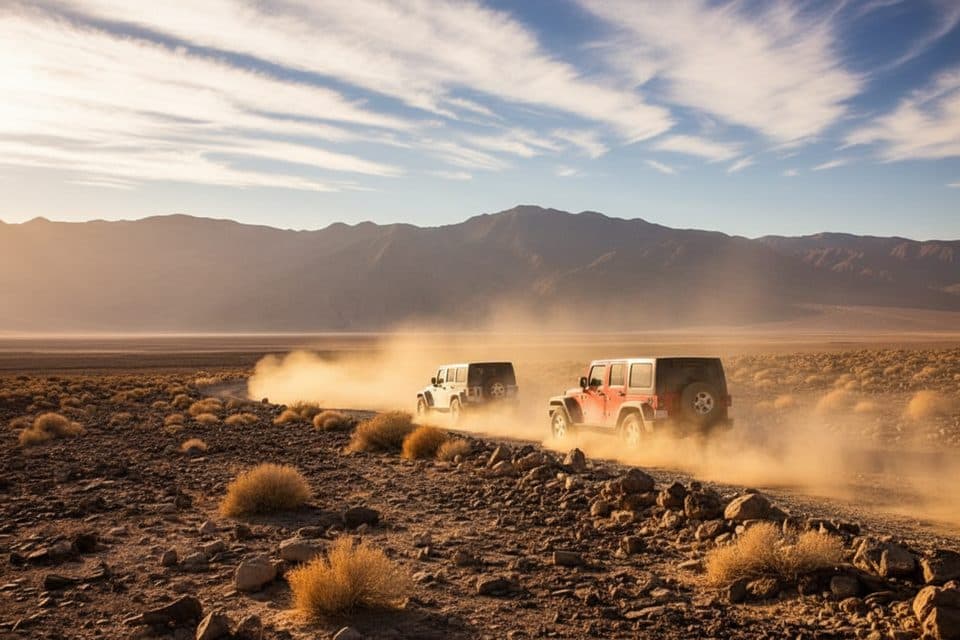 Store · 1.5 mi awayFarrabee's Jeep RentalsJeep rentals and tours to reach the park’s remote backroads
Parkwolf’s Death Valley ranking
The audio tour guide for the drive, plus offline maps, trails, and wildlife heatmaps for when the signal drops.