Overview
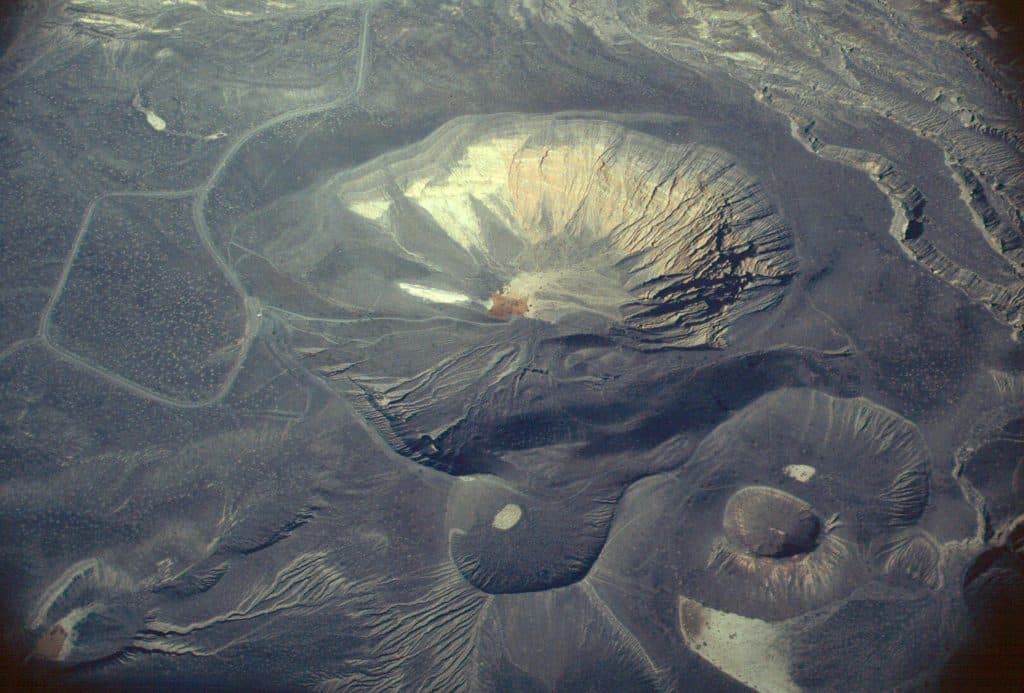
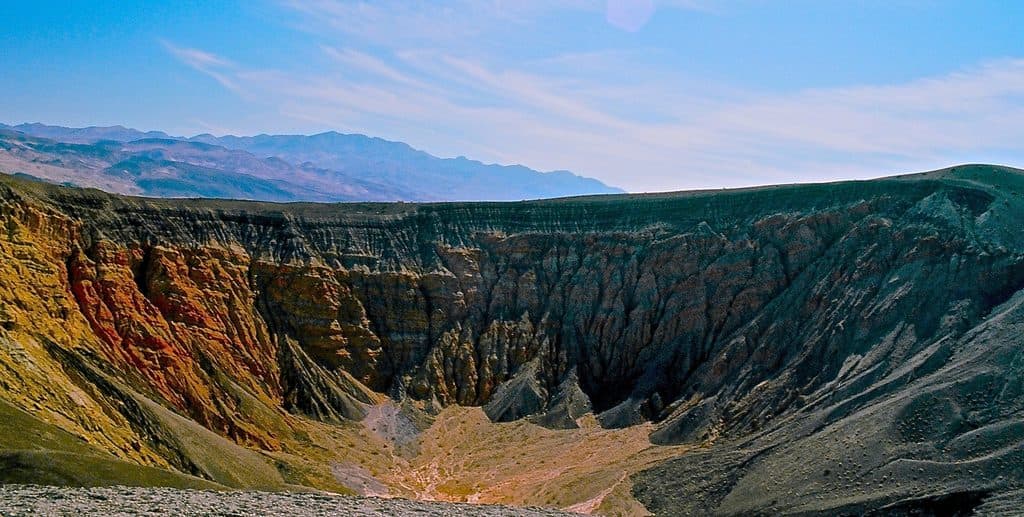
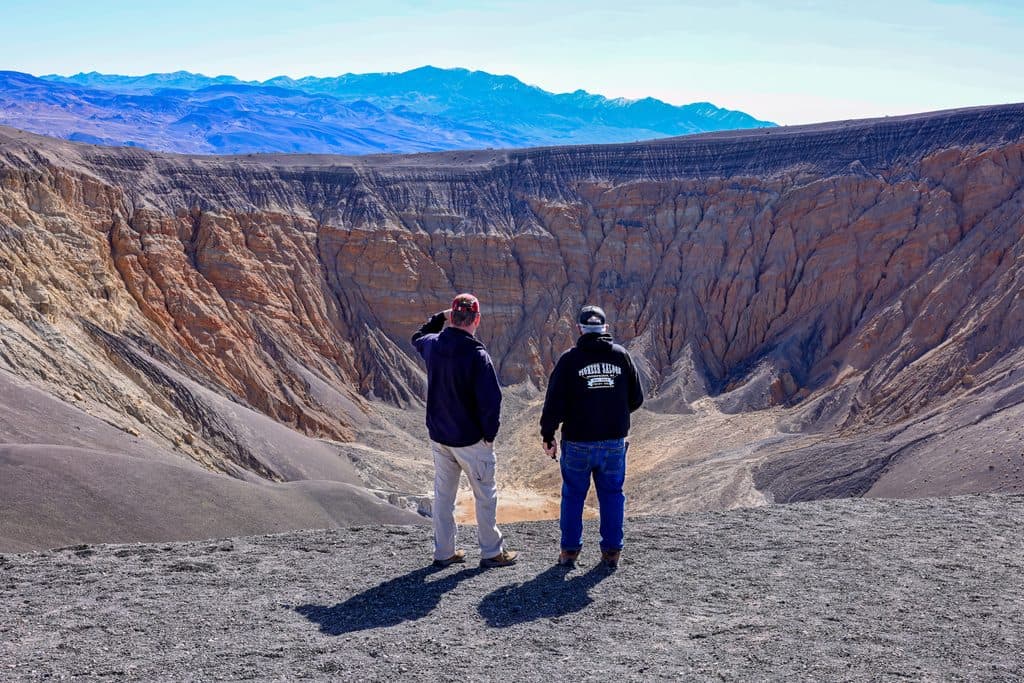
A half‑mile‑wide, 500–777‑foot‑deep volcanic blast crater, Ubehebe is the dramatic capstone of a whole field of explosion craters in the park’s far north. It formed about 2,100 years ago when magma met groundwater and detonated—a phreatomagmatic event you can literally read in the colorful stripes of its walls.
What You’ll See
- The main bowl’s sheer, banded walls in orange, brown, and black cinders.
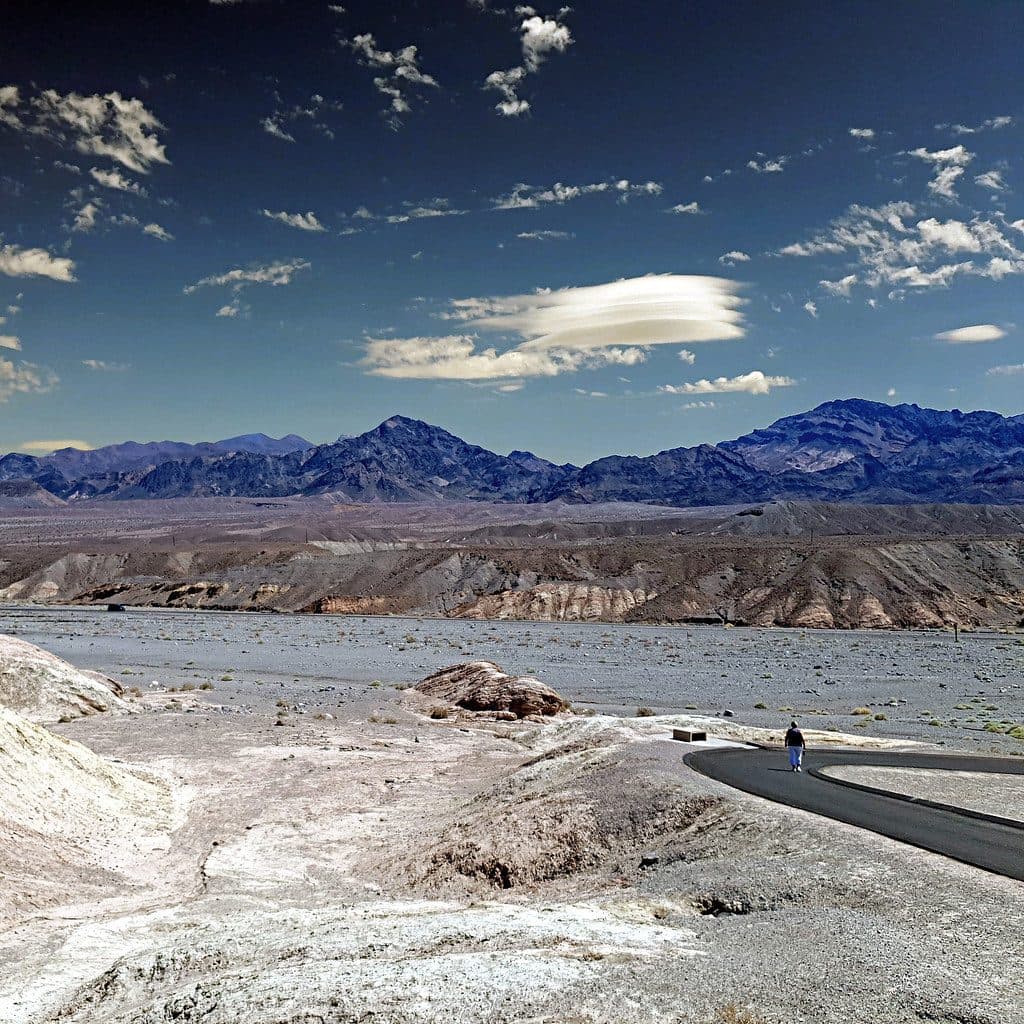
- A stark, otherworldly cinder landscape with expansive views from the rim.
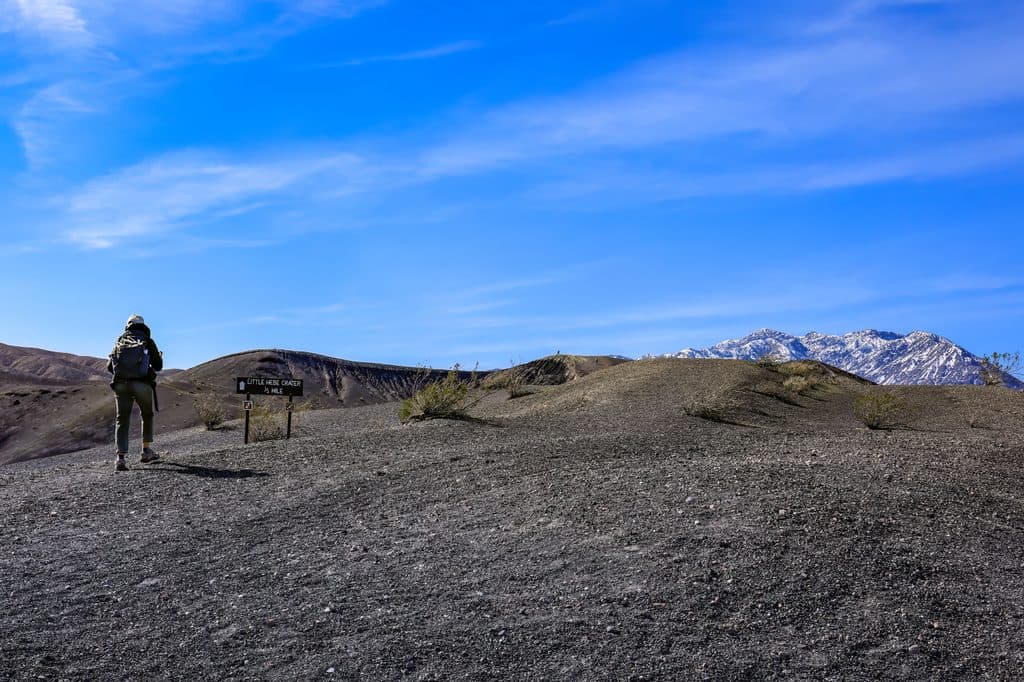
- Neighboring craters on the rim walk, including younger Little Hebe.
Hiking It
- The classic outing is the rim loop (about 1.5 miles, moderate) with short, steep bits and loose volcanic gravel that keeps you honest.
- You can drop to the crater floor on a steep spur—fun going down, a grind coming back up on marbles.
- From the main sign, the rim path also reaches Little Hebe and passes several smaller craters, making a compact, varied hike.
Conditions and Safety
- It’s windy here—often very windy—so secure hats, protect your eyes, and stay well back from steep, unstable edges.
- The footing is loose; expect “one step forward, half a step back” on climbs.
- Summer heat is no joke. Save strenuous efforts for cooler parts of the day.
Cultural Note
This landscape is significant to the Timbisha Shoshone people—treat the area with care and respect.
Essentials (Services and Logistics)
- There’s a parking lot right on the rim that also serves as the main viewpoint and trailhead.
- No services on site: no restrooms, water, food, or shade. The nearest restrooms are at Grapevine Ranger Station, roughly 6 miles away.
- Plan roughly an hour of driving from Furnace Creek; allow 1–2 hours here if doing the rim and a side trip to Little Hebe.
Best Time to Visit
- Early morning or late afternoon gives softer light that pops the crater’s layers and cooler temps for hiking.
- Crowds are lighter than the park’s central sights, but the small lot can feel busy in peak season—earlier is better.
- Wind is common year‑round; calmer windows are more likely near sunrise and sunset.

Wildlife
This is a geology‑first stop. You might spot birds or small reptiles, but wildlife viewing is limited in this exposed, cindery terrain.