Overview
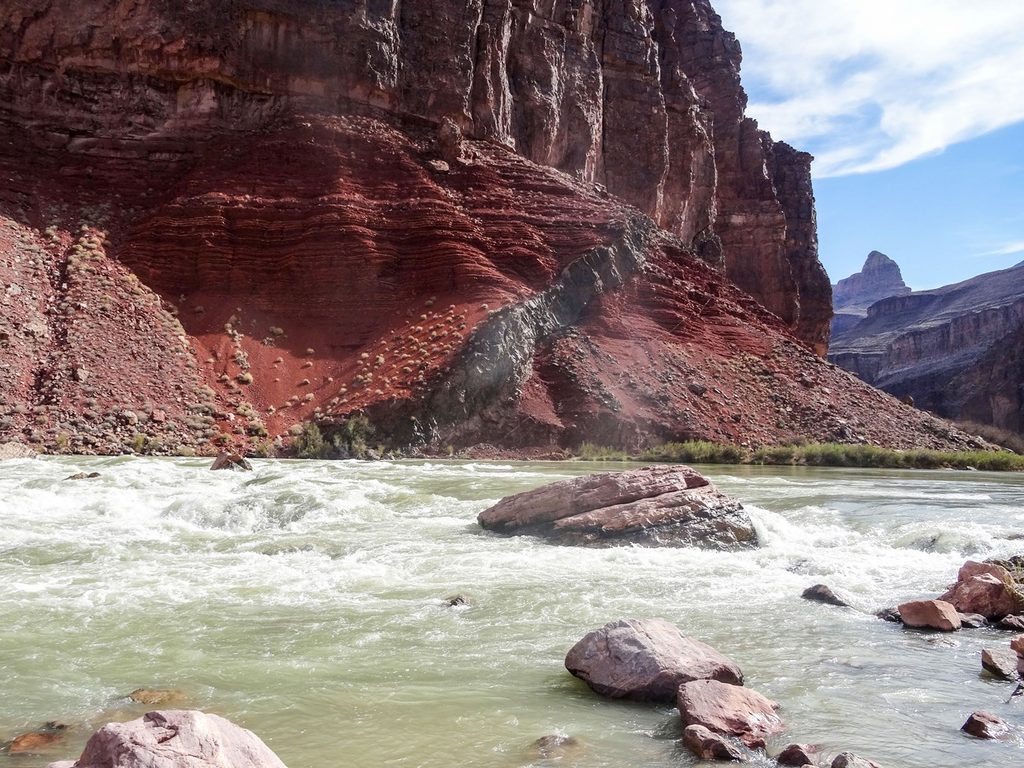
Hance Rapids is the Grand Canyon’s first true gauntlet on a typical river run—long, powerful, and famously technical. Tucked deep in the Inner Gorge near the mouth of Red Canyon, it twists left through a boulder-choked channel and drops roughly 30 feet over about half a mile. Expect guides and private boaters alike to pull over and scout; this one demands a plan.
What makes it stand out
- Difficulty and length: Rated Class 7–8 on the Grand Canyon scale (roughly Class IV–V), Hance is both long and unforgiving, with multiple holes and huge boulders, including a right-side maze nicknamed the “Land of the Giants.”
- Signature look: A thick, black basalt dike slashes across the cliffs above the rapid—an unmistakable landmark while you’re scouting and a stark visual against the colorful canyon walls.
How to experience it
- From the river: Standard practice is to stop and scout from river right before committing. There are multiple lines and timing matters—this is not a “down the middle” kind of rapid.
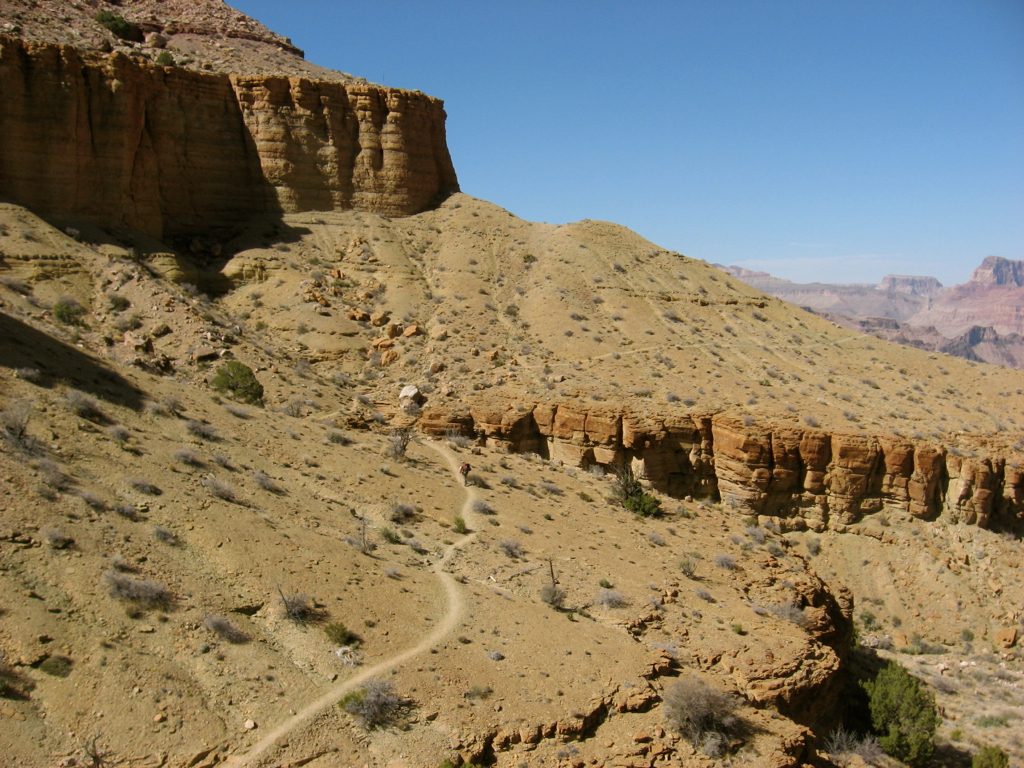
- From land (advanced hikers): The New Hance (Red Canyon) Trail drops to the river near the rapid. It’s one of the park’s hardest rim-to-river routes—steep, rugged, poorly marked, and waterless until the Colorado.
- Photography: The river-right scouting perch gives you action plus that dramatic basalt stripe overhead.
Geology and setting
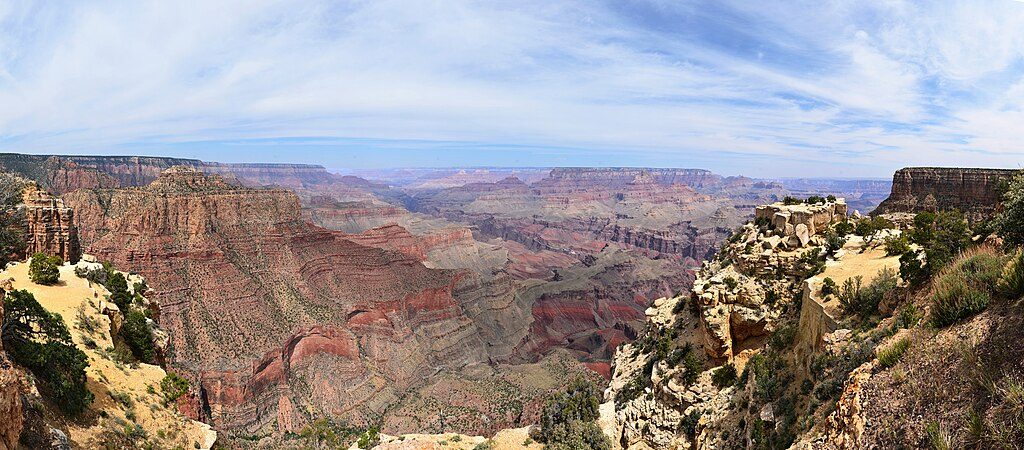
Hance formed where debris from Red Canyon constricted the Colorado River as it slices into the resistant basement rocks of the Granite Gorge. The basalt dike above the rapid is a bold visual cue of the canyon’s complex volcanic history intruding through older layers.
Wildlife
No species are unique to this spot, but typical river-corridor wildlife includes desert bighorn sheep, lizards, and birds like canyon wrens and peregrine falcons; occasional river otter sightings are mentioned in trip accounts.
Logistics and safety
- Access: By raft/kayak on permitted river trips or by the demanding New Hance Trail. There are no developed facilities at the rapid—no restrooms, no water taps, no signage.
- Water and camping: The Colorado River is the only reliable water source (treat it). Any camping is primitive as part of permitted river itineraries; there’s no designated campground here.
- Hazards: Flips and swims are common. Secure all gear and travel with proper rescue equipment and experience.
Best time to visit
- Season and hours: Year-round, with no set hours—this is wilderness.
- Crowds: Minimal due to remoteness; most boaters stop briefly to scout and move on.
- Photography: Plan timing and shooting angles from the scouting overlook; specialized guides note best seasons and light for this spot.