
Place · 2.1 mi away
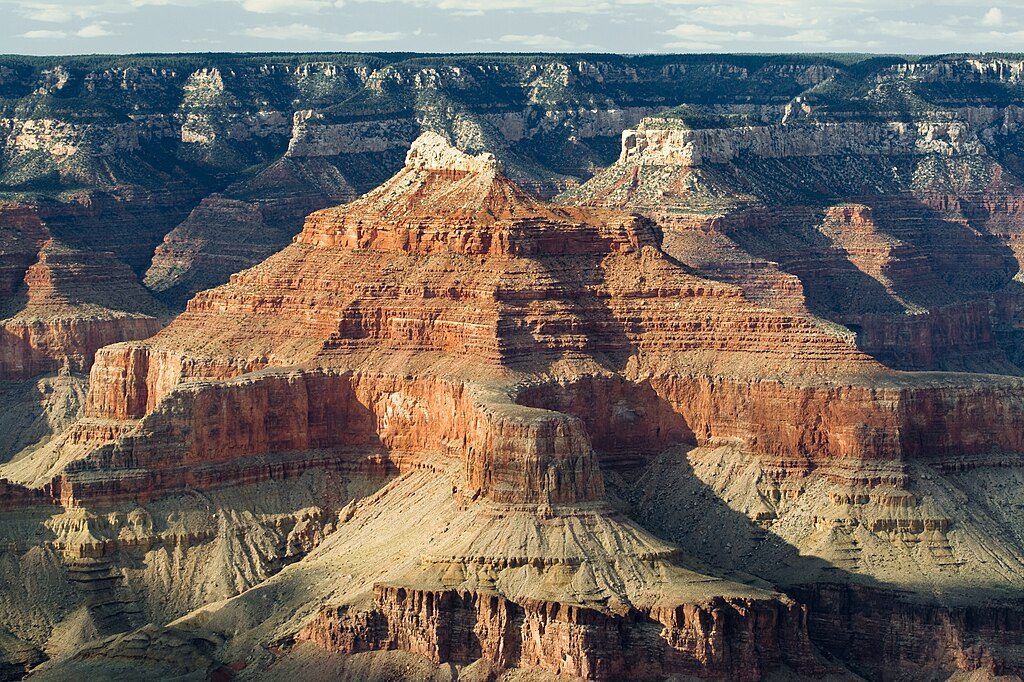
Isis Temple is a prominent inner‑canyon butte with an elevation around 7,006–7,012 feet. It sits opposite the South Rim’s main developed area and dominates the skyline from multiple viewpoints. The formation’s blocky, temple‑like silhouette has made it a favorite subject for photographers—widely depicted and easily recognized—yet it remains a true backcountry objective rather than a casual walk‑up.
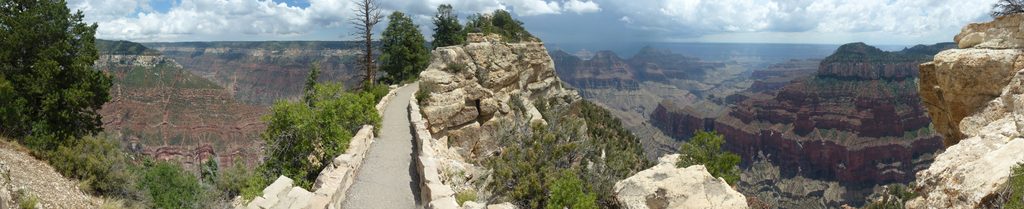
From the rim, you’re looking at a cliff‑forming cap of light Coconino Sandstone perched over the colorful steps of the Supai Group and Redwall Limestone below. From within the canyon, the surrounding layers include Tapeats Sandstone and vividly colored Hakatai Shale, with neighboring Cheops Pyramid part of the same uplifted fault block. Expect expansive views toward Bright Angel Canyon and, from certain angles, the Phantom Creek drainage.
Isis Temple stands out when viewed from the South Rim near the Visitor Center area. It’s also visible from Bright Angel Canyon, and from the west/northwest it can be seen from vantage points above the Phantom Creek drainage. If you’re here for photography, those perspectives showcase its isolated, temple‑like form.
There is no maintained trail to the summit. Approaches are long, brushy, and complex, typically involving off‑trail travel, route‑finding, and technical scrambling or climbing (Class 4–5th‑class). Most parties start from inner‑canyon corridors (e.g., via Bright Angel Canyon/Phantom Ranch area) before tackling steep sandstone bands and intricate gullies. Rescue here is difficult—this is an expert outing only.
The butte’s resistant Coconino Sandstone cap is what creates those sheer, pale cliffs. Below, softer units form stepped slopes, and the broader block—including neighboring Cheops Pyramid—has been uplifted, exposing a colorful cross‑section of Grand Canyon’s classic layers.
In this quieter corner of the inner canyon, lucky observers may encounter mule deer, bighorn sheep, ravens, raptors, and canyon wrens in adjacent canyons and slopes.
The name follows the Grand Canyon tradition of mythological and ancient‑world references. Fringe stories about hidden artifacts circulate, but they lack archaeological support.
For viewing and photography, anytime you have clear skies and good visibility works—early and late light accentuate the sandstone textures. If you’re contemplating an ascent, spring and fall are the safer seasons; summer heat and winter cold add serious risk. Overnight itineraries require a backcountry permit.
Place · 2.1 mi away
Place · 2.7 mi away
Place · 3.4 mi away
Place · 3.5 mi away
Easy · 5.3 mi away
Easy · 5.7 mi away
Easy · 6.1 mi away
Easy · 6.1 mi away

Parkwolf Tour Guide
