
Place · 0 mi away
Challenging
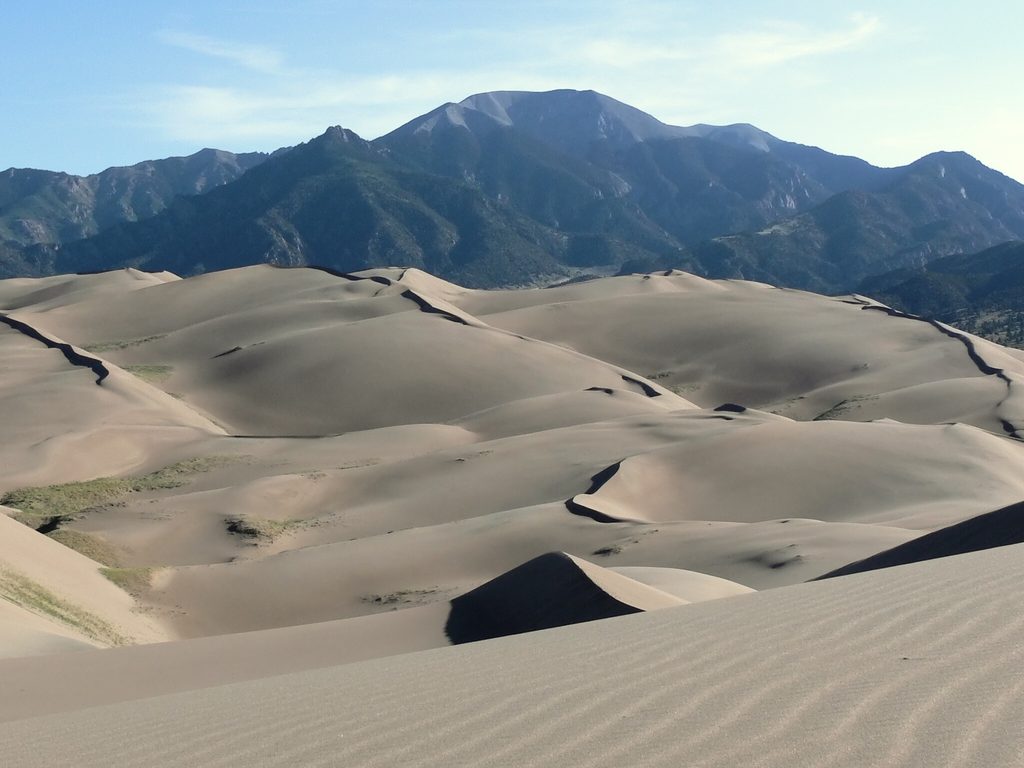
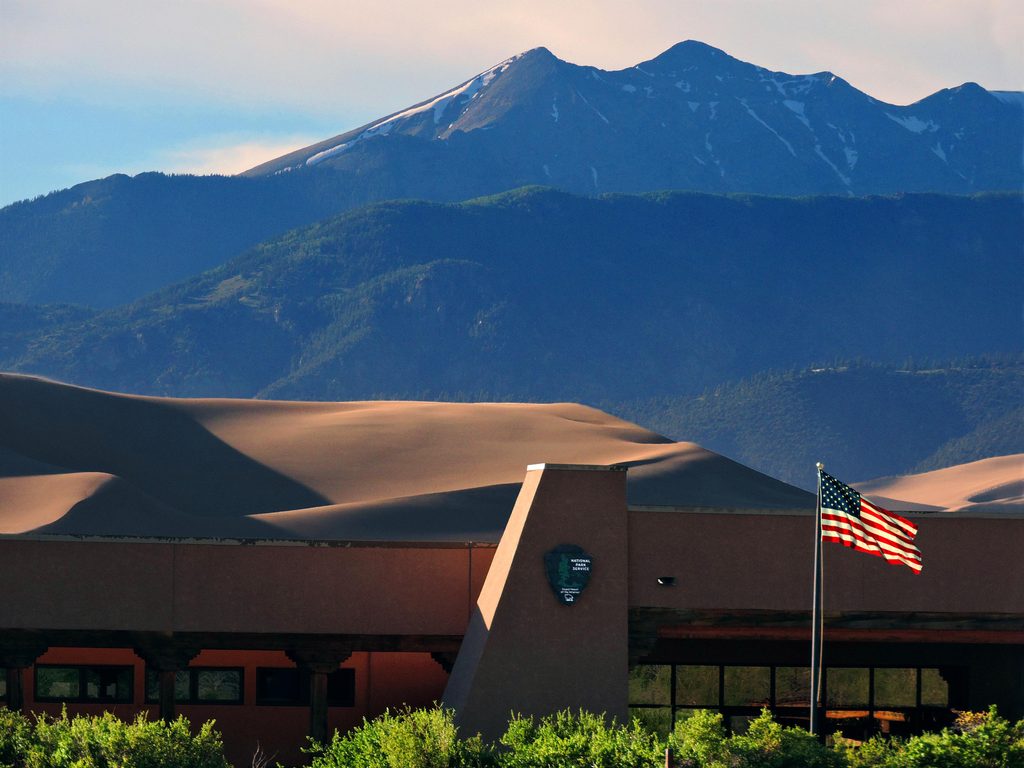
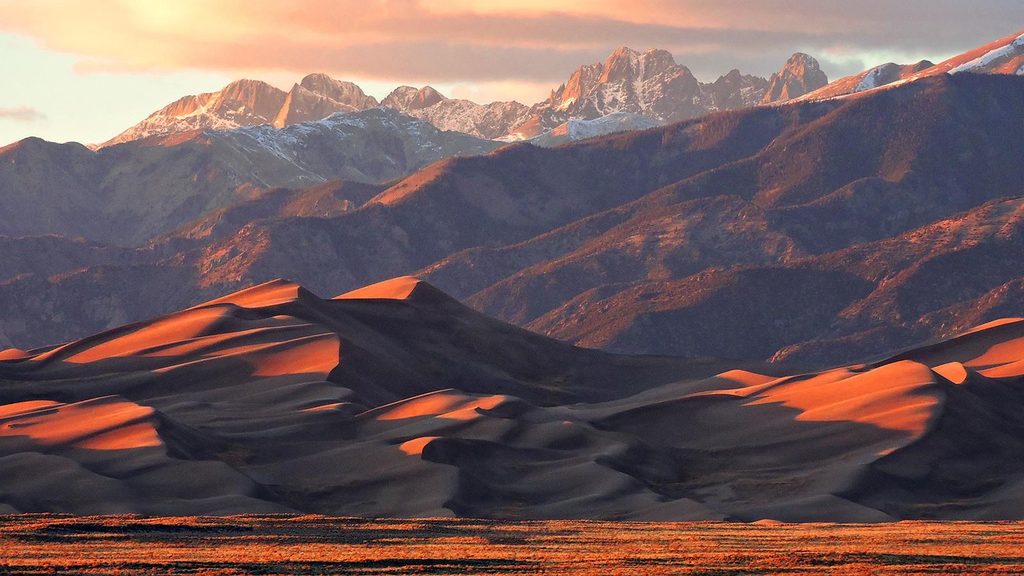
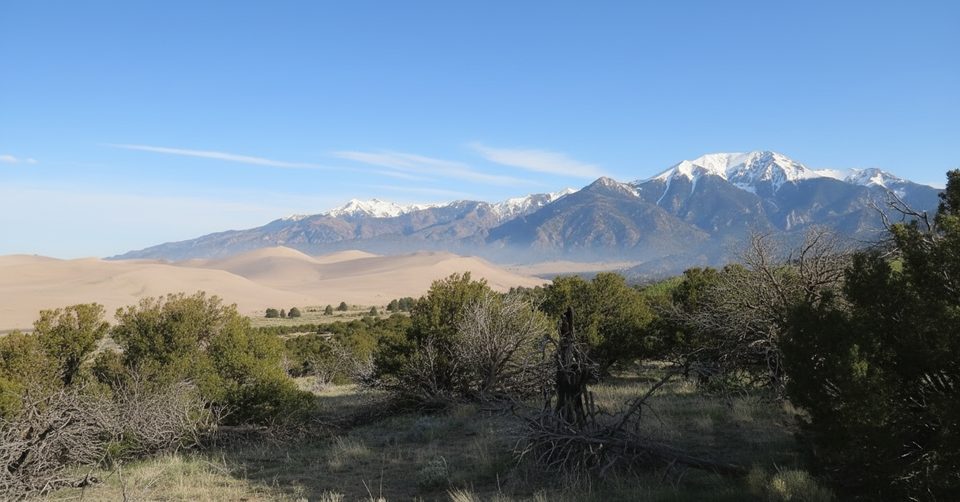
High Dune on First Ridge is the classic dune climb: about 3.0 miles total (out-and-back) with roughly 600–700 feet of vertical in deep, shifting sand. It looks like the tallest dune from the lot, but it isn’t the park’s high point—that honor goes to Star Dune. The payoff? A full sweep of the dunefield framed by the Sangre de Cristo Mountains and a rare hush—the sand absorbs sound, so the summit often feels eerily quiet.
Start from the main Dunes/Medano Creek parking area. Cross the broad flats (Medano Creek may be flowing seasonally) and then head for the crest lines. There’s no designated trail; the efficient way is to angle to ridges and zigzag up their spines rather than charging straight up the fall line. Expect slow, calf-burning progress and occasional backsliding—walking in sand at altitude is its own sport. The descent is the fun part: you can “glissade” down soft slopes, and many visitors bring or rent sandboards/sleds outside the park to ride down.
Despite the short distance, this is a hard hike. Deep sand, exposure, and high altitude add up. Wind commonly ramps up later in the day, blowing sand hard enough to sting; summer afternoons can bring thunderstorms. In warm months the sand surface can reach around 150°F, which is dangerous for bare feet and paws and will sap your energy fast.
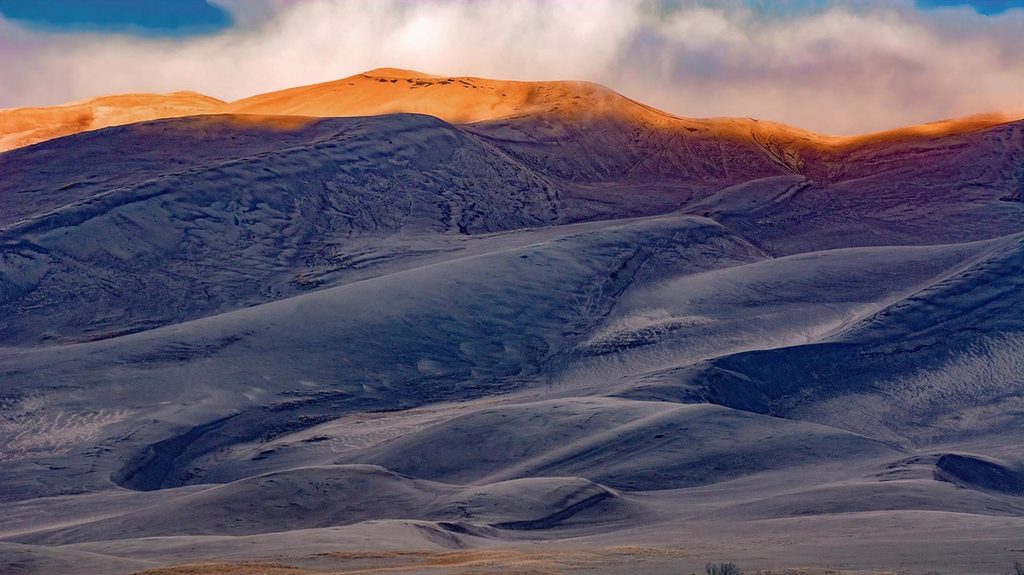
Shoulder seasons (late spring and early fall) are the sweet spot for cooler temps and fewer crowds. In summer, start at dawn to beat heat, wind, and storms; winter can be beautiful but frigid and blustery. Sunrise and early-morning light rake the dunes with contrast for photography, and crowds are far lighter then.
Bring more water than you think (this short hike drinks like a much longer one). Wear closed-toe shoes or boots; long pants and gaiters help keep sand out. Sunscreen, a brimmed hat, and sunglasses or even goggles are smart—blowing grit is real. Download an offline map and consider a paper backup; with no signs or fixed features, it’s easy to pick an inefficient line. Follow ridge crests where the sand is a tad firmer, take breaks, and turn back if winds or storms build.
You’re climbing part of the tallest dune field in the United States. The dunes are alive—ridges and slipfaces shift with every storm. Keep an eye out for tracks across the sand and for unusual, hardy life; the park hosts several insect species found nowhere else, adapted to heat, wind, and cold. The striking quiet up high is part of the magic here.
Leashed dogs are allowed to the top of High Dune and along the front face of the dunefield but not beyond the highest point. Protect paws from hot sand, carry extra water, and avoid midday heat.
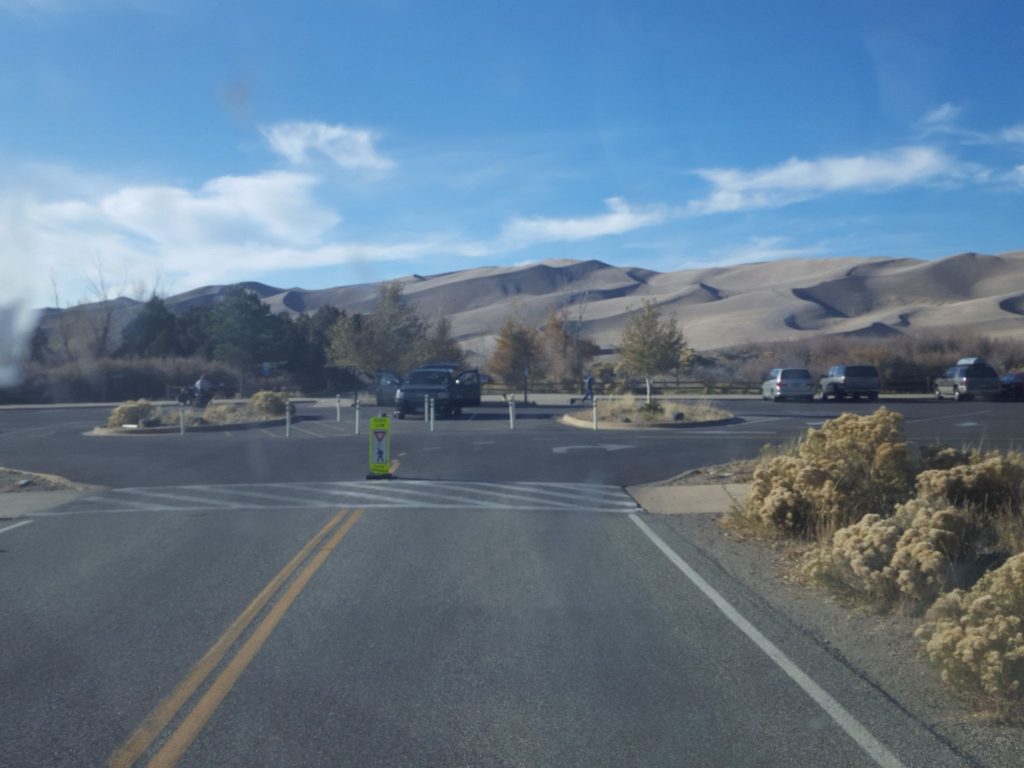
Park at the main Dunes/Medano Creek parking area (also called Medano Creek Trailhead); large lot with direct access to the flats below the dunefield.
Full exposure with frequent strong winds and blowing sand; summertime sand temps can reach ~150°F. No marked trail—navigation is by sight along shifting ridges; download an offline map and carry extra water. Afternoon thunderstorms are common in warm months; start early and turn back if weather builds. Dogs are not allowed past the highest point on High Dune and can burn paws on hot sand. Sources: [alltrails.com](https://www.alltrails.com/us), [hikingproject.com](https://www.hikingproject.com/).
Place · 0 mi away
Place · 0 mi away
Place · 0.5 mi away
Place · 0.5 mi away
Challenging · 0 mi away
Moderate · 0.6 mi away
Easy · 0.6 mi away
Easy · 0.6 mi away

Parkwolf Tour Guide
