Best time to visit
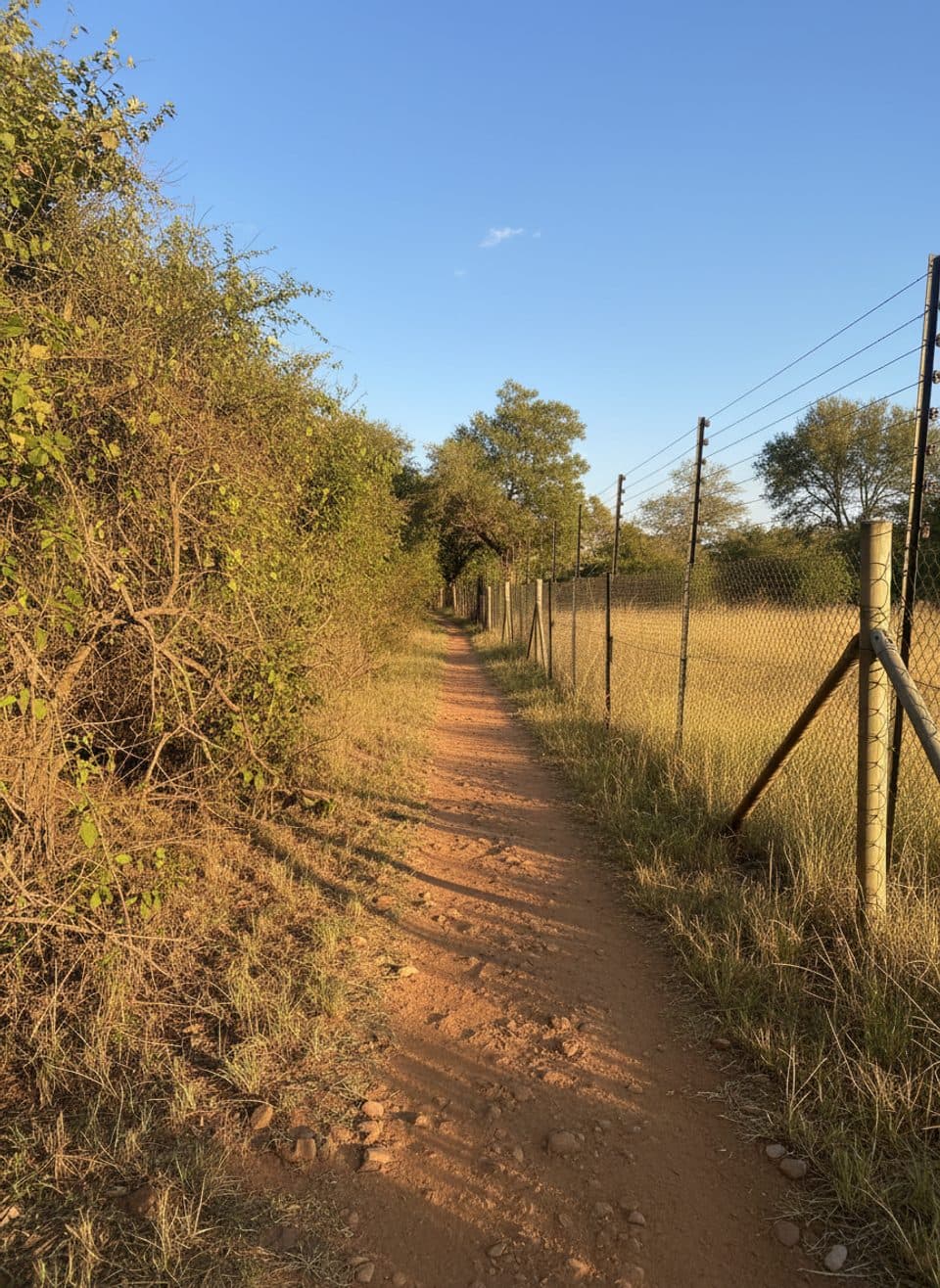
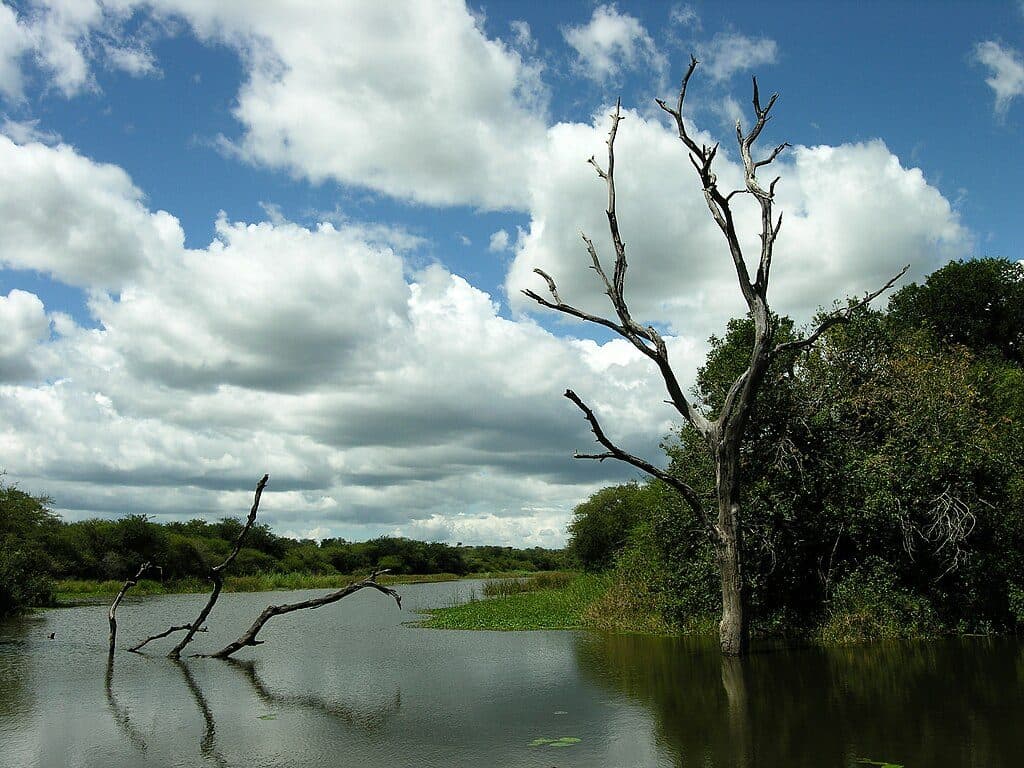
Early and late in the day are prime, with the dry months concentrating animals at the water. Late winter into September often shines before the first rains. If elephants arrive, give them space and never block access to the water.
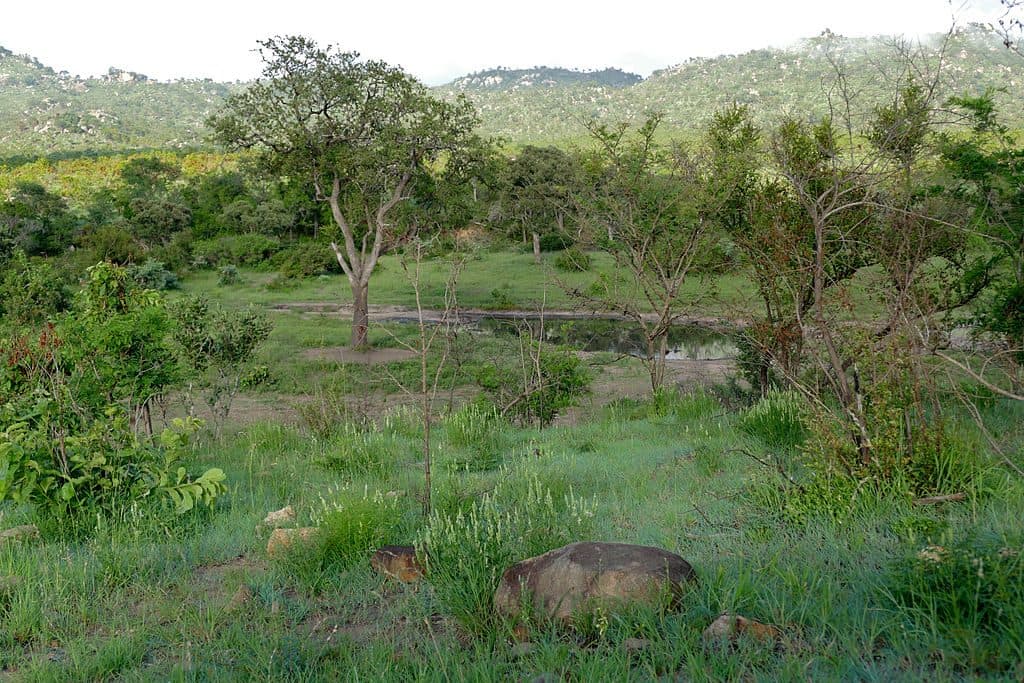
Scenic pullout · Kruger National Park
Simple pull-off waterhole with frequent big-mammal action
Overview
Matjulu Waterhole is a simple pull-off viewpoint on a short spur off the S110 Matjulu Loop near Berg‑en‑Dal. It’s an artificial, cement‑lined waterhole with bare surroundings in dry times, and no on‑site facilities. Its biggest draw: this is the closest functioning water source to Berg‑en‑Dal, so in the dry season it can be a busy wildlife hub.
Map
Local know-how
Use Berg‑en‑Dal Rest Camp for bathrooms, food and supplies before you loop out.
Arrive at dawn or the last two hours of light; dry-season visits are best.
If elephants are present, keep distance and never block their approach to water.
In the wet season, expect muddy gravel and drive cautiously on the S110.
Scan rocky koppies for leopards and check thickets slowly rather than rushing.
Plan your stop

The highest, rockiest slopes around here are a summer buffet for grizzly bears.
Kruger Tour Guide
Parkwolf is a GPS audio tour guide for Kruger National Park. As you drive, it chimes in with what’s ahead: hidden gems, upcoming stops, history, geology, and wildlife, right through your car’s speakers.
See the Kruger audio tourRecorded for this place
Matjulu Waterhole: A Magnet for Big Game“You're driving near the Matjulu Waterhole, a simple pull-off that can be a real hotspot for wildlife. Since it's the closest water source to Berg-en-Dal, big mammals are drawn here, especially in the dry season.”
Plays as you drive up to Matjulu Waterhole Viewpoint in the Parkwolf Kruger Tour Guide.
More stories near here in the app
“Fantastic app with many points of information… It’s great to just turn on while you’re driving and it gives you an audio tour of the national Park. We love it!!!!”


Guide
Expect big mammals to cycle through. Elephants often dominate when they arrive. White rhinos are regulars (cows with calves do turn up), and buffalo and baboons also use the water. Smaller antelope like steenbok and impala occur too, though when levels are low the sloped, cement edges can make access awkward for them. The surrounding habitat favors browsers over grazers, so kudu, giraffe and impala are more typical than zebra or wildebeest. Wild dogs are “sometimes” seen in the area, and leopards work the koppies along the loop, but both are hit‑and‑miss. Birders can scan for African hawk‑eagle, scarlet‑chested sunbird, pied kingfisher, white‑browed robin‑chat and mocking cliff‑chat.
You’re in Malelane mountain bushveld on granite and gneiss—rocky outcrops, stony soils upslope, and more fertile clayey lines in valleys. Granite’s poor mineral base means leaner grasses and thicker woody cover, which explains why browsers do well and visibility can be tricky. “Matjulu” is a Shangaan colloquialism meaning “place of the Zulus,” a name dating to the 19th‑century Swazi occupation of the lowveld.
Stay in your vehicle—there are no designated areas to alight here. A rare but serious leopard incident occurred near this waterhole in the past, underscoring the rule. Drive slowly, scan the koppies and thickets, and manage expectations: this mountain bushveld can be quiet one hour and deliver a rhino‑elephant double the next.
Wildlife
 1,312 sightingsLionMost seen around 6 AMSighting map
 727 sightingsLeopardMost seen around 5 AMSighting map
 2,403 sightingsElephantMost seen around 5 PMSighting map
 425 sightingsWhite RhinocerosMost seen around 6 AMSighting map
 547 sightingsBuffaloMost seen around 5 PMSighting map
 502 sightingsWild DogMost seen around 6 AMSighting map
Sighting maps show where each species has been reported across Kruger. Wildlife moves, so no sighting is guaranteed.
Keep exploring
 Food · 2.9 km awayBerg-en-Dal CafeteriaGrab-and-go eats inside Berg-en-Dal Rest Camp
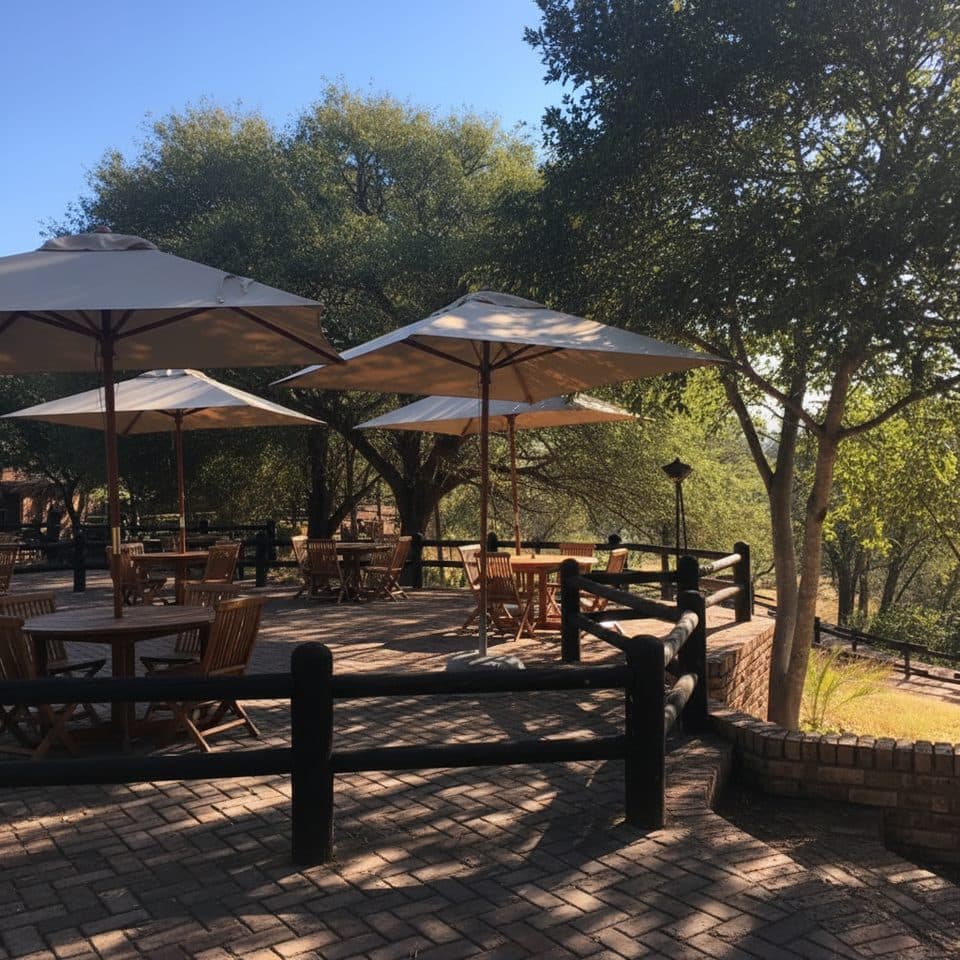 Restaurant · 2.9 km awayTindlovu Berg en Dal RestaurantBushveld dining with dam views, boma nights, and quick bites
 Lodging · 2.9 km awayBerg-en-Dal Rest CampMountain‑side rest camp with leopard‑lucky dam and a stellar pool
Parkwolf’s Kruger ranking

The audio tour guide for the drive, plus offline maps, trails, and wildlife heatmaps for when the signal drops.