Place · 0 mi away

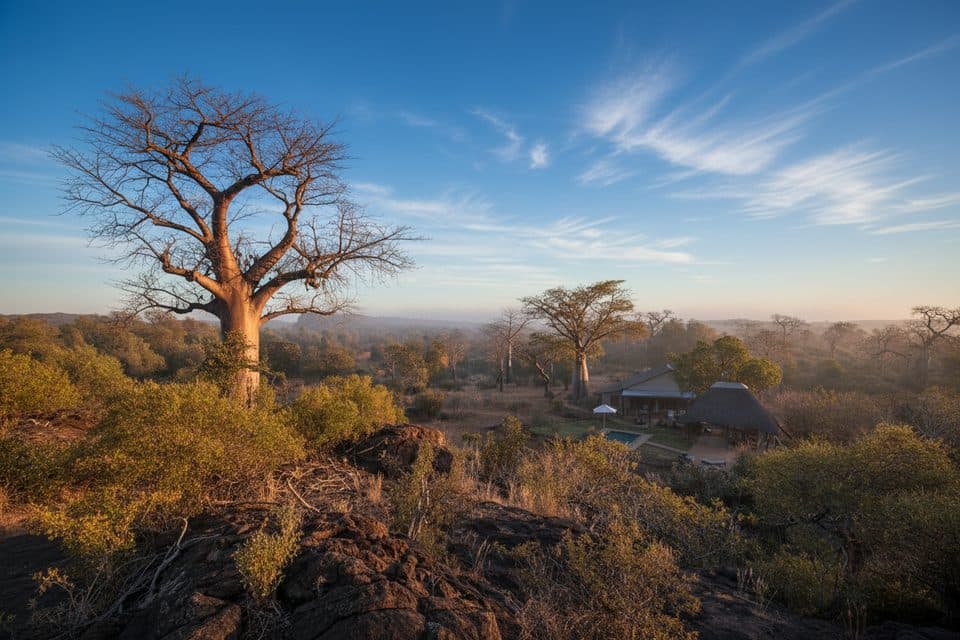
Pafuri Baobab, known as Baobab Hill, is a towering baobab set on a ridge in Kruger’s far north. It’s the kind of place that announces you’ve entered Pafuri’s “land of giants” — ancient landscapes, big skies, and that deep sense of remoteness. From the ridge you get wide views across the floodplains toward the Limpopo.
You’ll find it along the road between Klopperfontein and the Pafuri main road in the park’s far north. Nearest gate is Punda Maria; the Pafuri area lies roughly 70 km north of the gate, so allow unhurried time for park speed limits and sightings. GPS given for the tree is 22°29'26.95"S, 31°12'15.26"E.
There’s no formal parking bay or signed get-out point at the tree — plan to admire it from your vehicle. Kruger’s rules only allow alighting at designated areas, so use the region’s picnic sites for stretch breaks.
This baobab was an important stop on the old Ivory Trail and later a waypoint on migrant labor routes after World War I. It’s both a natural icon and a cultural touchstone for this corner of the park.
The surrounding Pafuri habitats include sandveld and lush riverine belts with baobabs, cluster-leaf and bushwillows. Expect nyala, kudu and buffalo, with frequent elephant and occasional predators like lion and even wild dog. Birders prize the area for specials, including the elusive Pel’s fishing owl along the Luvuvhu corridor.
There are no facilities at the baobab itself. Day visitors should use Pafuri Picnic Site or Babalala Picnic Spot for toilets, picnic tables and a safe place to stretch.
Make a mini-route of it: swing by Pafuri Picnic Site for a brunch stop, then continue to Crooks’ Corner or explore the Thulamela archaeological precinct for a deeper dive into the region’s layered history.
Start early. Morning and late afternoon bring softer light on the baobab and better chances of wildlife activity, plus cooler temps on the long drive north. This is one of Kruger’s quietest, remotest corners, so traffic is typically light compared to the south — but still plan extra time for gravel sections and sightings.