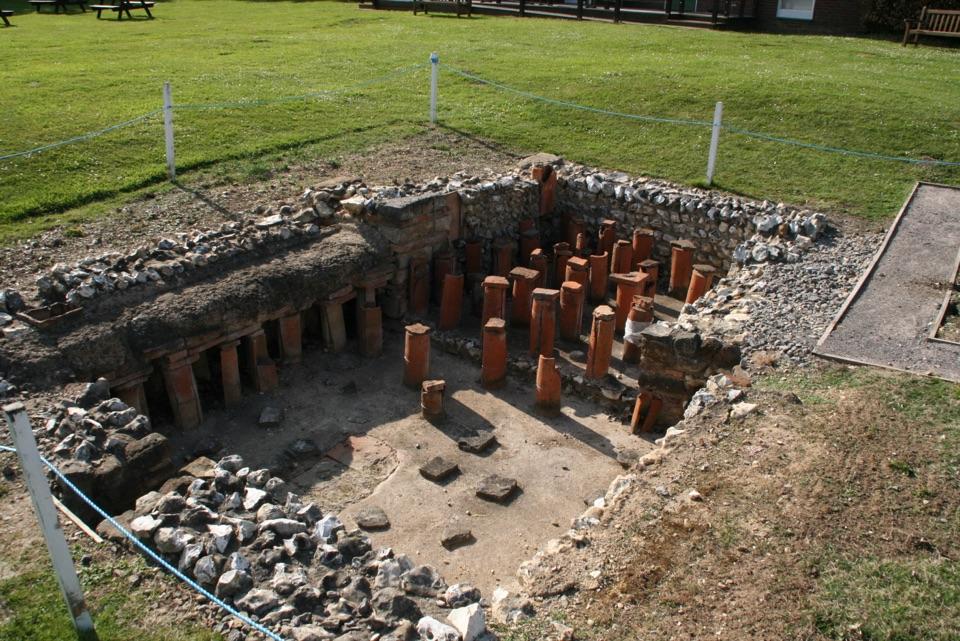
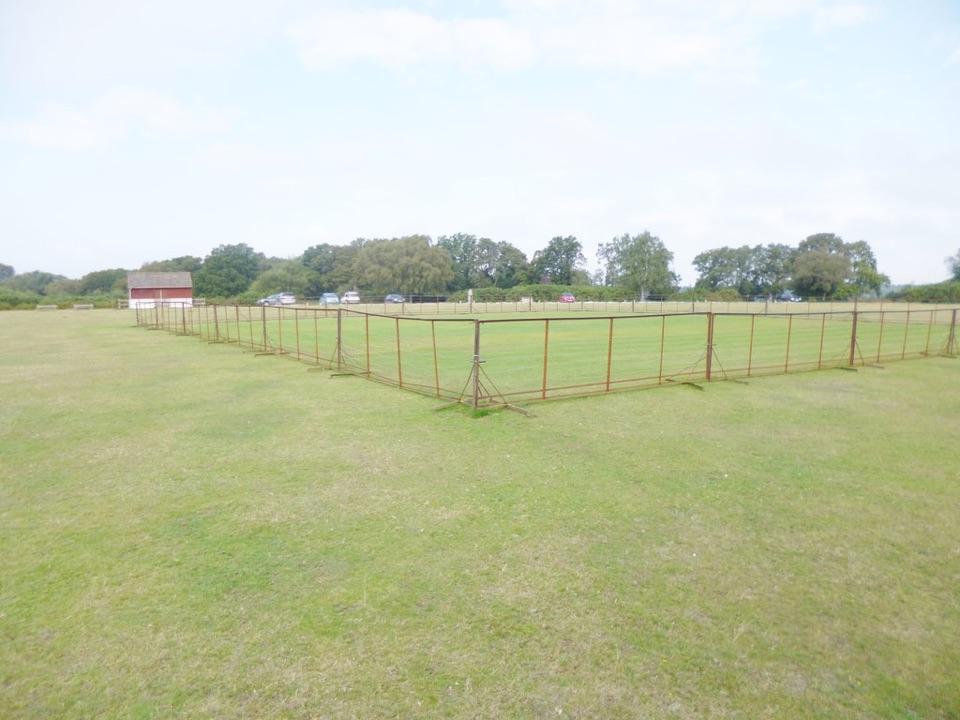
Outside, the room plan is marked out on the grass and information boards walk you round it. Two surviving mosaics are on display, along with a hypocaust: the underfloor heating for a bath suite. Look down into the pit at the tile supports that once carried a heated floor.
The museum is the best bit, and where most people spend their time. The discovery story is a good one: in 1942 a farmer's dog went after a ferret in the corner of a field and turned up oyster shells and mosaic tiles, and a local antiquarian, Morley Hewitt, bought the land and dug here every summer for three decades. The cases hold a hoard of 7,717 coins found buried in a pot, with nearly 500 of them on show beside the jar, a skeleton found in 1965 buried face down outside the dining room (nobody knows who he was or why), and two Roman milestones that had been reused as building stone. Kids can handle real artefacts and try on Roman kit.