Overview
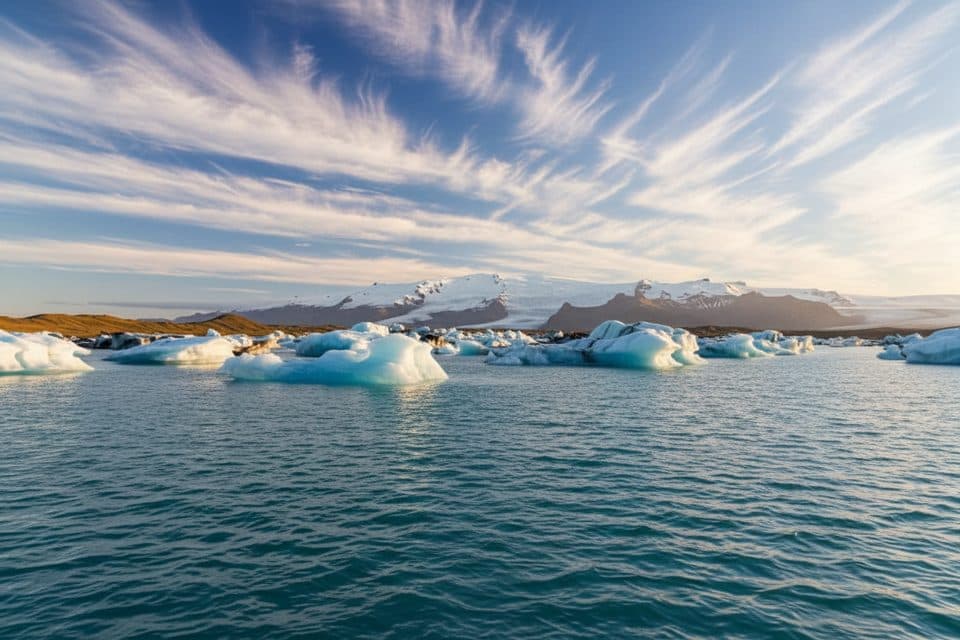
Jökulsárlón is the showstopper of the south coast: a glacier‑fed lagoon where icebergs constantly calve from Breiðamerkurjökull, drift, spin, and glow blue against dark water. It sits right off Route 1, so you can pull in, step out, and be staring at ice within minutes. Seals patrol the channel to the sea, birds wheel overhead, and the scene changes hour by hour as the ice moves.
What You’ll See
- A lagoon widely noted as Iceland’s largest lake, studded with sculptural icebergs in shades of blue and white.
- Regular seal activity, especially near the outlet to the ocean, plus abundant birdlife in season.
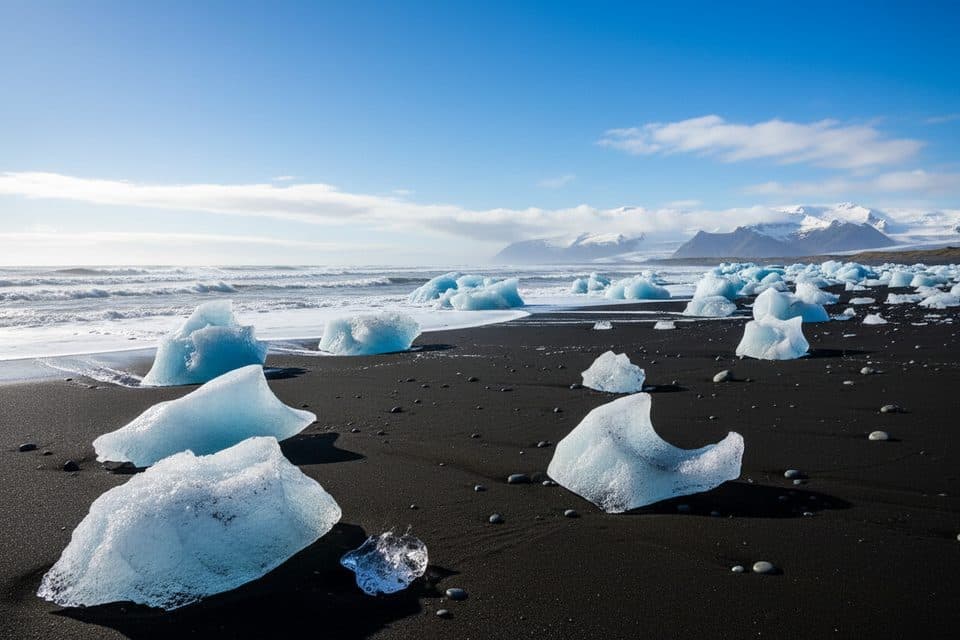
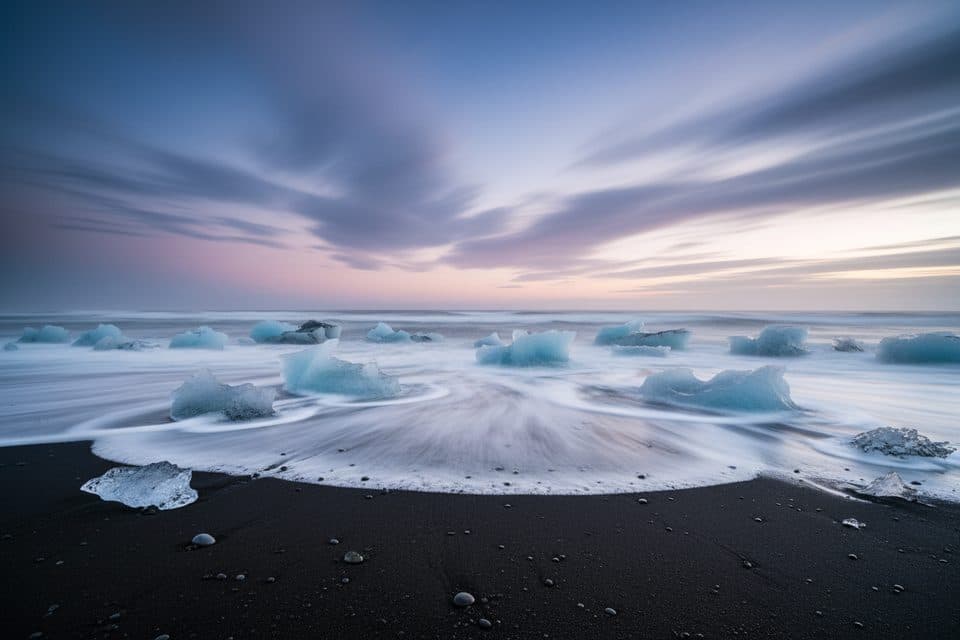
- Diamond Beach across the road, where smaller bergs wash ashore and sparkle on black sand.
How It Formed (in plain language)
Vatnajökull’s outlet glaciers push, drop, and melt rock and ice, leaving moraines and sandur plains behind. As Breiðamerkurjökull has retreated, it carved out this deep basin; ice now calves into the near‑freezing water and rides the current toward the sea. The whole coast here is shaped by the tug‑of‑war between volcano‑glacier systems, meltwater floods, and the Atlantic.
Things to Do
- Stroll the lagoon edge for close, safe views of the ice and wildlife.
- Walk under the bridge to reach Diamond Beach and follow the shoreline for changing compositions.
- Take a seasonal boat tour (amphibian or Zodiac) to weave among the bergs in summer.
- In winter, join a guided ice‑cave tour in the nearby Vatnajökull ice—the blue chambers are a different world.
- Short marked walks include a viewpoint route from the main lot toward Helguhóll, beach walks on Eystri‑Fellsfjara, and a longer trail connecting Fjallsárlón and Jökulsárlón.
- Peek at the small outdoor photo exhibit near the Eystri‑Fellsfjara parking.
Facilities and Services
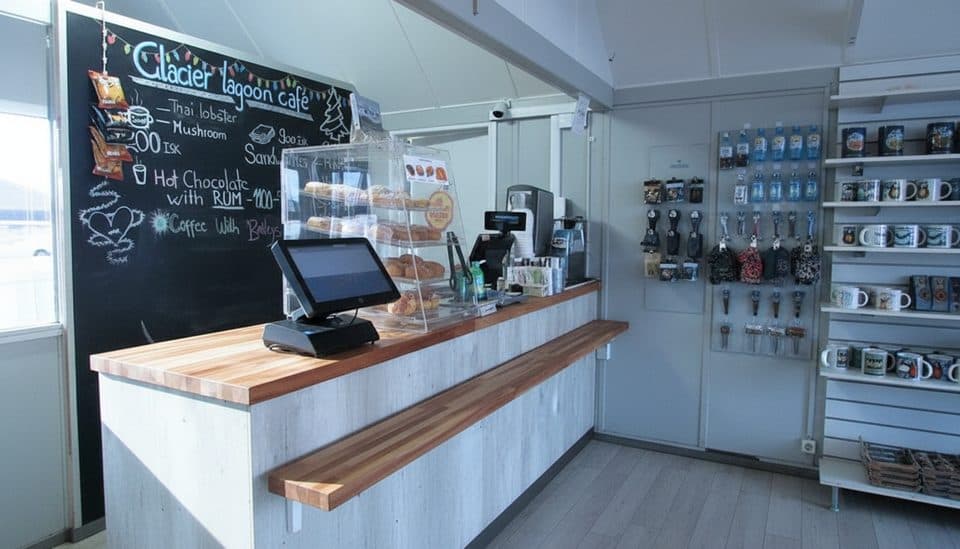
Flush toilets are available at Jökulsárlón (and nearby Fjallsárlón). There’s on‑site food via an all‑season café and seasonal vendors, plus privately run restaurants in the area. Park rangers patrol Breiðamerkursandur (Jökulsárlón, Fellsfjara, Fjallsárlón) year‑round. The main southern visitor information hub is Skaftafellsstofa for trail, conditions, and safety updates.
Best Time to Visit
Year‑round access from Route 1. In summer, aim for early morning or evening—once boat tours wind down, the lagoon often turns quiet and reflective. Midday in peak season draws the biggest crowds and parking pressure. Winter brings crisp air, fewer visitors, and ice‑cave season; summer offers softer weather and full boat operations. Photography is lovely at low sun angles—sunrise and late evening light make the ice pop.

Safety and Etiquette
- Stay off the ice and keep a respectful distance from the water’s edge—ice can roll or break without warning, and the water is near‑freezing.
- Don’t step onto glaciers or enter ice caves without a certified guide.
- Expect rapid weather shifts and strong winds; bring warm, waterproof layers and secure loose items.
- Heed ranger guidance and posted advisories—this is a dynamic landscape.
Practical Tips
- Parking is paid (often via an app) and popular lots can fill quickly in summer—arrive early or late.
- If it feels crowded, consider Fjallsárlón (15 minutes west) for quieter, closer glacier views, also with flush toilets and boat tours.
- Pair lagoon time with a slow walk on Diamond Beach for different angles on the same ice.