Overview
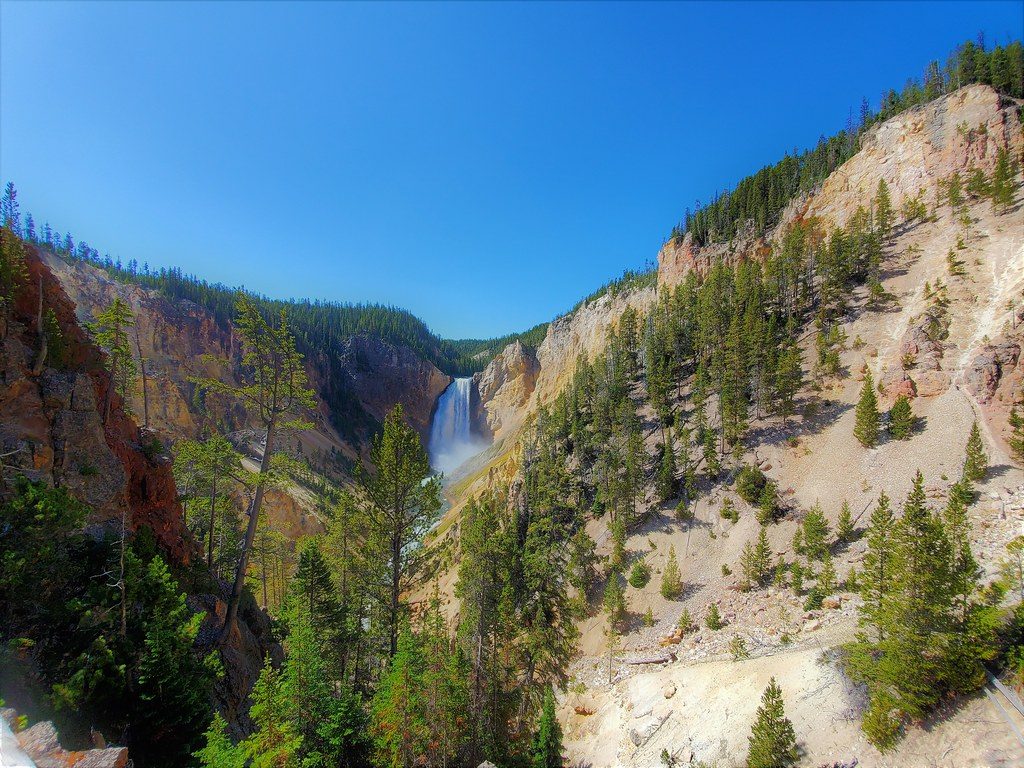
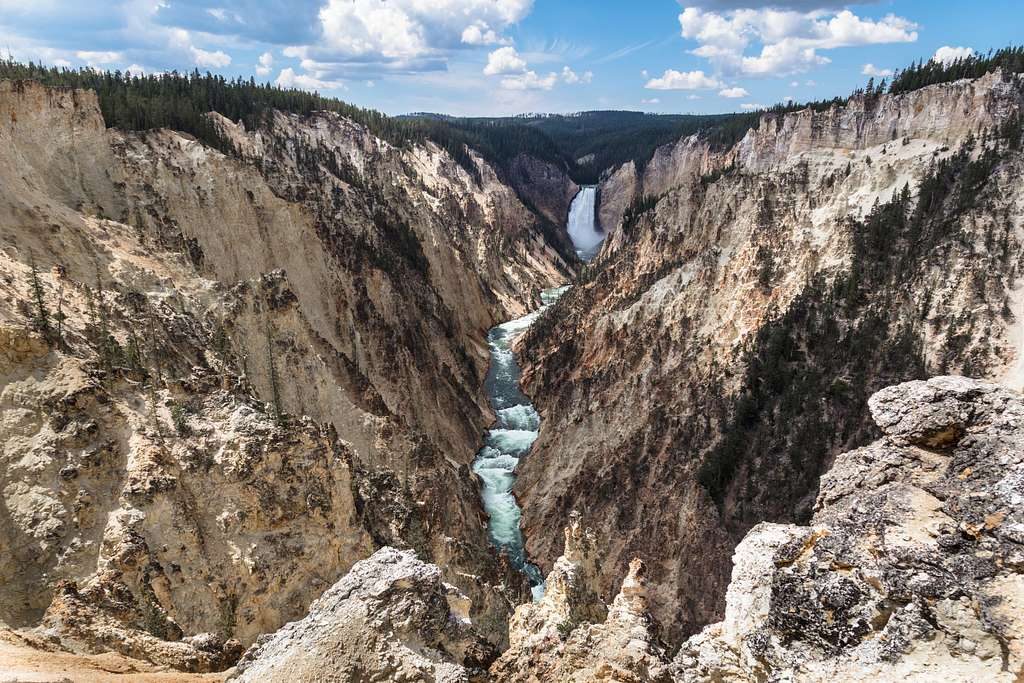
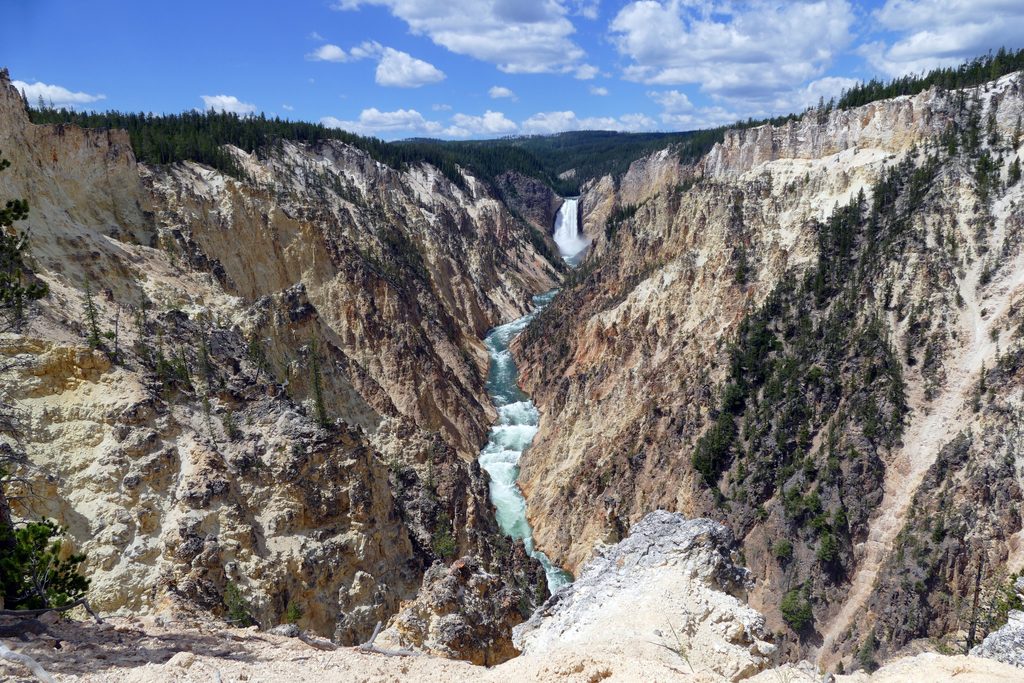
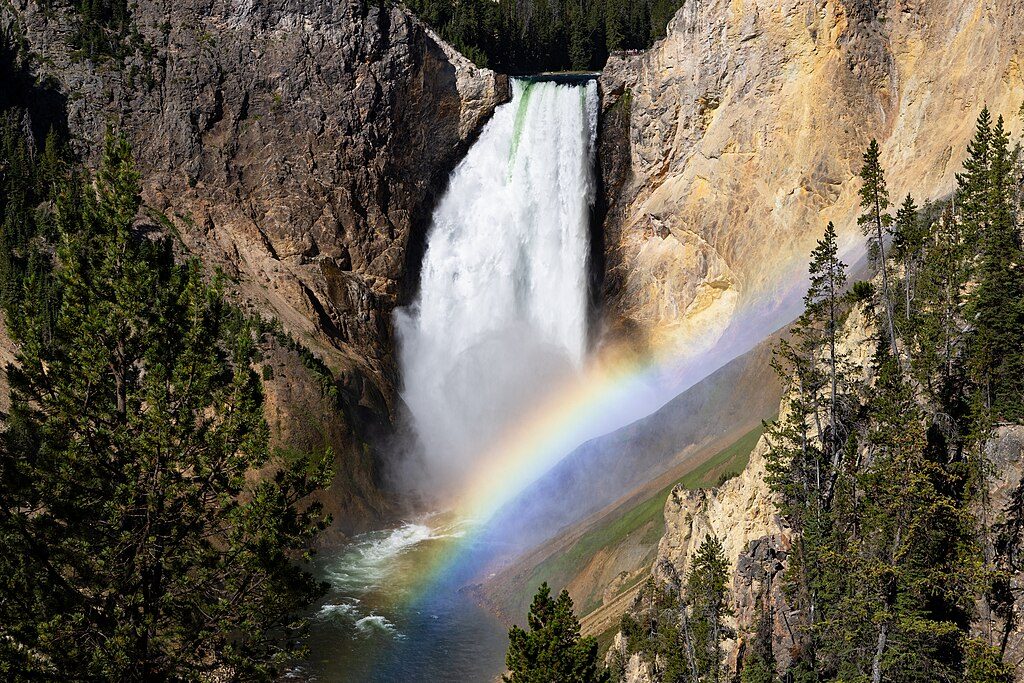
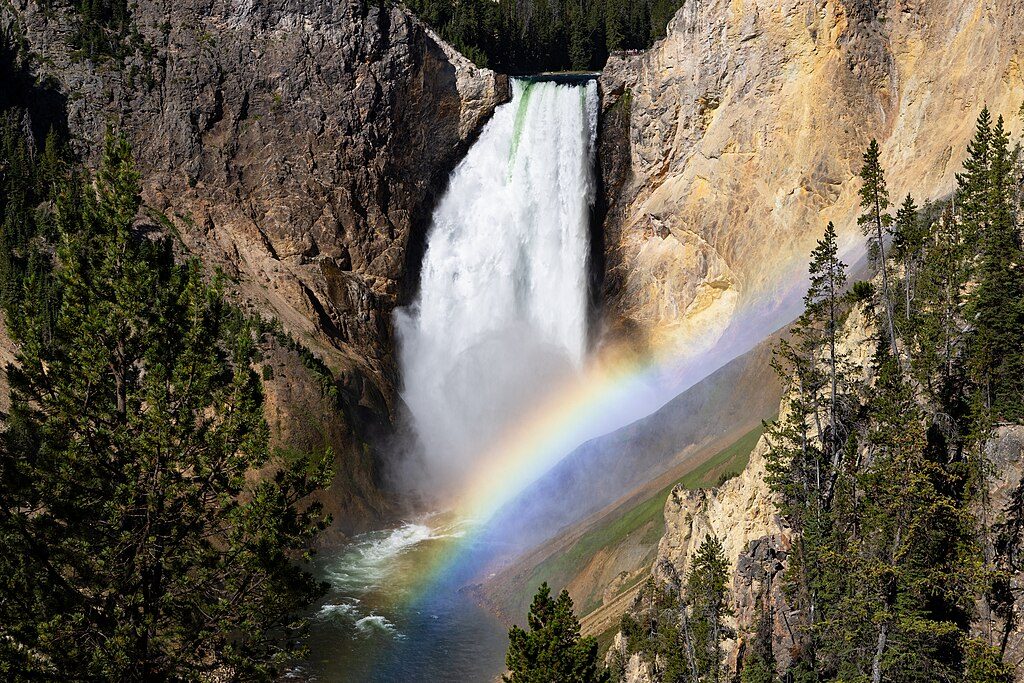
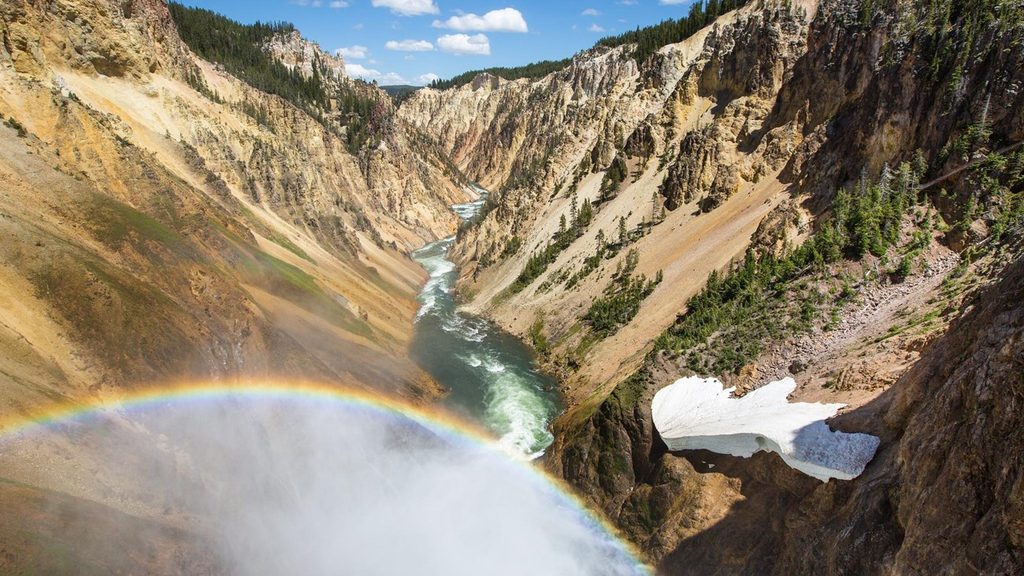
This is the canyon you picture when you think of Yellowstone’s river country—color-splashed walls, a thundering waterfall, and viewpoints that make your jaw drop. Carved by the Yellowstone River through hydrothermally altered rhyolite, the canyon glows gold, orange, and red where minerals have oxidized. It’s roughly 10,000–14,000 years old, 800–1,200 feet deep, and 1,500–4,000 feet wide. Two marquee waterfalls anchor the scene: Lower Falls at 308 feet and Upper Falls at 109 feet.
What You’ll See
- The Lower Falls dominating a long, painterly corridor of canyon—this is the classic shot everyone comes for.
- Upper Falls churning through a tighter gorge just upstream.
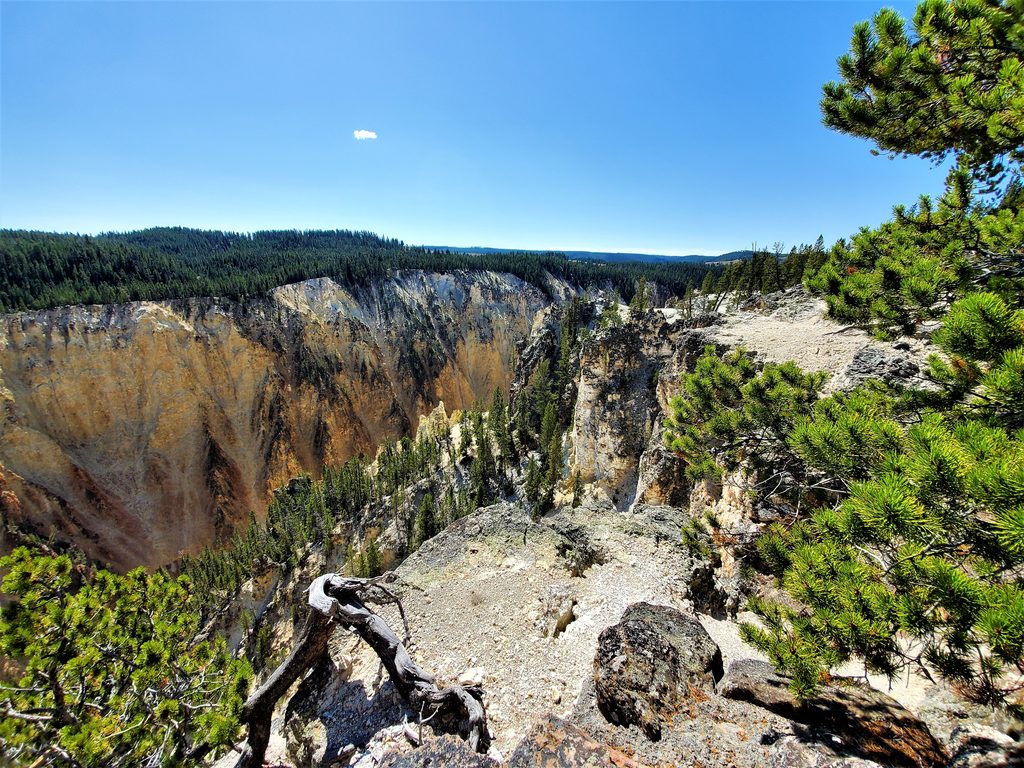
- Colorful, crumbling walls and dramatic pinnacles that hint at the canyon’s fiery and steamy past.
Best Viewpoints and Drives
- South Rim Drive (begins ~2.3 miles south of Canyon Junction): Upper Falls Viewpoints and Artist Point, the quintessential down-canyon view toward Lower Falls.
- North Rim Drive (one-way, begins ~1.2 miles south of Canyon Junction): Brink of the Lower Falls, Lookout Point, Grand View, and Inspiration Point. There’s also a separate spur to Brink of the Upper Falls ~1.6 miles south of Canyon Junction.
Trails Worth Your Time
- Brink of Lower Falls Trail: Short but very steep descent to the brink—spectacular and strenuous on the way back up.
- North Rim Trail: A connective path linking Lookout Point, Grand View, and Inspiration Point with continuous vistas.
- South Rim Trail: Walk from Upper Falls Viewpoints to Artist Point; keep an eye out for Crystal Falls just east of the Upper Falls area.
- Seven Mile Hole Trail: The only route to the canyon bottom here—a strenuous 10.2‑mile round trip best for strong hikers.
Wildlife
- Osprey often nest on canyon pinnacles from spring into late summer. Bring binoculars, scan the spires, and watch for fishing flights and nest exchanges.
Planning, Safety, and Flow
- Expect full parking lots and heavy crowds from late morning into mid‑afternoon in peak season. Do the rounds early or late.
- Trails to the fall brinks are steep with exposure. Wear traction footwear, keep kids close, and respect railings.
- You’re in bear country—carry bear spray, store food properly, and give wildlife space. Travel can also be slowed by wildlife traffic jams, so pad your schedule.
- Canyon Village nearby has the Visitor Education Center, restrooms, and services—use it as your base for info and breaks.
Best Time to Visit
- Light and crowds: Sunrise to mid‑morning or late afternoon to sunset give softer light on the canyon walls and a much easier parking situation. Midday (about 10 am–3 pm) is the peak crush.
- Photography: Artist Point and Lookout Point shine with angled light early and late; bring a zoom for the falls and nesting raptors.
- Seasons: Summer brings the easiest access and active osprey. Shoulder seasons can be chilly and stormy—pack layers.