Overview
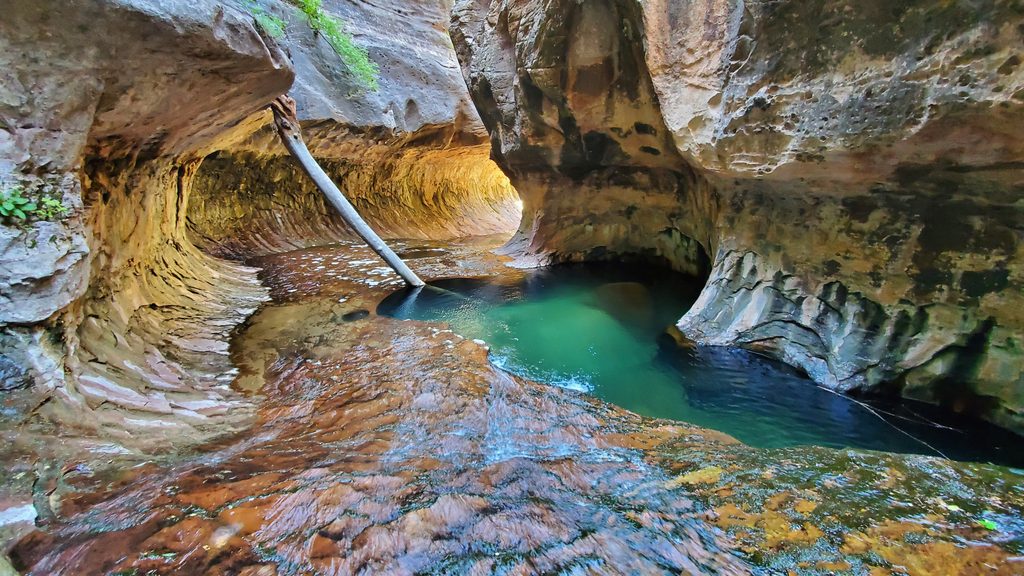
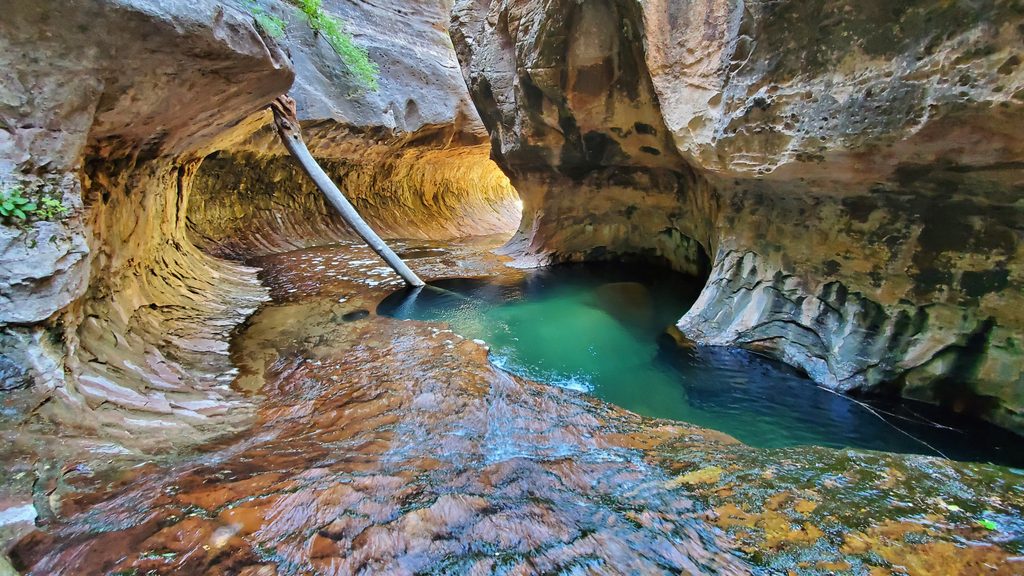
The Subway is the photogenic, tubular narrows of the Left Fork of North Creek—arched walls, polished chutes, and clear pools sculpted into a sandstone "tunnel." It’s one of the park’s most coveted wilderness experiences and absolutely delivers on the hype—if you’re up for a long, rugged day.
How to Experience It
You have two distinct options:
- Bottom‑Up Hike (non‑technical): A very strenuous out‑and‑back from the Left Fork Trailhead. Expect a steep initial descent into the canyon, then hours of boulder hopping, frequent creek crossings, and ankle‑ to knee‑deep wading before reaching the Subway chamber and turnaround waterfall. Landmarks include dinosaur tracks and red ledges along the way. Plan 6–10 hours.
- Top‑Down Canyoneering (technical): A committing through‑route starting at Wildcat Canyon Trailhead and exiting at Left Fork Trailhead. Requires rappelling (carry at least a 60‑ft rope), complex route‑finding, and mandatory swims through cold pools. A shuttle is required. Wetsuits are recommended except in the hottest weather.
Permits (Required)
A wilderness permit is required for both routes, with group size limited to 12. Permits are issued via a Seasonal Lottery (up to four months ahead) and a Daily Lottery two days prior. There’s a nonrefundable application fee, plus a per‑person fee if issued. The reservation holder must pick up the permit in person at the Zion Canyon Visitor Center Wilderness Desk. The Left Fork is day‑use only—no camping. Experienced regulars can apply for a Zion Express Membership to speed up reservations and permitting after completing required orientations.
Trailhead & Logistics
- Start/Finish (bottom‑up) and exit (top‑down): Left Fork Trailhead on Kolob Terrace Road.
- Facilities: Vault toilets at the trailhead; no potable water—bring all you need.
- Parking: Limited and can fill on busy days; arrive early and consider carpooling. There is no park shuttle service on Kolob Terrace Road.
Conditions, Safety & Gear
- Expect extensive wading, slick algae‑covered rock, and strenuous off‑trail travel. The steep climb out at the end of the day will test your legs.
- Water is cold year‑round; hypothermia is possible. Neoprene socks help on the bottom‑up; a wetsuit is often needed for the top‑down except in peak heat.
- Flash floods are a real hazard—avoid storm days and always check current conditions and weather forecasts before committing.
- Toxic cyanobacteria may be present; do not drink from the creek. Filtering/boiling does not remove toxins.
What You’ll See
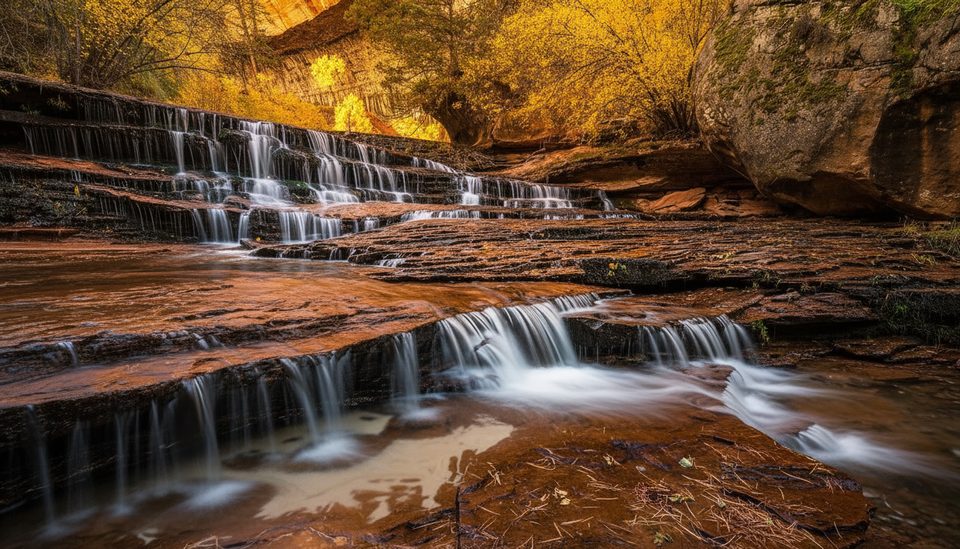
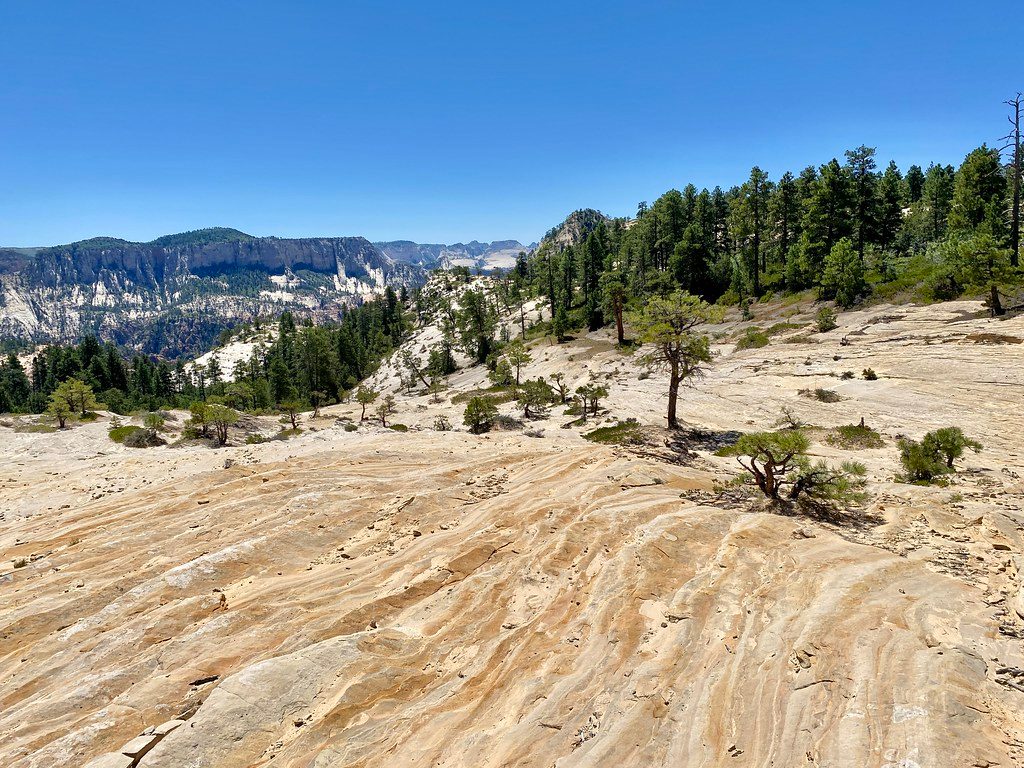
Curved, undercut walls, sculpted chutes, cascades, and luminous pools define the final Subway section. Along the approach, keen eyes may spot dinosaur tracks and classic red‑rock steps and ledges. Some hikers report encountering wildlife in the quieter stretches of the canyon.
Best Time to Visit
- Go early: Start at first light to beat heat, secure parking, and enjoy quieter conditions.
- Season: Spring through fall offers more comfortable air temps, but the water remains cold; monsoon season demands extra caution for flash‑flood risk. In shoulder seasons, pack insulating layers and neoprene socks; for the technical route, a wetsuit is recommended except in the hottest weather.
- Day length: It’s a full‑day push—plan your turnaround to ensure you’re on the exit climb well before dusk.
What to Bring (Bottom‑Up baseline, add technical kit if going Top‑Down)
- Sturdy closed‑toe footwear that excels when wet; trekking poles help with slippery crossings.
- Navigation for an off‑trail route: a detailed description and offline maps; mark your exit point on the way down.
- 2–3+ liters of water per person, electrolytes, food, sun protection, and a small first‑aid kit.
- Insulation for cold water and weather swings; dry storage for phone/keys.