
Place · 4.7 mi away
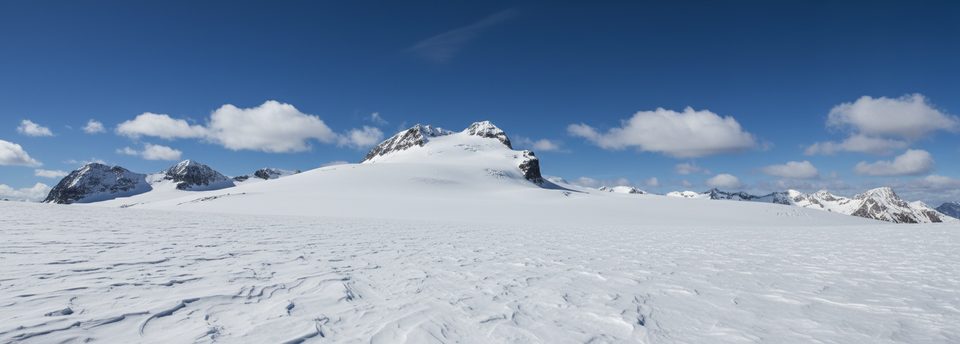
Mount Hector is a big, glaciated 11,000-footer rising above the Icefields Parkway north of Lake Louise. It’s a prized objective for experienced climbers and ski mountaineers thanks to its wide Hector Glacier and the sweeping summit views across the Lake Louise massif, Wapta Icefields, and neighboring peaks like Little Hector and Mount Andromache.
Most parties start from an informal roadside pullout on the Icefields Parkway, then work into glaciated terrain. Expect a long but steady climb across the broad Hector Glacier, followed by a more technical push on a rocky, sometimes crumbly summit ridge. A typical ski outing clocks roughly 13.7 km round trip, ~1,530 m of gain, and 7–10 hours, depending on conditions and pace. It’s less crowded than tourist viewpoints, but on good spring days the small parking area can overflow.
This is not a casual hike. You’ll need solid glacier travel skills (crevasse risk), avalanche awareness, and comfort with short, steeper alpine sections near the top. Weather turns quickly and visibility can drop, complicating navigation on the glacier. Cell service is unreliable; treat this as a remote objective and plan accordingly.
Essential kit commonly includes: crampons, ice axe, harness, rope, helmet, crevasse rescue gear, and full avalanche safety gear in winter/spring. A GPS track or detailed route description is wise; the route is unmarked and can be hard to follow after fresh snow.
There are no facilities at the pullout—no toilets, water, or signage. Arrive self-sufficient. Services are down the road at Lake Louise. Campers often use Parkway campgrounds in the area (e.g., Mosquito Creek), but nothing is at the mountain itself.
Specific sightings aren’t well documented here, but in these subalpine and alpine zones you might come across mountain goats, marmots, or ptarmigan, with occasional bears lower down. Give wildlife space and follow park guidance.
Named for geologist James Hector, the mountain saw its first ascent in 1895 by Philip S. Abbot, Charles Fay, and Charles S. Thompson. The summit block is made of Cathedral limestone and dolostone over older Gog Group quartzite—classic sedimentary layers uplifted during the Laramide orogeny.
Place · 4.7 mi away
Place · 5 mi away
Place · 8 mi away
Place · 8.5 mi away
Easy · 2.4 mi away
Challenging · 4.9 mi away
Challenging · 4.9 mi away
Challenging · 4.9 mi away

Parkwolf Tour Guide
