
Place · 0.9 mi away
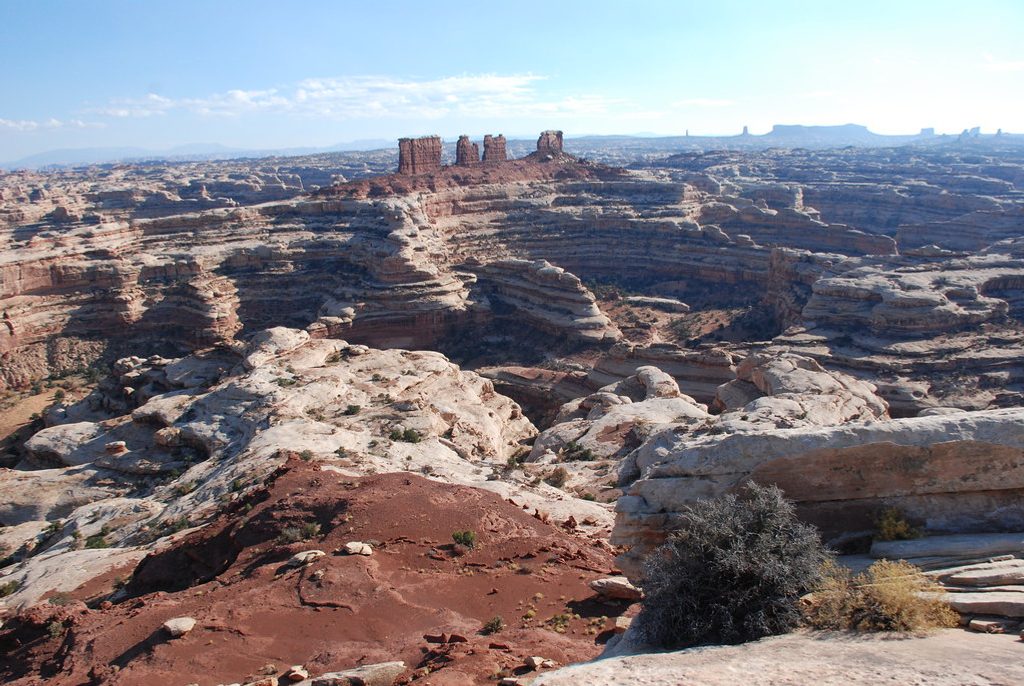
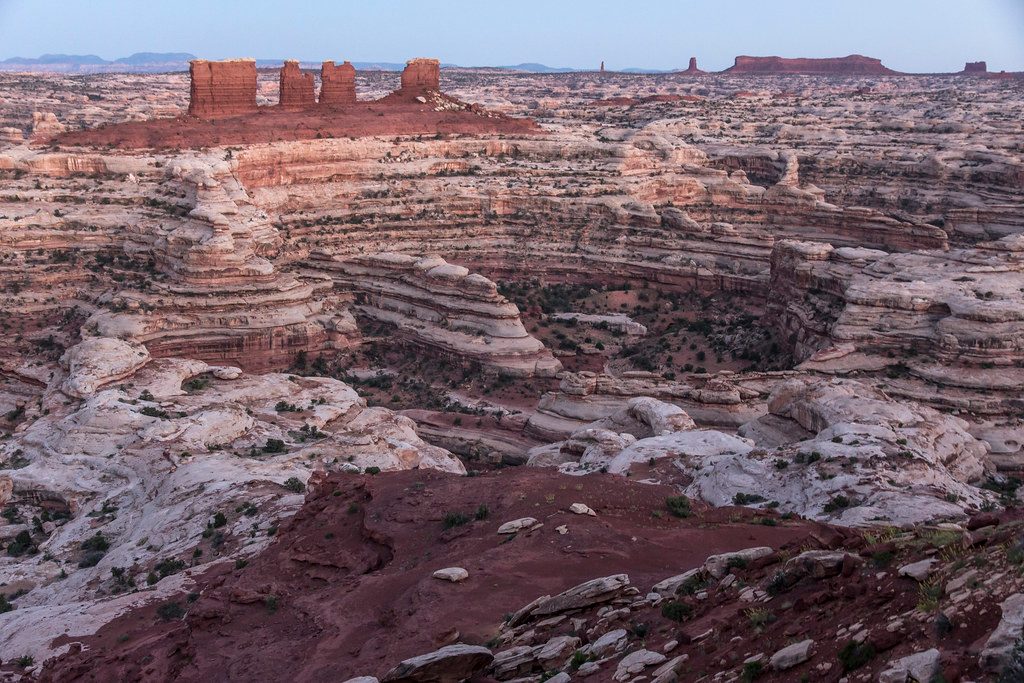
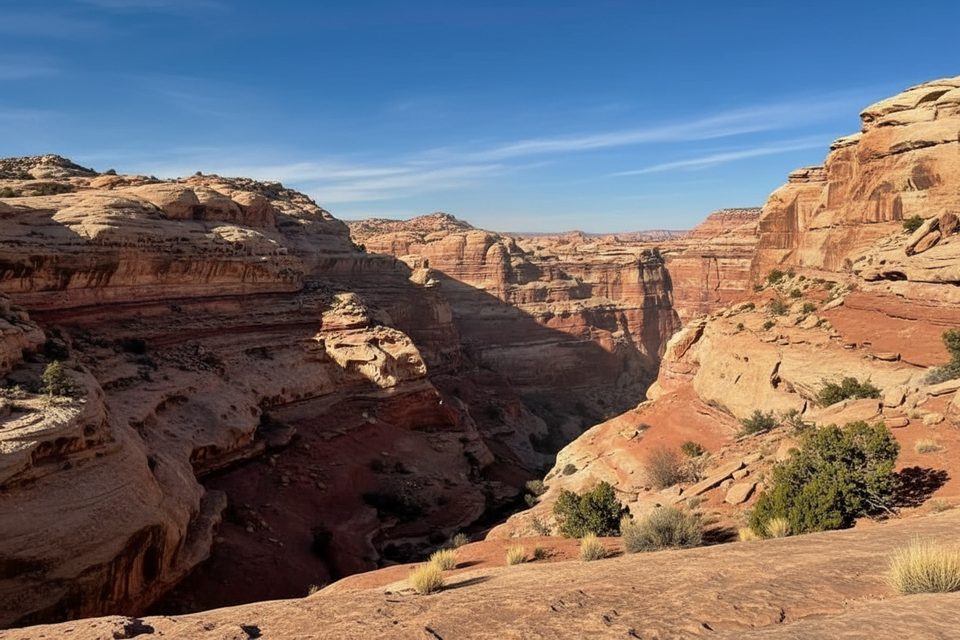
Perched on the rim of the park’s most remote district, Maze Overlook gazes into a labyrinth of sandstone canyons, towers, and slickrock. It’s the classic “you earn it” viewpoint: wild, quiet, and spectacular, with nothing but raw desert spreading in every direction.
Most approaches involve high‑clearance 4WD roads; without that, expect a very long walk‑in to reach the rim. The route below the overlook is no casual stroll—think steep slickrock, ledges, cairn‑to‑cairn navigation, occasional Class 4 scrambling, and historic moki steps. Many experienced parties carry a short rope to lower packs on the steepest sections. Navigation demands focus; carry a topo map/GPS and know how to use them.
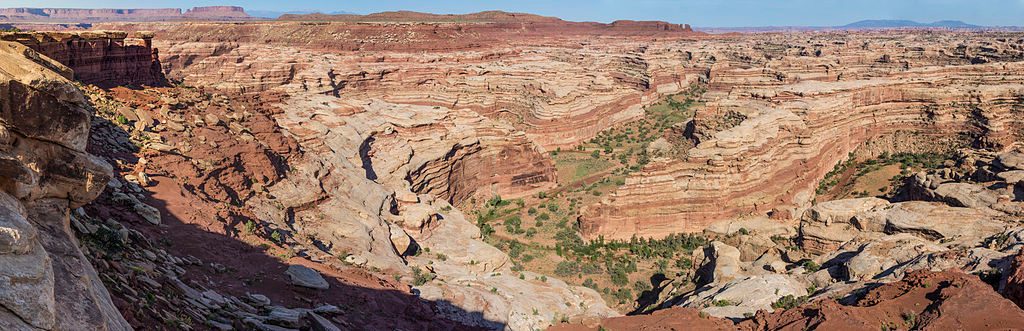
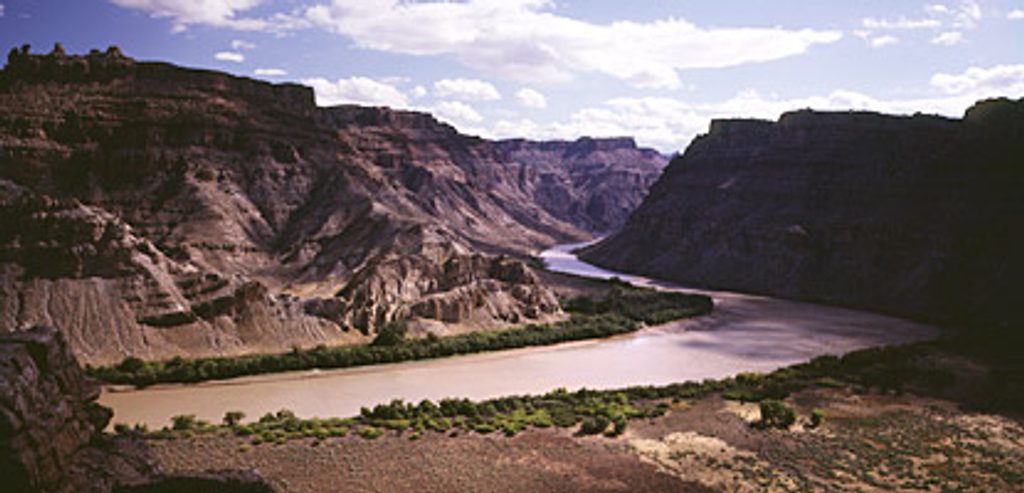
From the edge, you’ll survey the convoluted canyons of the Maze, with features like the Chocolate Drops and distant desert summits dotting the horizon. Layered sandstones—carved by flash floods and wind—create a true puzzle of buttes, fins, and sheer walls. It’s a scene of vastness and silence that most visitors to the park never witness.
There are designated, primitive campsites near the overlook (reserved via backcountry permits). Don’t expect amenities: no toilets, no tables, no trash, and absolutely no potable water. Natural water is scarce and unreliable; plan to carry what you need and pack out all waste. Cell service is effectively nonexistent and help is far away—self‑sufficiency is the rule here.
The Maze’s solitude and sparse vegetation keep sightings sporadic, but this backcountry supports desert wildlife like bighorn sheep, lizards, and raptors. Move quietly at dawn and dusk for your best chances.
This is a remote, committing objective. Route‑finding, exposure, heat, and distance can compound quickly. Bring ample water (at least a gallon per person per day, more in heat), sun protection, first aid, extra food, and emergency gear. If you’re dropping below the rim, conservative decision‑making is essential.
Aim for cooler weather and start early to avoid dangerous heat. Crowds aren’t a concern here; the remoteness keeps numbers low. Photographers will love the soft light at the bookends of the day, and on moonless nights the stars are unforgettable.
Place · 0.9 mi away
Place · 1.3 mi away
Place · 6.1 mi away
Place · 6.2 mi away
Challenging · 0 mi away
Challenging · 2.5 mi away
Challenging · 3.6 mi away
Challenging · 6.1 mi away

Parkwolf Tour Guide
