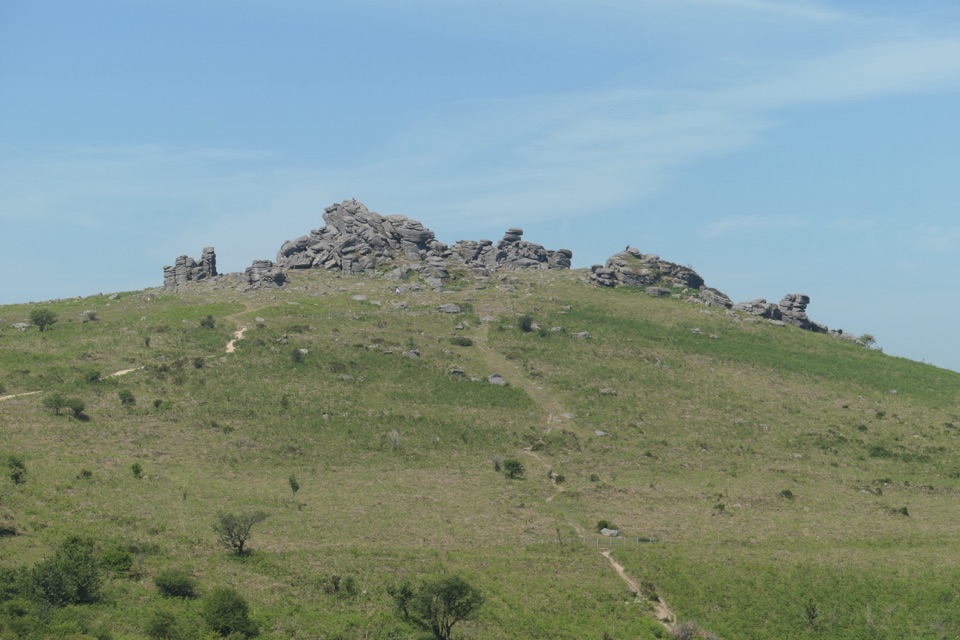
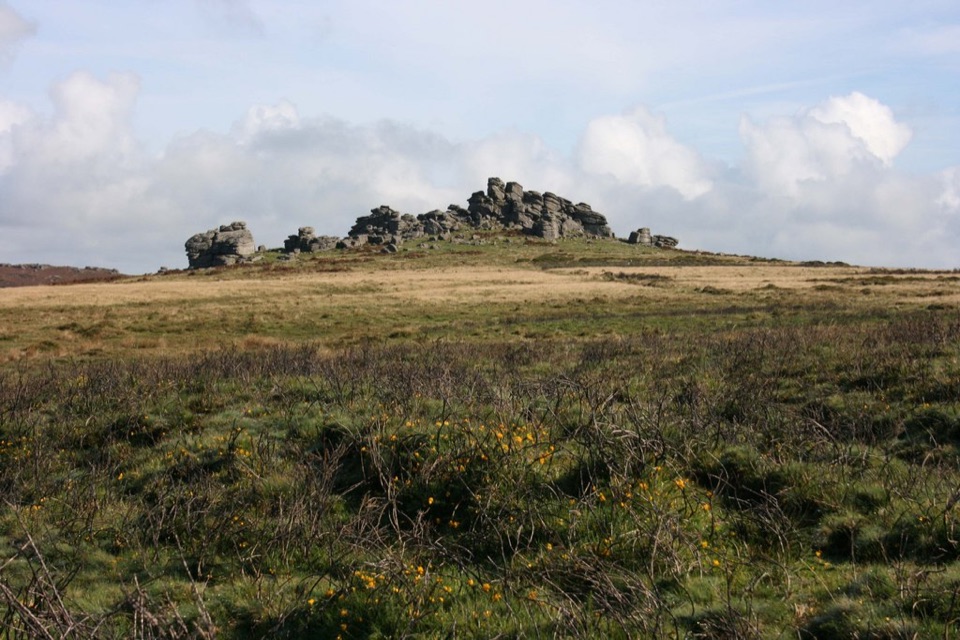
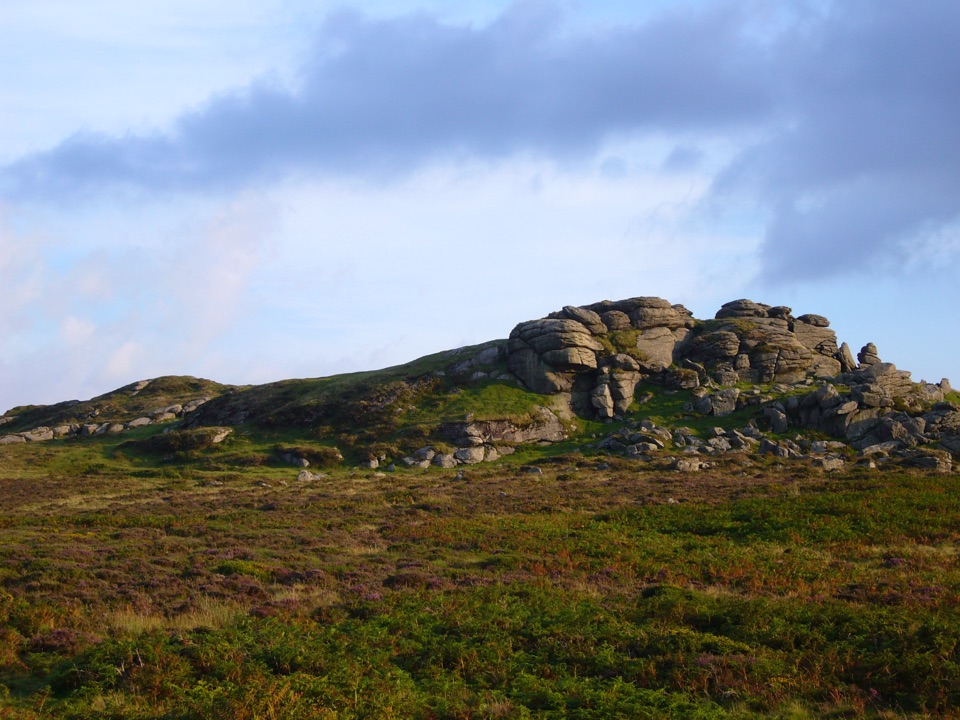
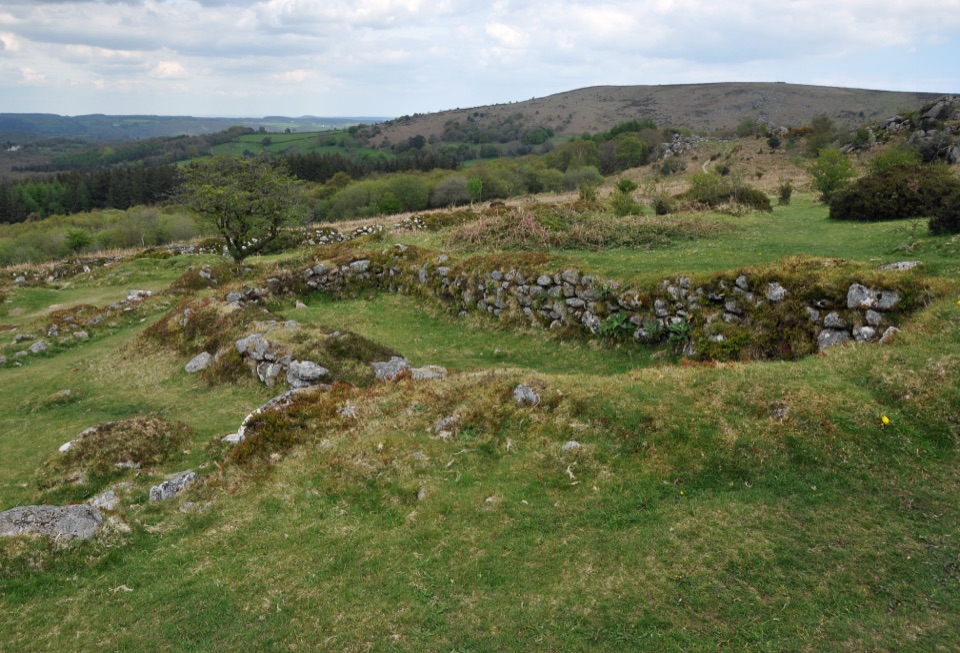
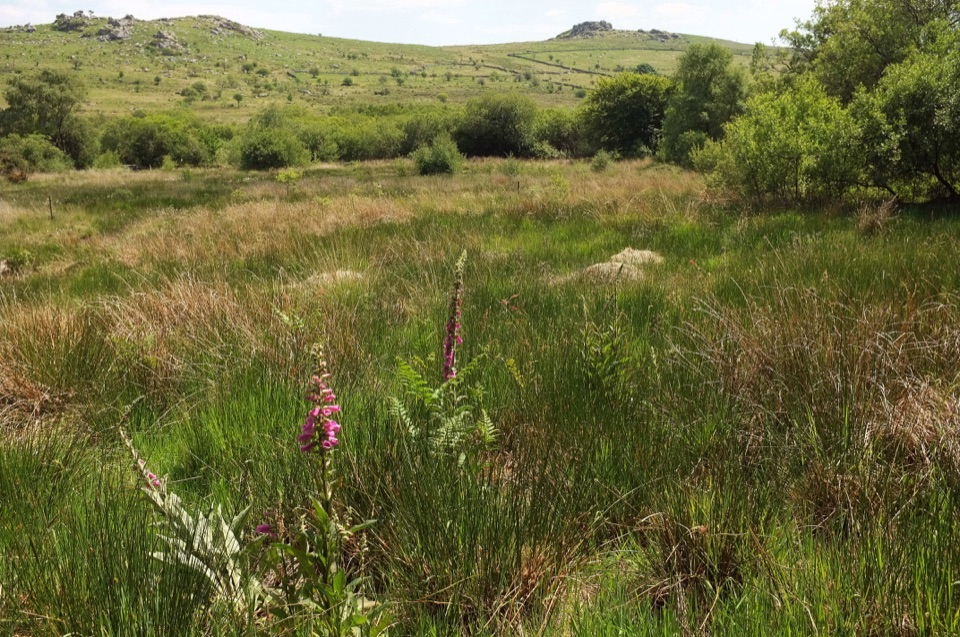
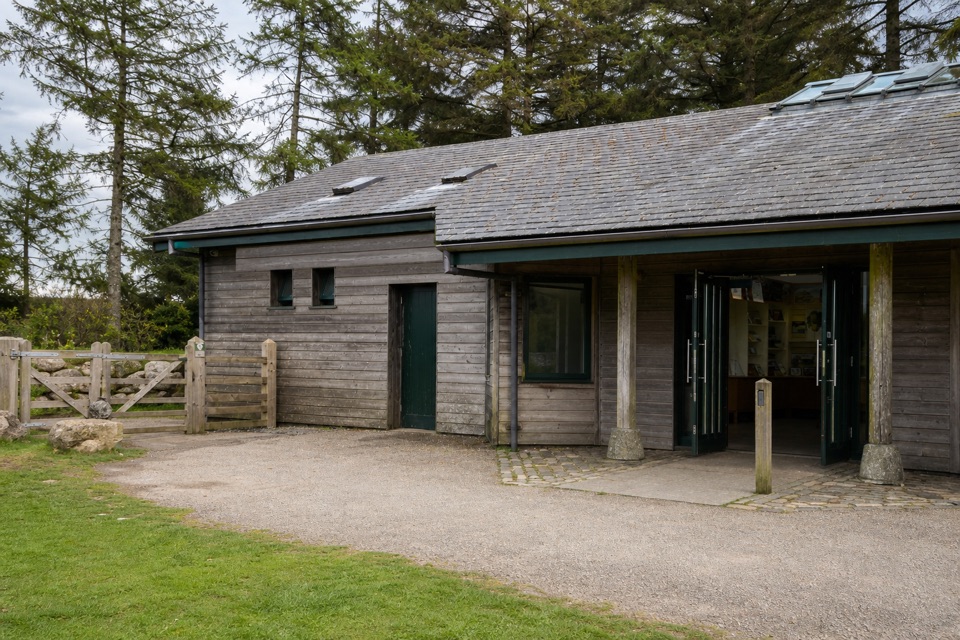
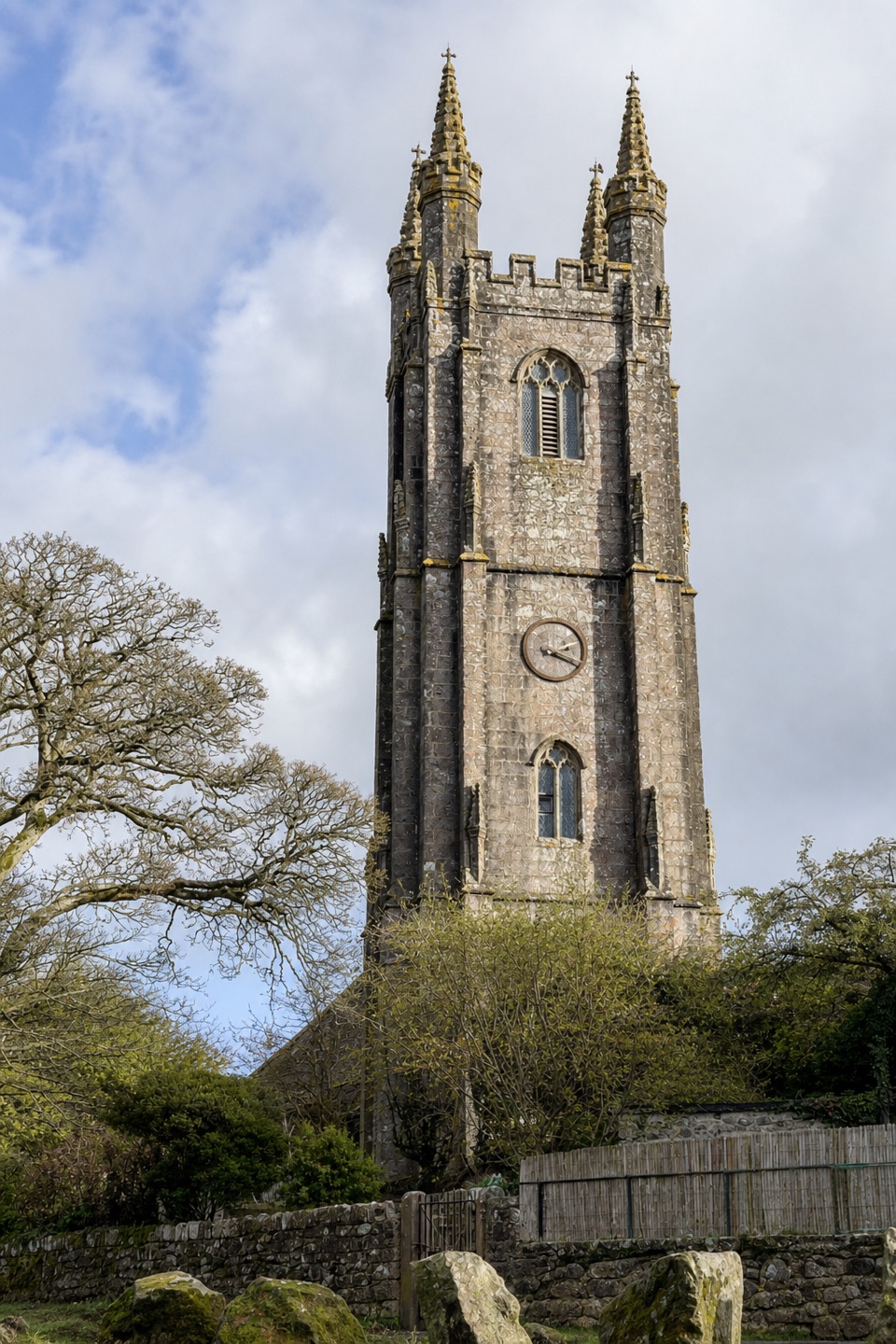
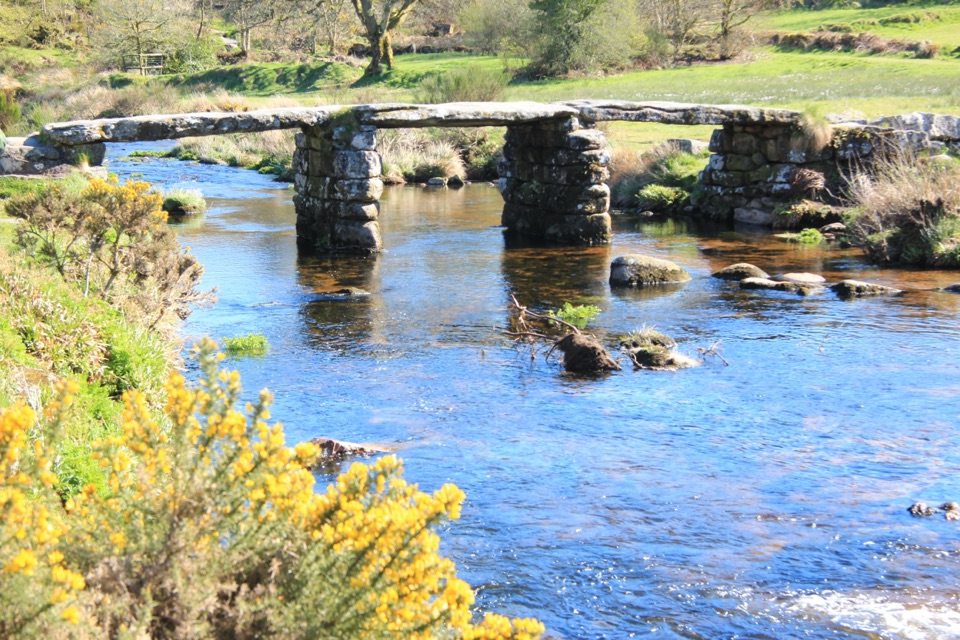
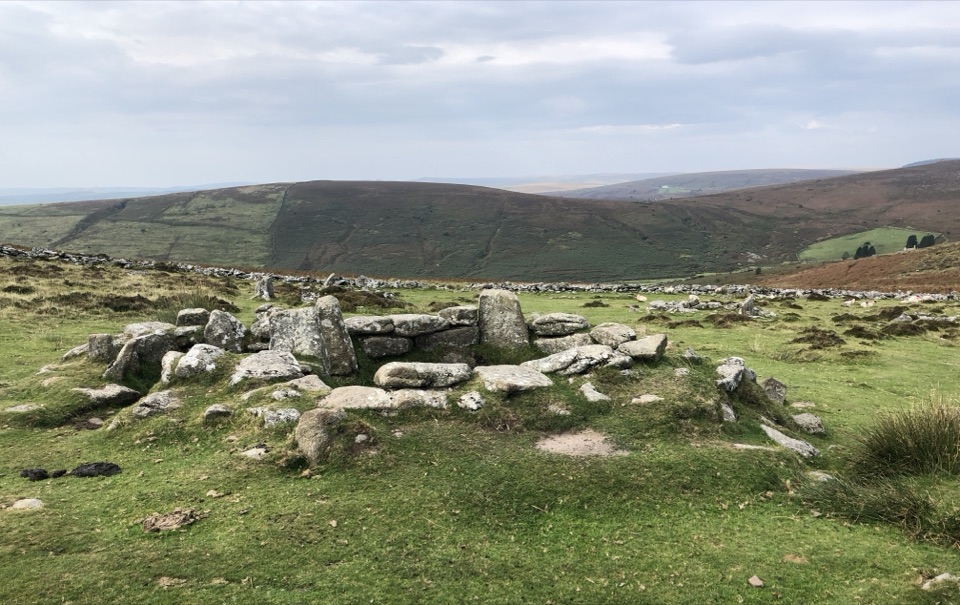
The village below is a separate archaeological site, but it gives Hound Tor its deeper story. Eleven stone buildings survive, probably arranged as three small farms around longhouses, with barns, yards and corn-dryer ovens. The settlement grew into a farming hamlet around 1200 and was mainly occupied in the thirteenth and fourteenth centuries. Its residents worked small terraced fields for oats and rye before colder conditions, repeated harvest problems and wider disease and demographic pressures made high-altitude farming harder.
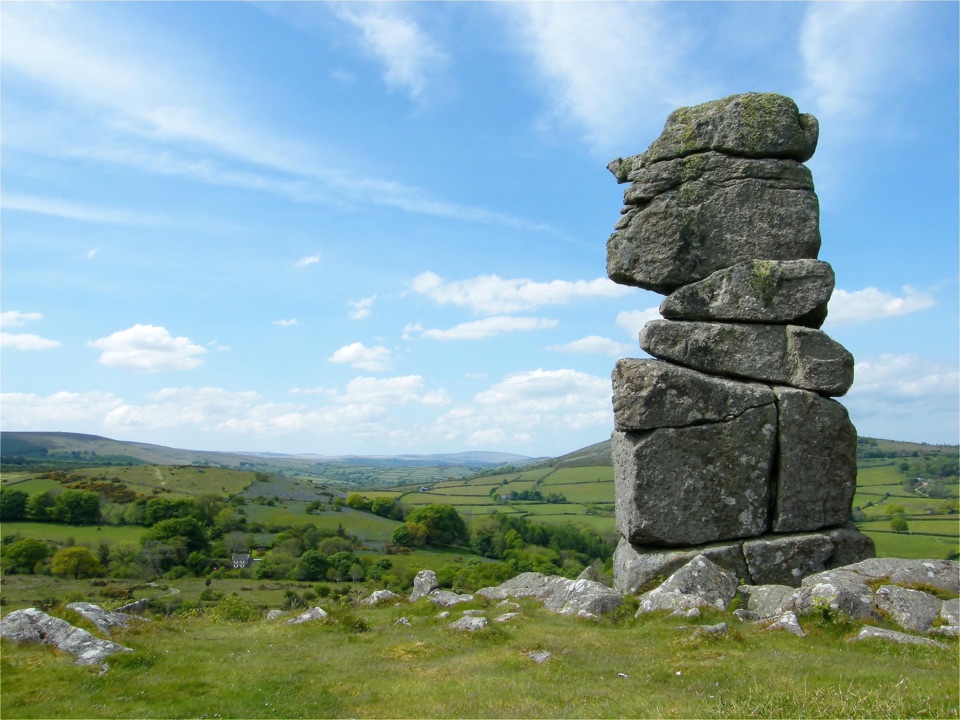
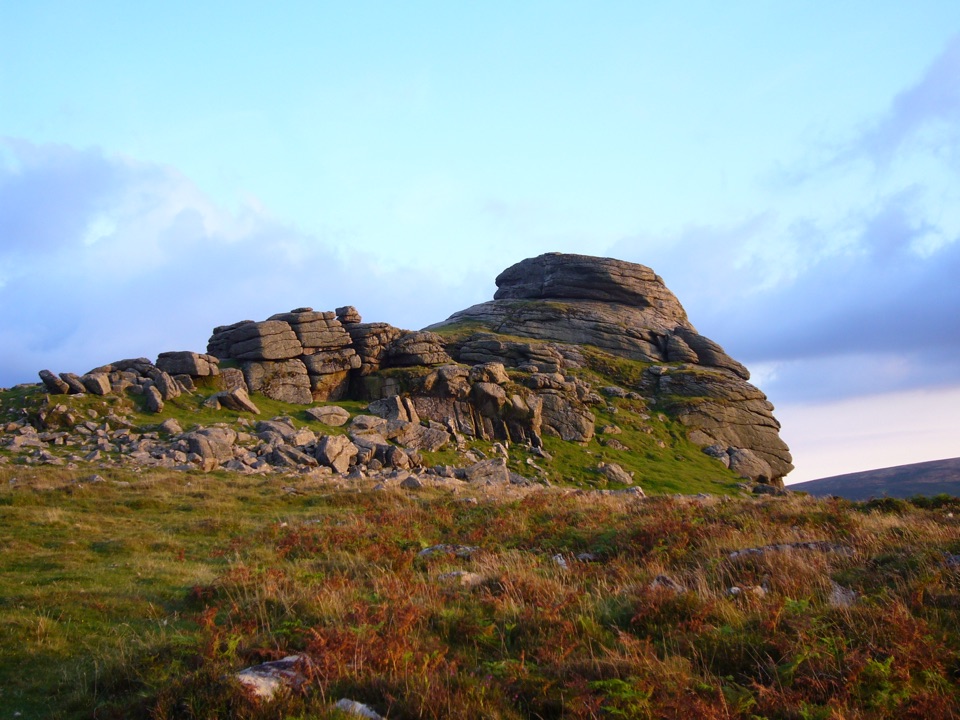
Look for the contrast between the tor's apparently timeless granite and the deliberately shaped stone buildings below. Local folklore also connects the animal-like rocks with The Hound of the Baskervilles, but that is a reputed association, not established evidence of Conan Doyle's inspiration. For the strongest photograph, frame the rock stacks from Greator Rocks with the abandoned village and open moor beyond.