Parking
Signed carpark just off the Arnhem Highway. Follow the short, flat access path to the Mamukala wetlands walk and bird hide; the full visitor route is a 3 km return walk with a loop section.
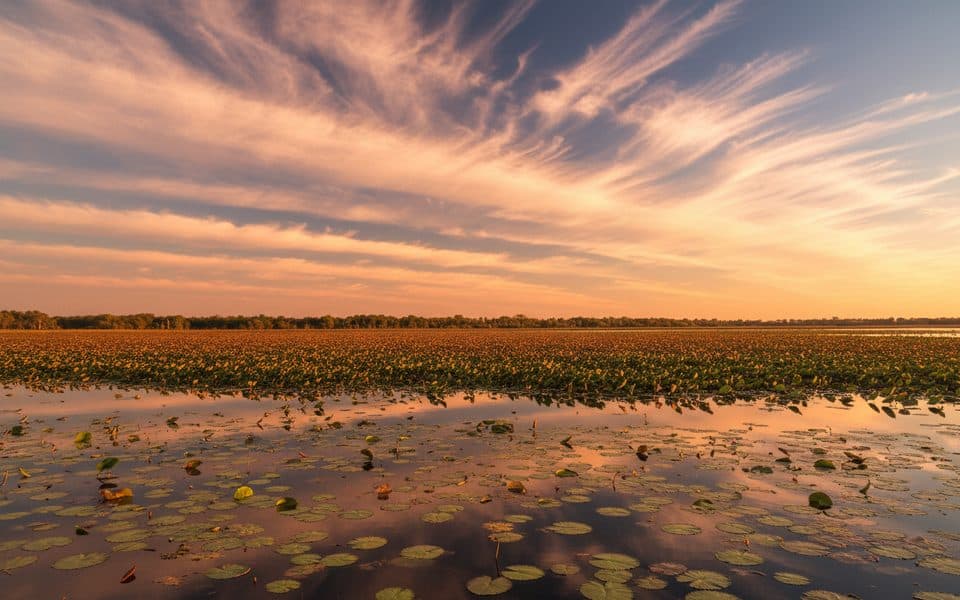
Kakadu National Park, NT
Easy loop with superb birdwatching from a serene wetland hide
Overview
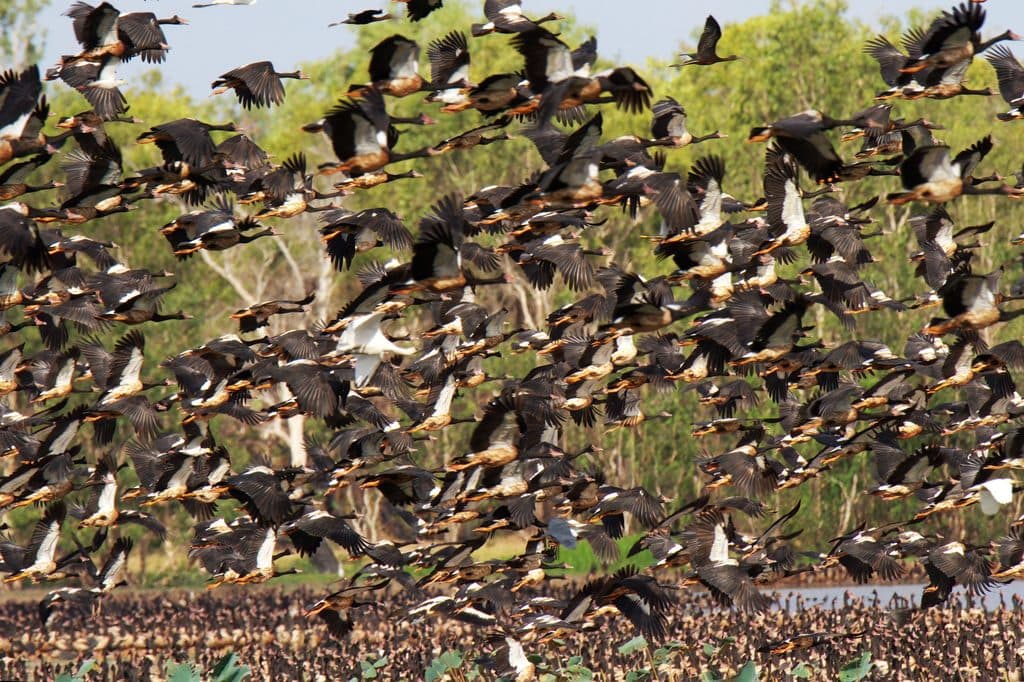
If birds are your thing, this is one of Kakadu’s best stops. The Mamukala Wetlands Walk is a gentle 3 km/1.9-mile return walk from the carpark, combining a short access path with a loop beside the wetlands. The star turn comes late in the dry season when thousands of magpie geese and other birds gather as water shrinks elsewhere—think nonstop movement and sound.
 Parkwolf’s verdictWhy go
Map & elevation
Plan your hike

The highest, rockiest slopes around here are a summer buffet for grizzly bears.
Kakadu Tour Guide
Parkwolf is a GPS audio tour guide for Kakadu National Park. As you drive, it chimes in with what’s ahead: hidden gems, upcoming stops, history, geology, and wildlife, right through your car’s speakers.
See the Kakadu audio tourRecorded for this trailhead
Mamukala Wetlands Bird Hide and Walk“Just ahead is the turn-off for the Mamukala Wetlands. It’s an easy stop, with a short walk to an observation hide overlooking a big, lily-covered billabong.”
Plays as you drive up to this trailhead in the Parkwolf Kakadu Tour Guide.
More stories near here in the app
“Fantastic app with many points of information… It’s great to just turn on while you’re driving and it gives you an audio tour of the national Park. We love it!!!!”


Trail guide
Start at the signed carpark off the Arnhem Highway and follow the short, flat access path to the Mamukala wetlands walk. The complete visitor route follows the loop around the wetlands and then returns along the shared approach to the carpark. Parks Australia lists it as a Grade 2 return walk taking about 1 hour 30 minutes. The first section to the bird hide is wheelchair-accessible; the loop is unsealed but flat, with compact dirt underfoot.
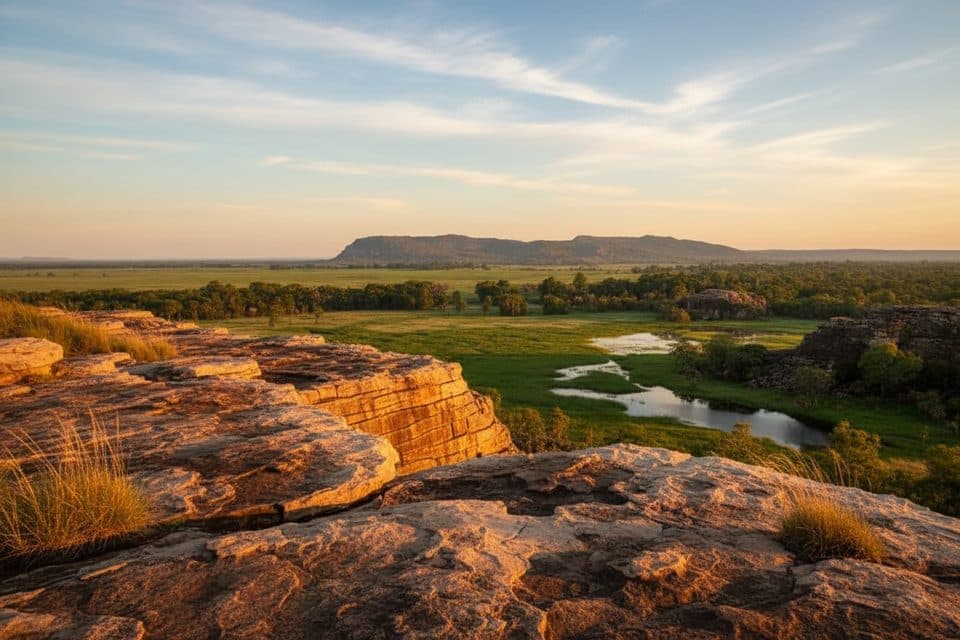
Expect expansive wetland views dotted with aquatic plants, with paperbark and pandanus around the edges. The observation hide is the focal point—quiet, shaded, and built for lingering—with interpretive displays (including a mural) that explain the area’s seasonal shifts and cultural significance. Keep an eye out for magpie geese in big numbers in the late dry, plus jacanas tip-toeing on lily pads, egrets, herons, kingfishers, and the occasional agile wallaby on the loop. Crocodiles can be present near the water’s edge—observe from a distance.
Bring binoculars and a camera—you’ll use them. Carry water, wear sun protection, and use insect repellent because you’re right by the water. Read the interpretive panels at the hide to understand how this wetland changes through the year and why it’s important to local Aboriginal people, especially in the late dry season.
Wildlife
 1,079 sightingsSaltwater CrocodileMost seen around 7 AMSighting map
 121 sightingsWater BuffaloMost seen around 6 AMSighting map
 76 sightingsFrilled DragonMost seen around 7 AMSighting map
 116 sightingsRed-tailed Black CockatooMost seen around 7 AMSighting map
 101 sightingsBrolgaMost seen around 7 AMSighting map
 299 sightingsMagpie GooseMost seen around 5 PMSighting map
Sighting maps show where each species has been reported across Kakadu. Wildlife moves, so no sighting is guaranteed.
Keep exploring
 EasyGungarre Walk3.9 km · 2 hr · 10.3 km awayEasy 3.9 km loop from a banyan fig through monsoon forest to Ankurdabbal Billabong
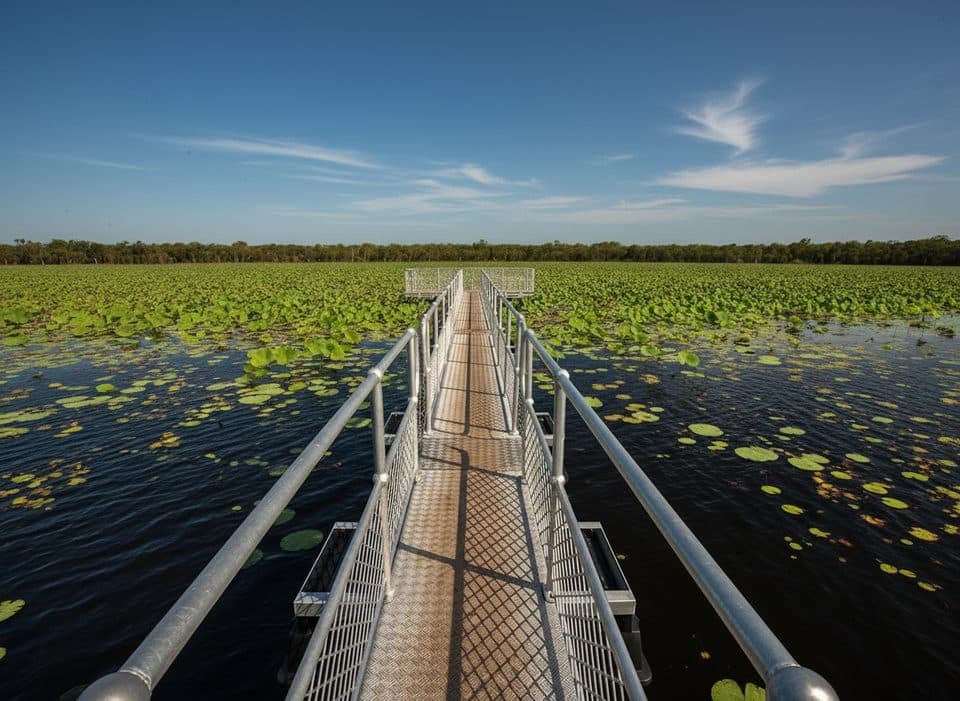 EasyKungarre Walk3.9 km · 2 hr · 10.8 km awayEasy loop from Aurora to bird-rich Ankurdabbal Billabong
Parkwolf’s Kakadu ranking
The audio tour guide for the drive, plus offline maps, trails, and wildlife heatmaps for when the signal drops.