Overview
About Muckross Abbey
Why stop
- A lot of original stonework survives, from the tower to the vaulted rooms.
Heads up
- Uneven floors and steep stone stairs limit access to some rooms.
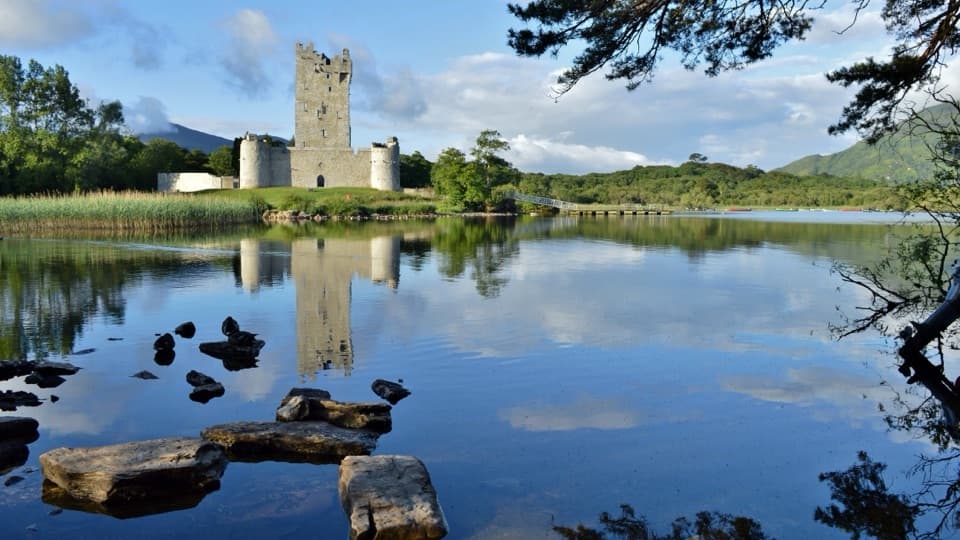
Muckross Abbey is the roofless remains of a 15th-century Franciscan friary in the wooded grounds of Killarney National Park. Its church has a broad square tower and tall stone windows, but the vaulted cloister is the part to seek out: a square arcade around a courtyard with a yew at its centre. Give yourself time to wander through the rooms rather than stopping at the first view.
 Parkwolf’s verdictA friary worth a proper wander
Map
Where it is

The highest, rockiest slopes around here are a summer buffet for grizzly bears.
Killarney Tour Guide
Your drive to Muckross Abbey, narrated.
Parkwolf is a GPS audio tour guide for Killarney National Park. As you drive, it chimes in with what’s ahead: hidden gems, upcoming stops, history, geology, and wildlife, right through your car’s speakers.
Recorded for this place
Muckross Abbey“You're approaching the park entrance for the walk to Muckross Abbey. A short walk from the roadside parking brings you to this fifteenth-century Franciscan friary.”
Plays as you drive up to Muckross Abbey in the Parkwolf Killarney Tour Guide.
More stories near here in the app
- Blue Pool Woodland Trails
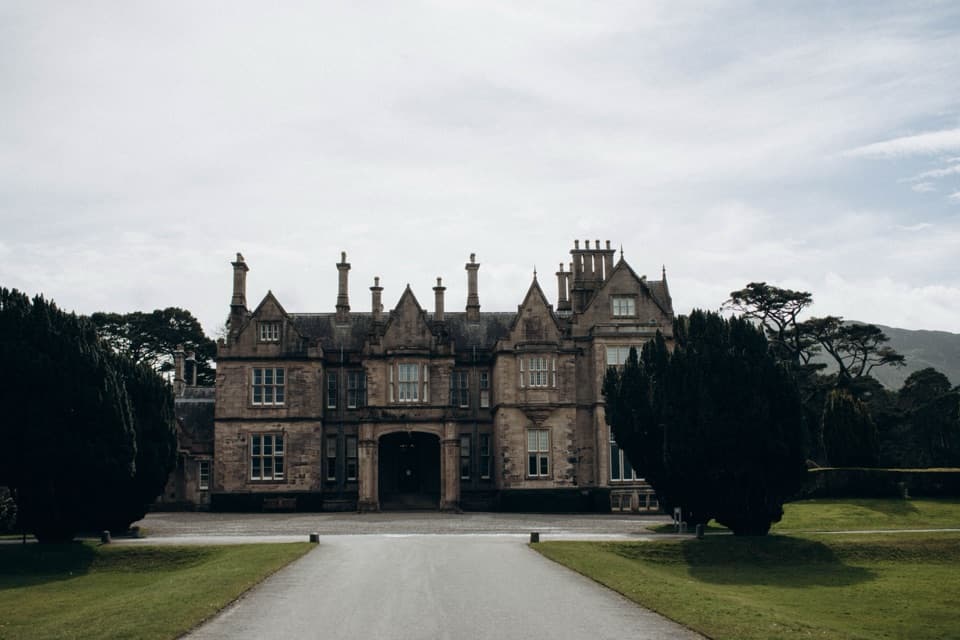
- Muckross House and Gardens
- A New Set of Antlers
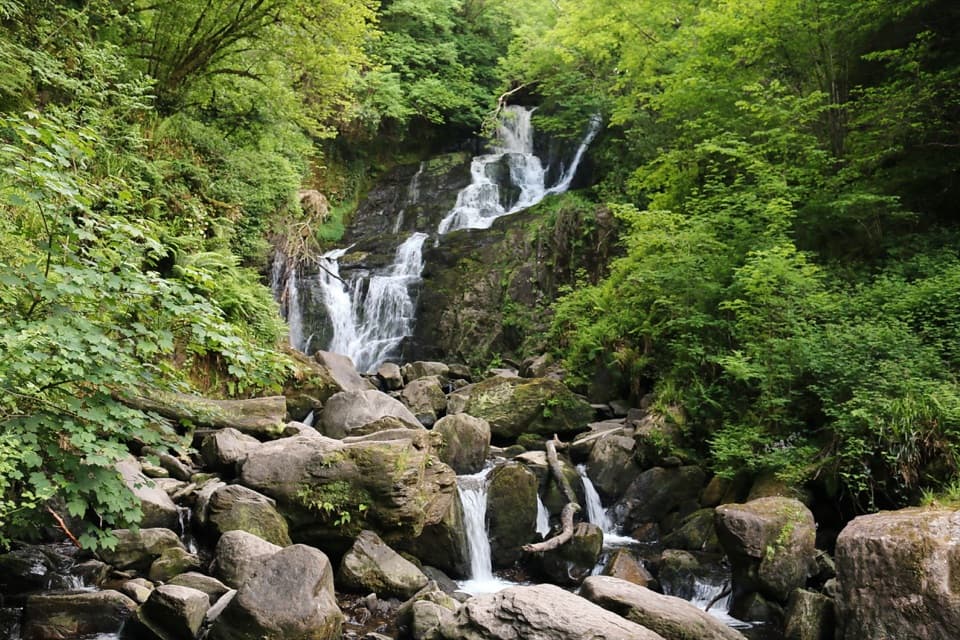
- Torc Waterfall
- 18 audio storiesacross Killarney’s roads, triggered by GPS as you drive
- Wildlife heatmapsfor Red Deer, Sika Deer, Feral Goat, and 11 more
- Works offlinemaps, 29 trails, 32 places, and audio download before you lose signal
- CarPlay readysimple controls built for the drive
“Fantastic app with many points of information… It’s great to just turn on while you’re driving and it gives you an audio tour of the national Park. We love it!!!!”


Guide
More about Muckross Abbey
Getting to the ruinsThe Abbey is open to the public and a short walk from parking on the N71.
The Abbey is open to the public and a short walk from parking on the N71. You can also make it a stop on the Lakeside Walk, a rough, meandering path toward Muckross House. The walk is longer if you start from one of the farther Muckross House parking areas, so choose your starting point with that in mind. Inside, uneven stonework and steep stairs make some upper rooms difficult to reach. The Garden Restaurant and craft shop are at Muckross House's Walled Garden Centre, a separate stop from the Abbey.
Look into the cloisterWalk around the vaulted arcade and look through its arches into the courtyard.
Walk around the vaulted arcade and look through its arches into the courtyard. The yew makes the view feel different from an ordinary set of ruins; for a photo, frame its trunk with one of the stone openings so you catch the tree and the masonry together. The tree's age is disputed, so it's best appreciated without attaching a specific date to it.
The friars and their neighborsThe Observantine Franciscan friary was founded in 1448 with support from Gaelic chieftain Donal…
The Observantine Franciscan friary was founded in 1448 with support from Gaelic chieftain Donal Mac Mór Mac Chartaigh. These friars travelled to nearby towns to preach and depended on local people, including the McCarthy clan, for food and supplies. That makes the site a record of a working religious community tied to the region, not just an isolated church.
How the roof came offThe friary was sacked during the late-16th-century Desmond Rebellions.
The friary was sacked during the late-16th-century Desmond Rebellions. In 1652, Cromwellian troops under General Edmond Ludlow removed its roof; some friars were killed, and survivors fled to France. The buildings were abandoned, leaving the open sky above the cloister and church that visitors see now.
A graveyard still in useThe old and modern graveyards around the Abbey remain active, with burials still taking place.
The old and modern graveyards around the Abbey remain active, with burials still taking place. Gaelic poets Piaras Feiritéar, Aodhagán Ó Rathaille and Eoghan Rua Ó Súilleabháin are among those buried here; Feiritéar was executed at Killarney in 1653. Leave space for mourners and treat the graves as a living burial place, not just part of the ruins.
Wildlife
Wildlife in Killarney
 106 sightingsRed DeerMost seen around 7 AMSighting map
 209 sightingsSika DeerMost seen around 7 AMSighting map
 12 sightingsFeral GoatMost seen around 6 PMSighting map
 49 sightingsSwanMost seen around 7 AMSighting map
 48 sightingsHeronMost seen around 5 PMSighting map
 16 sightingsCormorantMost seen around 8 AMSighting map
Sighting maps show where each species has been reported across Killarney. Wildlife moves, so no sighting is guaranteed.