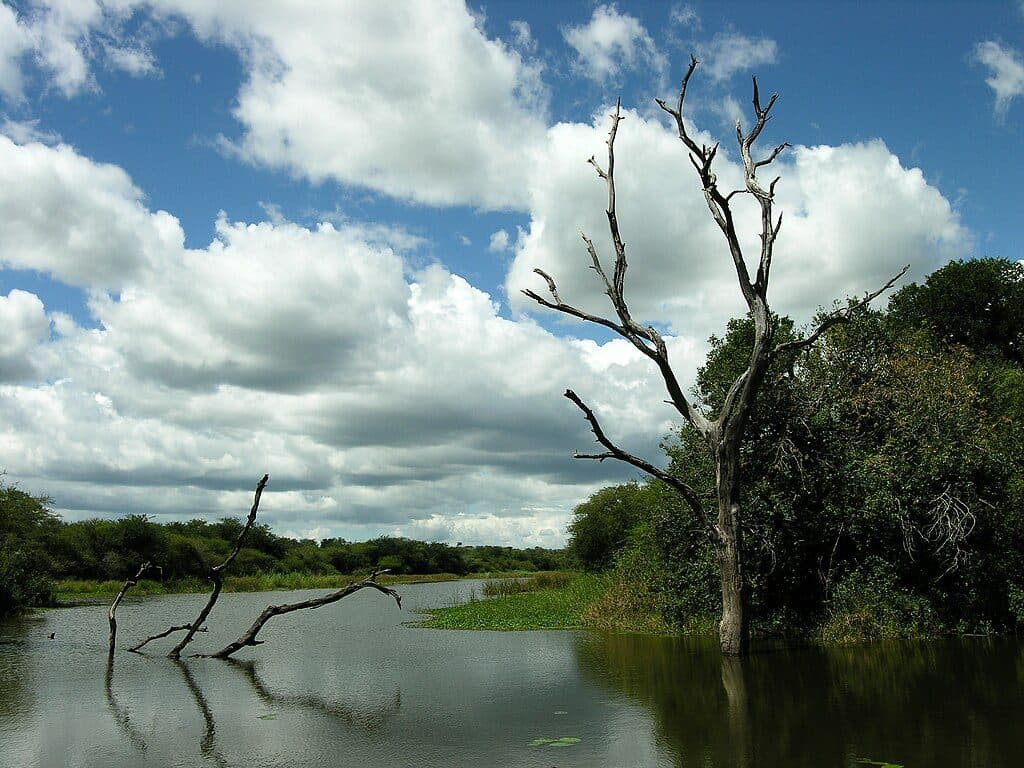
Best time to go
River levels and views change with the seasons. After heavy rains, the Olifants can run full—dramatic to see, but animals may spread out. In drier spells, exposed sandbars concentrate crocs and birds, making scanning easier.

Scenic pullout · Kruger National Park
Get-out bridge with big river views and reliable hippo-croc action
Overview
Olifants River Bridge is one of those rare spots where you’re allowed to hop out of the car and soak it all in. In the clearly marked middle section of the bridge you can step out, stretch, and line up photos of the wide Olifants channel below. It’s a natural pause point on drives between Satara, Olifants, and Letaba rest camps, with big views that make even a quiet wildlife day feel worth the stop.
Map
Local know-how
Exit only in the marked central zone and keep an eye on traffic.
Arrive at sunrise or late afternoon for both activity and flattering light.
Scan sandbanks and shallow pools for crocs and hippos; reedbeds for kingfishers, herons and fish eagles.
Need restrooms or supplies? Pair the stop with Olifants or Letaba rest camps.
After heavy rains the river can run high—build in patience and scan slowly.
Plan your stop
The highest, rockiest slopes around here are a summer buffet for grizzly bears.
Kruger Tour Guide
Parkwolf is a GPS audio tour guide for Kruger National Park. As you drive, it chimes in with what’s ahead: hidden gems, upcoming stops, history, geology, and wildlife, right through your car’s speakers.
See the Kruger audio tourRecorded for this place
Olifants River Bridge: A Get-Out Spot with Great Views“The crossing ahead is the Olifants River Bridge, one of the rare spots where you're allowed to get out of your car in a designated central section.”
Plays as you drive up to Olifants River Bridge in the Parkwolf Kruger Tour Guide.
More stories near here in the app
“Fantastic app with many points of information… It’s great to just turn on while you’re driving and it gives you an audio tour of the national Park. We love it!!!!”


Guide
This stretch of river regularly delivers hippo pods and crocodiles on sandbanks and in shallow pools. Elephants often move through, and it’s a solid bet for waterbuck and other riverine game. Birders should work the reedbeds and overhanging branches for kingfishers, herons, and fish eagles. Sightings ebb and flow, so give it a few unhurried minutes before you roll on.
East of the river, dark, nutrient-rich basalt soils support especially nutritious grasses that draw herds of grazers—zebra, wildebeest, buffalo—and, naturally, their predators. West of the river, older granite/gneiss country carries more wooded hills and thinner grass. The bridge sits over a genuine ecological seam, which is part of why the river is so productive to scan.
You may exit your vehicle only in the signed central portion of the bridge—stick within the marked zone and stay mindful of passing traffic. There are no restrooms, water, or picnic facilities here; plan your comfort stops at Olifants or Letaba rest camps nearby.
Wildlife
 1,312 sightingsLionMost seen around 6 AMSighting map
 727 sightingsLeopardMost seen around 5 AMSighting map
 2,403 sightingsElephantMost seen around 5 PMSighting map
 425 sightingsWhite RhinocerosMost seen around 6 AMSighting map
 547 sightingsBuffaloMost seen around 5 PMSighting map
 502 sightingsWild DogMost seen around 6 AMSighting map
Sighting maps show where each species has been reported across Kruger. Wildlife moves, so no sighting is guaranteed.
Keep exploring
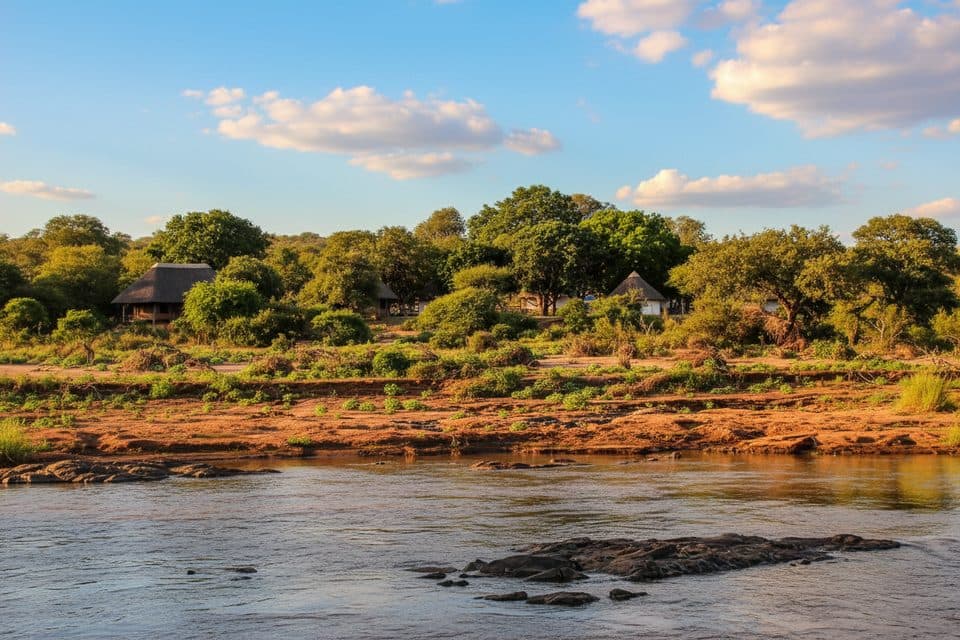 Campground · 4.6 km awayBalule Rest CampOff‑grid riverbank camp for starry nights and quiet wildlife time
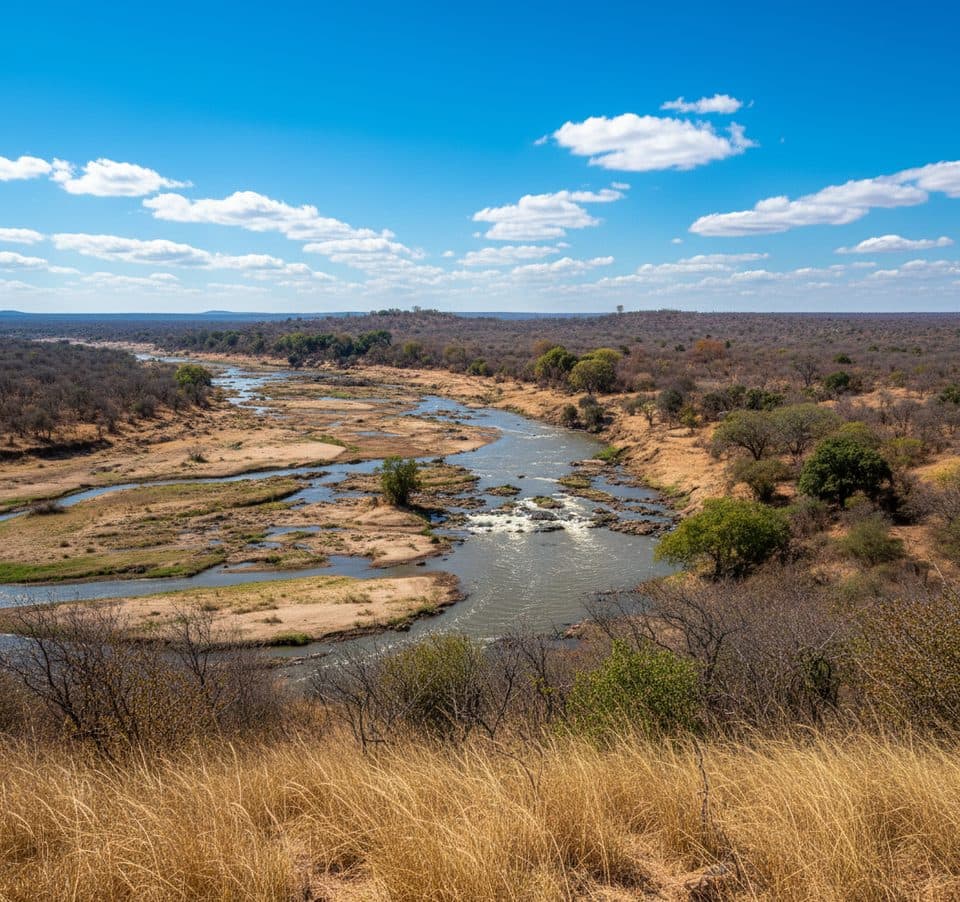 Scenic pullout · 5.4 km awayN’wamanzi LookoutClassic Olifants River lookout for hippos, crocs, and elephants
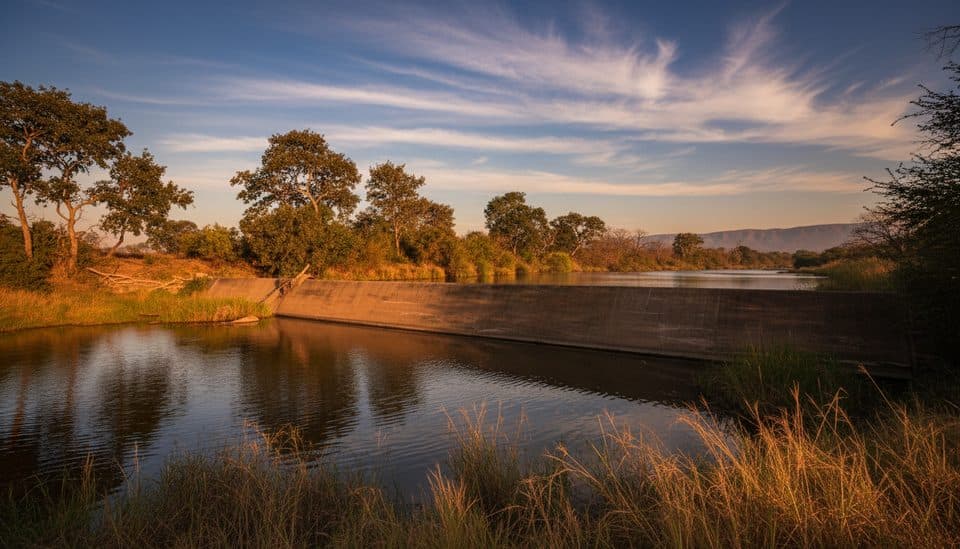 Scenic pullout · 5.5 km awayNgotso WeirQuiet weir pull-off that often pulls in thirsty game
Parkwolf’s Kruger ranking

The audio tour guide for the drive, plus offline maps, trails, and wildlife heatmaps for when the signal drops.