
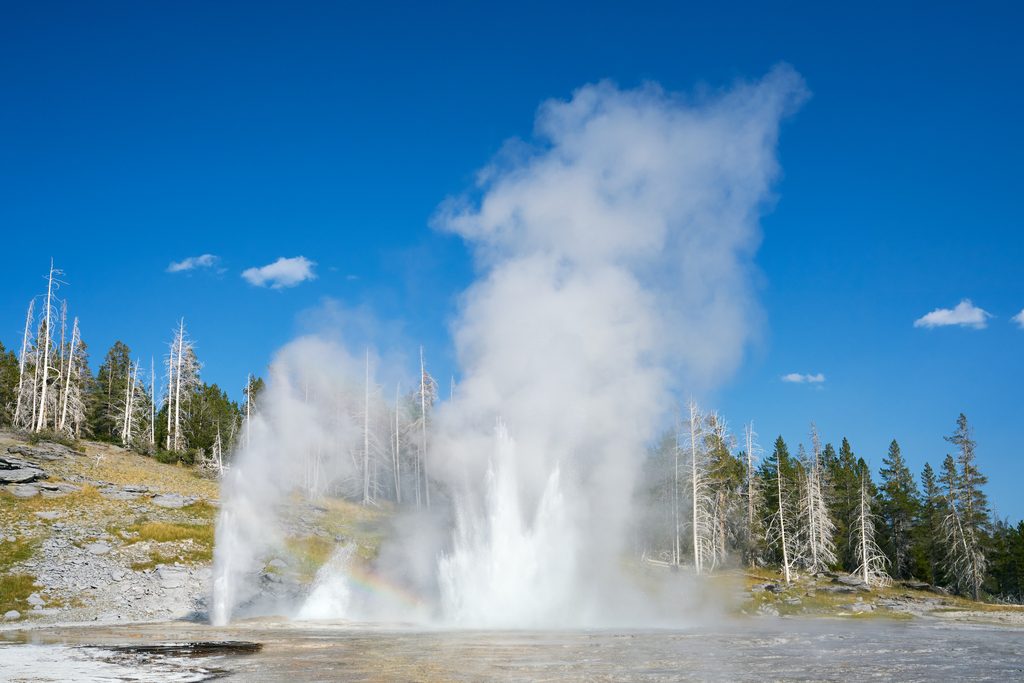
Place · 0.1 mi away
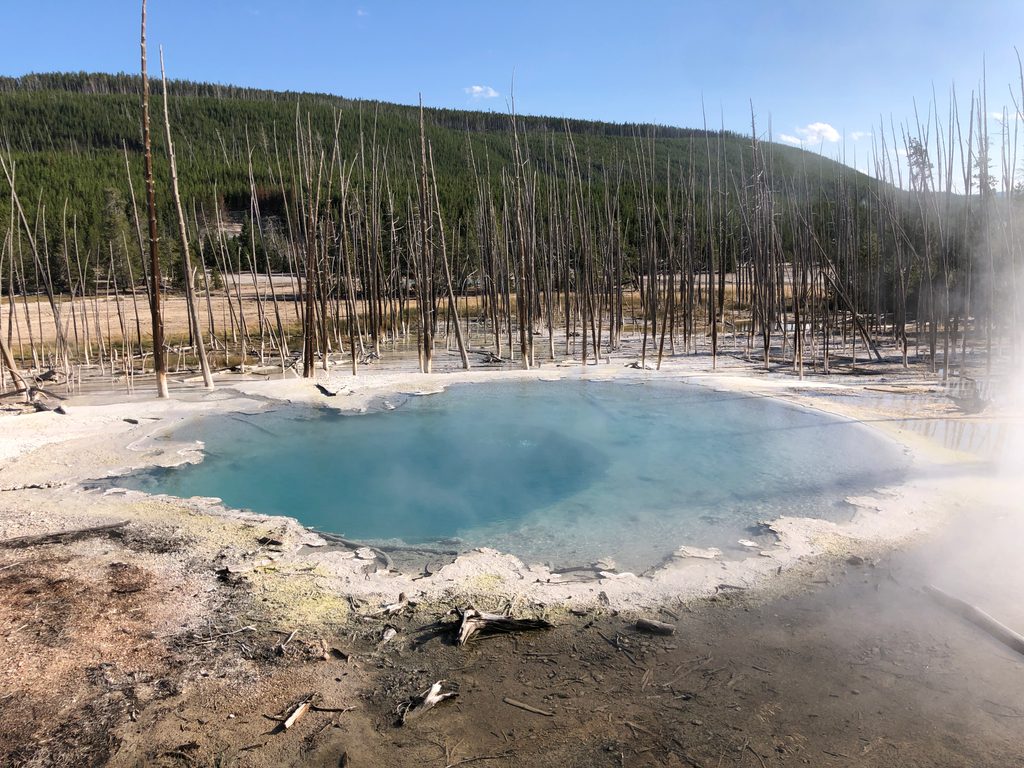
Cistern Spring is a standout in the Norris Geyser Basin’s Back Basin—a clear, vivid blue pool that constantly overflows and builds a pale rim of silica (sinter). It’s one of those features that stops you on the boardwalk; simple at first glance, but the story underneath is wild.
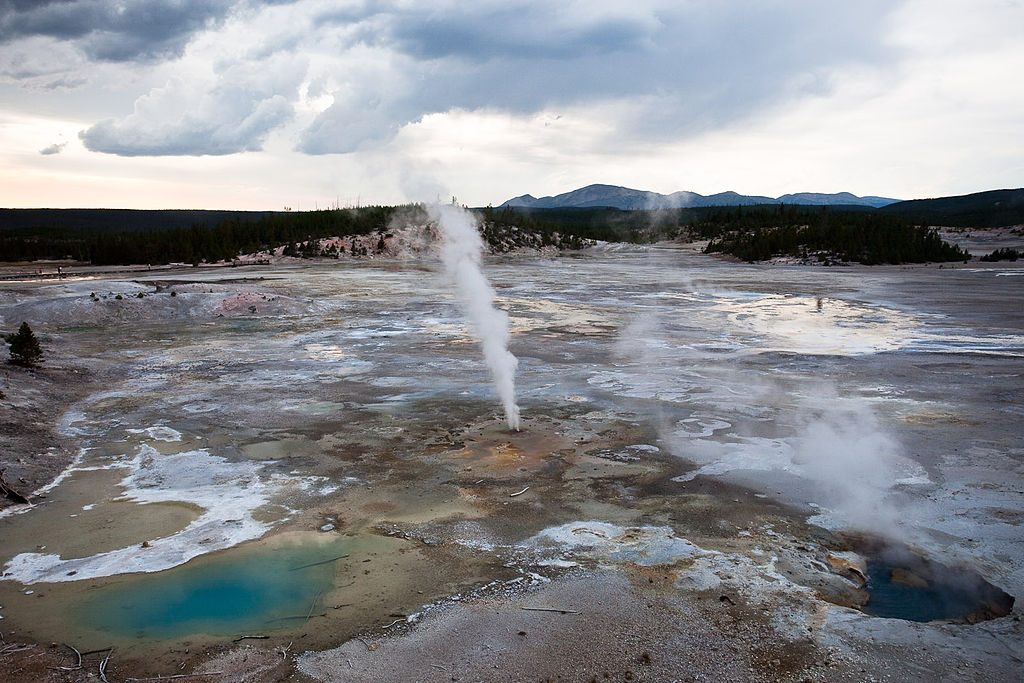
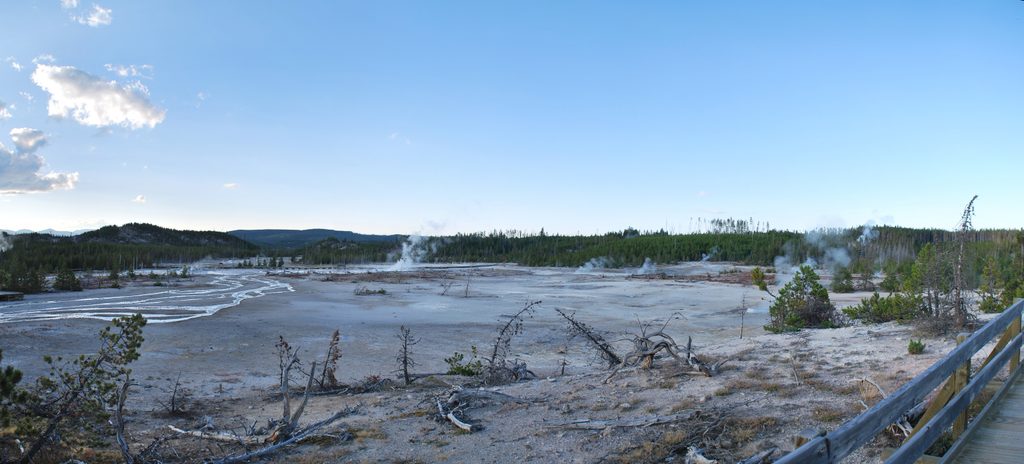
Most days you’ll find a calm, brimful pool steaming over a bright, almost snow-white sinter edge, with a stark hillside of dead lodgepole pines below—killed by decades of silica‑rich overflow and warm soils. Depending on temperature, you’ll notice color changes from heat-loving microbes around the margins.
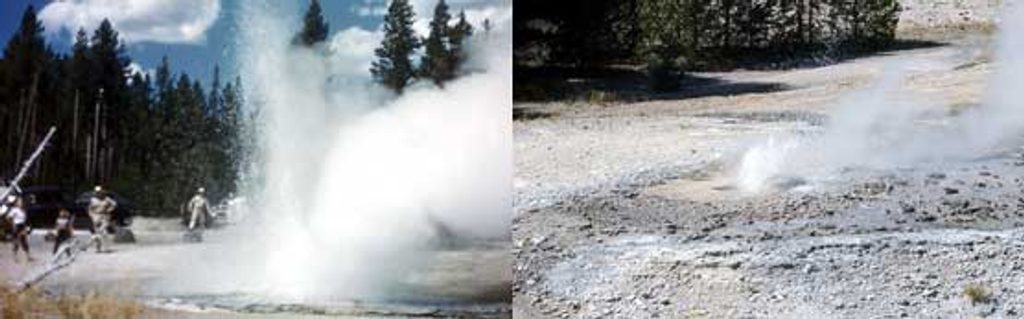
Cistern is hydrologically linked to Steamboat Geyser (just about 330 feet away). After Steamboat’s major water eruptions, Cistern often drains within a day, then slowly refills over the next few days. It’s also a prolific builder—depositing roughly 1/2 inch of sinter each year—so the landscape here evolves faster than most features.
Seismic studies suggest Cistern has a shallow vertical conduit feeding a deeper, offset reservoir, and Steamboat has its own deep, near-vertical conduit. There isn’t a simple open pipe between them near the surface; instead, they likely share a network of fractures at depth. That hidden plumbing explains both Steamboat’s power and Cistern’s drain‑and‑refill routine.
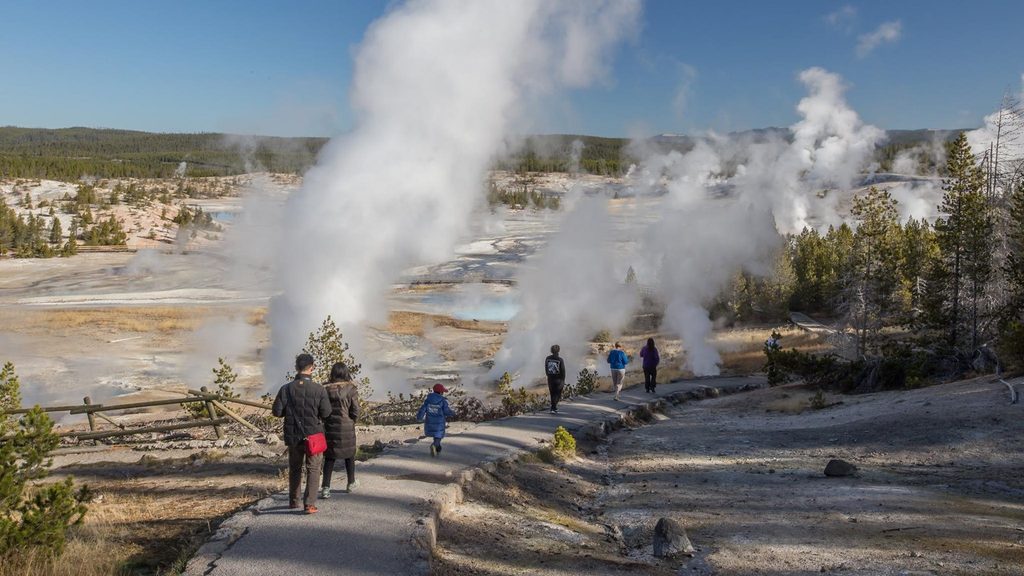
You’ll reach Cistern via the Norris Back Basin boardwalk loop, a short walk from the museum area. Stay on the boardwalk—the ground is thin and the water is near boiling. Expect sulfur smells and drifting steam; wind direction can make views crystal clear or totally ghosted in a minute.
Pair Cistern with nearby Steamboat Geyser and other Back Basin curiosities on the same boardwalk loop. Norris is famously dynamic—features can look different visit to visit—so keep your expectations flexible.
Place · 0.1 mi away
Place · 0.1 mi away
Place · 0.1 mi away
Place · 0.2 mi away
Easy · 0.1 mi away
Easy · 0.2 mi away
Easy · 1 mi away
Easy · 1 mi away

Parkwolf Tour Guide
