
Place · 0.2 mi away
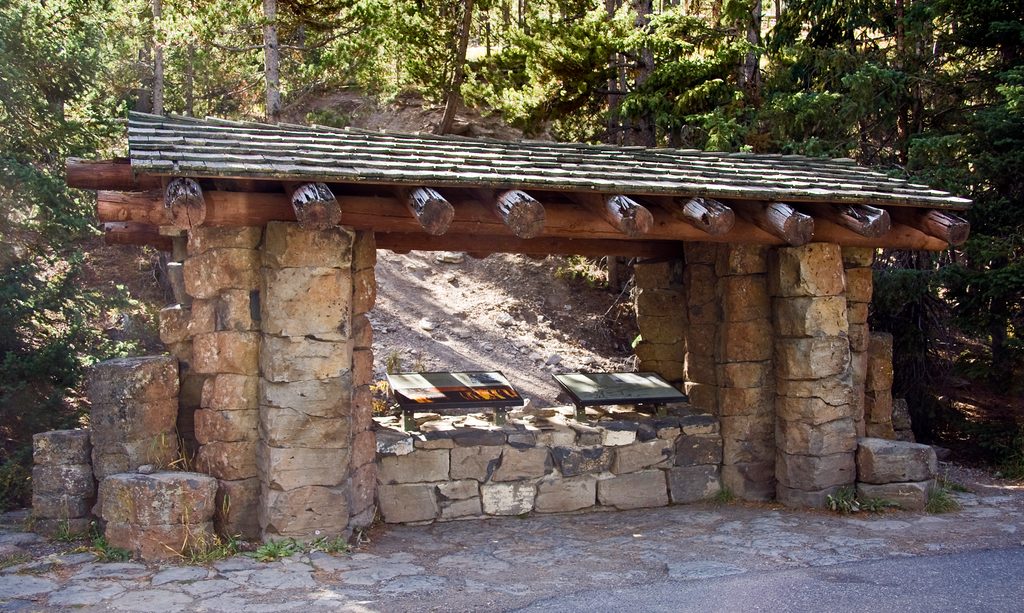
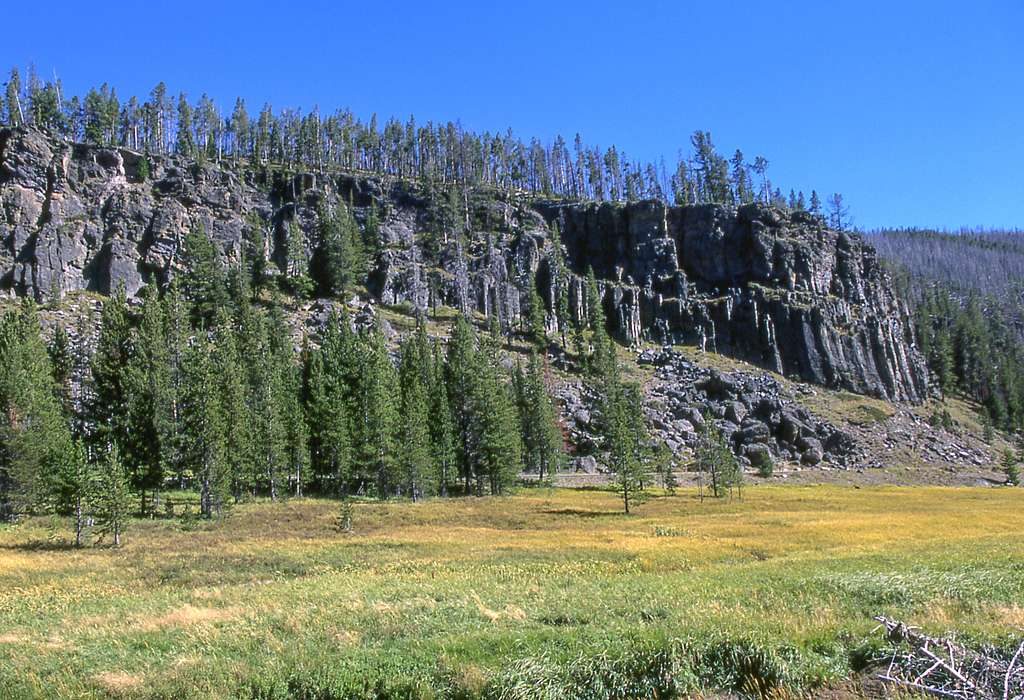
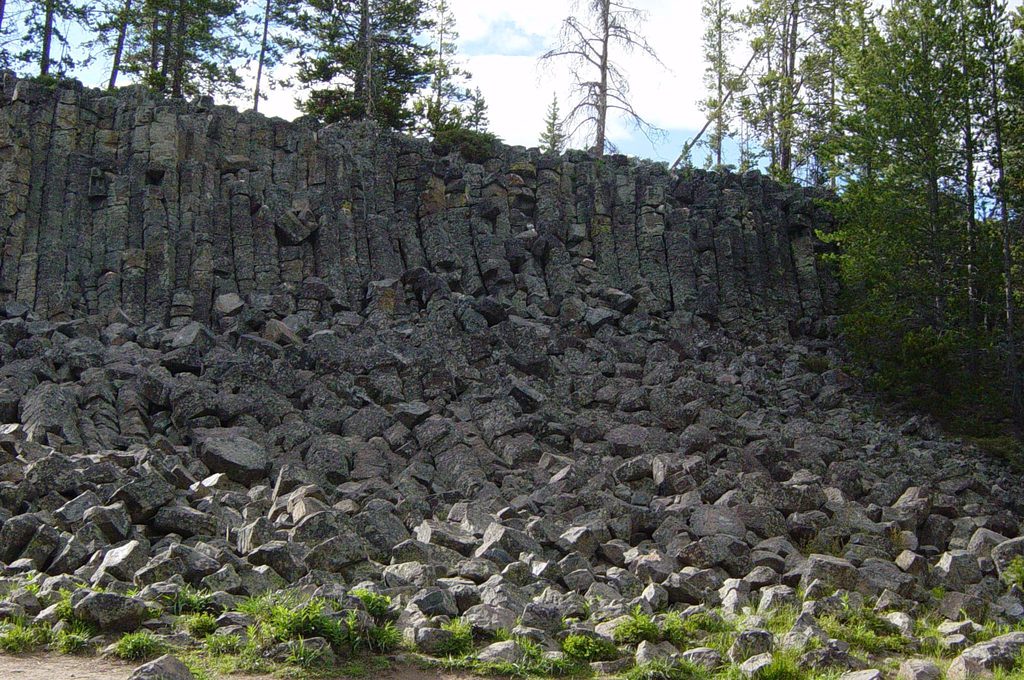
This is a quick, meaningful stop on the Grand Loop Road between Mammoth and Norris. The kiosk marks Obsidian Cliff, a National Historic Landmark, and it’s notable as the first wayside exhibit in the national park system (built in 1931). You’re here for the story more than the scenery: how this black volcanic glass shaped trade, technology, and travel across North America for millennia.
Expect a signed roadside pullout with an interpretive display and a clear view of the cliff rising above a talus slope. You’ll read about the geology and history and, per visitor reports, find obsidian samples to see and touch at the display. The cliff itself is viewed from below; closures are common on the slope, so treat this as a learn-from-the-road stop rather than a hike.
Obsidian Cliff is a thick exposure of volcanic glass formed when silica‑rich lava cooled rapidly, creating a natural glass ideal for sharp tools. Its roughly 98‑foot‑thick face and long history of quarrying (starting over 11,000 years ago) made it one of the most important obsidian sources for Indigenous peoples. Artifacts from here have been traced across vast trade networks—from western Canada to the Great Lakes—with a striking share found in Hopewell mortuary sites in the Ohio River Valley. A late‑1980s fire opened the area to broader archaeological study, deepening our understanding of how people worked and used this stone.
There’s no set “show time” here—stop whenever you’re already driving between Mammoth and Norris. If you want a calmer moment to read the panel, swing by when traffic is lighter and the pullout isn’t crowded. It’s a short, easy add-on to any day in this part of the park.
Place · 0.2 mi away
Place · 1.9 mi away
Place · 3.1 mi away
Place · 4.3 mi away
Moderate · 1.9 mi away
Easy · 4.7 mi away
Easy · 6.2 mi away
Easy · 6.2 mi away

Parkwolf Tour Guide
