Place · 0 mi away
Challenging

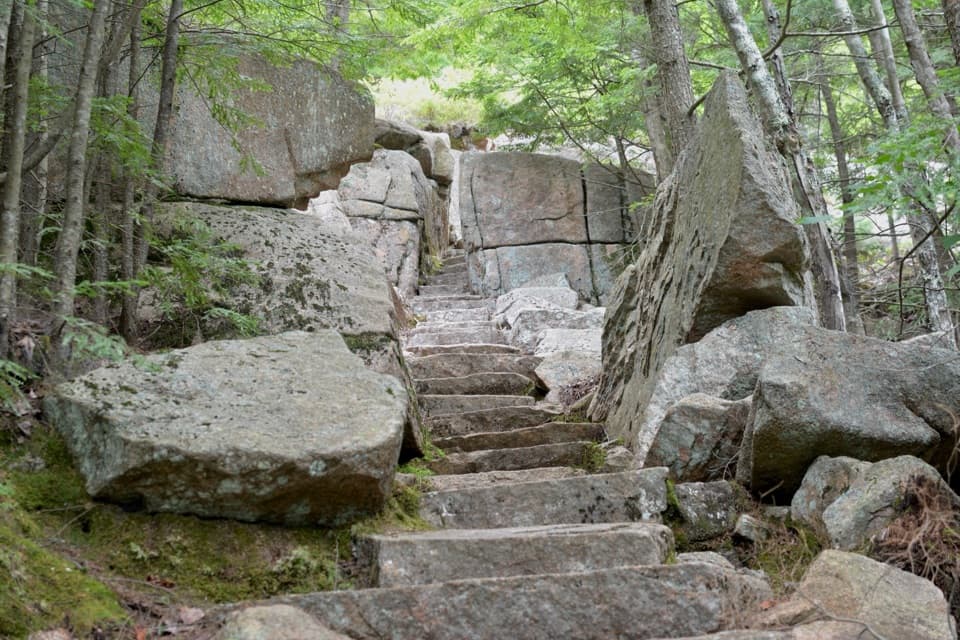
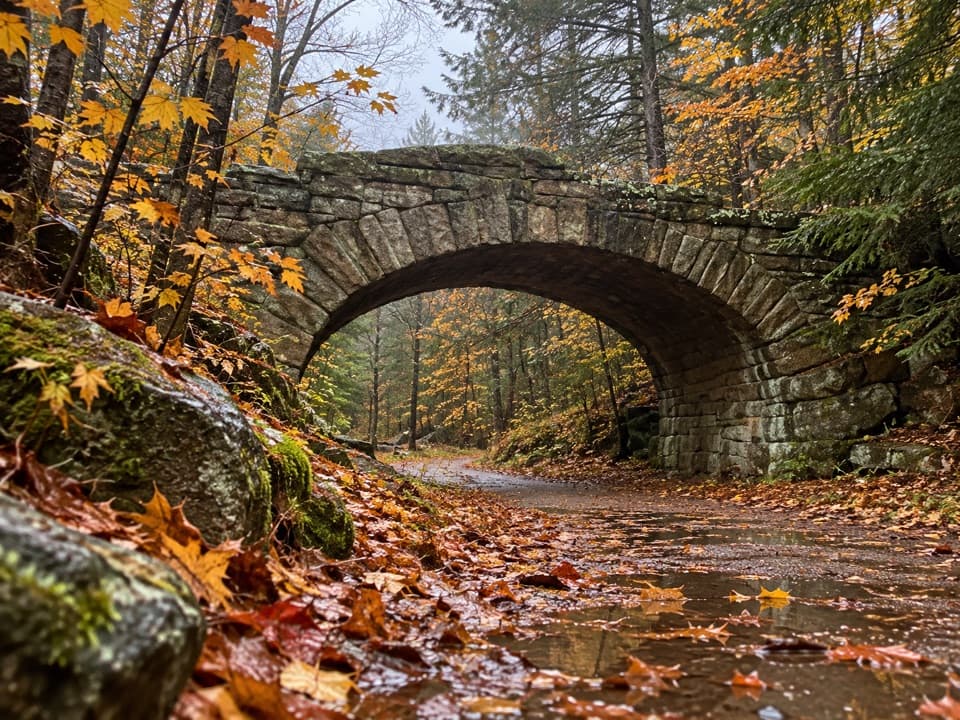
If you love crafted stonework and big views without iron rungs, Beachcroft Path is your Champlain Mountain ascent. It’s a historic, moderately strenuous climb that trades ladders for long granite stairways and broad ledges, with constant payoffs over The Tarn, Dorr Mountain, and out toward Frenchman Bay. Expect a steady workout and classic Acadia scenery.
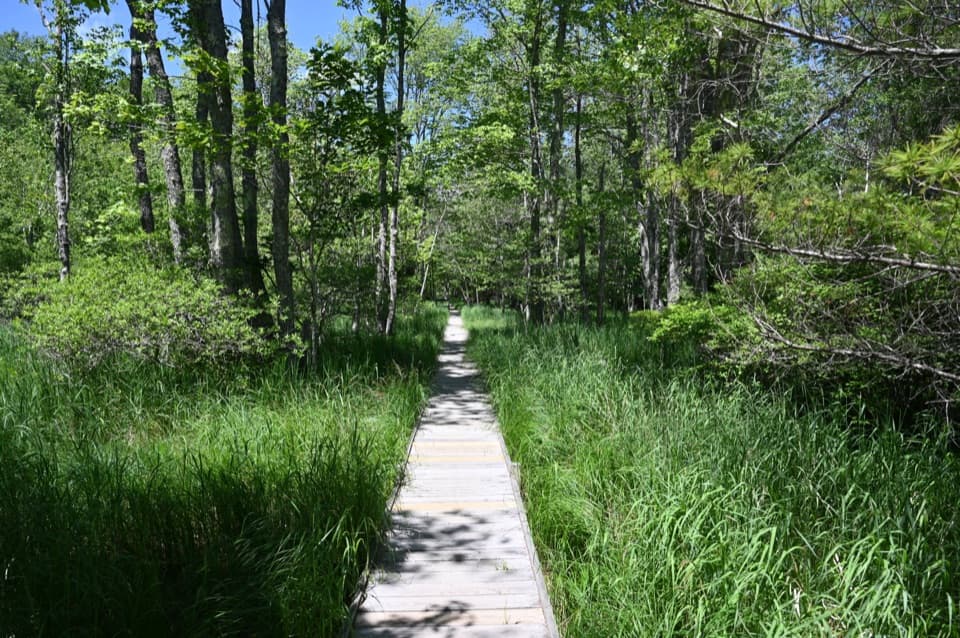
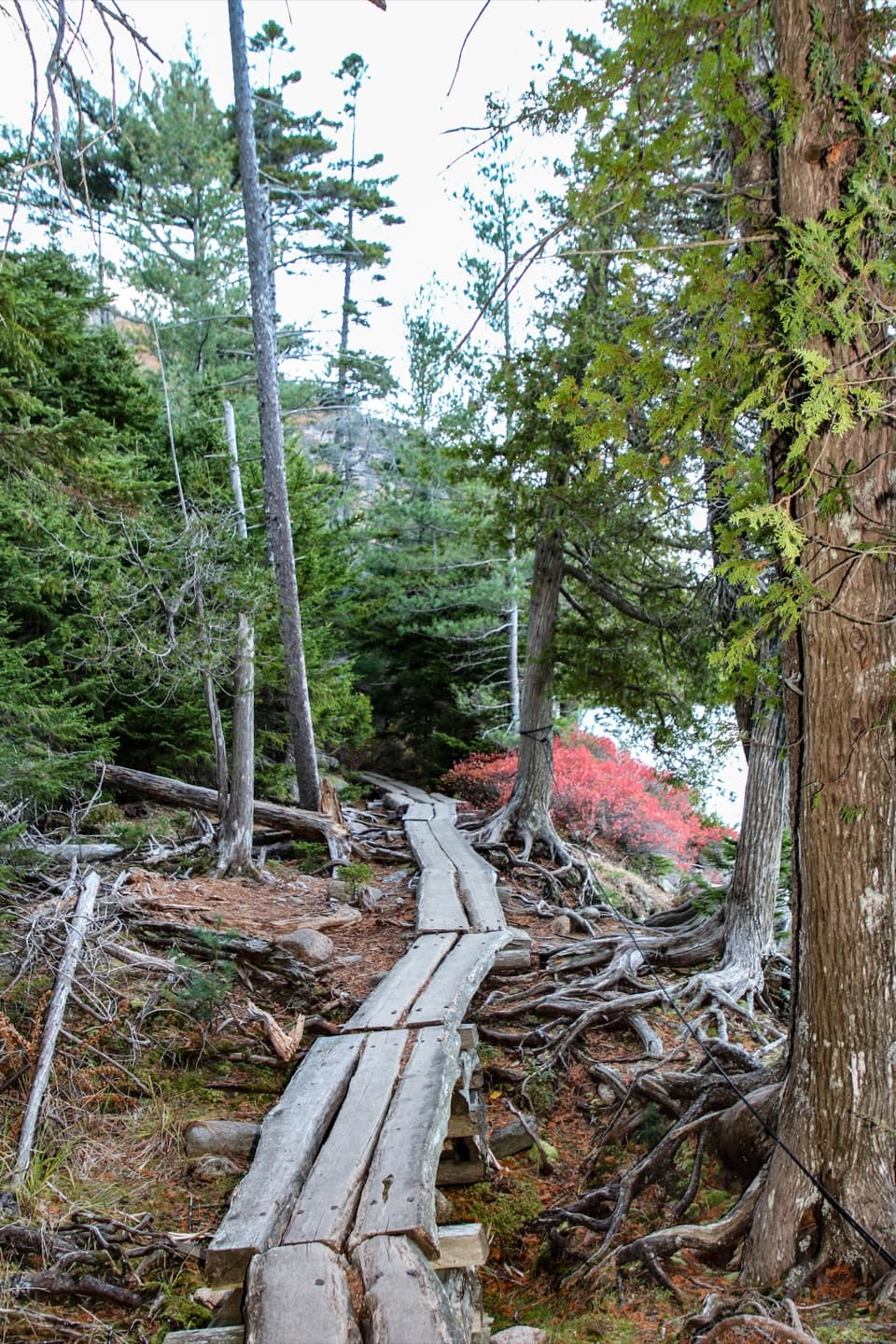
The trail begins directly across from ME‑3 at The Tarn and climbs southeast through forest before breaking onto open pink‑granite ledges. It passes near Huguenot Head (no official spur to the actual summit) and crosses a marshy notch before the final push to Champlain Mountain’s 1,058‑foot summit, where it intersects the Champlain South Ridge and Precipice routes. Beachcroft Path alone is about 2.0 miles round trip to the summit, with roughly 1,000 feet of gain—longer if you link other trails for a loop.
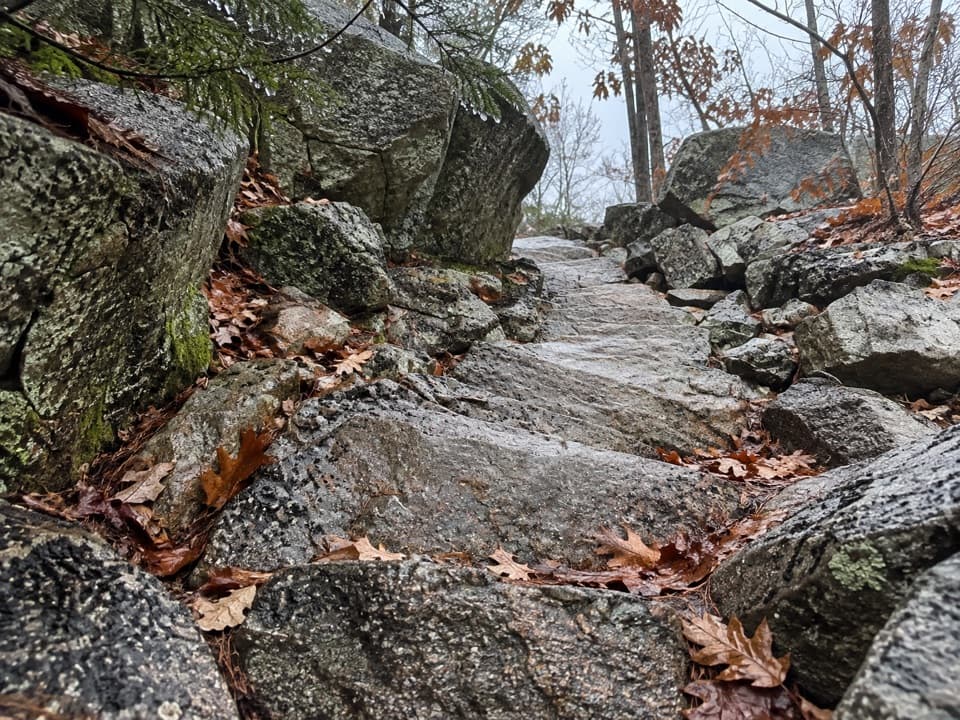
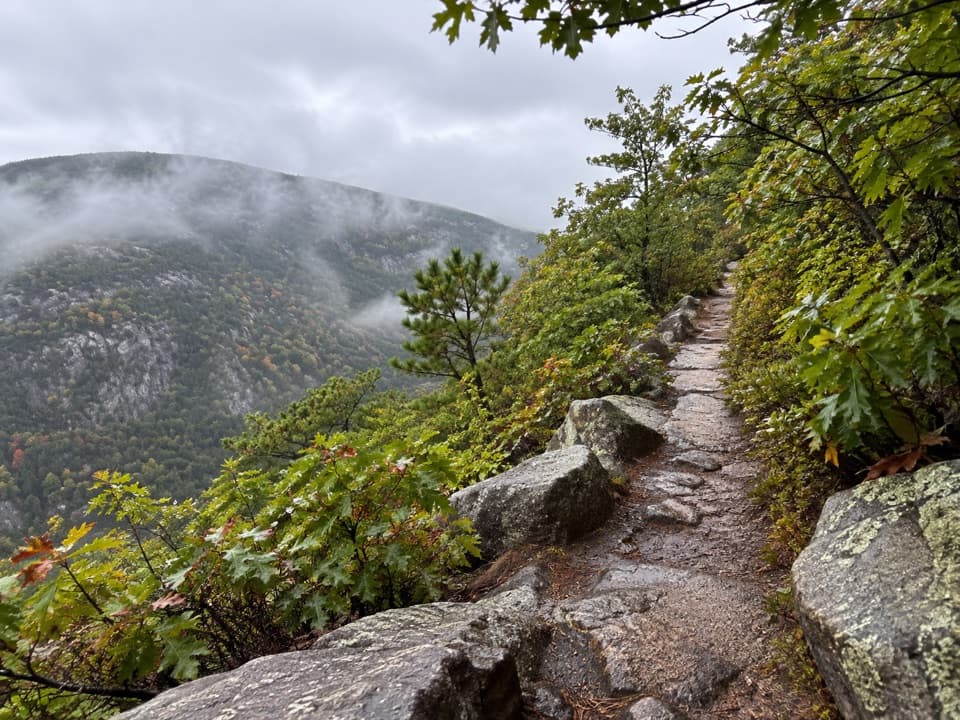
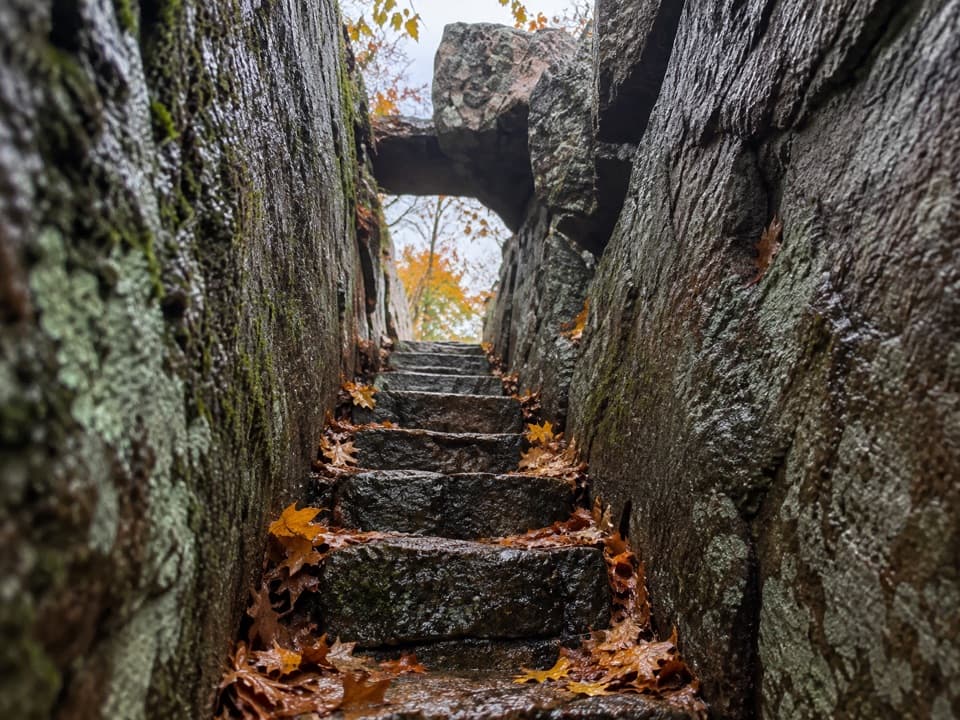
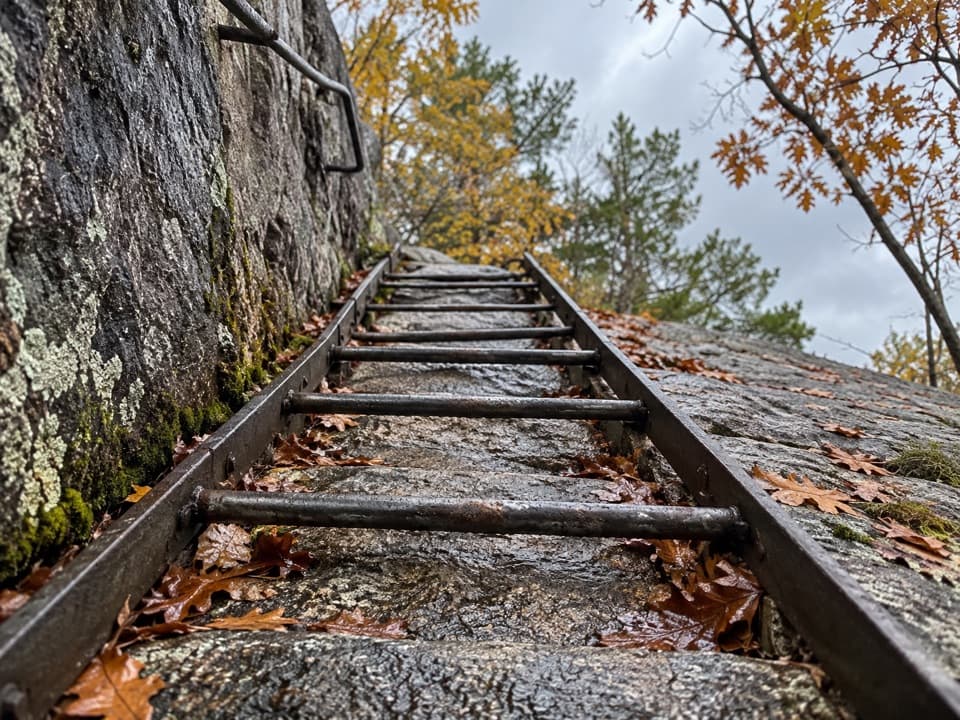
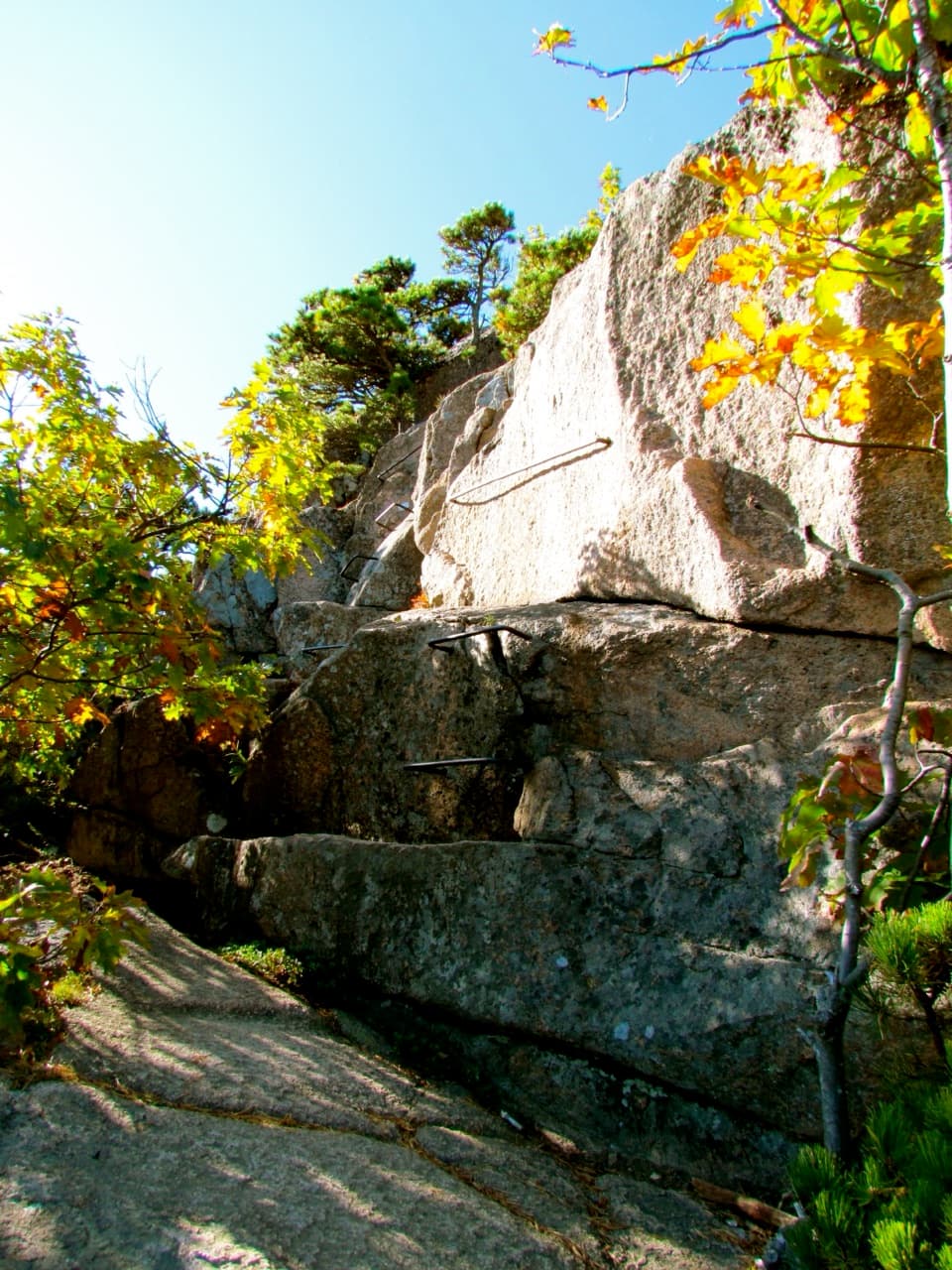
This is one of Acadia’s signature stone stairway hikes: meticulously built switchbacks, slabs, and ledges that keep things non‑technical but sustained. The upper section includes some light scrambling and exposed granite. It’s well marked with blue blazes and cairns; still, on open rock the line can be less obvious—watch the markings and don’t follow stray rock piles.
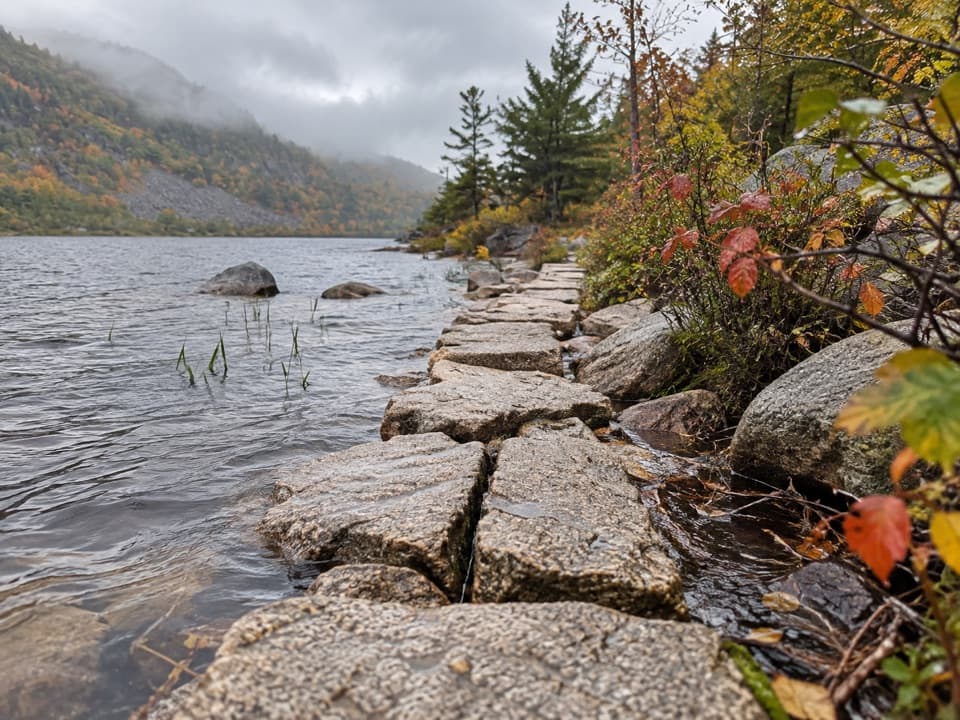
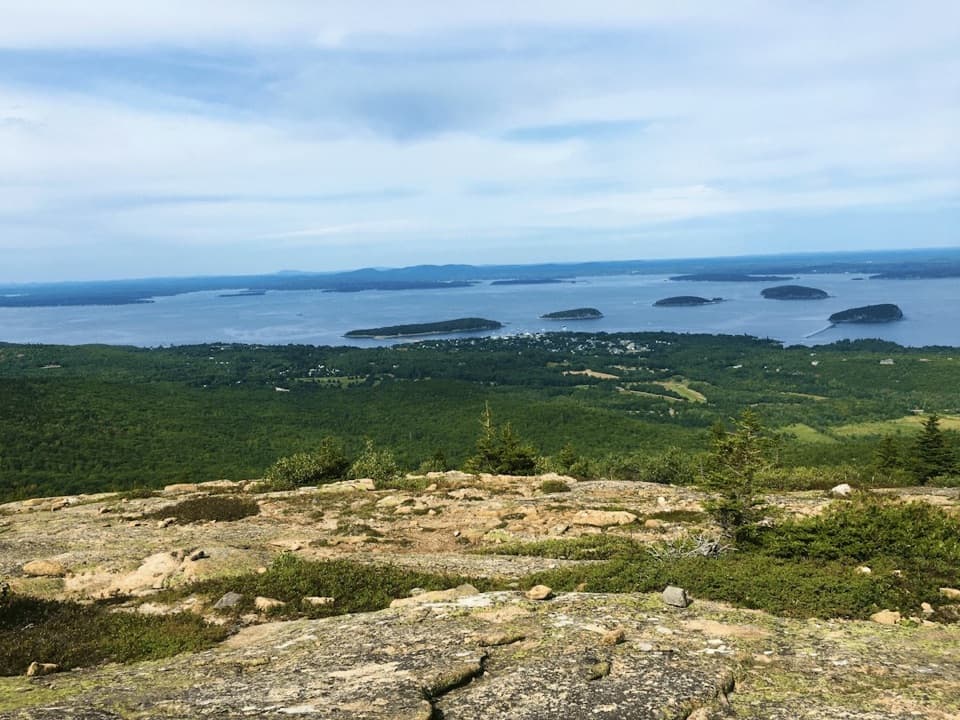
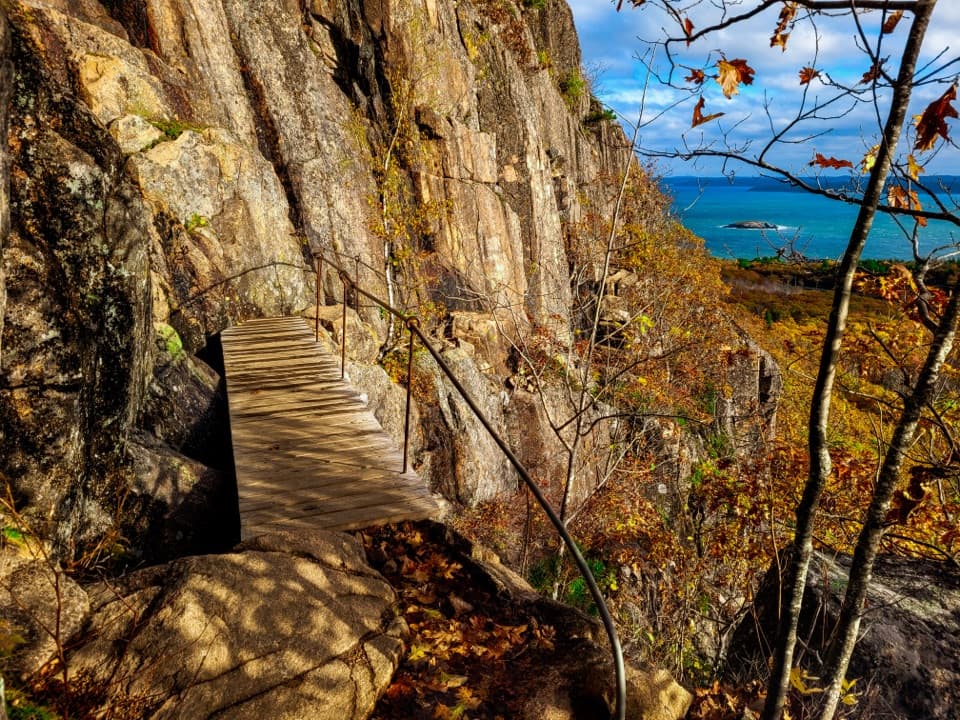
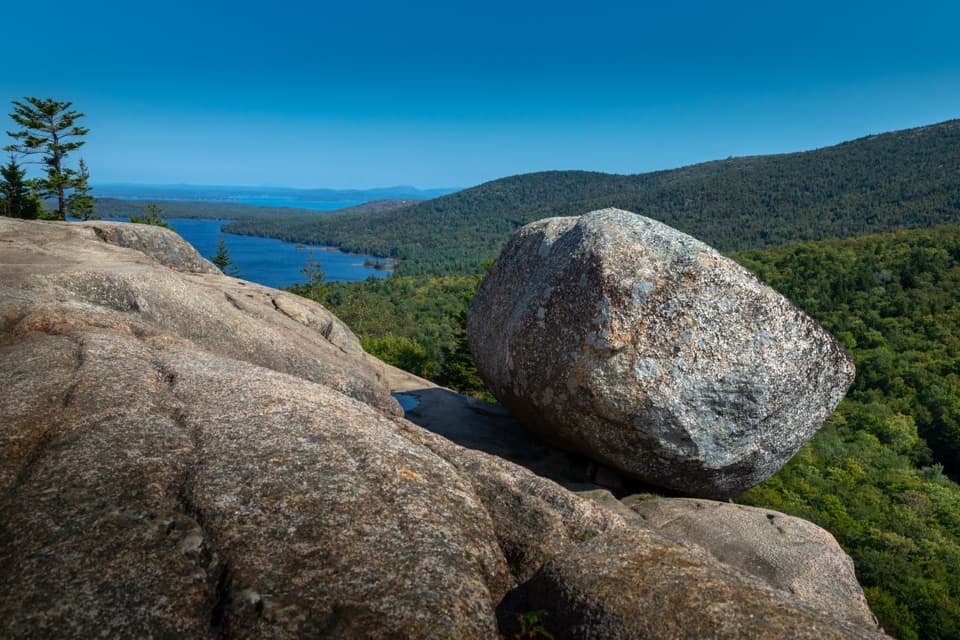
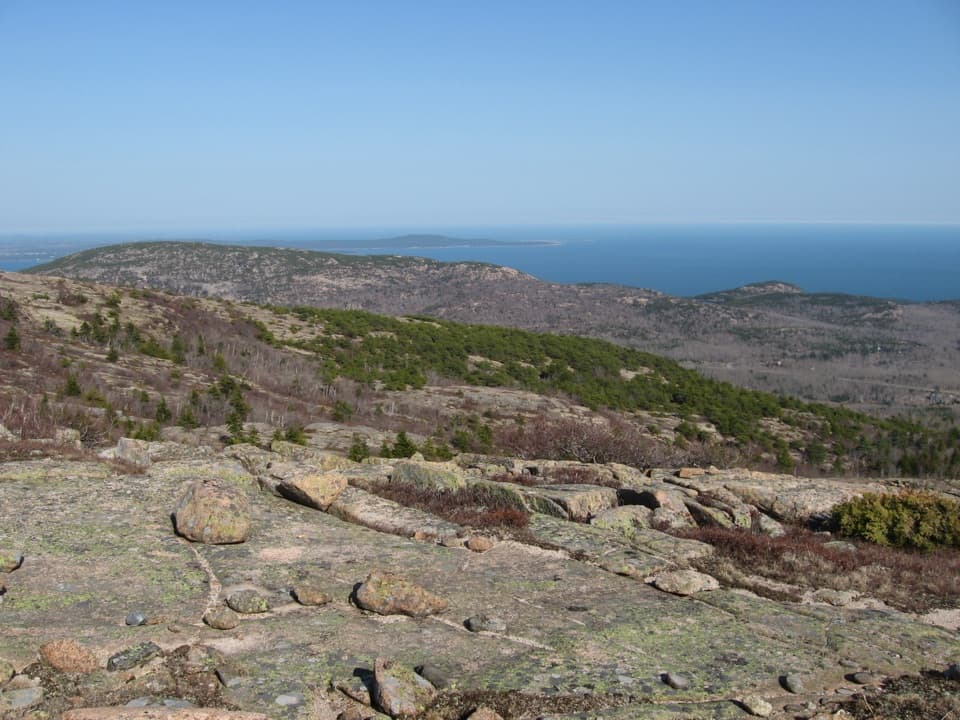
Views arrive early and often: over The Tarn’s mirror water, across to Dorr Mountain, and out to the islands of Frenchman Bay. The ledges are classic Acadia pink granite—bedrock shaped by ancient volcanic activity and later sculpted by ice—so you’re literally walking the park’s geology.
Best from spring through fall, with peak color and crisp air in autumn. It’s open year‑round, but in winter or shoulder‑season cold snaps expect ice; traction is strongly recommended. Granite is slick when wet—skip it in rain. It’s generally less crowded than the Precipice, but weekends and peak summer still draw plenty of hikers; start early for quieter ledges and cooler temps.
Park at The Tarn parking area along ME‑3; the trailhead is directly across the road by The Tarn.
Open granite ledges are extremely slippery when wet or icy; upper sections require light scrambling and careful footing. In the Huguenot Head area, ignore unofficial rock piles and stay on the signed, blue‑blazed route. Use traction in winter.