
Place · 0.4 mi away
Moderate
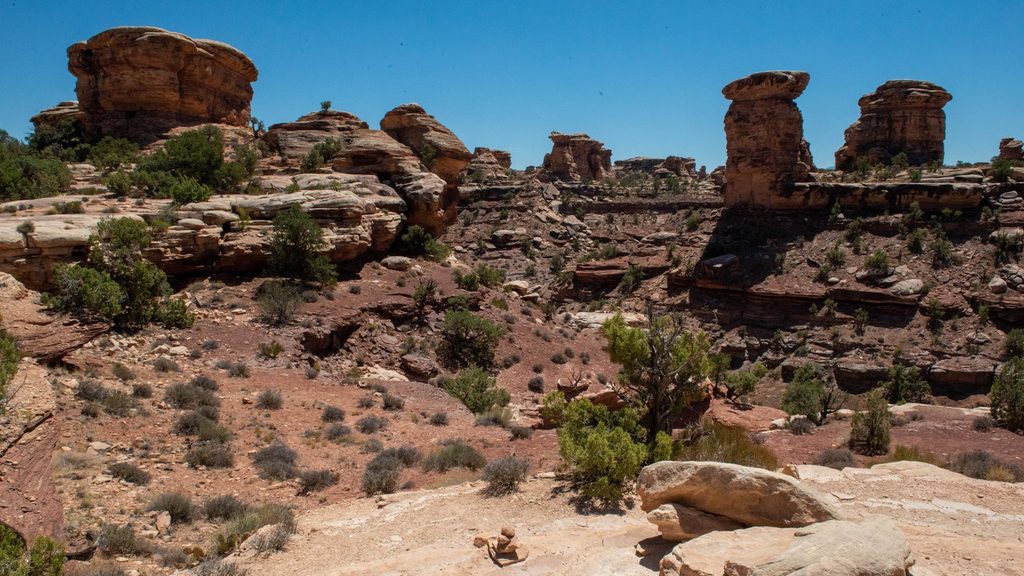
This classic Needles District circuit links Squaw Canyon and Big Spring Canyon in a single 7.5-mile loop (total), starting from the Squaw Flat Campground trailhead. It’s a manageable half-day that still feels adventurous: sandy canyon bottoms, cairned slickrock benches, and a high saddle with sweeping views of the Needles formations and distant La Sals.
Note: The park has been updating place names; “Squaw Canyon” is being renamed to “Wooden Shoe Canyon.” You’ll still see both names in different places. The loop itself and access remain the same from the Squaw Flat area.
Hike the loop in either direction. Clockwise takes you up Squaw Canyon first, over a slickrock saddle, and down Big Spring Canyon; counterclockwise flips that. The canyon bottoms are generally straightforward walking on sandy soil with pockets of cottonwoods, grasses, and brush. As you climb toward the divide, the character shifts to grippy slickrock and short, steep pitches with brief exposure. The descent on the far side includes a rounded, sloping slickrock section that’s not technical but can feel airy if you dislike heights.
Cairns mark the route across slickrock—pay attention so you don’t wander. Early junctions are signed, but it’s easy to drift onto other trails (Lost Canyon and Peekaboo split from this network), so read signs closely.
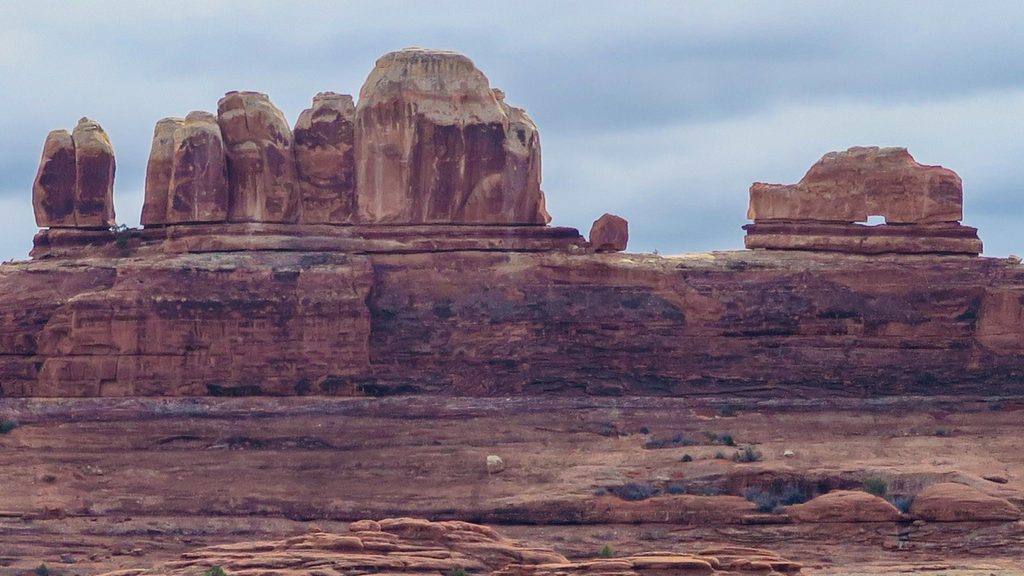
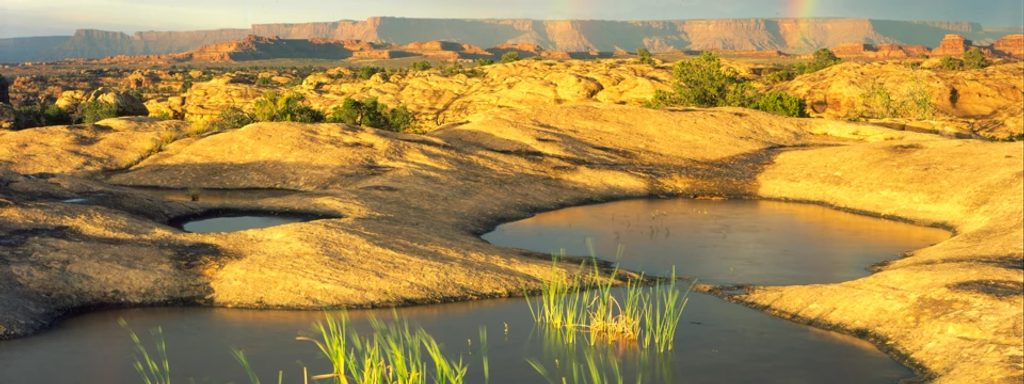
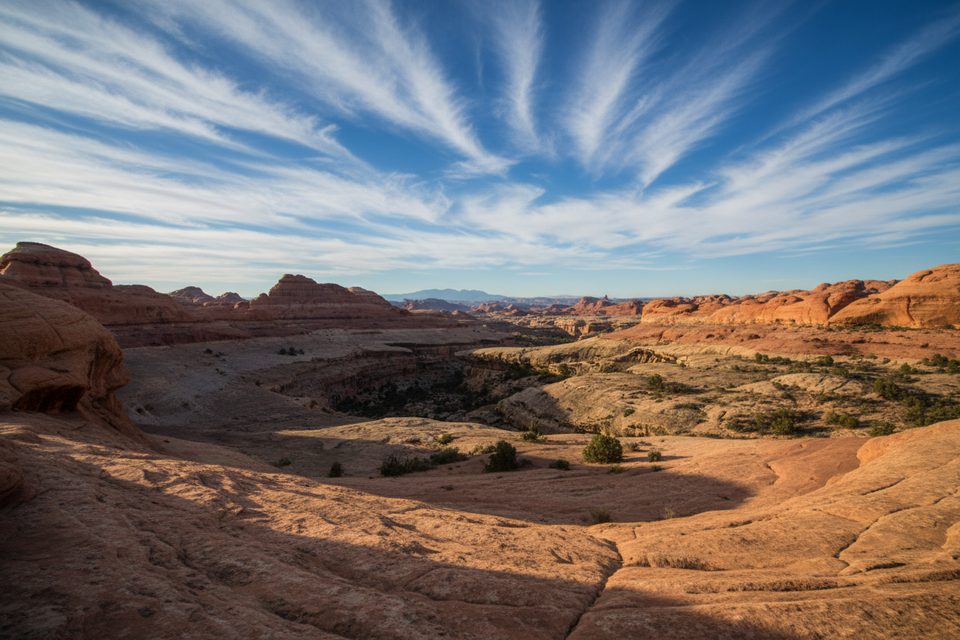
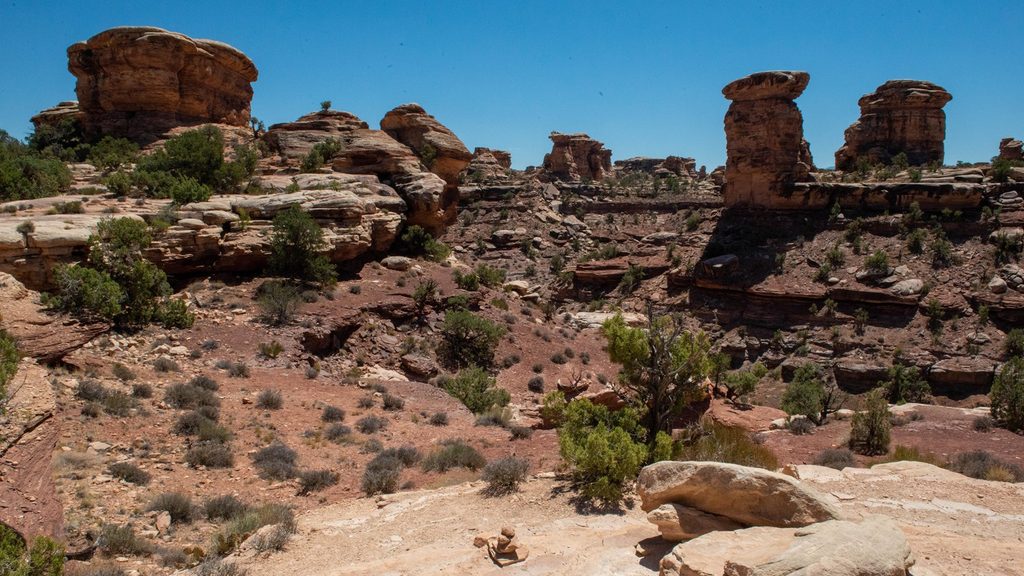
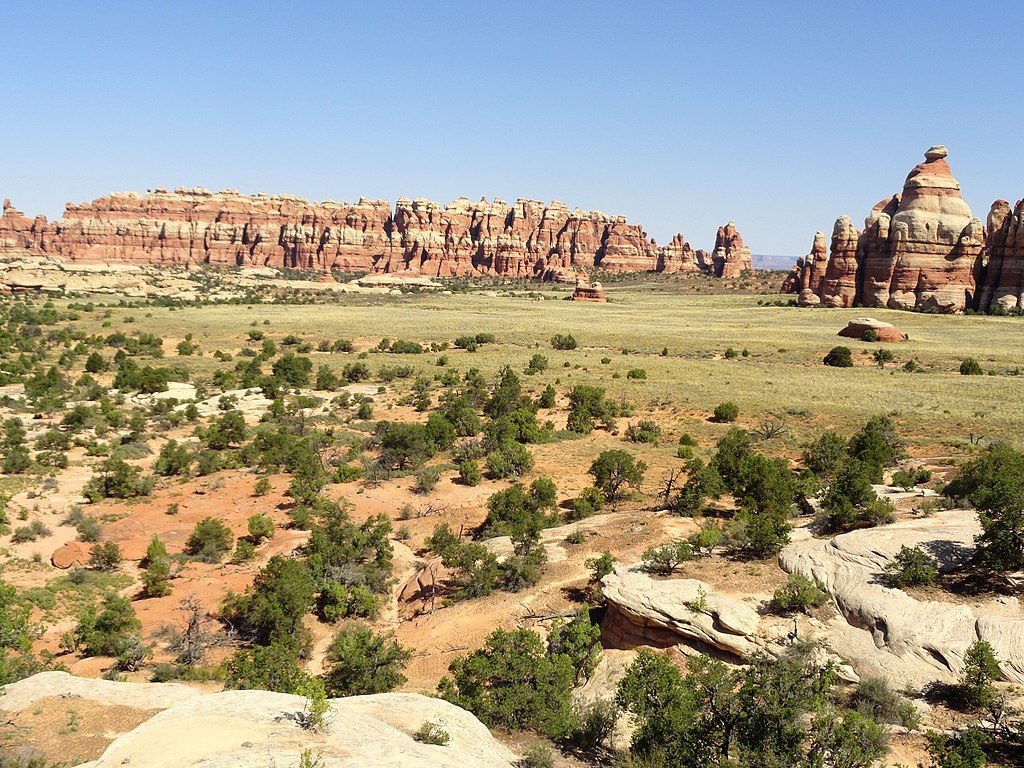
You’re moving through Cedar Mesa Sandstone—red-and-white banded cliffs, benches, fins, and spires that define the Needles. Expect classic desert textures: multi-hued monoliths, slickrock domes, and sandy washes. The high saddle between canyons is your panorama moment, with the Needles skyline, Island in the Sky mesa, and La Sal Mountains lining the horizon. Pinyon-juniper dots the drier slopes; the canyon bottoms hold more vegetation thanks to shallow groundwater.
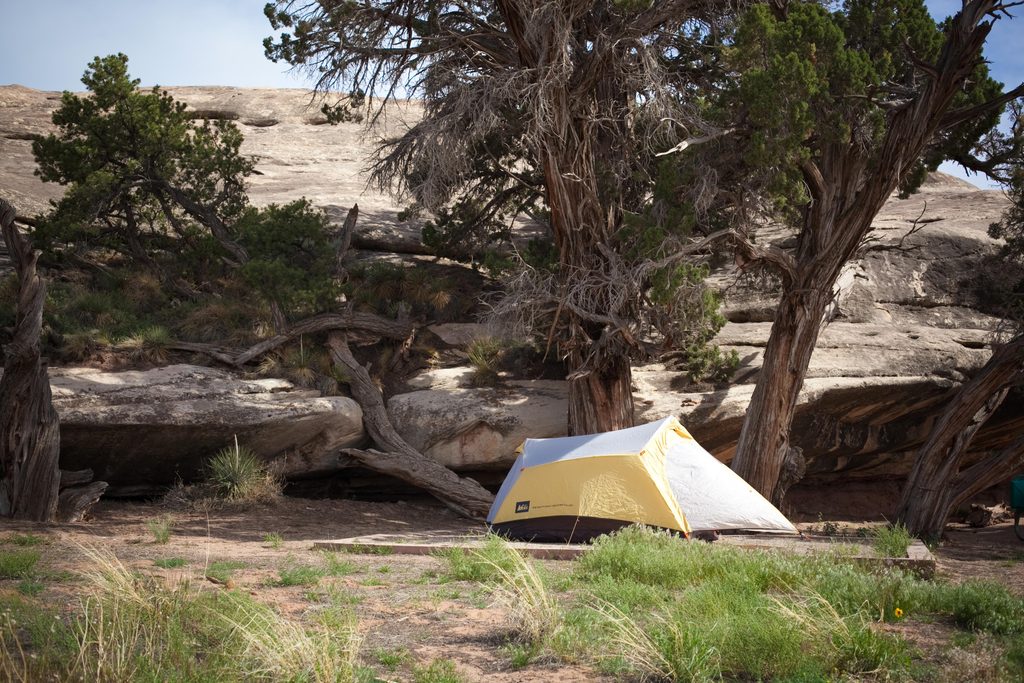
Big Spring often flows, but treat all water before drinking. Day hikers don’t need a permit. Backcountry camping requires a permit, and designated sites are set back from the main trail. If you want an early start, consider staying at the adjacent Squaw Flat Campground.
Spring and fall are the sweet spots—comfortable temps and strong light for photography on the saddle and canyon walls. Summer is a bad idea here: heat routinely soars, and there’s little shade on the slickrock crossings. Winter is possible, but slickrock can be icy or wet; traction and caution are essential.
Is it worth it? Absolutely for hikers who want a half-day Needles sampler with real variety—two different canyons, a scenic saddle, and just enough scrambling to stay fun without turning technical.
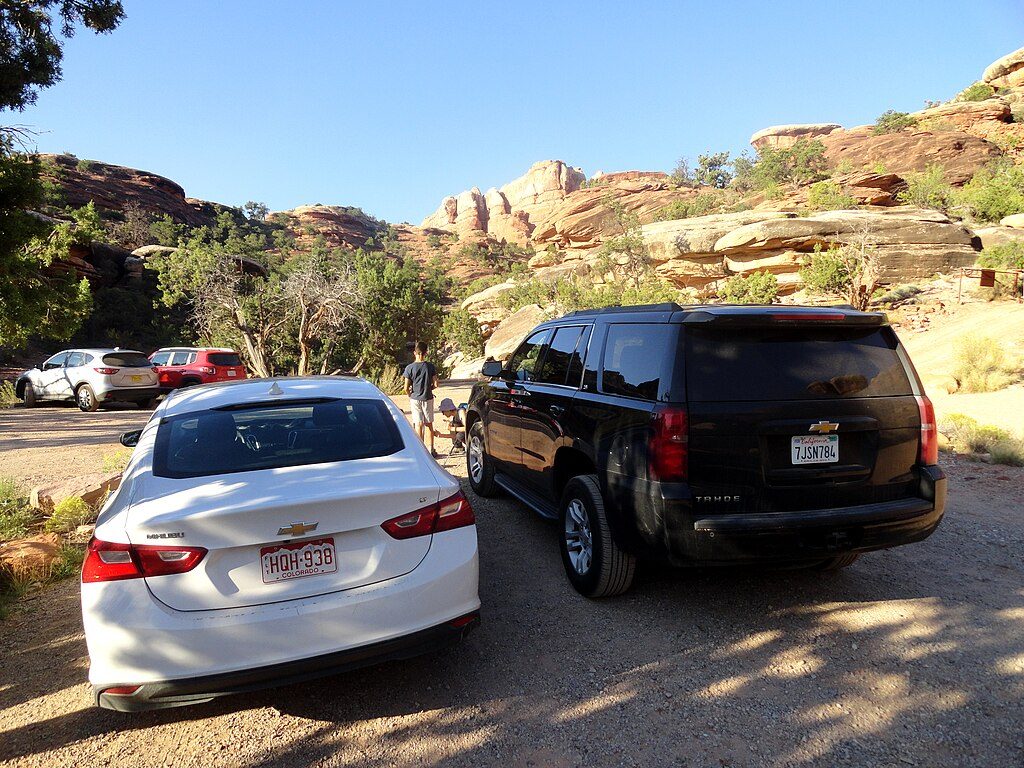
Park at the Squaw Flat Campground (Loop A) trailhead in the Needles District; signs point toward Squaw/Big Spring and nearby trails.
Short, steep slickrock with brief exposure; follow cairns to avoid losing the route. Summer heat can be extreme; winter slickrock may be icy or wet. Treat any water from Big Spring before drinking.
Place · 0.4 mi away
Place · 1.3 mi away
Place · 1.6 mi away
Place · 2 mi away
Moderate · 0 mi away
Moderate · 0 mi away
Challenging · 0 mi away
Challenging · 1.3 mi away

Parkwolf Tour Guide
