San Miguel Island Campground

Remote, wind-battered bluff camp with prolific wildlife
San Miguel Island Campground, Channel Islands National Park
InsideChannel Islands National Park

Overview

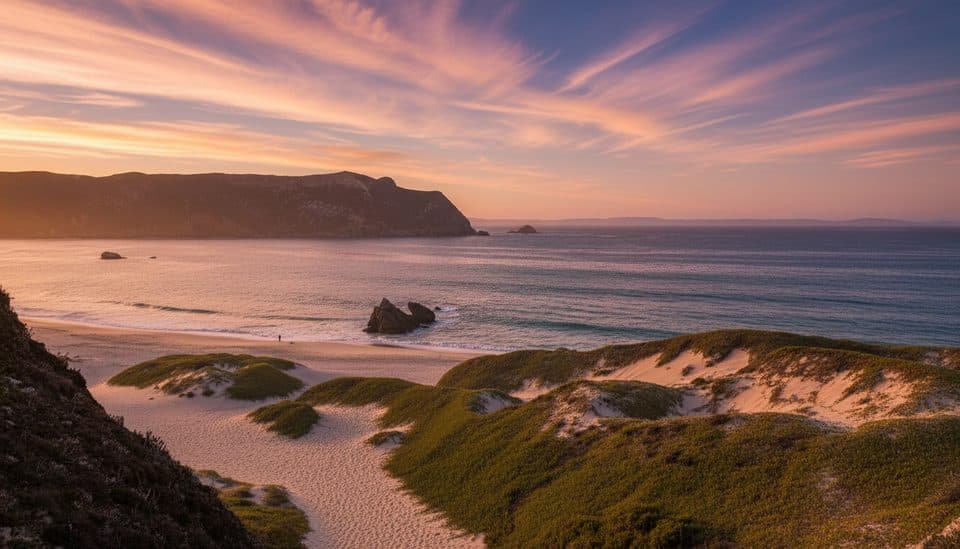
Perched on a windswept plateau above Cuyler Harbor, San Miguel Island Campground delivers a raw, backcountry experience—no frills, just wild Pacific scenery and solitude. Access is by boat (or other permitted operators) with a steep, rugged 1.25-mile hike from the beach landing up Nidever Canyon to reach camp. If you’re self-sufficient and game for wind, you’ll be rewarded with sweeping ocean views and a sense of true isolation.

Campsites & Setup

There are 9 primitive tent sites (one accommodates a group), each outfitted with a five-foot windbreak, picnic table, and food storage box. A vault/pit toilet serves the campground. There’s no potable water, no shade, no store, and no services—plan to be entirely self-reliant.

What You’ll See

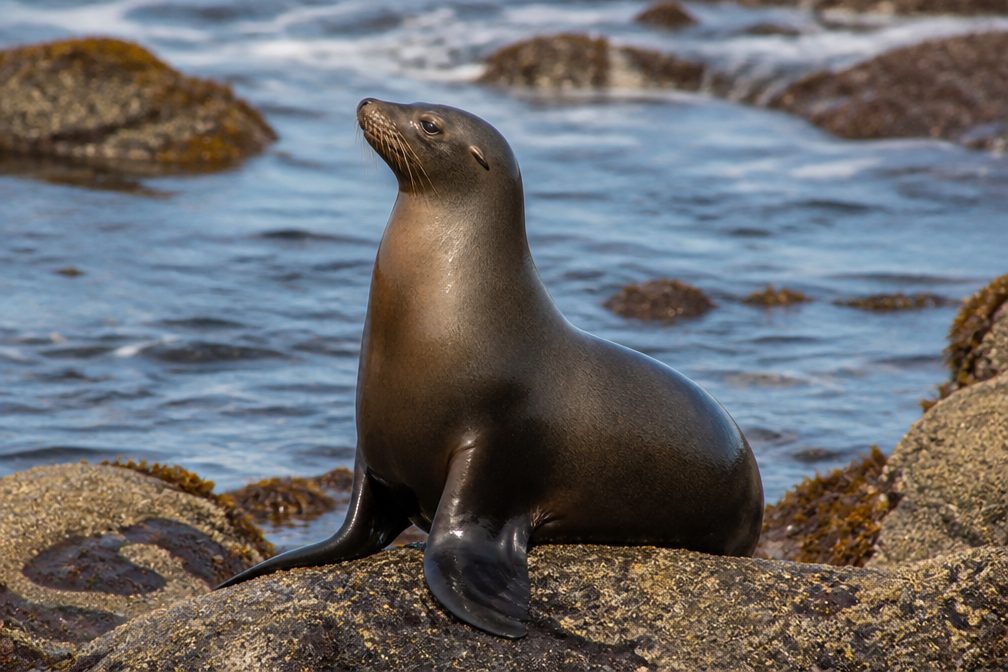
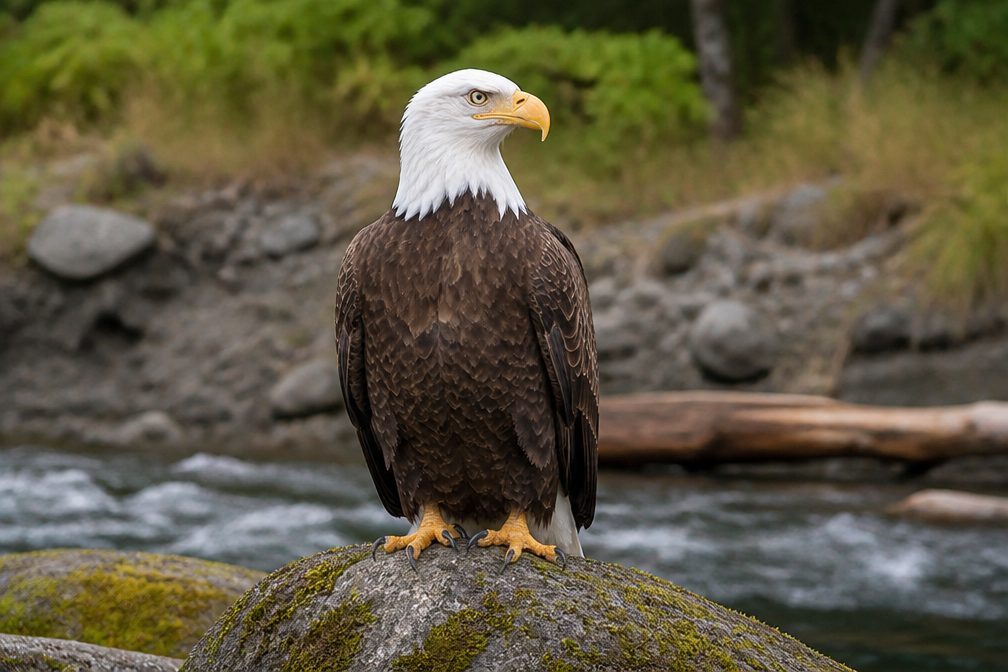
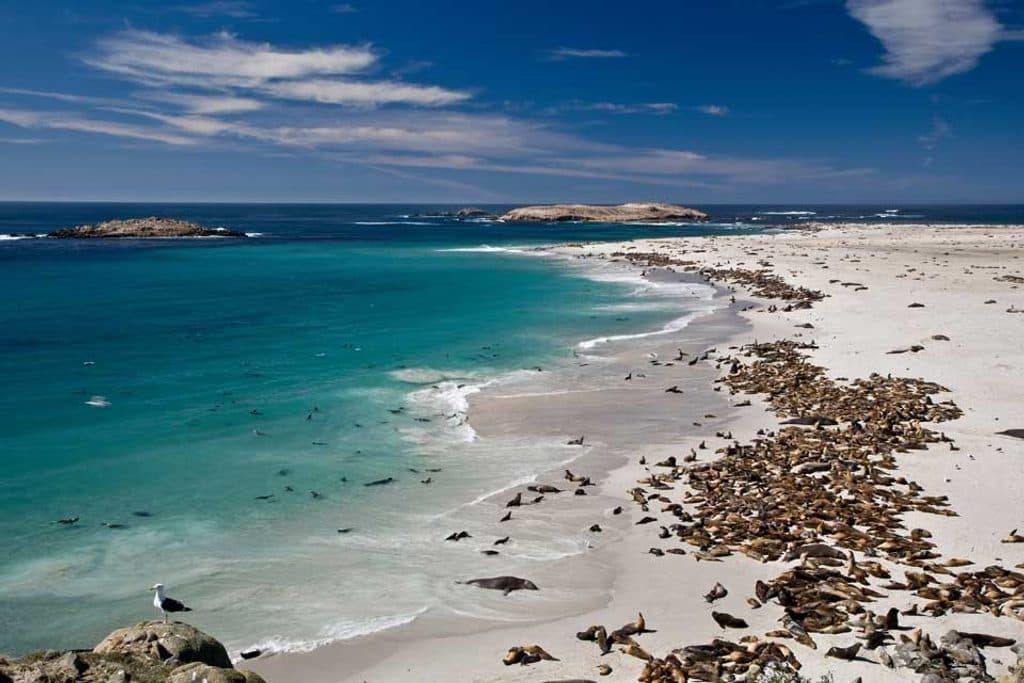
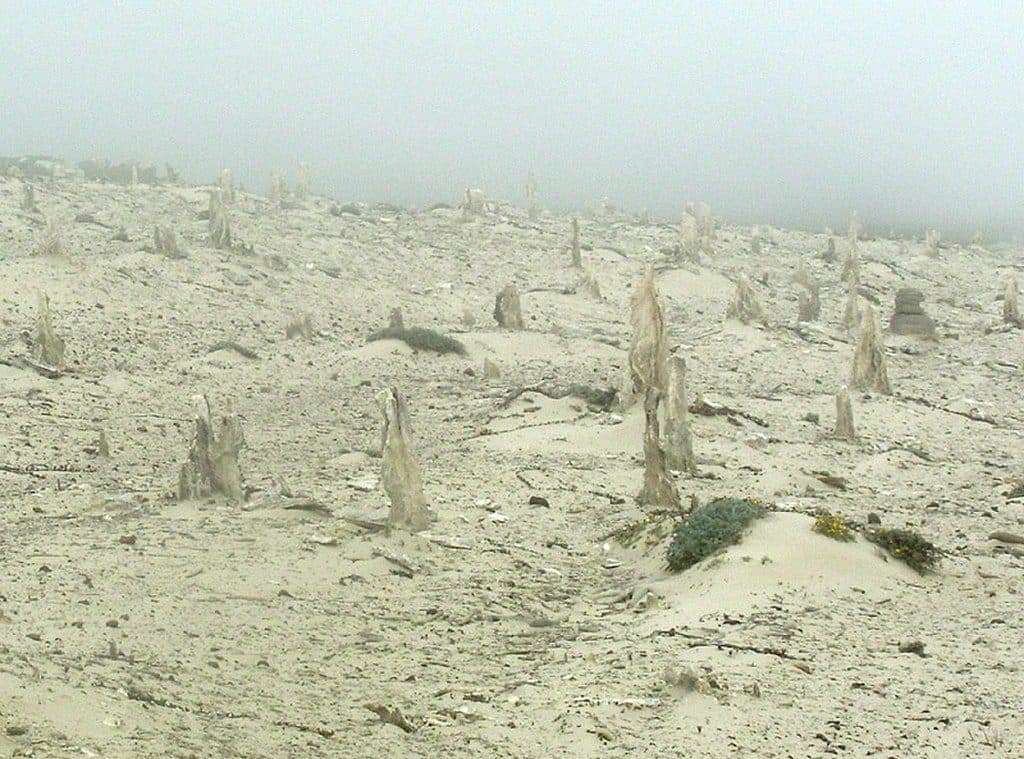
Expect dramatic bluffs, rolling marine terraces, and beaches alive with pinnipeds (seals and sea lions). Birdlife is prolific, with numerous nesting seabird species. On land, keep an eye out for the island fox and deer mice. Spring blooms of native plants—including giant coreopsis—hint at the island’s ongoing ecological recovery. The broader island holds curiosities like a caliche “forest” and Pleistocene history, adding depth to your hikes.

Logistics, Rules & Access

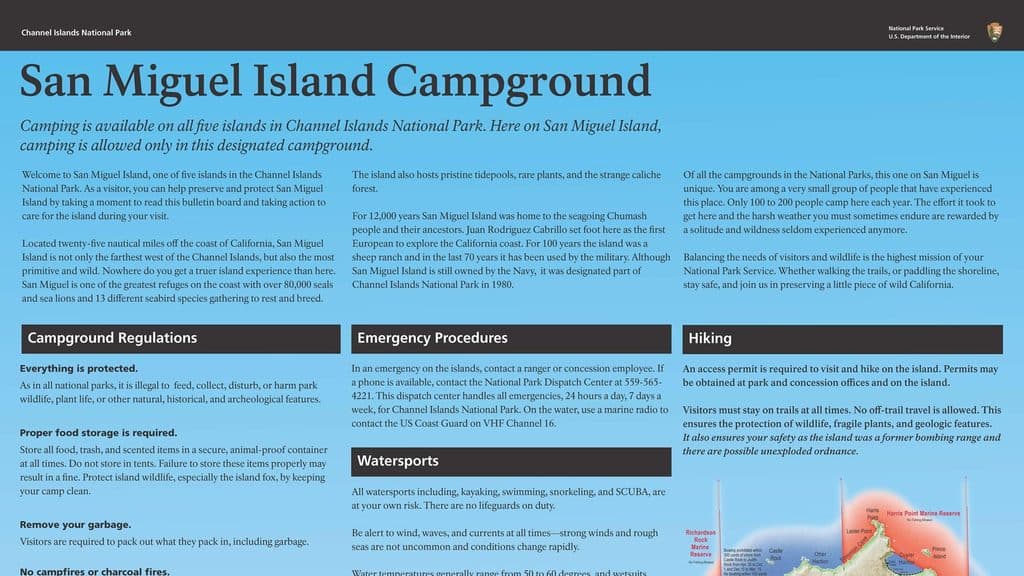
Visiting San Miguel requires a permit/liability waiver. Private boaters self-register at the Nidever Canyon entry; concessioner passengers receive the required forms with reservations. Hiking is on established trails only—no off-trail travel is allowed. Quiet hours begin at 10 pm. There are no roads, parking, or vehicle access.

Conditions to Expect

Wind is the defining feature here—bring a sturdy, low-profile tent with extra stakes and guy lines. Even in summer, evenings are cold and damp, and fog is common. Weather can delay transport, so pack extra food and essentials.

Best Time to Visit

Crowds are minimal year-round due to the limited access and primitive setup. Plan your stay around transport schedules and the forecast. Light and visibility can change quickly with fog and wind, so be flexible and ready to move when conditions open up.


What to Bring

Carry all drinking and cooking water (plan generously), a robust tent with ample anchoring, warm layers and rain gear, a camp stove (no campfires), and extra food in case weather extends your stay. Pack out all trash. Download official park resources for maps and self-guided info before you depart; there’s no connectivity on island.

Is It Worth It?

For experienced, self-reliant campers, this is one of the most unforgettable places to sleep—bleak in the best way, with wildlife and big-sky ocean vistas for company. If you want amenities, choose elsewhere; if you want the edge-of-the-map feeling, this is your spot.

Pros

  • Rare, remote wilderness experience with abundant wildlife
  • Each site has a windbreak, picnic table, and food locker
  • Quiet, low visitor volume due to limited access

Cons

  • No potable water, shade, or on-island services
  • Steep 1.25-mile carry from beach landing to the plateau
  • Consistently harsh winds and variable, chilly weather

Tips

  • Bring all water; there is no potable water anywhere on the island.
  • Use a low-profile tent and pack extra stakes and guy lines for the wind.
  • Carry extra food and essentials in case weather delays your return boat.
  • The hike from the beach to camp is steep; pack light and secure your load.
  • A permit/liability waiver is required; complete it before you set foot on the island.
The Parkwolf tour guide sitting on a phone mounted in a car

Parkwolf Tour Guide

Like a tour guide in your car.

Save the places you found around Channel Islands, then let Parkwolf guide the drive between them.Download Parkwolf on the App Store