Overview
About Joffre Falls
Why stop
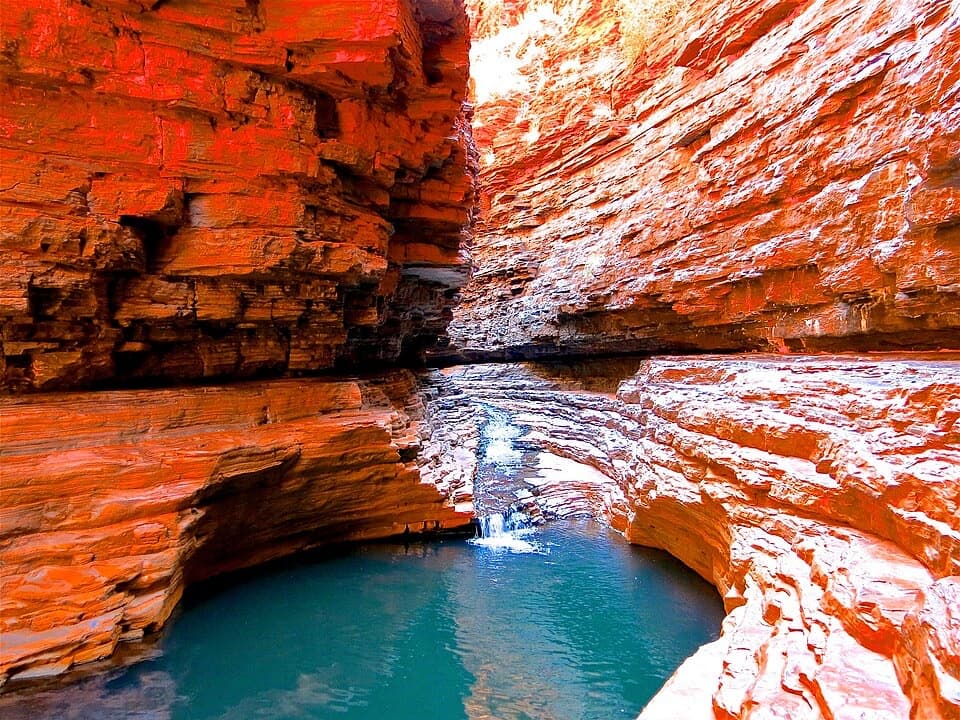
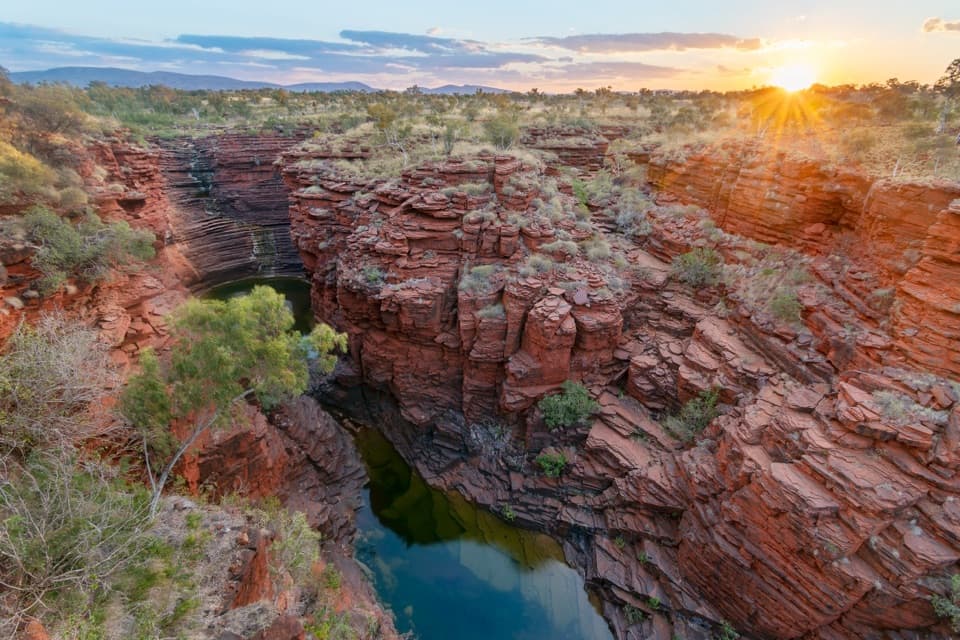
- The curved red-rock amphitheatre is striking even when the falls are dry.
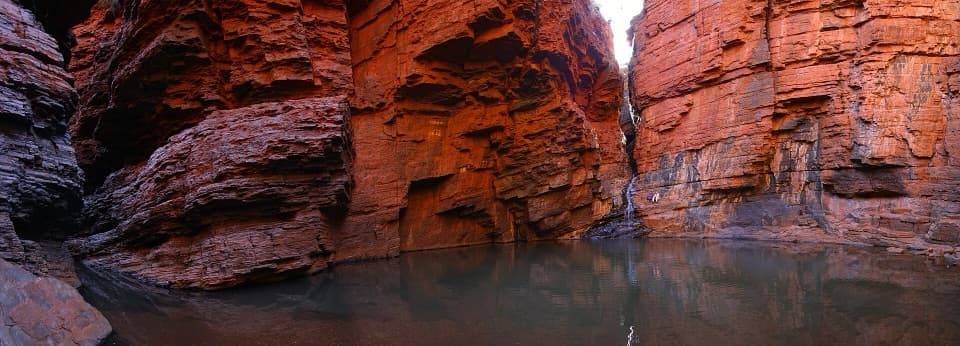
- A gorge-floor view of the pool, ledges and narrow canyon walls.
Heads up
- The descent is rough and steep, with a creek crossing and ladders.
- Seasonal flow means the waterfall may be dry or the pool low.
Map
Where it is
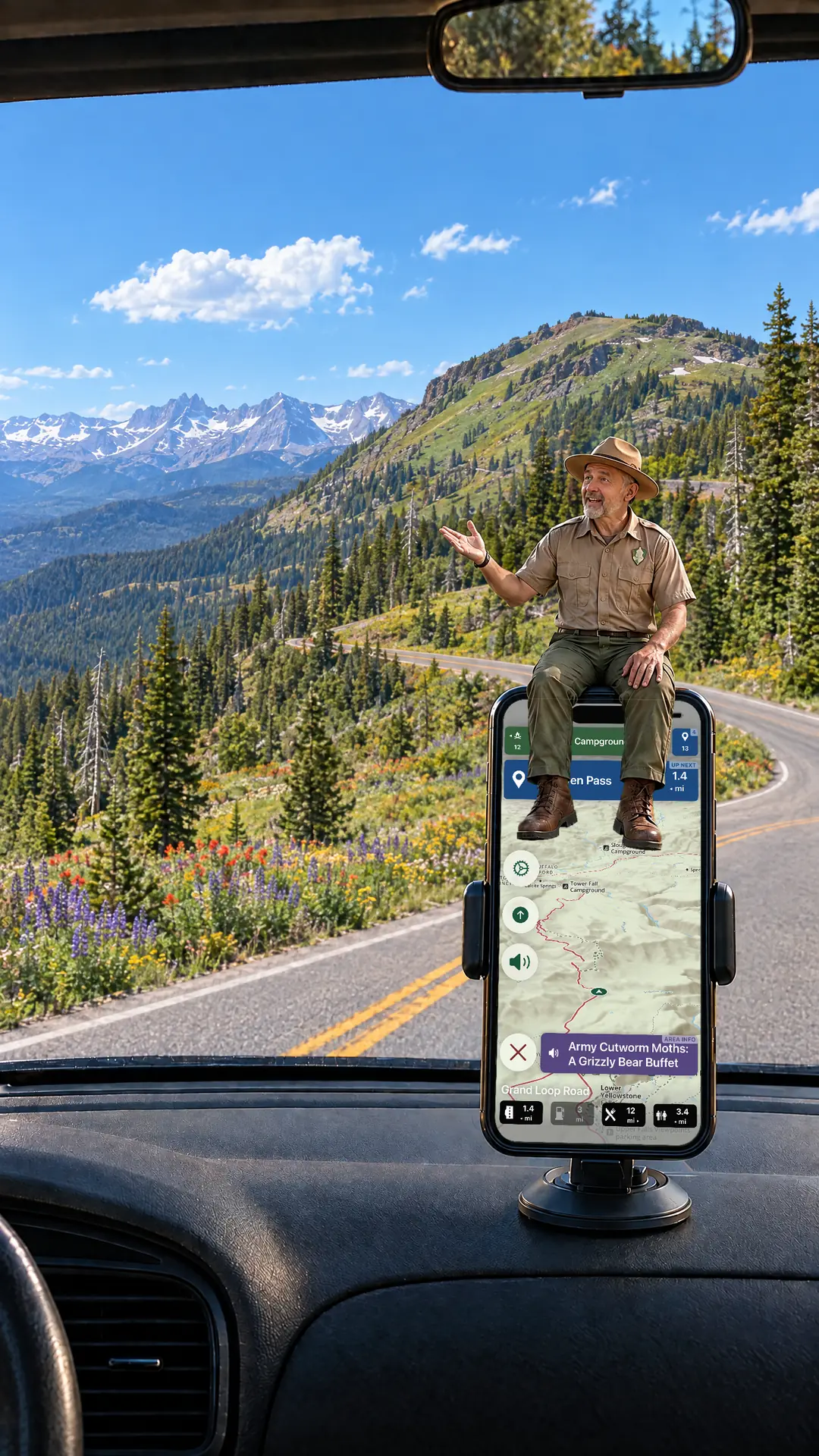
The highest, rockiest slopes around here are a summer buffet for grizzly bears.
Karijini Tour Guide
Your drive to Joffre Falls, narrated.
Parkwolf is a GPS audio tour guide for Karijini National Park. As you drive, it chimes in with what’s ahead: hidden gems, upcoming stops, history, geology, and wildlife, right through your car’s speakers.
See the Karijini audio tourRecorded for this place
Joffre Falls and Lookout“Up ahead is Joffre Gorge, where a curved red cliff wraps around a dark pool like an amphitheatre. I’d choose the lookout for a short stop: allow about twenty minutes return on an uneven path with rock steps.”
Plays as you drive up to Joffre Falls in the Parkwolf Karijini Tour Guide.
More stories near here in the app
- Karijini Eco Retreat and Outback Restaurant
- How a Kestrel Hangs in the Air
- Rain Beneath the Surface
- The Scales in a Moth's Pattern
- 141 audio storiesacross Karijini’s roads, triggered by GPS as you drive
- Wildlife heatmapsfor Dingo, Rock Wallaby, Mulga Snake, and 13 more
- Works offlinemaps, 22 trails, 30 places, and audio download before you lose signal
- CarPlay readysimple controls built for the drive
“Fantastic app with many points of information… It’s great to just turn on while you’re driving and it gives you an audio tour of the national Park. We love it!!!!”


Guide
More about Joffre Falls
The falls and the gorgeJoffre Falls is a seasonal waterfall on the western side of Karijini National Park.
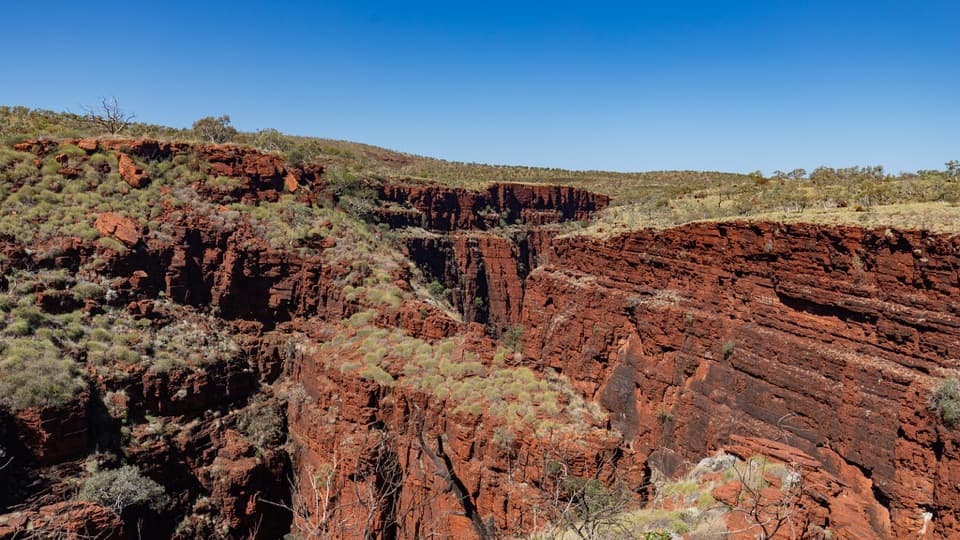
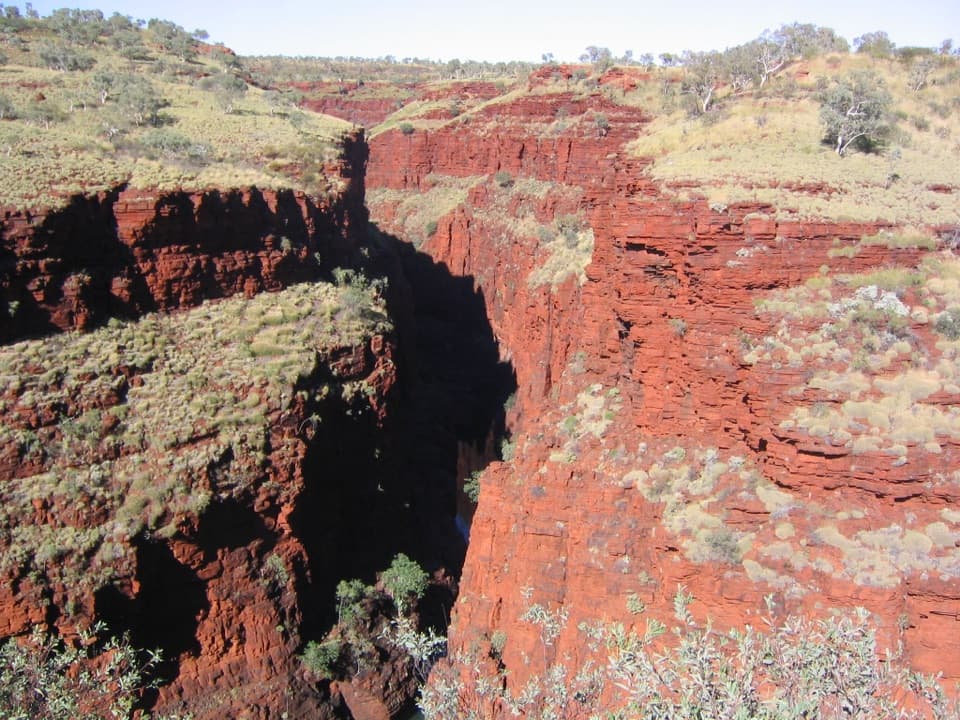
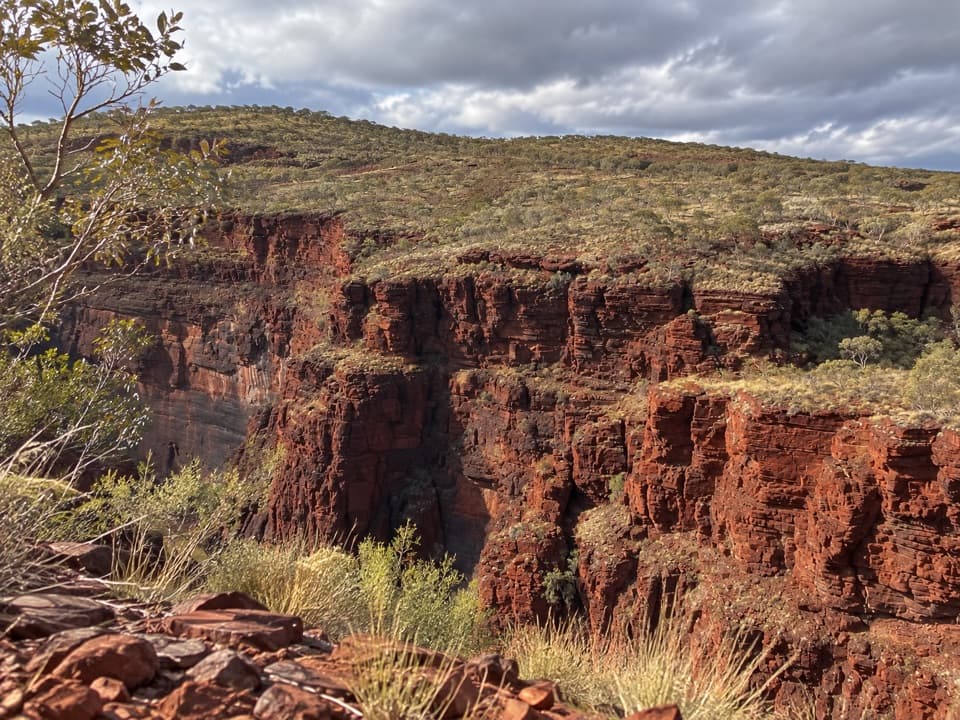
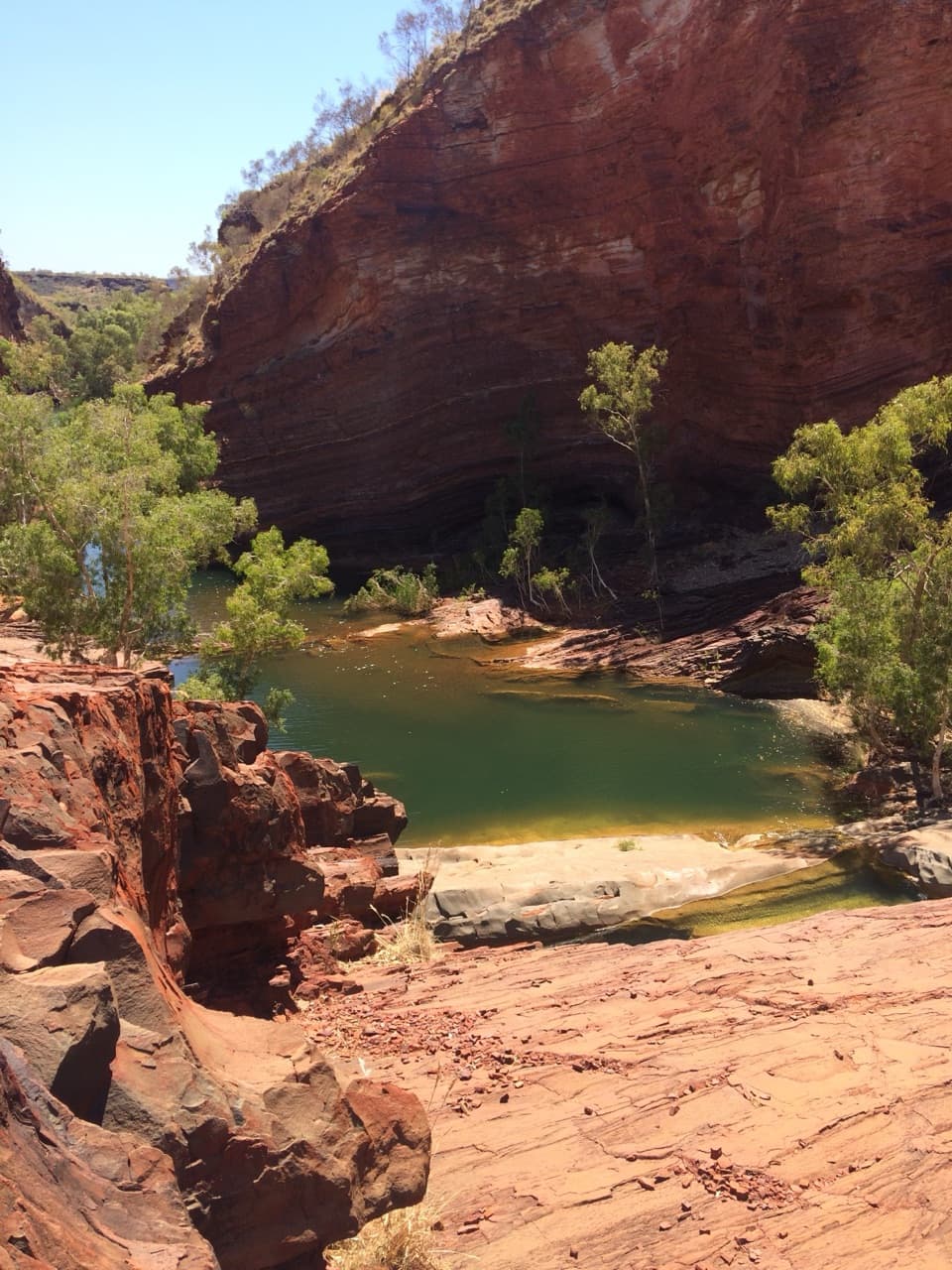
Joffre Falls is a seasonal waterfall on the western side of Karijini National Park. It spills over step-like red cliffs into a dark pool, making a curved natural amphitheatre; farther down, the gorge narrows over smooth black rock. This is the gorge-floor visit, separate from the rim lookout. Keep it on your list for the shape and scale of the gorge, even if the falls are dry. They are most impressive after rain.
The walk to the poolFrom the main car park, follow the marked route into the gorge to the first pool below the…
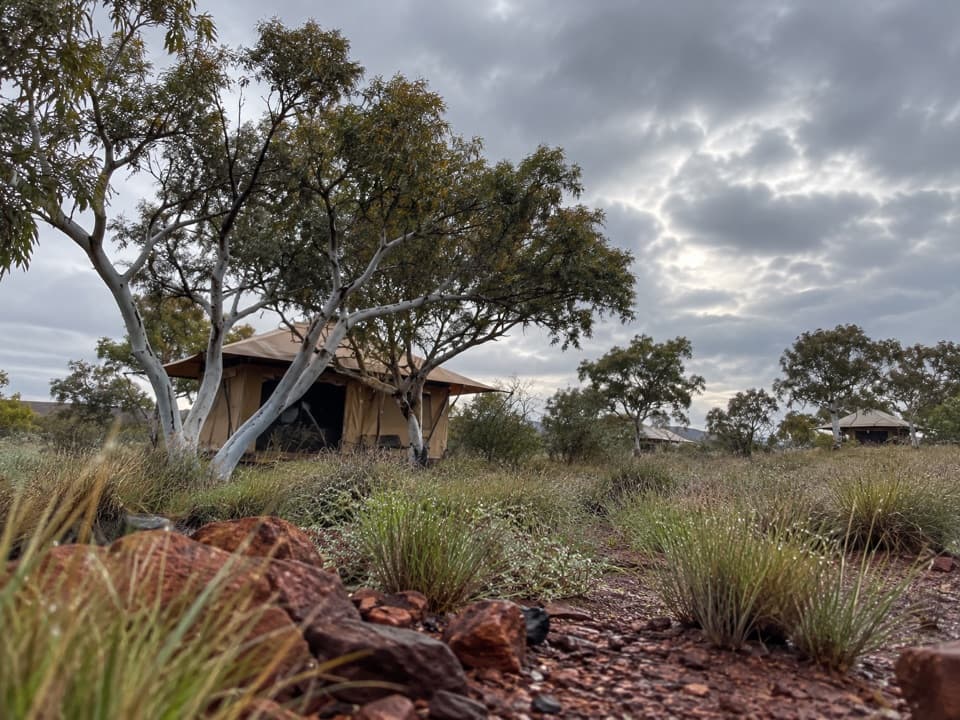
From the main car park, follow the marked route into the gorge to the first pool below the waterfall. The return walk is about 1.5 km and two hours. That short distance hides a rough outing: expect rock-slab scrambling, a creek crossing and ladders. Some visitors report wet, slippery footing and wading, so the effort can change with conditions. If you mainly want the view, use the separate rim lookout instead; its uneven rock-step approach is much shorter, about 20 minutes return, and it is not the descent to the pool. A path from Karijini Eco Retreat also reaches the gorge.
Rain and cold waterDon't enter the gorge if rain is in the area, and leave straight away if rain starts while…
Don't enter the gorge if rain is in the area, and leave straight away if rain starts while you're inside: flash floods can arrive quickly. Gorge pools can be extremely cold, especially from April to September, and diving or jumping is not allowed. Swimming is listed here, but it depends on safe conditions and the state of the pool; visitors sometimes find the water low or stagnant. Picnic tables and shelters are at the main car park, so sort out your food and anything you need before heading down.
What to look forThe cliff faces reach about 50 metres.
The cliff faces reach about 50 metres. From above, the amphitheatre's curved ledges and the pool at their base give you the clearest sense of the whole bowl; from gorge level, the dark water and smooth black rock stand out against the red walls. For a photo from the rim, keep the pool in the frame so the cliffs don't lose their scale. Flow varies with rain, so don't plan around seeing a cascade.
Country and the park nameKarijini is the Banyjima name for the Hamersley Range.
Karijini is the Banyjima name for the Hamersley Range. Banyjima, Kurrama and Innawonga people are the park's Traditional Owners. Their land-management practices, including fire-stick farming, have shaped the park's varied vegetation and its succession over time.
Wildlife
Wildlife in Karijini
 44 sightingsDingoMost seen around 6 PMSighting map
 18 sightingsRock WallabyMost seen around 6 AMSighting map
 15 sightingsMulga SnakeMost seen around 7 PMSighting map
 36 sightingsHamersley Rock MonitorMost seen around 9 AMSighting map
 13 sightingsWestern BowerbirdMost seen around 7 AMSighting map
 34 sightingsChildren's PythonMost seen around 8 PMSighting map
Sighting maps show where each species has been reported across Karijini. Wildlife moves, so no sighting is guaranteed.