Pros & cons
PROS
- Striking three-peaked volcanic complex with active monitoring
- Best viewed via Valley of Ten Thousand Smokes bus or flightseeing
CONS
- No maintained trails or on-site amenities
- Weather and visibility often limit views
Overview
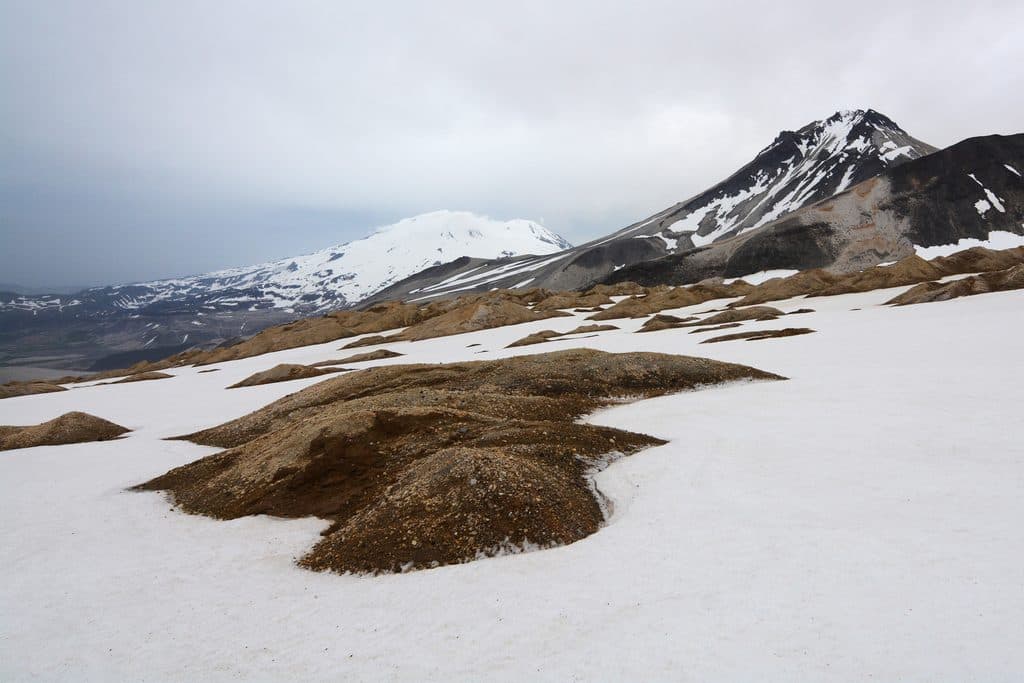
Trident Volcano is a rugged, three-peaked volcanic complex of stratovolcanoes and domes, topping out around 6,115 feet. It sits in the heart of the Katmai volcanic cluster and was named for its trio of summits. It’s active and seismically monitored, with current status at a routine, low-level alert.
Geology & History
Trident is part of the tight-knit Katmai cluster that includes Mount Katmai, Mageik, Martin, Griggs, and Novarupta. While the 1912 cataclysm unfolded at nearby Novarupta and triggered Katmai’s caldera collapse, Trident’s own mid‑20th‑century activity built a new cone beginning in 1953. Expect a landscape shaped by ash, ice, and ongoing volcanic processes.
How to See It
There’s no trailhead or roadside pullout for Trident—Katmai is largely roadless. Your realistic land-based look is the concessioner bus from Brooks Camp to the Valley of Ten Thousand Smokes overlook, which offers distant views across the Aleutian Range. For a closer look, book flightseeing with authorized air operators; it’s the most reliable way to appreciate Trident and its neighbors.
What to Expect
This is true wilderness with no services near the volcano. Any on-foot approach beyond the overlook is off-trail, remote travel in bear country—fit only for fully self-sufficient backcountry parties with appropriate skills. Weather is a major player: strong winds, frequent clouds, and low ceilings are common, and clear summer days are relatively scarce. On clearer days, you may spot occasional steam plumes from volcanoes in this cluster, including Trident.
Safety & Status
Trident is continuously watched by scientists, and its aviation color code and alert level can change with unrest. Before any trip focused on the volcanoes, check current volcano status and any ash advisories through official channels.
Best Time to Visit
June–September aligns with Brooks Camp operations and the daily Valley of Ten Thousand Smokes bus—your best bet for land-based views. Aim for the clearest weather window you can get; morning or late-day light can add definition to the peaks. Flightseeing is highly weather-dependent, so build in flexibility.

Where it is
58.2350, -155.1036Tips for Trident Volcano
- 01Take the Valley of Ten Thousand Smokes bus for the most accessible land views.
- 02Book flightseeing and keep plans flexible—weather scrub-outs are common.
- 03There are no trails or facilities at Trident; treat anything beyond overlooks as expedition travel.
- 04Check current volcano status and any ash advisories before your trip.
Near Trident Volcano
All places →All trails →
2.9 mi awayNovarupta1912 eruption vent capped by a rhyolite dome in ash desert
4.5 mi awayBaked MountainRemote volcanic ridge above the Valley of Ten Thousand Smokes
5 mi awayCrater LakeRemote caldera lake born from Katmai’s 1912 eruption
6.1 mi awayMount MageikRemote, glacier-clad volcano best seen from the Valley Overlook
33.1 mi awayBrooks River Elevated BoardwalkElevated stroll to world-class bear viewing on the Brooks RiverEasy · 2.2 mi · 1 hr
Brooks Falls TrailShort, flat walk to world-class brown bear viewing platformsEasy · 1.2 mi · 30 min
Dumpling Mountain TrailBig Brooks Camp views, real tundra, and real bear countryChallenging · 8 mi · 5.3 hr
Cultural Site TrailA flat, 0.5-mile walk to a reconstructed Alutiiq home by Brooks River.Easy · 0.5 mi · 15 min