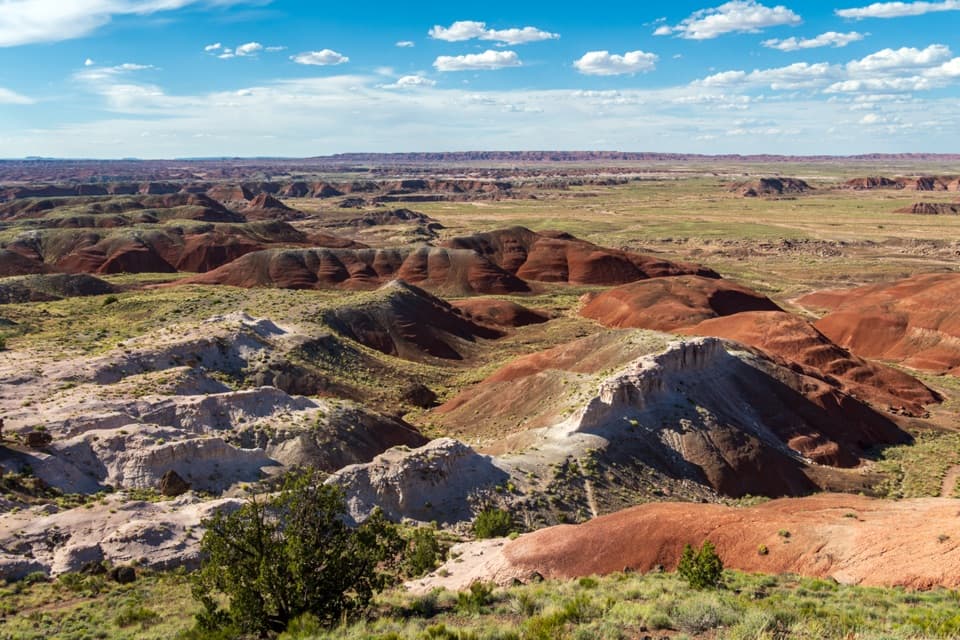
Parking
Use the Rainbow Forest Museum parking area. Walk east along the paved access over Jim Camp Wash to the joint Long Logs and Agate House trail approach on the south side of the road.
#9 of 16 trails in Petrified Forest
Petrified Forest National Park, AZ
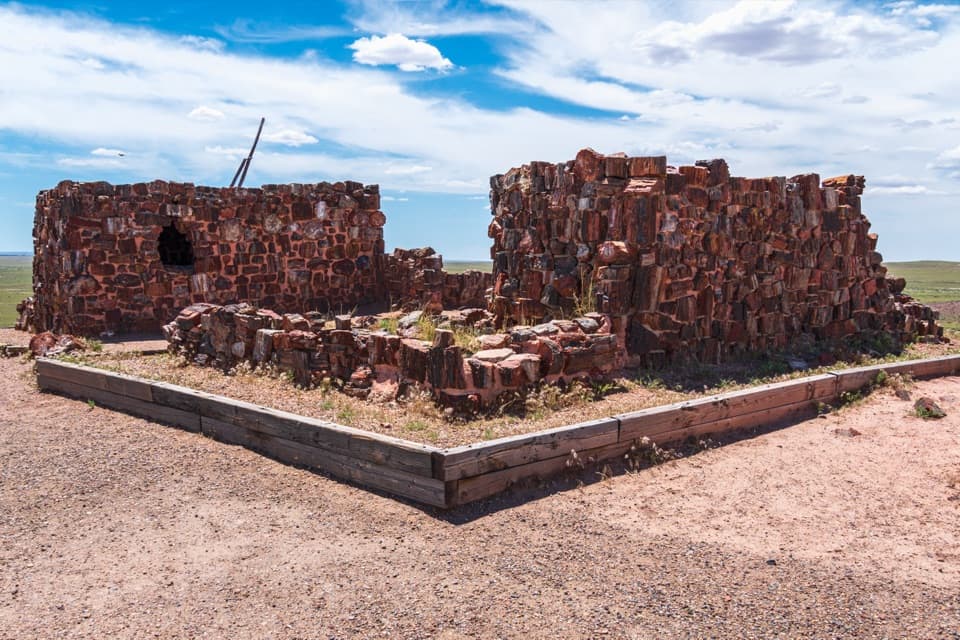
A short paved start leads to a pueblo built from petrified wood.
Overview
Map & elevation
Plan your hike

The highest, rockiest slopes around here are a summer buffet for grizzly bears.
Petrified Forest Tour Guide
Parkwolf is a GPS audio tour guide for Petrified Forest National Park. As you drive, it chimes in with what’s ahead: hidden gems, upcoming stops, history, geology, and wildlife, right through your car’s speakers.
See the Petrified Forest audio tourRecorded for this trailhead
Rainbow Forest Museum and Giant Logs“Up ahead is Rainbow Forest Museum, a good stop for seeing the park's prehistoric animals as well as its trees.”
Plays as you drive up to this trailhead in the Parkwolf Petrified Forest Tour Guide.
More stories near here in the app
“Fantastic app with many points of information… It’s great to just turn on while you’re driving and it gives you an audio tour of the national Park. We love it!!!!”


Trail guide
This two-mile round-trip out-and-back starts at Rainbow Forest Museum parking, follows the paved access to the shared trail approach, then takes the rougher Agate House spur to a viewing point outside the pueblo. Allow about an hour. It’s a good short walk if you want an unusual piece of park history; keep to this spur if Agate House is your goal, since the Long Logs loop is a separate detour. NPS lists the two trails combined at 2.6 miles round trip.
The first half-mile is paved and suitable for strollers and powered or manual mobility equipment. Beyond that, the surface is rough. The average grade is 4.1%, with a maximum grade of 14.7% and cross slope up to 10.4%, so the paved start doesn’t make the full route suitable for every mobility aid.
Agate House is an eight-room ancestral Puebloan home built from petrified wood. Archaeologists believe it was occupied briefly about 700 years ago; its entrance was through the ceiling. The site is culturally significant to Hopi and Zuni people and was listed on the National Register of Historic Places in 1975. The low rooms and vivid wood blocks make this the walk’s main payoff.
The structure is closed to entry for safety. Visitors must stay at least 15 feet away, so plan to look from outside the buffer and then return the way you came. The Rainbow Forest Museum is beside the parking area if you want a separate interpretive stop.
Wildlife
 185 sightingsPronghornMost seen around 6 AMSighting map
 172 sightingsMule DeerMost seen around 6 AMSighting map
 100 sightingsCoyoteMost seen around 6 PMSighting map
 33 sightingsWapitiMost seen around 7 PMSighting map
 35 sightingsGunnison's Prairie DogMost seen around 8 AMSighting map
 56 sightingsPorcupineMost seen around 7 PMSighting map
Sighting maps show where each species has been reported across Petrified Forest. Wildlife moves, so no sighting is guaranteed.
Keep exploring
 EasyLong Logs and Agate House Trails2.6 mi · 1.5 hr · 0.1 mi awayPetrified logs and an ancient pueblo on a 2.6-mile round trip.
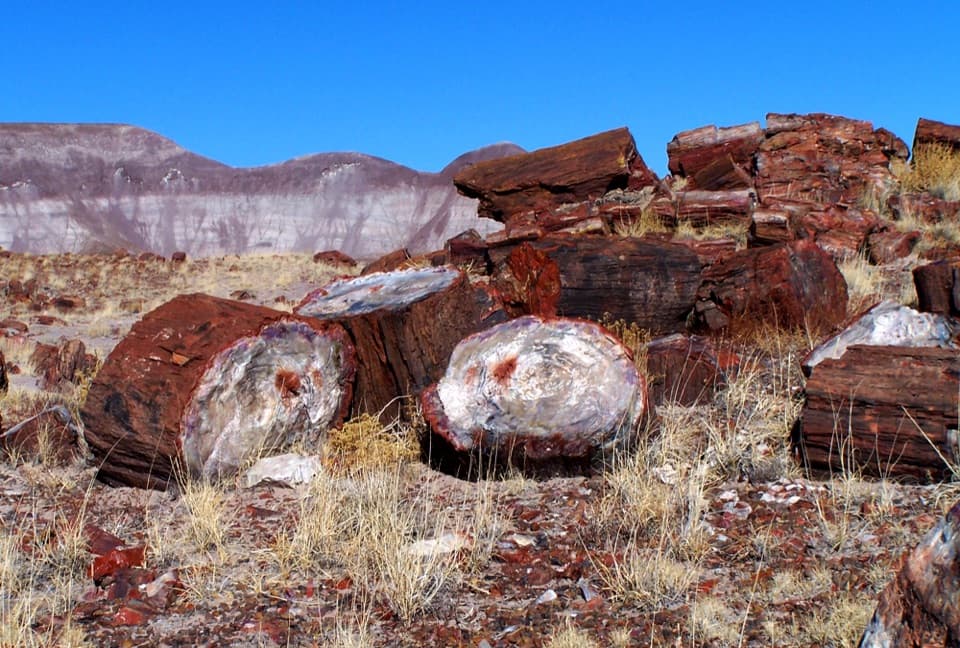 EasyLong Logs Trail1.6 mi · 1.5 hr · 0.1 mi awayBright petrified logs beneath gray and purple badlands.
 EasyGiant Logs Trail0.4 mi · 15 min · 0.1 mi awayA quick paved loop past giant logs, with several stair sets.
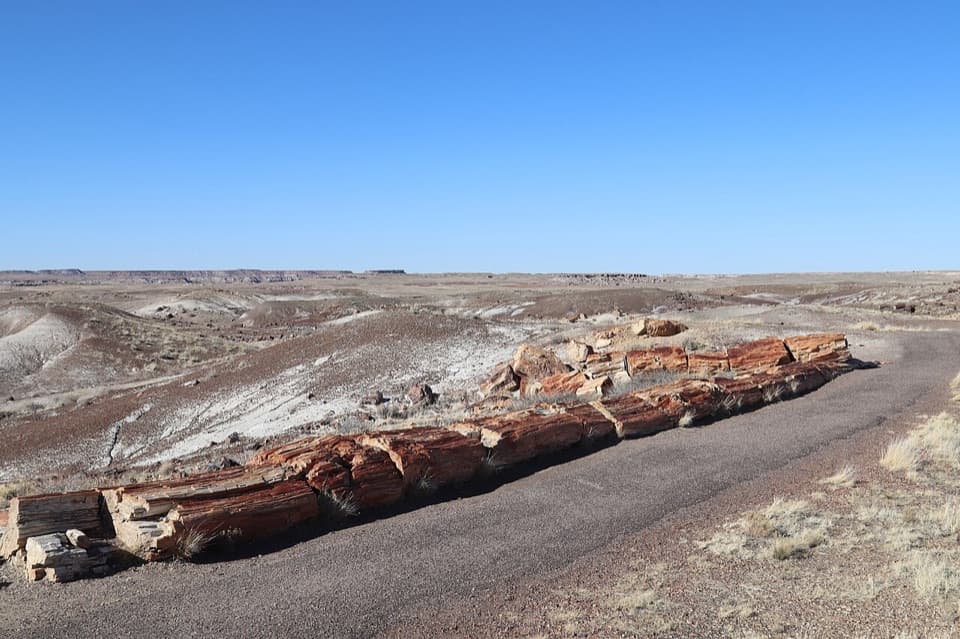 EasyCrystal Forest Trail0.9 mi · 30 min · 5.3 mi awayA short loop among colorful logs scattered across purple badlands.
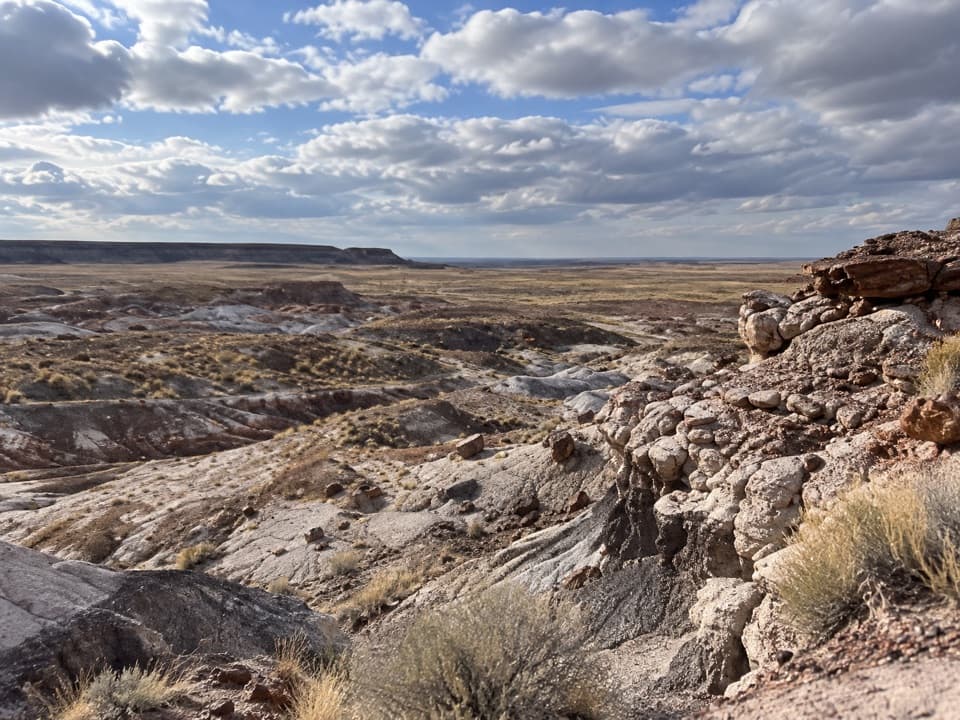 ModerateFirst Forest Point4.2 mi · 3 hr · 6 mi awayWash route-finding leads to petrified wood and a mesa view.
 ModerateJasper Forest Hike2.5 mi · 1.5 hr · 6 mi awayA disappearing road threads a dense field of ancient petrified logs.
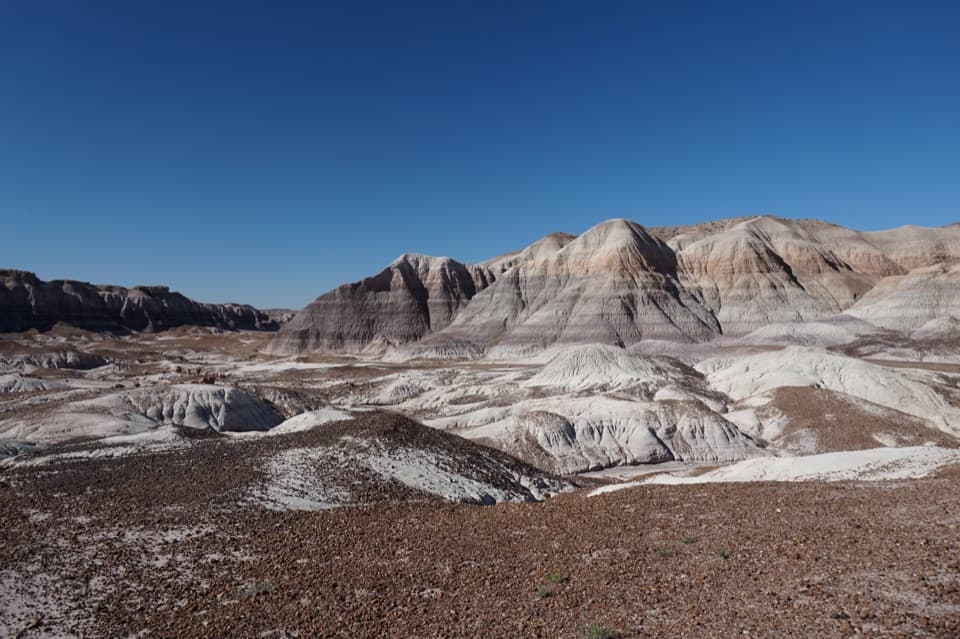 ChallengingBlue Forest Trail1.2 mi · 1.5 hr · 10.1 mi awayA rough old trail through blue badlands and exposed petrified wood.
 EasyBlue Mesa Trail1 mi · 45 min · 10.5 mi awayColor-banded badlands and petrified wood on a short, steep loop.
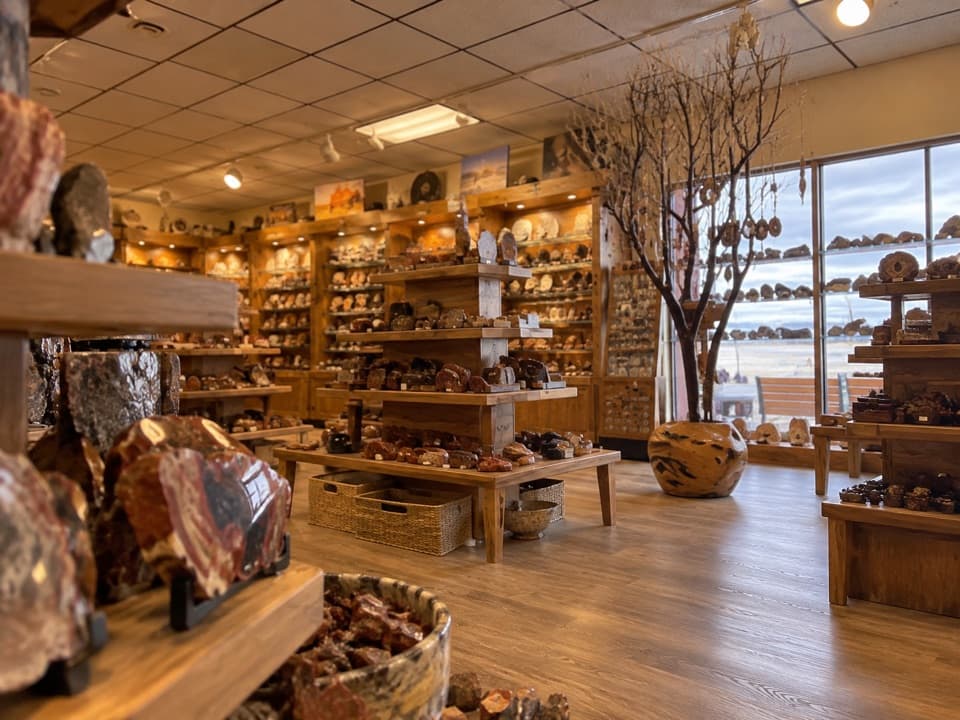 Store · 0.1 mi awayRainbow Forest Lodge Gift ShopA handy shop for souvenirs and privately sourced petrified wood.
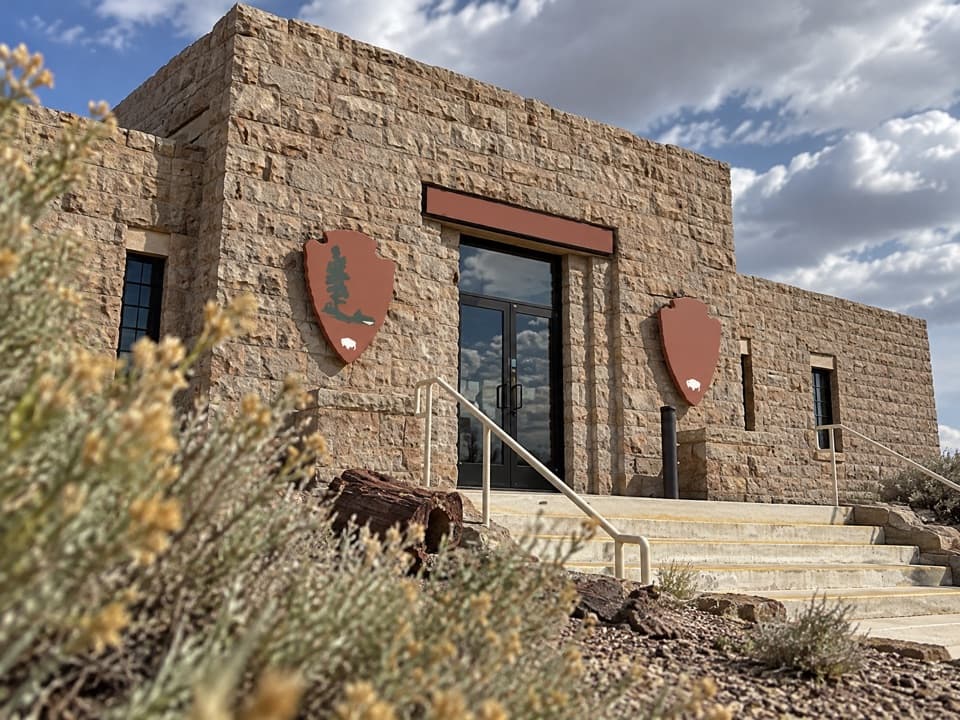 Sight · 0.1 mi awayRainbow Forest MuseumFossils inside, giant logs waiting just outside.Sight · 0.2 mi awayGiant LogsClose views of giant petrified logs on a short museum-side loop.Sight · 0.5 mi awayLong LogsWalk among a colorful scatter of unusually long petrified logs.Sight · 0.7 mi awayAgate HouseA small hilltop pueblo built from petrified wood.
 Entrance station · 1.6 mi awaySouth Entrance StationThe southern gate starts a 28-mile cross-park drive.
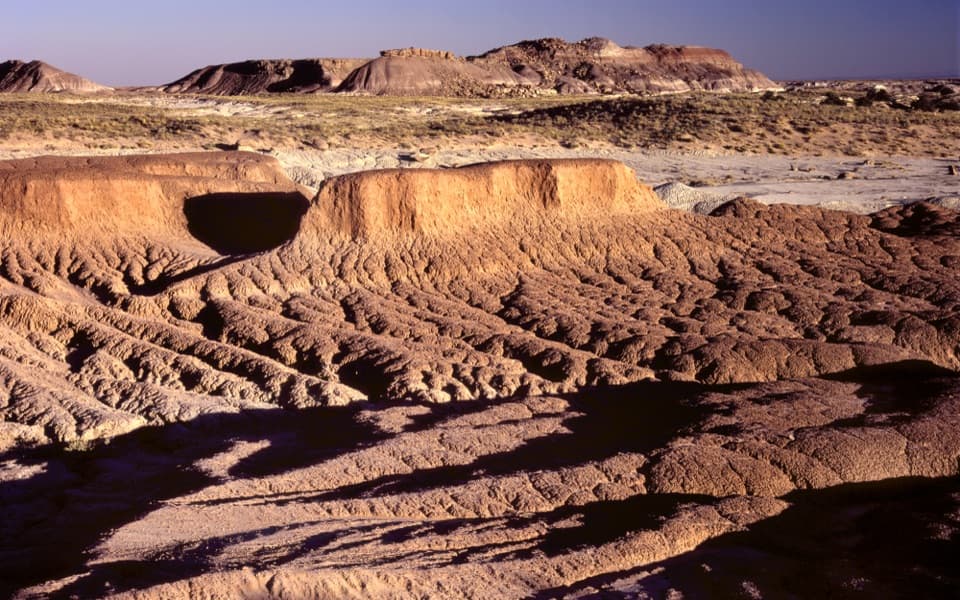 Scenic pullout · 1.8 mi awayHamilili PointA quick pullout for layered badlands and the Flattops skyline.
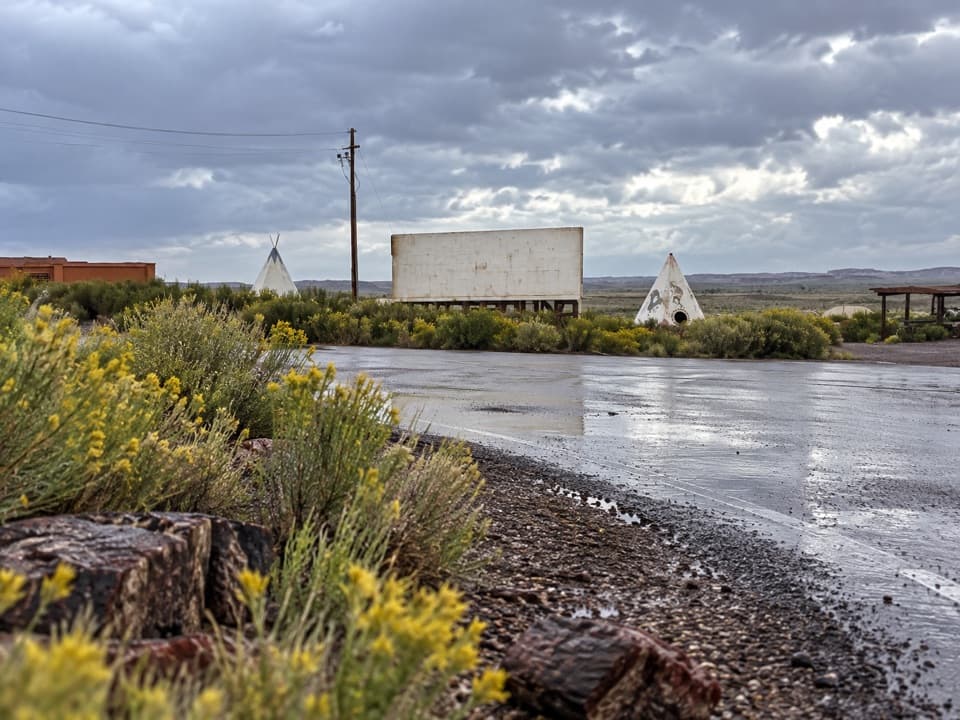 Campground · 2.2 mi awayCrystal Forest Gift Shop CampgroundA private RV base beside the park's south gate.
Parkwolf’s Petrified Forest ranking

The audio tour guide for the drive, plus offline maps, trails, and wildlife heatmaps for when the signal drops.