Sutherland Falls

A 580 m cascade pouring straight from Lake Quill
Sutherland Falls, Fiordland National Park
InsideFiordland National Park

Overview

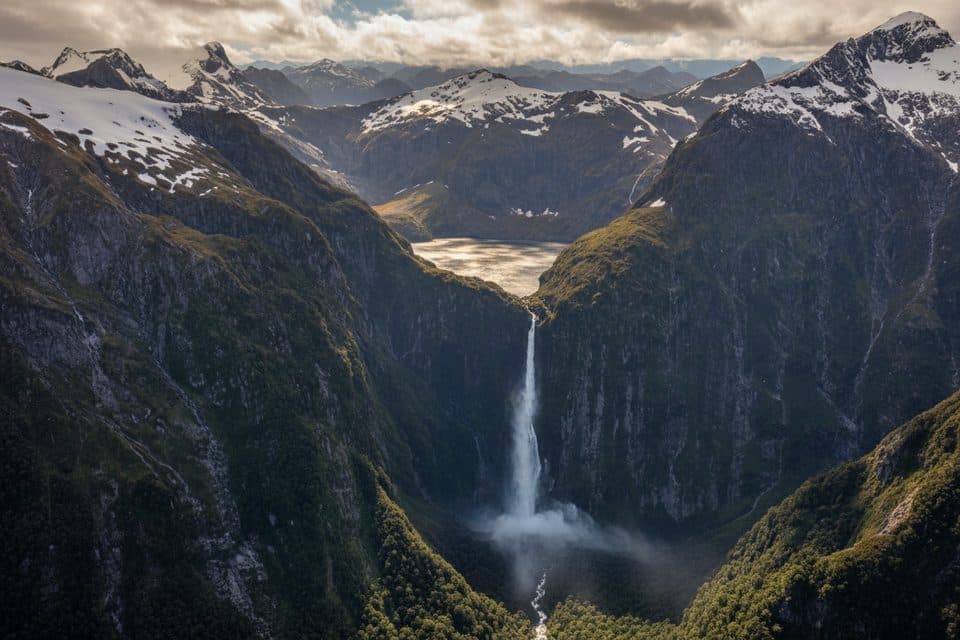
Sutherland Falls is Fiordland’s showstopper: a 580 m (1,904 ft) torrent plunging in three distinct tiers straight out of Lake Quill, a small glacial bowl perched above a sheer rock wall. The setting is peak Fiordland—steep mountains, dense rainforest, and a constant soundtrack of rushing water.

What You'll See

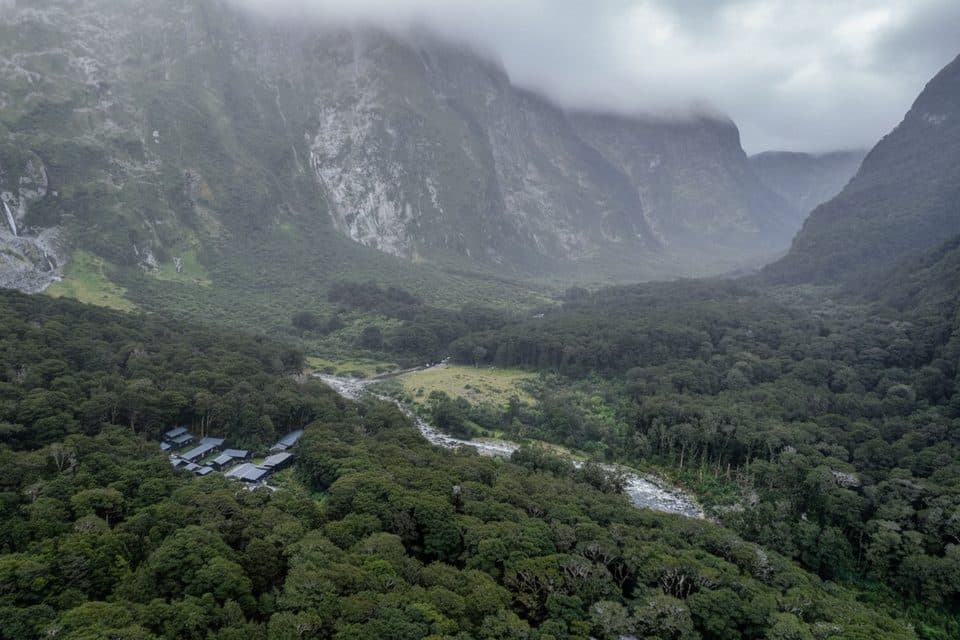
From the ground, the base is a sensory overload: thunder, wind, and mist that can drench you in seconds. You’ll feel the power up close, but the scale is so vast it’s hard to fit the whole waterfall in a single frame. From the air, the view opens up—the circular glacier-carved Lake Quill, the lip where it spills over, and all three drops lined up against the cliff.

How to Visit

  • Milford Track hikers take a signed side trip near the Quintin Public Shelter; it’s about 90 minutes return and includes a couple of swing bridges before the final spray-soaked approach. Expect to return the same way.
  • Not doing the 4‑day Milford Track? Scenic flights (fixed-wing or helicopter) from places like Queenstown, Te Anau, or Milford Sound give the best full-length perspective.

Why It’s Special

Few waterfalls anywhere fall so cleanly, so far, from a lake perched right on the edge. The combination of vertical relief (three drops totaling 580 m) and raw remoteness makes this one of the country’s most revered natural sights.

Wildlife

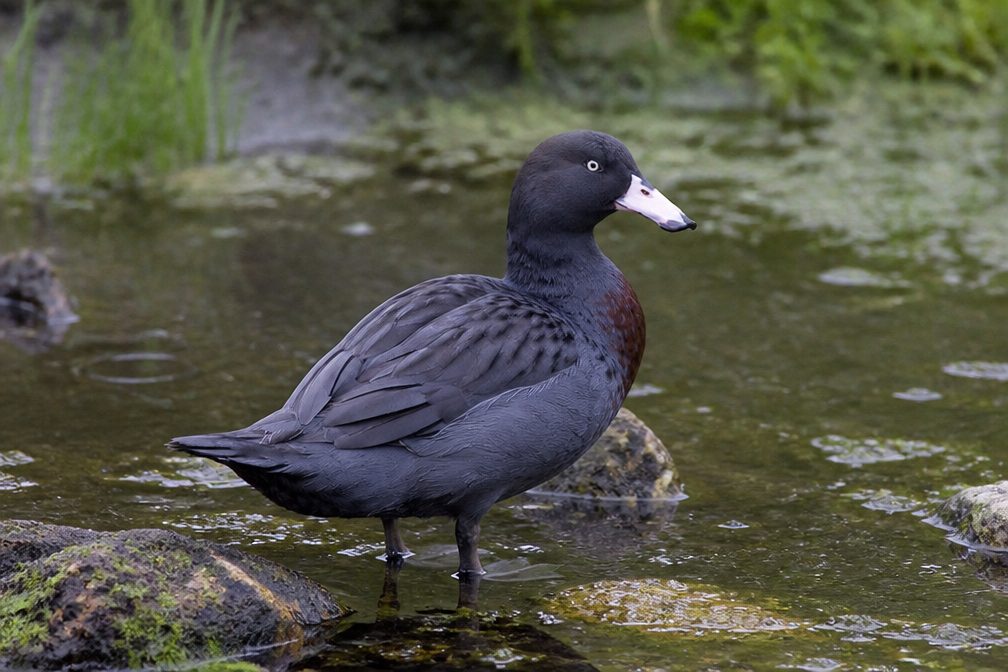
The broader Fiordland area supports native birds like kea, tūī, and mohua, along with lush temperate rainforest flora. Around the falls, expect more mist than wildlife; keep your eyes and ears open along the track.

History & Geology

The falls are named for Donald Sutherland, who first saw them in 1880. Lake Quill—formed by Ice Age glaciation—feeds the waterfall. The falls even cameo in a background shot in The Hobbit, which gives you a sense of their cinematic scale.

Conditions & Practicalities

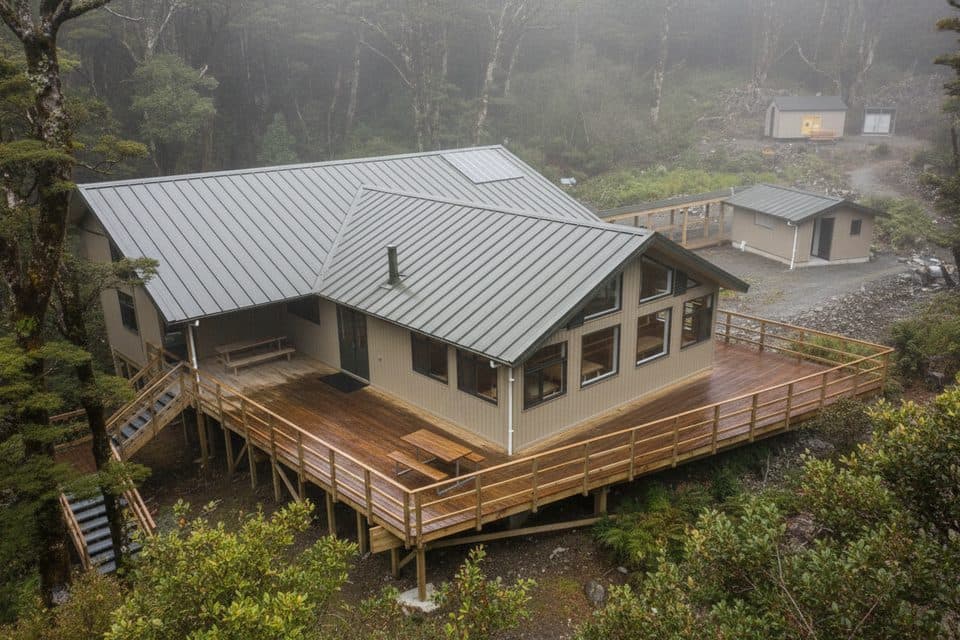
Fiordland is famously wet, which supercharges the falls but also means rain is likely. There are no facilities at the falls themselves; the nearest basic amenities are at Milford Track huts and shelters along the route. Bring waterproof layers, protect your camera, and pack insect repellent—sandflies can be relentless.

Best Time to Visit

  • Season: The Milford Track is typically walked in the Great Walk season (roughly Nov–Mar). Scenic flights operate year-round, weather permitting.
  • Waterflow: The falls are most dramatic after rain or during snowmelt.
  • Crowds: Due to the remote access, it’s never like a roadside attraction, but midday tends to be busier with track traffic; mornings and late afternoons on-track feel quieter.


Is It Worth It?

If you’re on the Milford Track, this detour is a no-brainer. If you’re not hiking, an aerial loop over Lake Quill and the three tiers is one of the most striking flightseeing experiences in the region.

Pros

  • Iconic 580 m, three-tier waterfall fed by Lake Quill
  • Milford Track side trip reaches the thundering base

Cons

  • Access is via a multi-day Milford Track hike or a scenic flight
  • Fiordland weather is wet; heavy spray and sandflies are common

Tips

  • Milford Track huts must be booked; the falls are a side trip on the multi‑day hike.
  • From Quintin Public Shelter, allow about 90 minutes return to the base.
  • Expect swing bridges and heavy spray near the end; pack a rain shell and dry bag for cameras.
  • Bring sandfly repellent and keep it handy.
  • For the full three-tier view and Lake Quill, consider a scenic flight.
The Parkwolf tour guide sitting on a phone mounted in a car

Parkwolf Tour Guide

Like a tour guide in your car.

Save the places you found around Fiordland, then let Parkwolf guide the drive between them.Download Parkwolf on the App Store