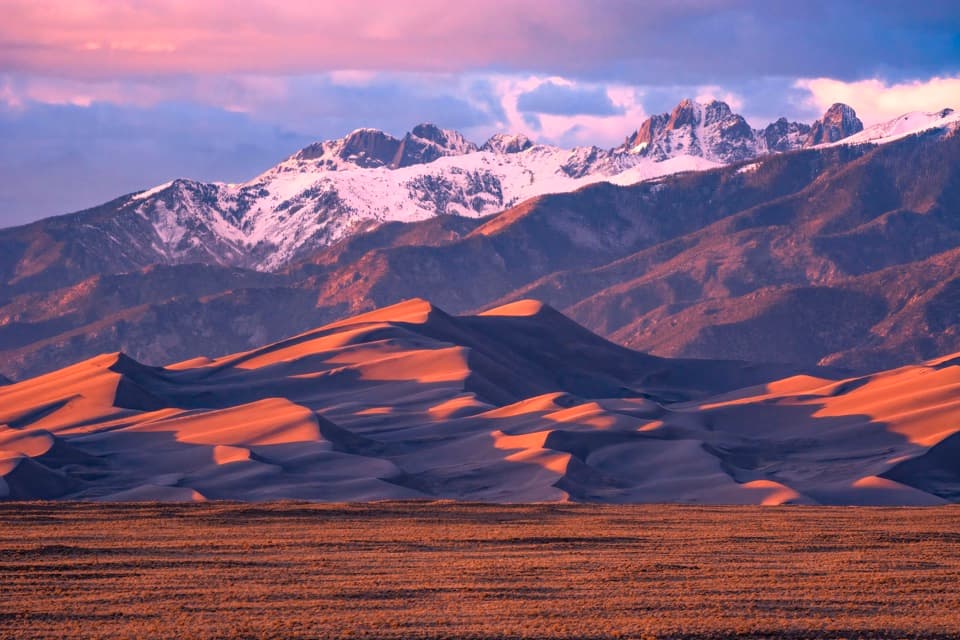
Star Dune

Towering star-shaped summit with sweeping views and a tough ridge climb
Star Dune, Great Sand Dunes National Park
InsideGreat Sand Dunes National Park

Overview

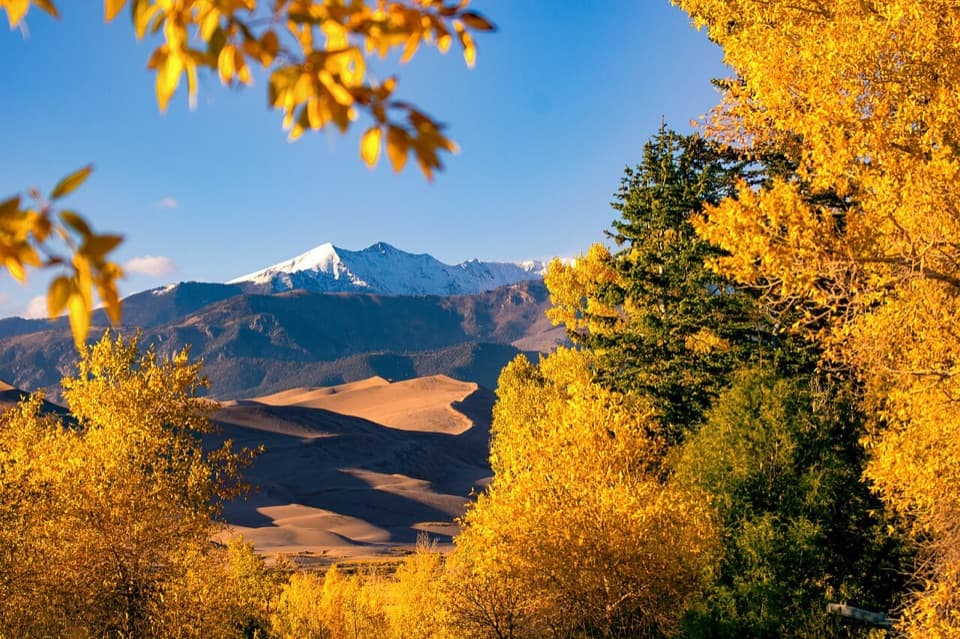
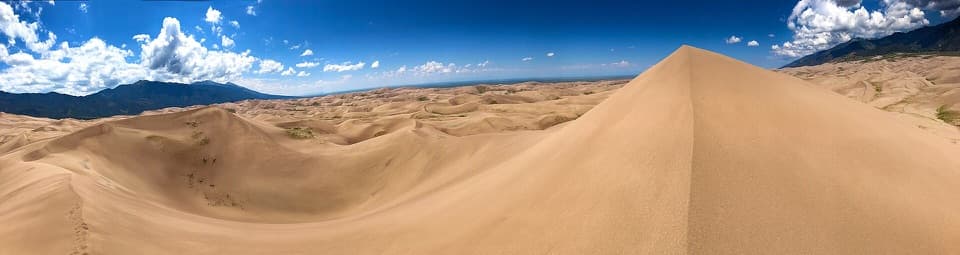
Star Dune is the park’s marquee summit: a true “star dune” with multiple arms radiating from a high point, rising about 741 feet from base to top. It’s big, beautiful, and humbling—all shifting light and ripples with nothing but sky above. GPS (for reference): 37.7517639, -105.5580583.

Getting There & Routes

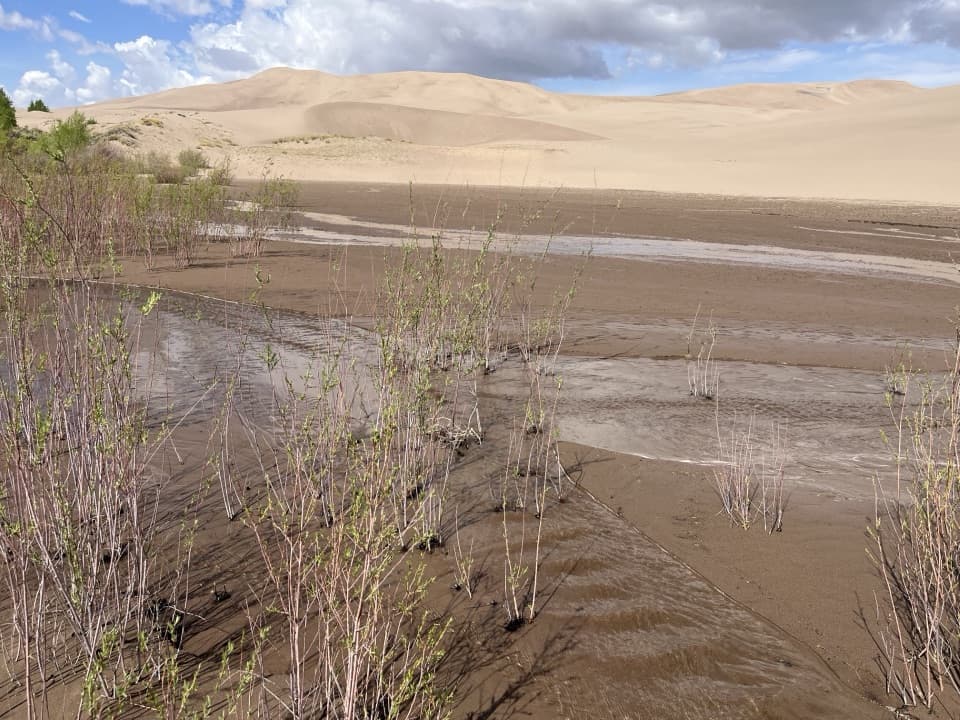
  • Most direct: From the main Dunes/Medano Creek parking area, walk roughly 2 miles south along the Medano Creek bed until the pyramid profile of Star Dune is obvious, then pick a ridge and climb.
  • Scenic loop option: Gain First Ridge to High Dune, traverse dune crests toward Star Dune, then descend to Medano Creek and follow the creek bed back.
  • Expect 6–9 hours round trip depending on fitness, acclimation, wind, and how efficiently you stick to ridges. There are no marked trails in the dunefield; choose your own line.

Difficulty & Navigation

This is harder than the mileage suggests. Soft sand means two steps forward, one back. Navigation can feel samey once you’re deep in the dunefield; strong directional awareness is essential. Follow ridgelines whenever possible—they’re firmer and minimize needless ups and downs. The park notes many phone apps can be inaccurate on the dunes, so download offline maps and carry a low-tech backup like a compass.

Best Times to Visit

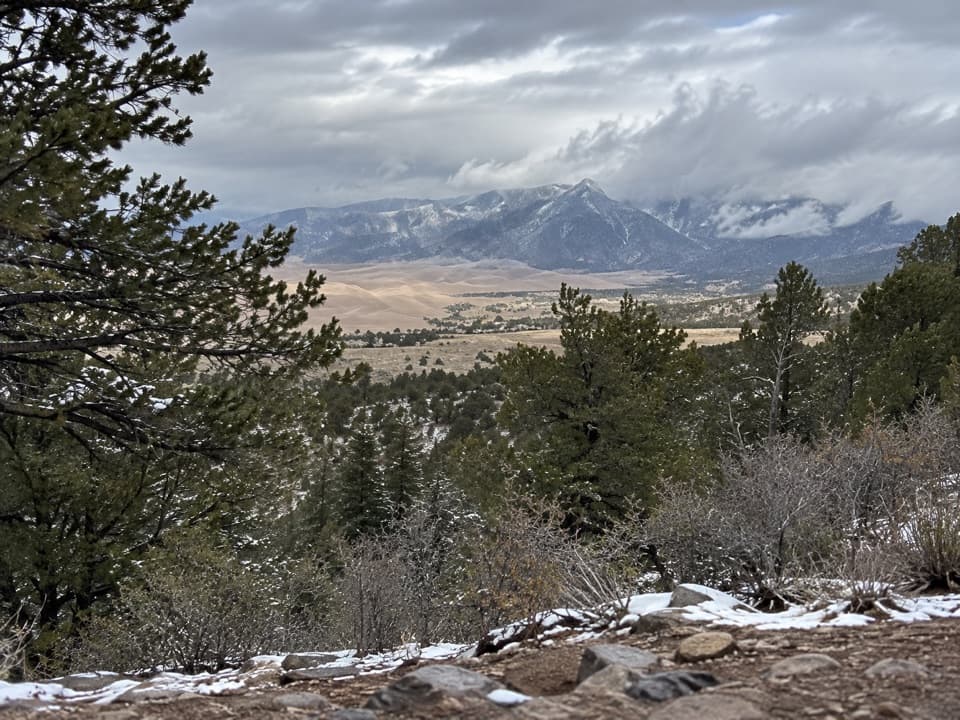
Start at dawn in warm months. By late morning to afternoon, sand temperatures can soar and thunderstorms are common. Early and late light makes the dune textures pop for photos, and winds are often calmer. Midday—especially on weekends—tends to be busier near the main use areas; predawn and evening are typically quieter. After rain, the surface firms up and climbing is easier. In winter, expect cold, wind, and occasional blizzard conditions.

Nature Notes

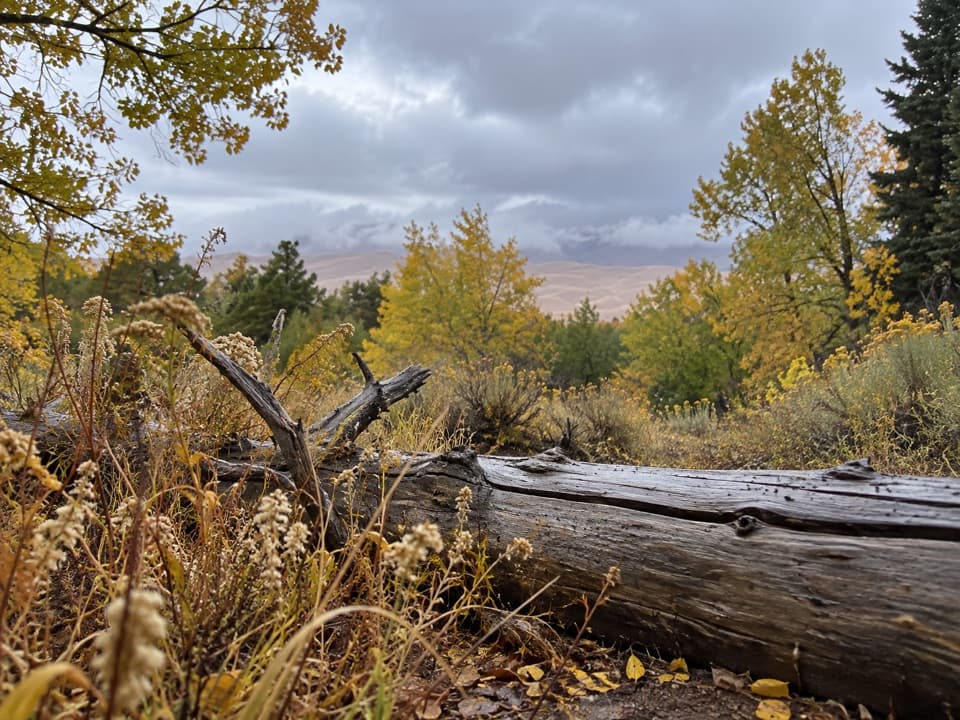
Keep an eye out for unusual tracks, ripples, and sand grains of different colors. In warmer months you might encounter several endemic insects that live only in these dunes—look, don’t disturb. When flowing (typically late spring into early summer near the dunefield), Medano Creek can exhibit “surge flow,” pulsing like mini-waves as sand forms and collapses in the bed.

Safety & Gear

Cover up and carry more water than you think you need (2–4 liters per person is a good start). Wear closed-toe shoes; in hot months, the sand can burn bare feet. High-top footwear or gaiters help keep sand out. Bring sun protection, eye protection for blowing sand, snacks/electrolytes, and a wind layer. Thunderstorms and lightning are serious—turn around if weather builds.

Facilities & Rules

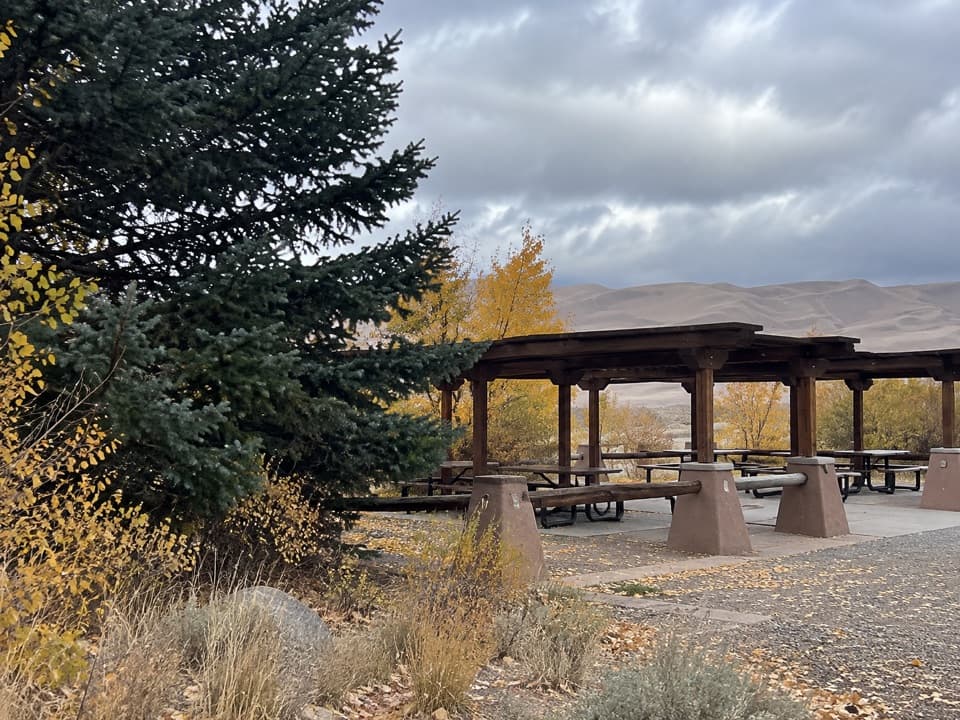
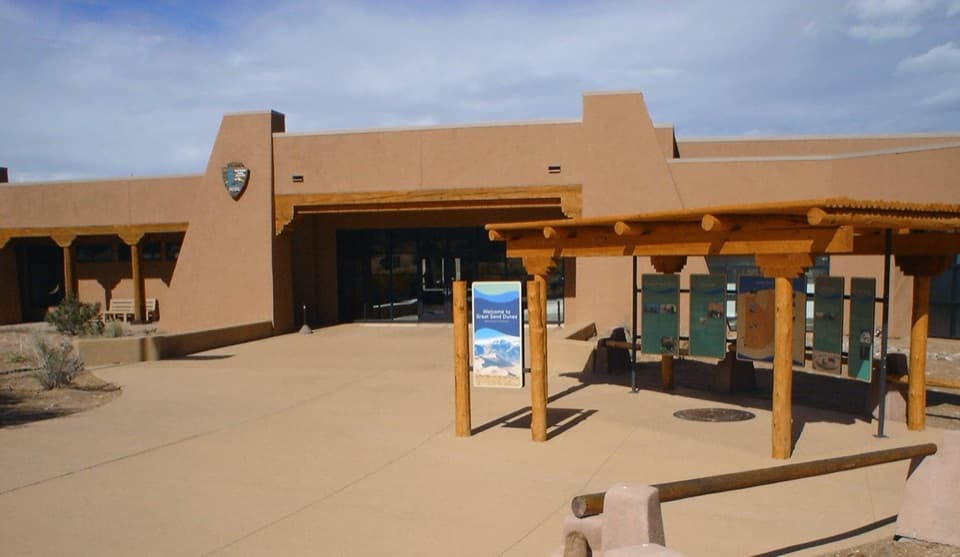
There are no amenities at Star Dune. Restrooms and water are available at the Visitor Center; vault toilets are at the main dunes parking area. Pets are allowed only in the main use areas up to High Dune—not into the interior dunefield that includes Star Dune. Plan accordingly before you set out.

Pros

  • One of North America’s tallest dunes (741 ft) with huge summit views
  • Distinct multi-ridged star shape that rewards ridge-top walking

Cons

  • Long, unmarked sand slog with easy-to-miss navigation
  • Summer sand can hit ~150°F with windy, stormy afternoons

Tips

  • Start at dawn and follow ridgelines—firmer sand, less energy wasted.
  • Walk the Medano Creek bed south, then pick a ridge to ascend.
  • Download offline maps and bring a compass; apps can be unreliable on the dunes.
  • Carry 2–4 liters of water per person and real sun/wind protection.
  • Avoid sandals; closed-toe shoes prevent burns and keep sand abrasion down.
The Parkwolf tour guide sitting on a phone mounted in a car

Parkwolf Tour Guide

Like a tour guide in your car.

Save the places you found around Great Sand Dunes, then let Parkwolf guide the drive between them.Download Parkwolf on the App Store