Dunes Overlook

Short hike to sweeping dunes-and-peaks panorama
Dunes Overlook, Great Sand Dunes National Park
InsideGreat Sand Dunes National Park

Overview

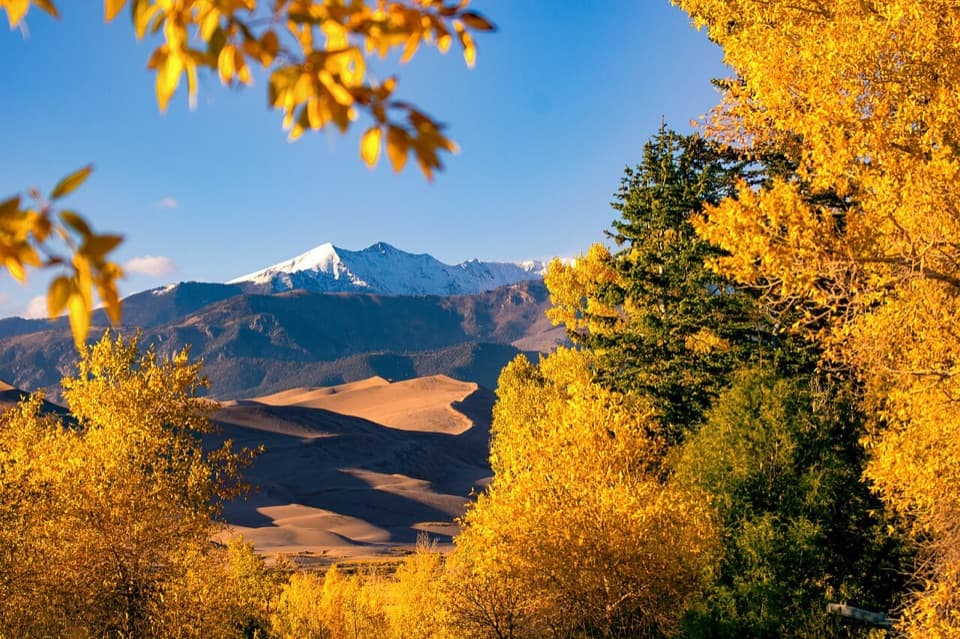
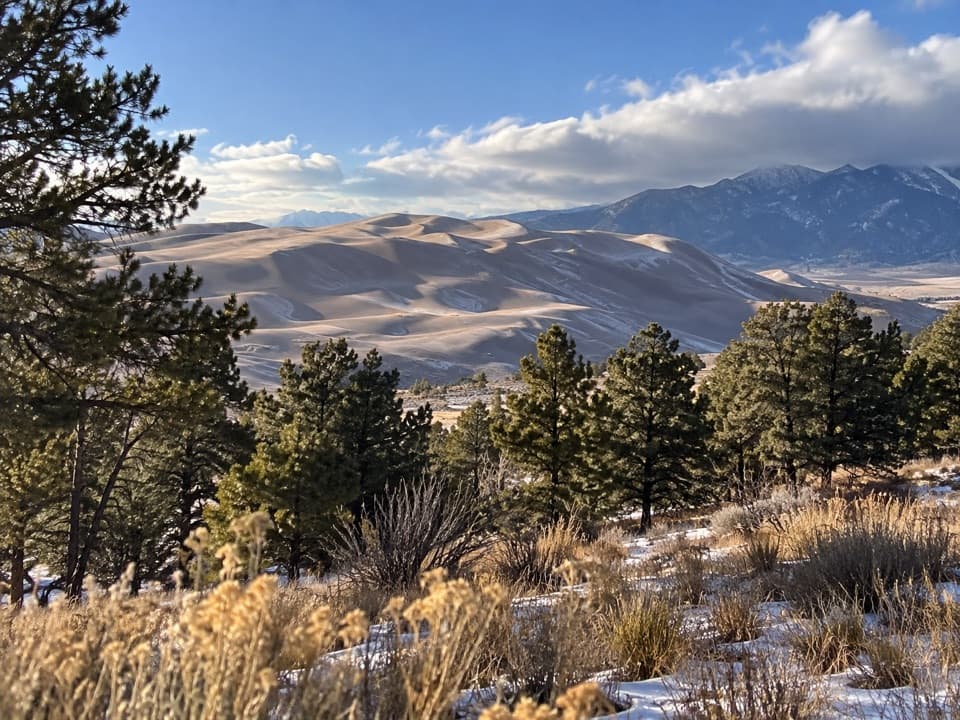
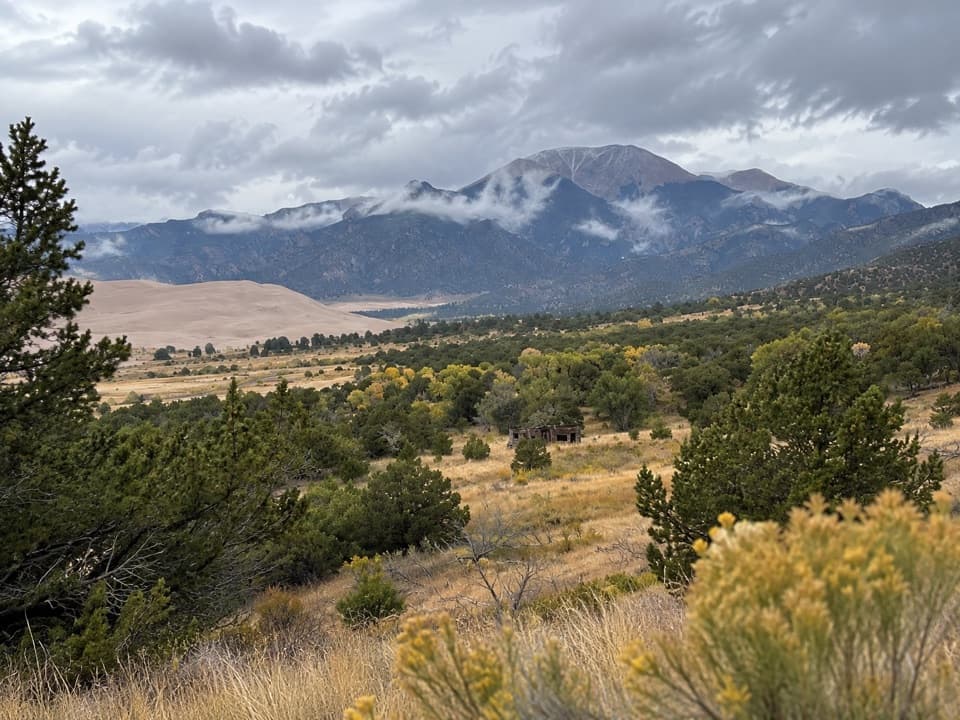
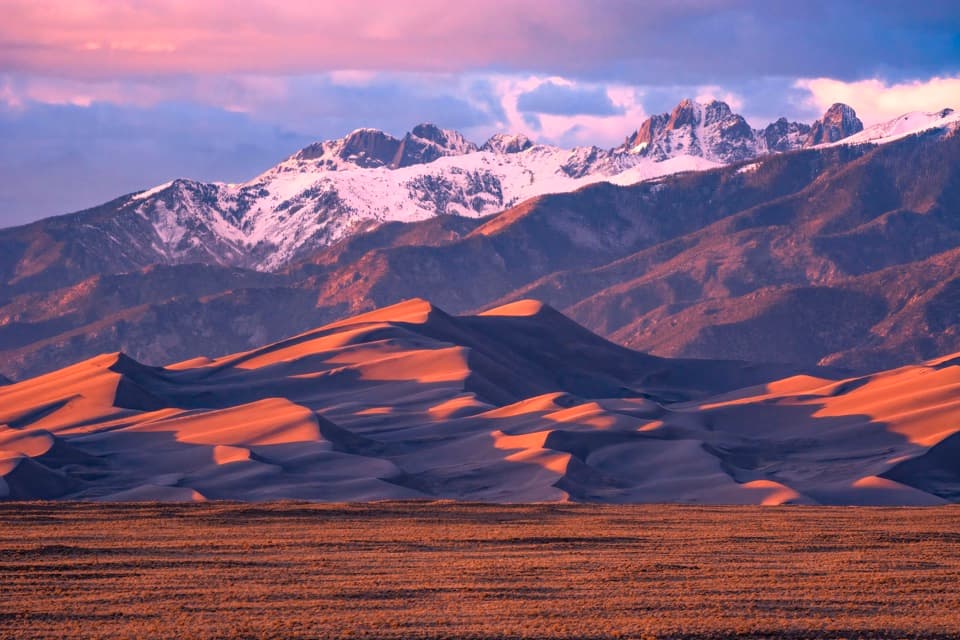
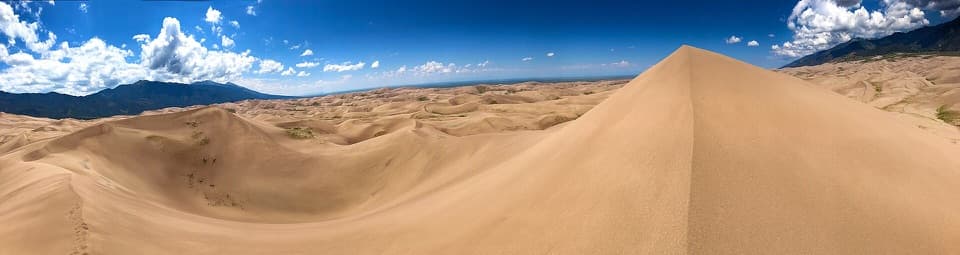
Dunes Overlook is the quick-hit panorama you want: a short, moderately uphill walk to a ridge above the 30‑square‑mile dune field with the Sangre de Cristo Mountains as a dramatic backdrop. It’s a favorite for sunset when the dune ridges light up in stripes of shadow and gold.

Route & Logistics

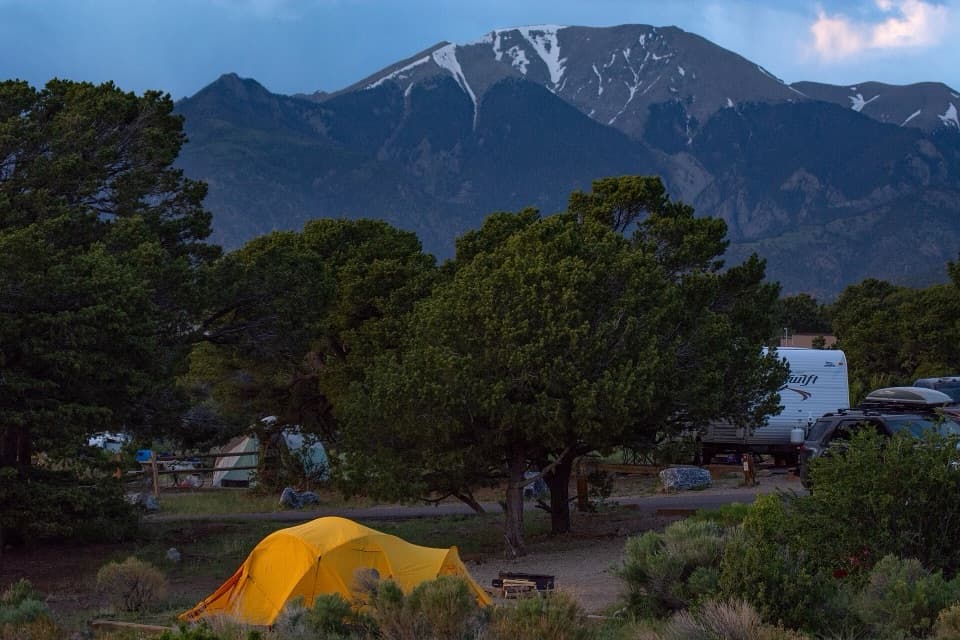
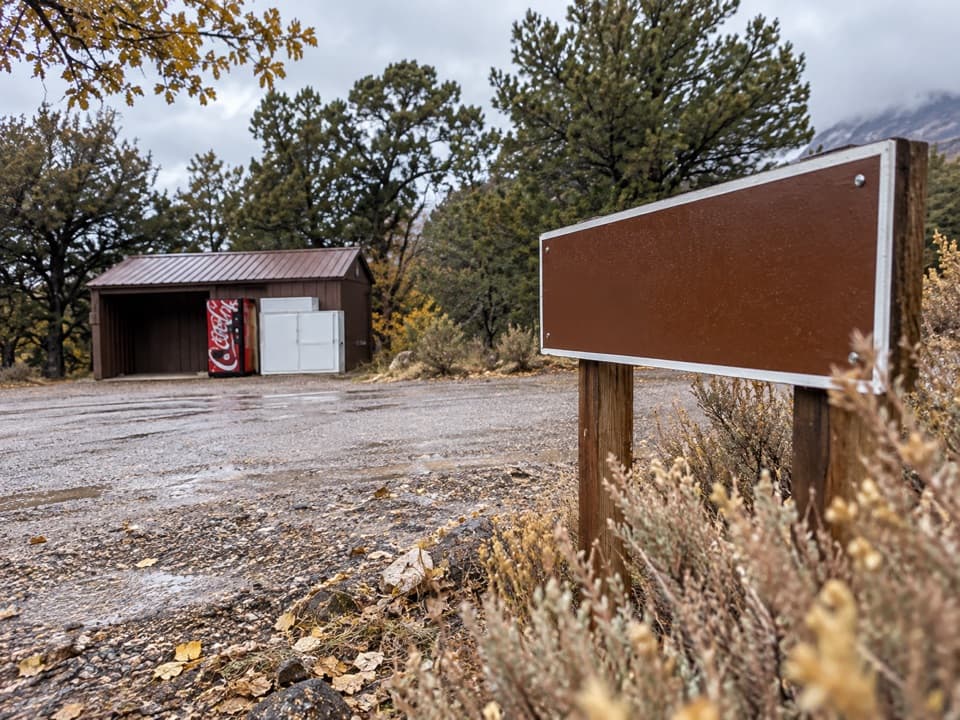
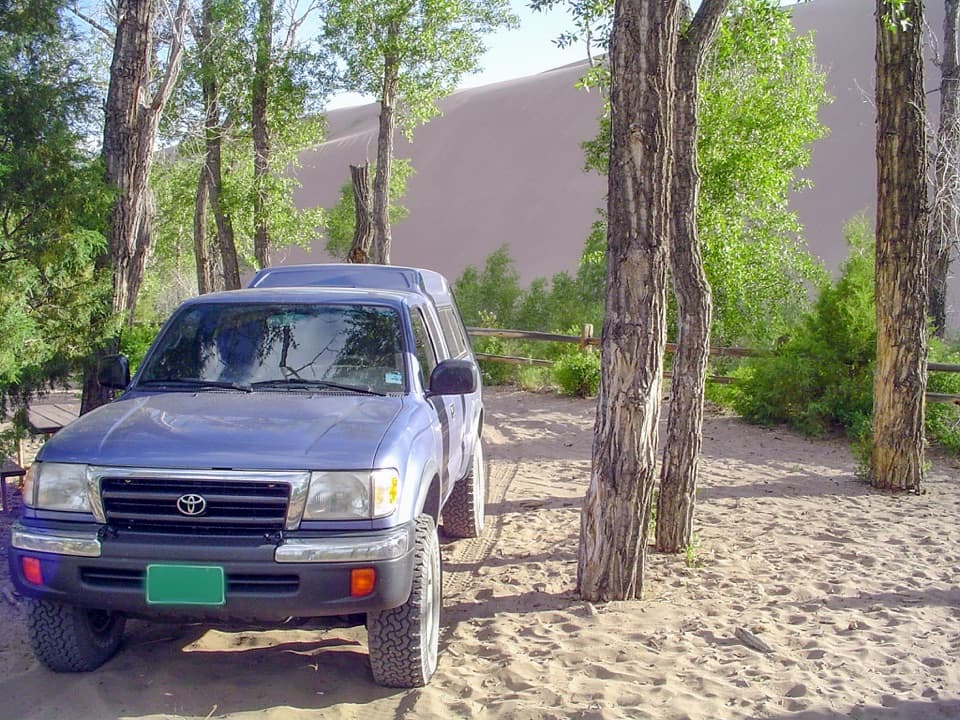
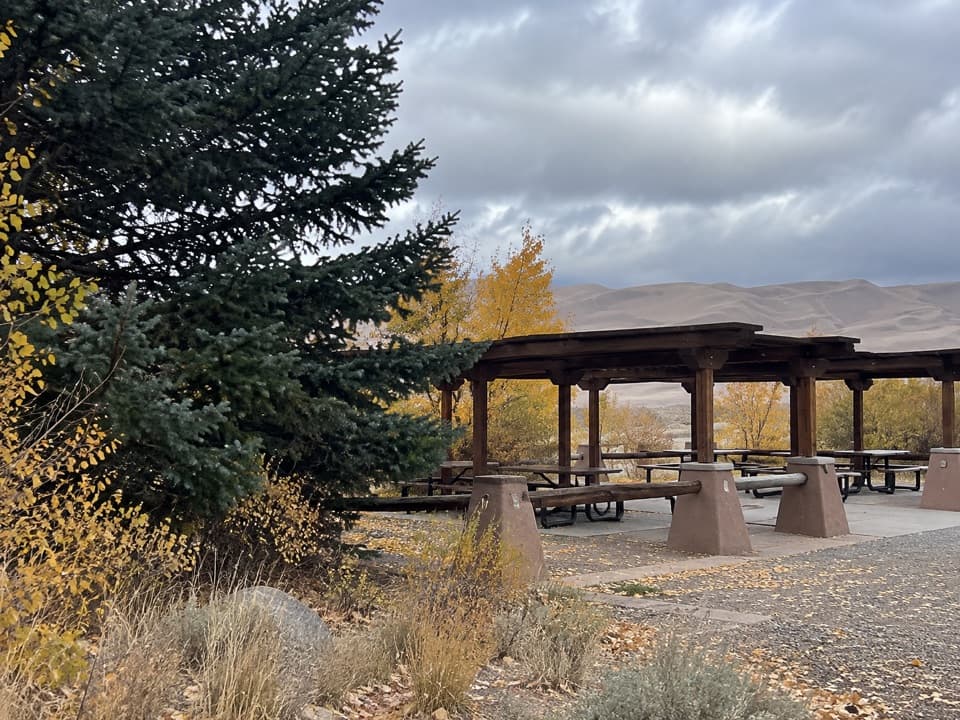
Start at the Sand Ramp Trailhead at the north end of Piñon Flats Campground. Follow the Sand Ramp Trail for about 0.5 miles, then branch onto the Dunes Overlook Trail. From the junction, four gentle switchbacks climb to two viewpoints—Lower and Upper Overlooks—set about 0.1 mile apart. Expect roughly 2.0 miles round trip (some hikers record up to ~2.7 miles depending on GPS and wandering) with modest overall elevation gain. Parking in the campground is limited and tightly signed; most spots are for registered campers, so read signs carefully. A restroom is near the trailhead area; there are no facilities at the overlooks. Benches at the ridge make it easy to settle in for the show. The park is open 24/7 year‑round, so timing is up to you.

What You’ll See

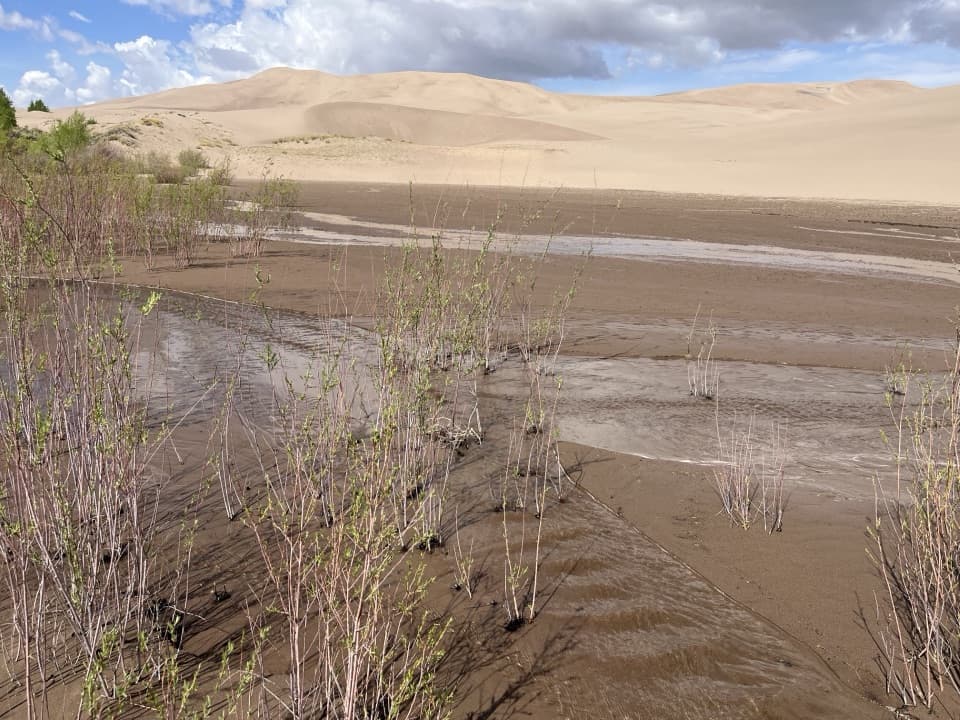
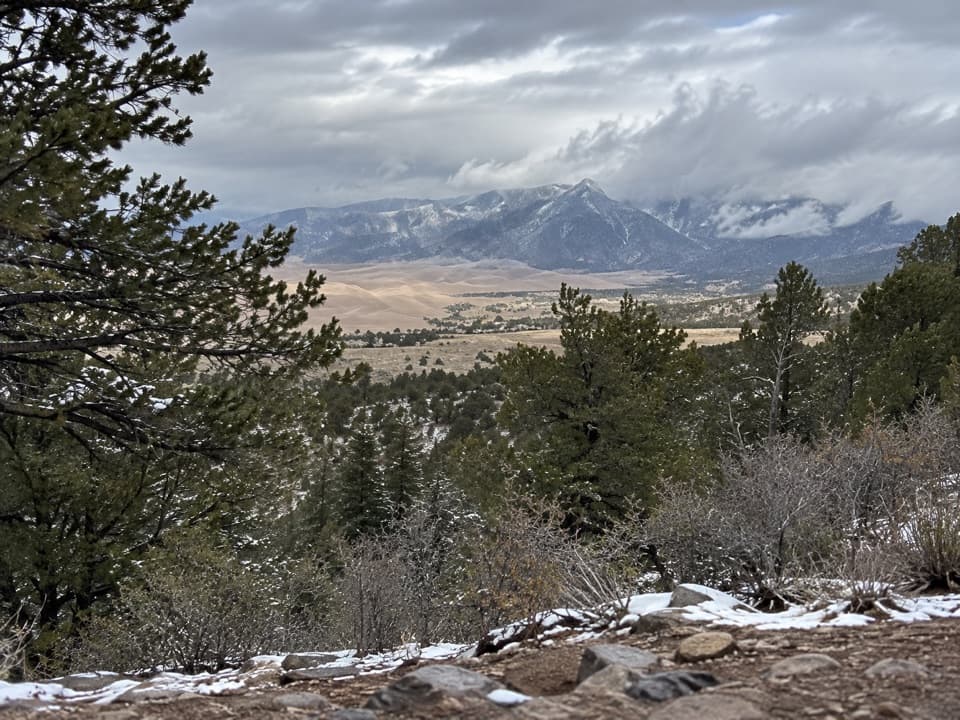
From the ridge you’ll get a full sweep of North America’s tallest dunes framed by high peaks. In late spring, you can often pick out Medano Creek’s broad sandy channel skirting the southern edge of the dunefield. Many visitors slightly prefer the Lower Overlook for how the pinyon‑juniper foreground frames Mount Herard and the dune sea—visit both and decide for yourself.

Geology in View

You’re looking at a dune system built by a clever wind-and-water loop: prevailing winds blow sand toward the mountains, storm winds push it back, and streams recycle sand around the margins so it can be blown in again. The tallest summits out there trade the crown as shifting sands subtly reshape crests over time. It’s a living landscape, constantly on the move.

Wildlife & Environment

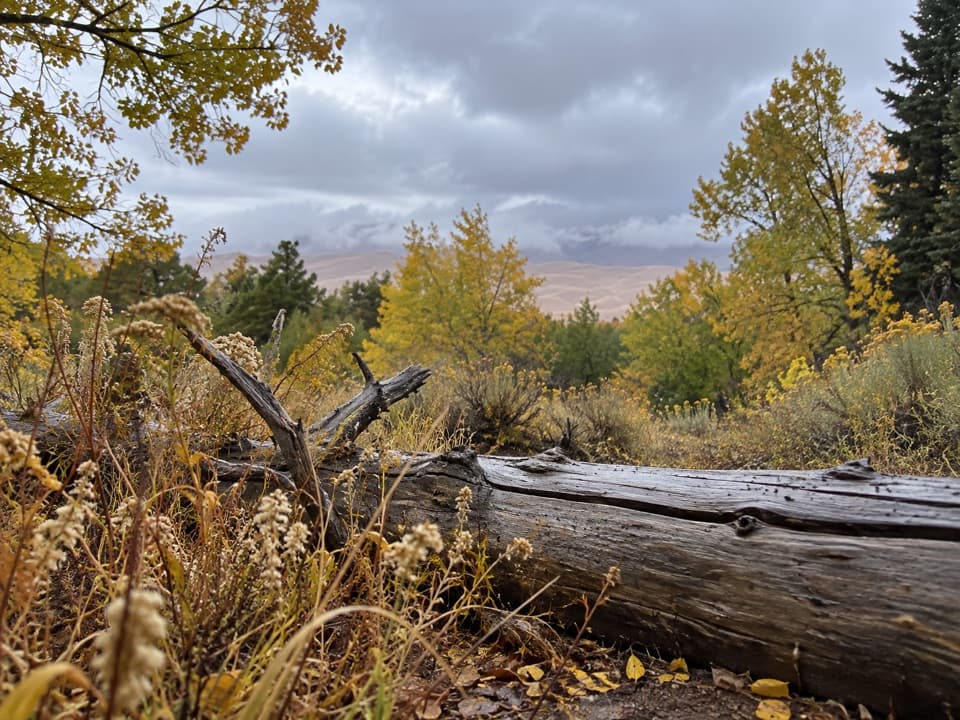
The approach passes through pinyon‑juniper with pockets of cacti and seasonal wildflowers. Black bears are more common in the nearby foothills than on the open dunes—stay bear aware and make noise, especially at dawn and dusk. Winds can be strong on the ridge.

Best Time to Visit

Sunset and the hour after are prime for contrasty light and photography; early mornings are quieter and cooler with gentler tones. In summer, avoid midday—the sand and air can be punishingly hot. Spring adds interest below with Medano Creek’s seasonal flow, while fall often brings crisp air and clear views.

Tips

  • Hit both overlooks; they’re close together and offer different framing.
  • Expect a signed turnoff about 0.5 miles from the trailhead—don’t miss it.
  • Bring plenty of water, sun protection, and a wind layer.
  • Pack insect repellent; mosquitoes can be active in season.
  • If the small trailhead area is full, loop back later rather than parking in signed campsite spots.

Pros

  • Benches at the viewpoint for lingering over the panorama
  • Short, rewarding hike with sweeping views of the entire dunefield

Cons

  • Very limited parking at the Piñon Flats access
  • No facilities at the overlooks themselves
  • Afternoon heat, sun, and winds can be harsh

Tips

  • Read parking signs at Piñon Flats; most spots are for campers.
  • Visit both Lower and Upper Overlooks—they’re only about 0.1 mile apart.
  • Watch for the Dunes Overlook turnoff about 0.5 miles from the trailhead.
  • Bring bug spray—mosquitoes can be active in season.
  • Aim for sunset or early morning to beat heat and get the best light.
The Parkwolf tour guide sitting on a phone mounted in a car

Parkwolf Tour Guide

Like a tour guide in your car.

Save the places you found around Great Sand Dunes, then let Parkwolf guide the drive between them.Download Parkwolf on the App Store