Nevada Fall

Thundering 594‑ft cascade with huge views after a stout climb
Nevada Fall, Yosemite National Park
InsideYosemite National Park

Overview

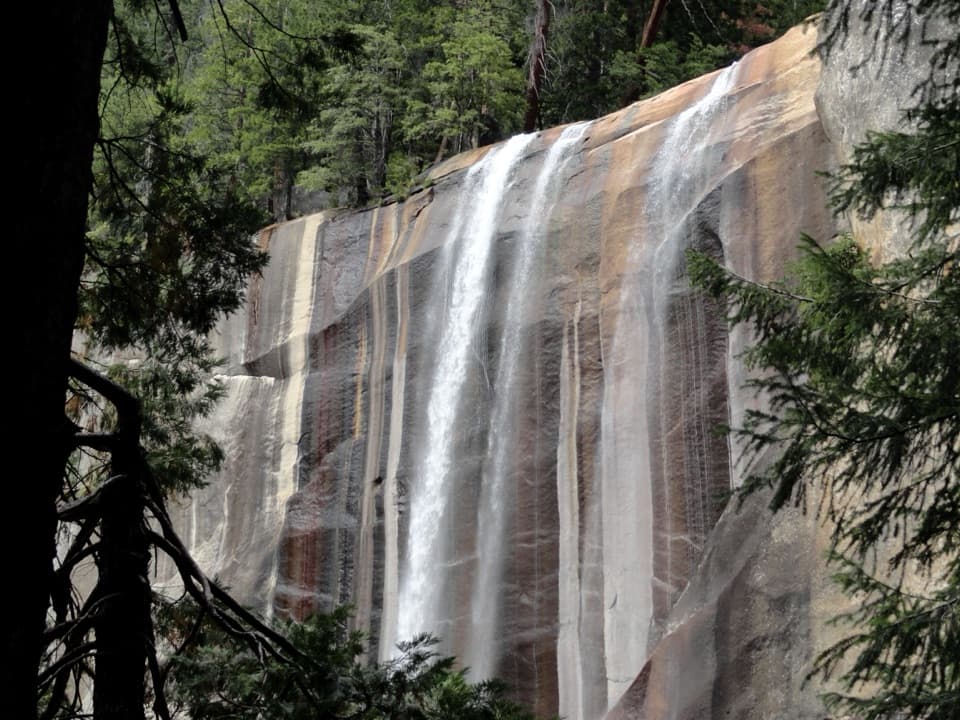
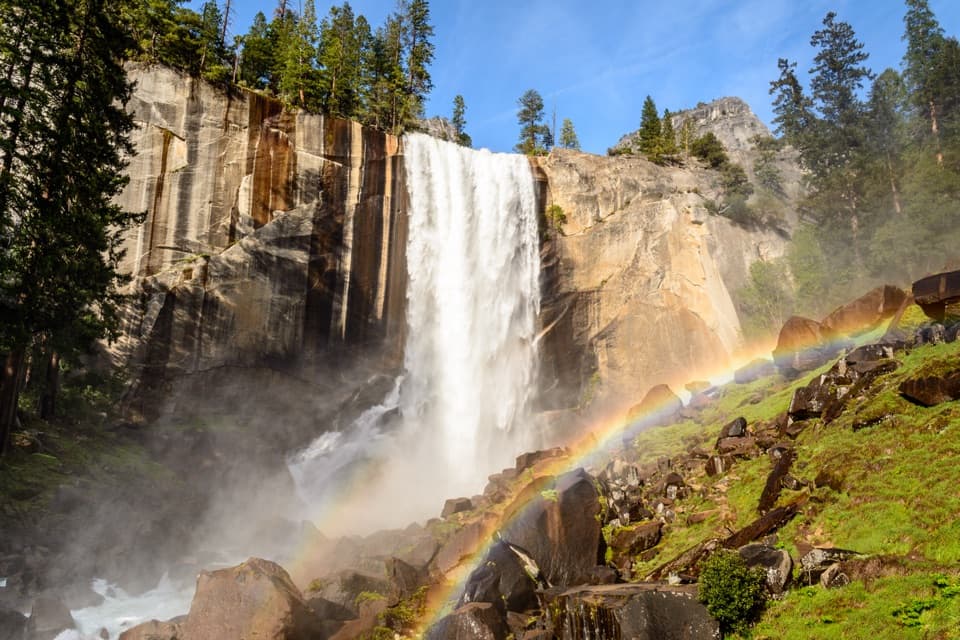
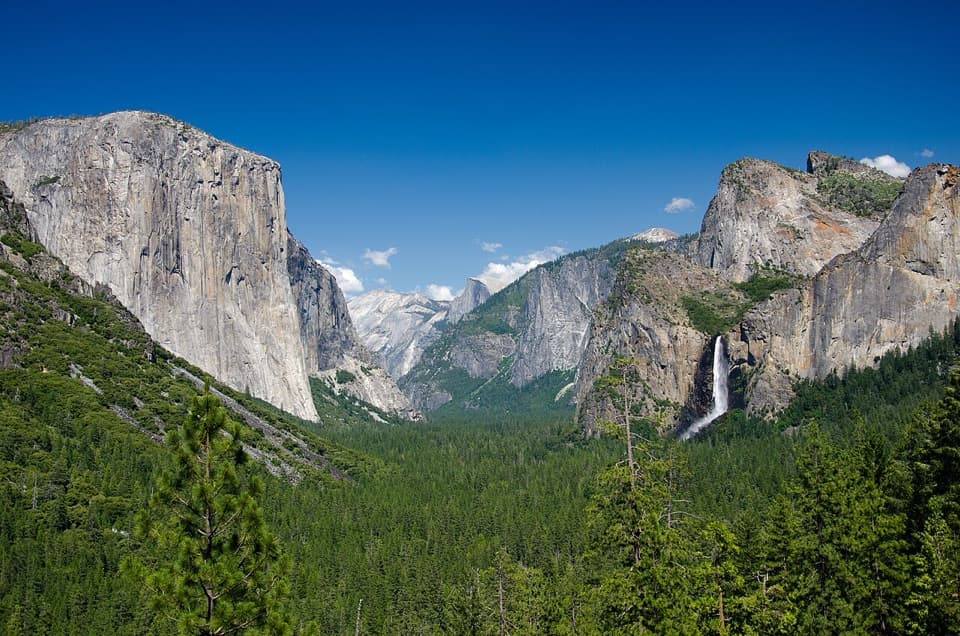
Nevada Fall delivers a thundering, 594‑foot drop of the Merced River and big, open views as your reward. Getting there is half the fun: the Mist Trail climbs past Vernal Fall on steep, spray‑soaked stone steps before continuing to Nevada. It’s strenuous, memorable, and one of the park’s classic outings.

The Hike: Routes and Difficulty

Most hikers ascend via the Mist Trail and descend the John Muir Trail (JMT). Expect a sustained climb with steep, sometimes wet granite steps near Vernal Fall, then a rockier, airy feel on the push to Nevada. A popular loop to Nevada Fall runs about 5.7 miles round‑trip with roughly 2,100 feet of elevation gain. The JMT descent trades steps for switchbacks and wider views, making it easier on knees and less slippery.

Trailhead, Parking, and Shuttle

Start at Happy Isles at the east end of Yosemite Valley. Parking near the trailhead is limited; plan to leave your vehicle in a day‑use lot and ride the Valley shuttle to the Happy Isles area.

Amenities on the Way

You’ll find a flush restroom at the Happy Isles area. About a mile in, the Vernal Fall Footbridge has restrooms and potable water—this is the key refill stop before the big staircase. There’s another restroom at the top of Vernal Fall, and one more by the bridge over the Merced River near Nevada Fall. Don’t expect food or additional water taps at the tops of the falls—pack what you need.

Safety and Seasonal Notes

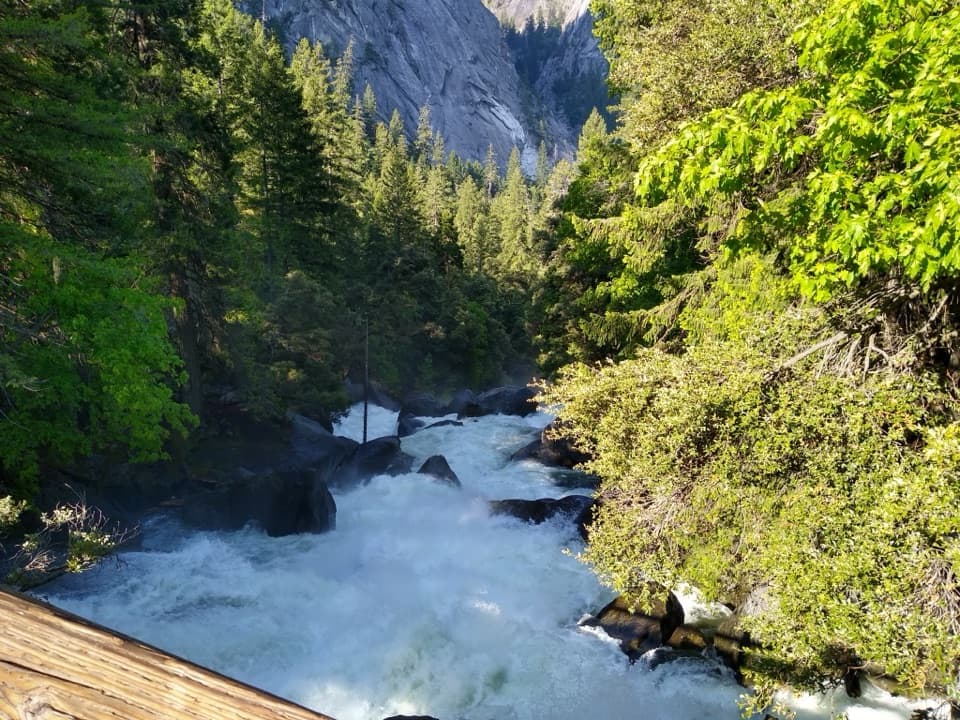
The Mist Trail steps can be drenched in spring runoff and slick with sand year‑round. Wear shoes with solid traction and consider trekking poles for the descent. Stay behind railings and well back from swift water; people have been swept over the falls. Dogs aren’t allowed on this route. Rockfall and ice occur naturally—obey all closures. In winter, the Mist Trail stairs are typically closed when icy; the JMT’s “Ice Cut” near Nevada Fall also closes—follow posted detours.

Geology: What You’re Seeing

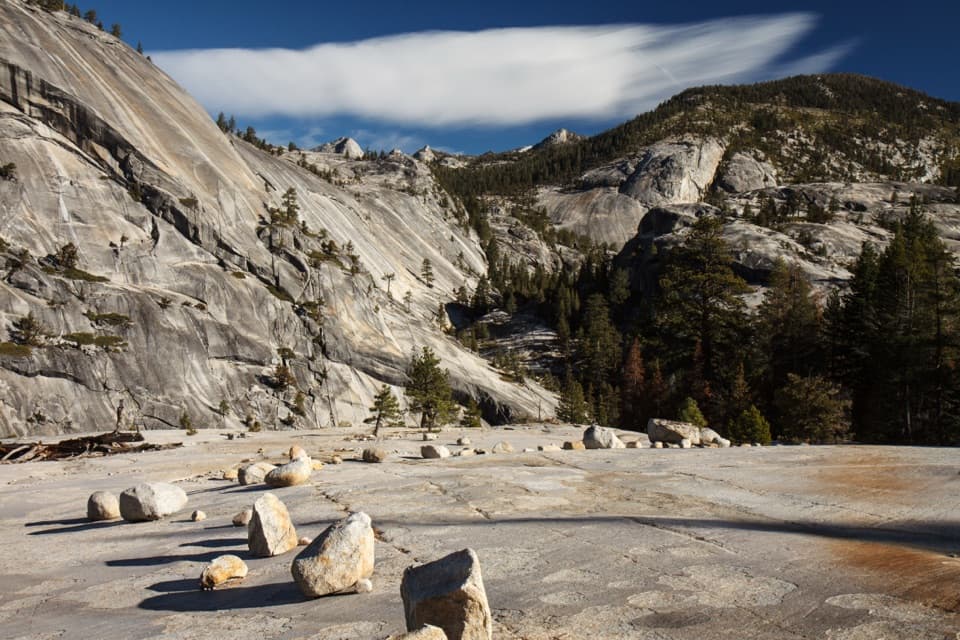
Nevada Fall exists because glaciers carved Yosemite’s granite into deep U‑shaped valleys and left hanging tributaries. The Merced River drops over resistant granitic bedrock here, creating the dramatic plunge and the polished slabs you’ll see along the way.

Wildlife and Leave No Trace

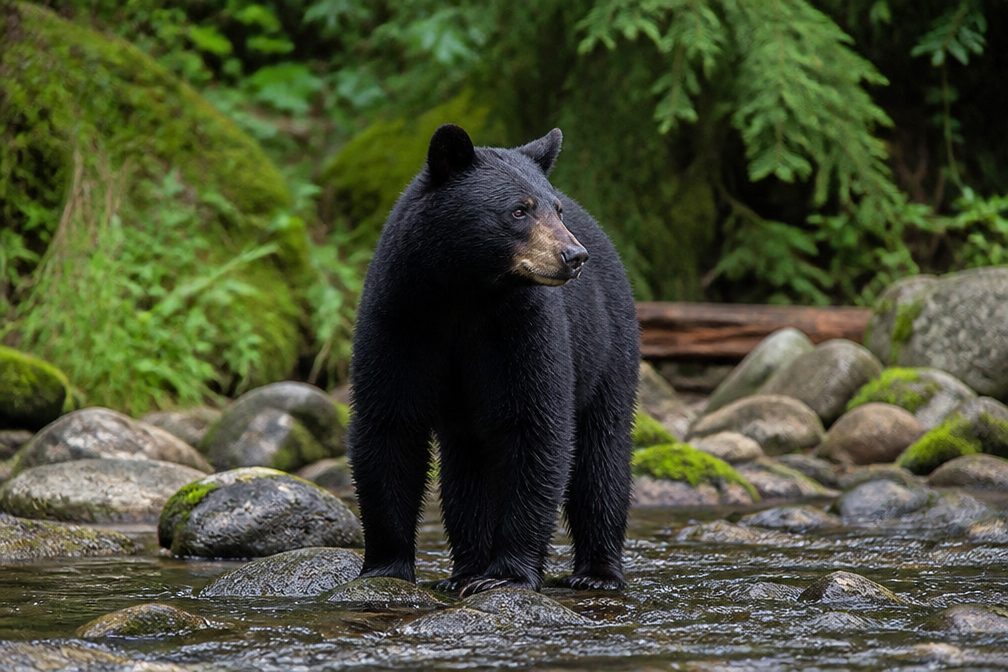
Bears, ravens, and bold ground squirrels quickly learn where hikers snack. Keep food sealed, never feed wildlife, and pack out all trash. Snakes (including rattlesnakes) and ticks are present—watch your step and do tick checks after hiking.

Best Time to Visit

For sheer power (and rainbows in the spray), late spring to early summer is prime. Late summer through fall brings lower flow and drier footing. Start early to climb in cool morning shade and to beat crowds that surge by mid‑morning. In winter and early spring, expect icy conditions and intermittent closures—check current trail status before you go.

Pros

  • Spectacular 594‑ft waterfall with sweeping vistas from the top
  • Classic loop: Mist Trail up, John Muir Trail down
  • Restrooms and potable water available en route at Vernal Fall Footbridge

Cons

  • Steep, wet granite steps and heavy crowds by mid‑morning
  • Seasonal ice/closures can affect both Mist Trail and JMT in winter

Tips

  • Catch the first shuttle and start at sunrise to climb in cool shade and avoid crowds.
  • Refill bottles at the Vernal Fall Footbridge; there are no water taps above.
  • Go up the Mist Trail and come down the John Muir Trail for a safer, scenic loop.
  • Pack a light shell in spring—the Mist section can soak you.
  • In winter, expect detours and closures; confirm current trail status before starting.
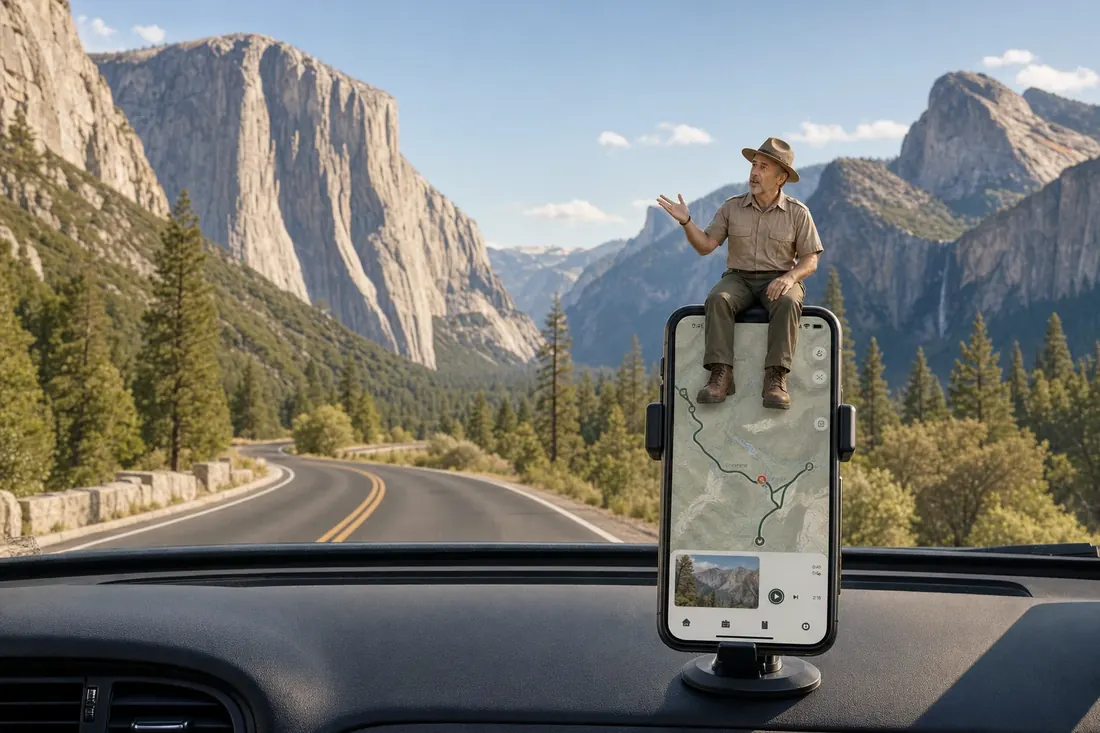
The Parkwolf tour guide sitting on a phone mounted in a car

Parkwolf Tour Guide

Like a tour guide in your car.

Save the places you found around Yosemite, then let Parkwolf guide the drive between them.Download Parkwolf on the App Store