Parking
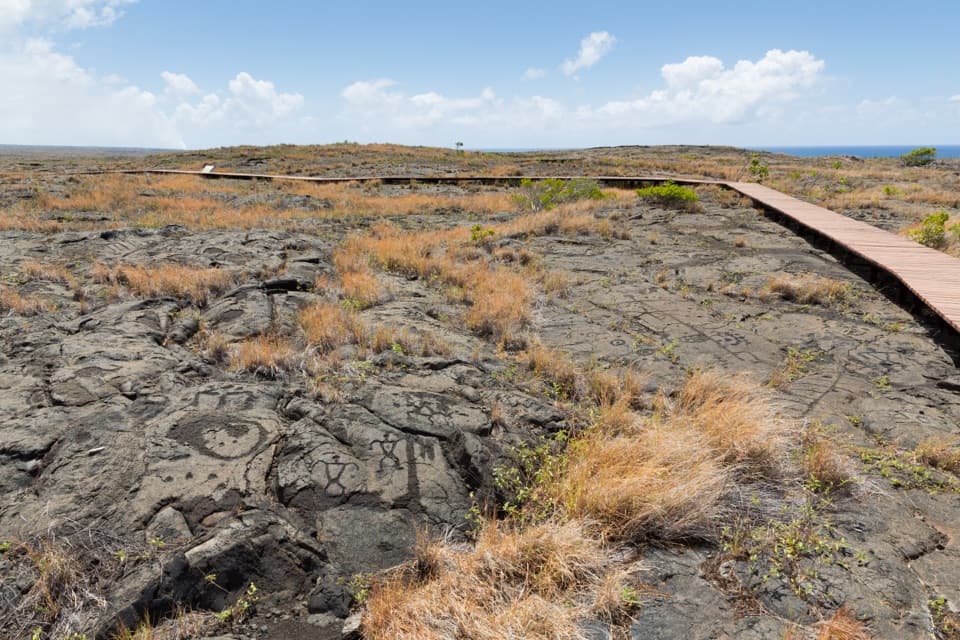
Start at the Nāhuku parking area on Crater Rim Drive. The lot has 14 spaces, including two for oversized vehicles, and often fills during busy periods. Cross the road at the marked pedestrian crossing; do not walk along Crater Rim Drive.
#2 of 33 trails in Hawaiʻi Volcanoes
Hawaiʻi Volcanoes National Park, HI
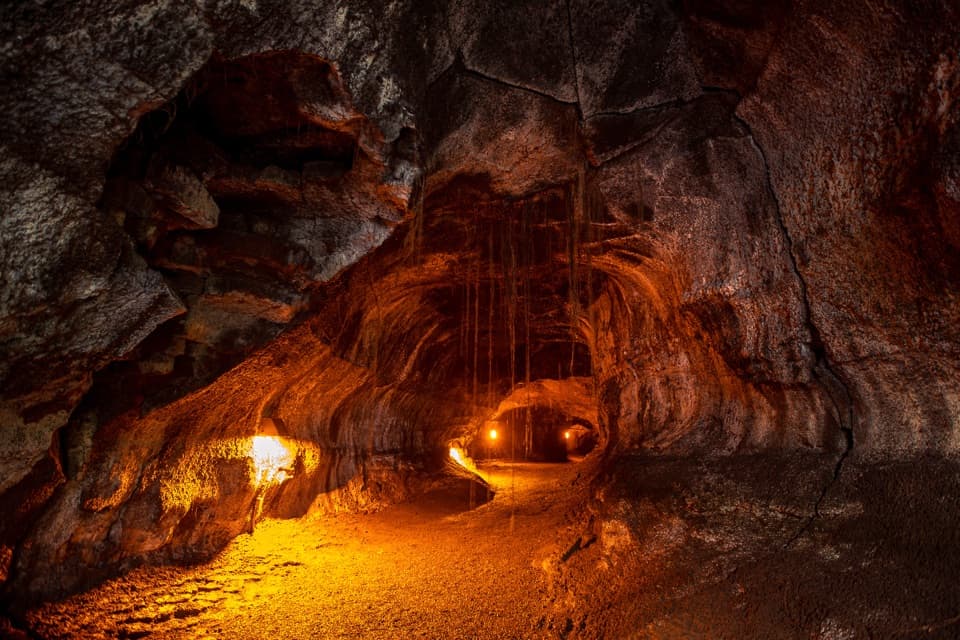
A short ferny walk leads into a 500-year-old lava tube.
Overview
Nāhuku (Thurston Lava Tube) is a short 0.4-mile loop from its own parking area: a paved rainforest walk, a passage through an old lava tube, and a forest return. Allow about 30 minutes, a little more if you want to look around inside. I'd make time for it if you've never walked through a lava tube. It's an easy outing, but the low ceiling, darkness outside the lighting schedule, and damp cave floor make it a different kind of short hike. If enclosed underground spaces bother you, turn around before the entrance.
 Parkwolf’s verdictIs this the hike for you?
Map & elevation
Plan your hike
The highest, rockiest slopes around here are a summer buffet for grizzly bears.
Hawaiʻi Volcanoes Tour Guide
Parkwolf is a GPS audio tour guide for Hawaiʻi Volcanoes National Park. As you drive, it chimes in with what’s ahead: hidden gems, upcoming stops, history, geology, and wildlife, right through your car’s speakers.
See the Hawaiʻi Volcanoes audio tourRecorded for this trailhead
Nāhuku: Inside a Lava Flow“Nāhuku Lava Tube is coming up, with a rainforest walk into a tunnel left by flowing lava. I'd do this one if you've never been inside a lava tube. Allow about half an hour for the short loop from its own parking area.”
Plays as you drive up to this trailhead in the Parkwolf Hawaiʻi Volcanoes Tour Guide.
More stories near here in the app
“Fantastic app with many points of information… It’s great to just turn on while you’re driving and it gives you an audio tour of the national Park. We love it!!!!”


Trail guide
The Nāhuku parking area sits on Crater Rim Drive. It has 14 spaces, including two for oversized vehicles, and fills during busy periods. From the lot, use the marked pedestrian crossing; don't walk along the road. The paved trail heads into rainforest, with tree ferns crowding the path. Listen for native bird calls on this short approach. The forest is part of the visit, but this isn't a viewpoint hike: the lava tube is the reason to come.
The route takes you through about 600 feet of lava tube, then up a few stairs and back through the forest. The passage is mostly level, but several sections have a low ceiling, so watch your head. Visitors often report a wet floor and puddles; take your time where the surface is slick. The cave lights run on a schedule, so bring a flashlight if you might enter when they're off. Pets aren't allowed on park trails. For a photo, include the tunnel's curve and the roots hanging overhead; a little context shows more than a close-up of the rock.
Nāhuku formed about 500 years ago, when a river of lava near 2,000°F flowed through this area. As the outer lava cooled into a crust, it insulated the hotter flow beneath it. When the supply stopped or drained away, the hollow tube remained. Walking through it puts you inside the route that molten rock once took through the landscape.
Nāhuku means “the protuberances,” a name that may refer to lava drippings that once hung from the ceiling. Those formations disappeared after souvenir collectors began taking them following the tube's discovery in 1913. Local newspaper publisher Lorrin Thurston is credited with discovering the tube, which is why the English name stuck alongside Nāhuku. The missing formations are a good reminder to leave the rock and the roots alone.
Lava tubes on Hawaiʻi Island shelter life adapted to darkness, including specialized crickets, spiders, and microbial communities. You may not see any of them on a quick walk, but the cave is more than an empty tunnel. Keep to the path and don't touch the walls or hanging roots. Hawaiʻi Volcanoes protects these underground environments as fragile habitat, as well as remarkable volcanic features.
Wildlife
 600 sightingsHawaiian Goose (Nēnē)Most seen around 5 PMSighting map
 35 sightingsGreen Sea TurtleMost seen around 11 AMSighting map
 36 sightingsHawaiian Hawk ('Io)Most seen around 11 AMSighting map
 41 sightingsBlack NoddyMost seen around 5 PMSighting map
 96 sightingsWhite-tailed TropicbirdMost seen around noonSighting map
 24 sightingsHawai'i 'ElepaioMost seen around 8 AMSighting map
Sighting maps show where each species has been reported across Hawaiʻi Volcanoes. Wildlife moves, so no sighting is guaranteed.
Keep exploring
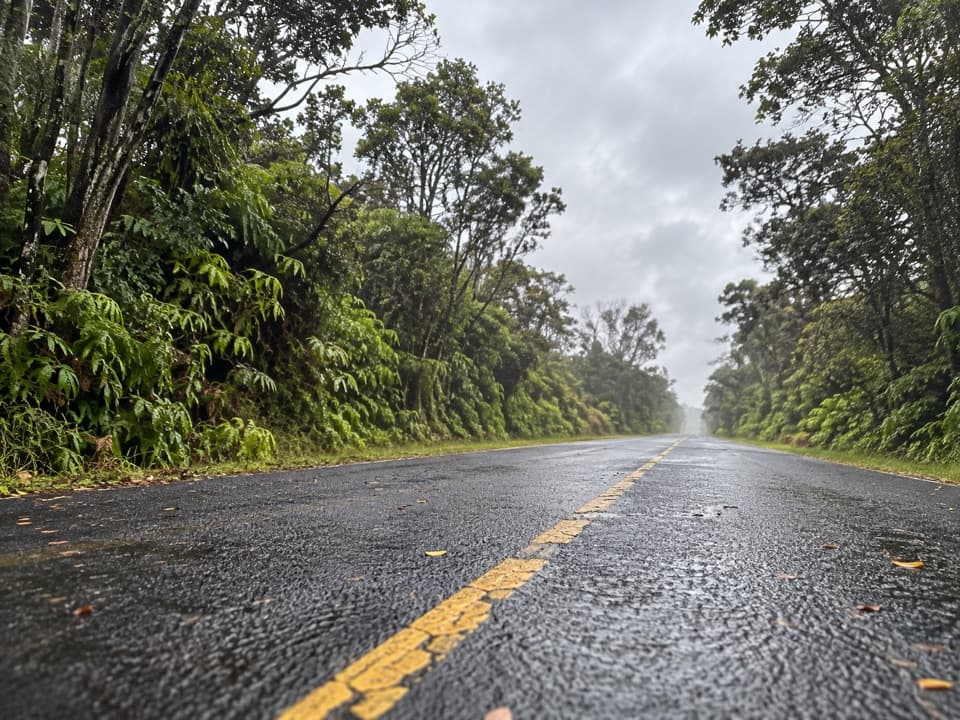 EasyEscape Road Trail3.8 mi · 2 hr · At the trailheadA gentle forest descent from Nāhuku toward Mauna Ulu.
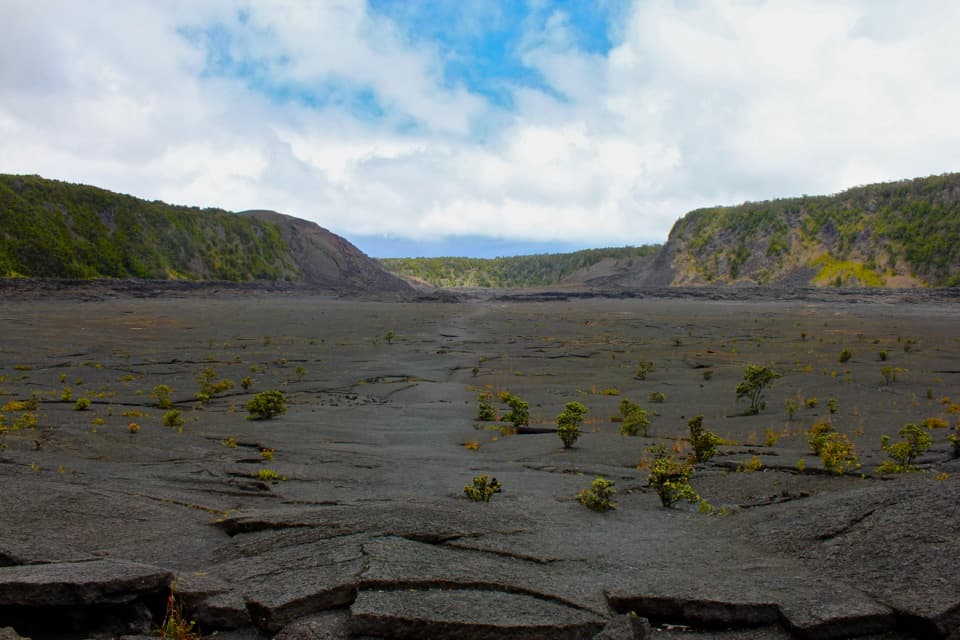 ModerateKīlauea Iki Trail3.3 mi · 2.5 hr · 0.3 mi awayCross a solidified lava lake beneath Puʻupuaʻi
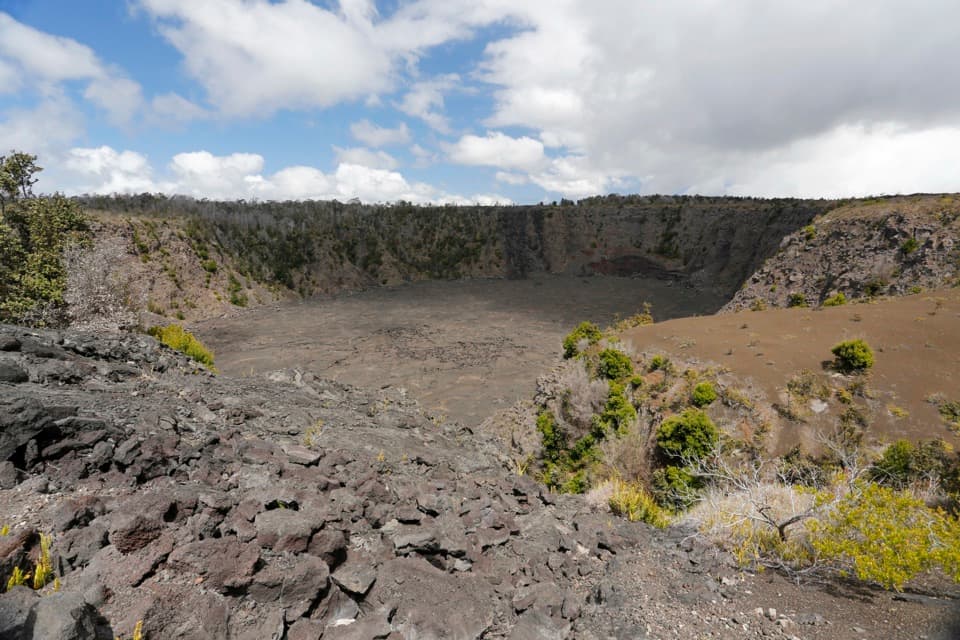 EasyKeanakākoʻi Crater Trail2 mi · 1.3 hr · 1 mi awayAn easy walk on a former road reaches a 115-foot crater.
 ModerateUēaloha (Byron Ledge) Trail2.2 mi · 1.5 hr · 1 mi awayOpen cinder, forested ledge, and views of Puʻupuaʻi.
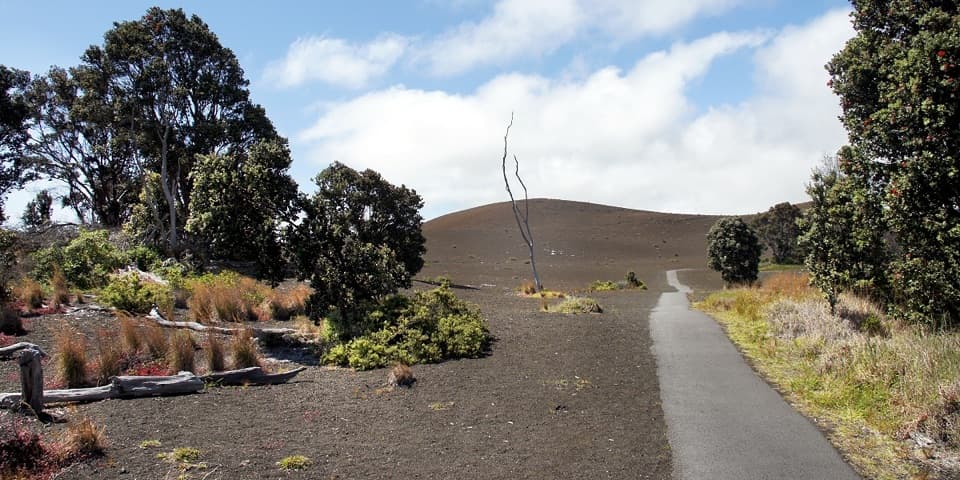 EasyDevastation Trail1 mi · 1 hr · 1.1 mi awayA short paved walk through cinder from Kīlauea Iki’s 1959 eruption.
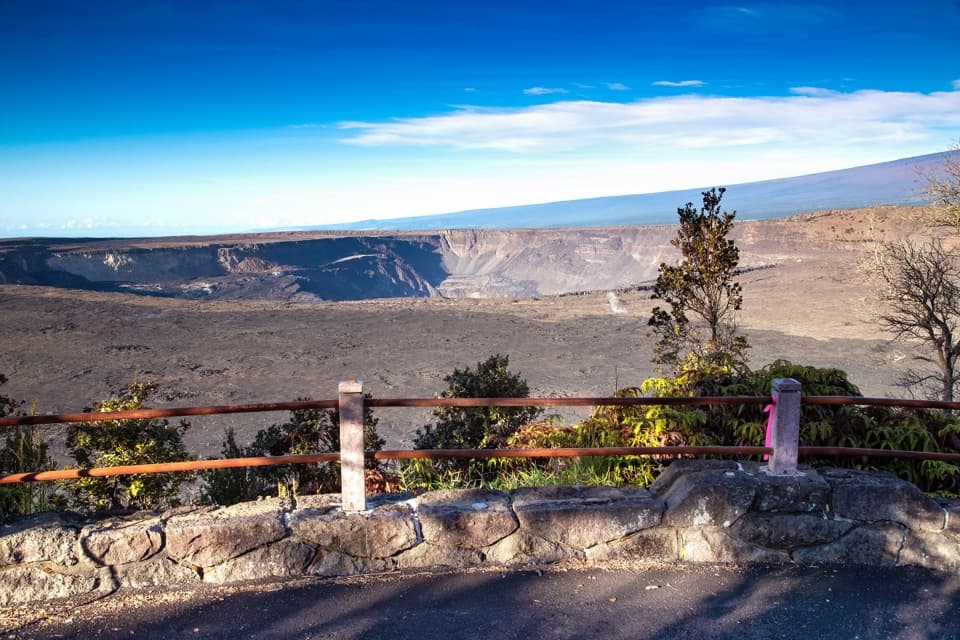 EasyKūpinaʻi Pali (Waldron Ledge) Trail1.2 mi · 54 min · 1.8 mi awayA short paved route to a broad caldera view
 ModerateHalemaʻumaʻu Trail1.6 mi · 1.5 hr · 1.8 mi awayA short rainforest descent opens onto Kīlauea’s caldera floor.
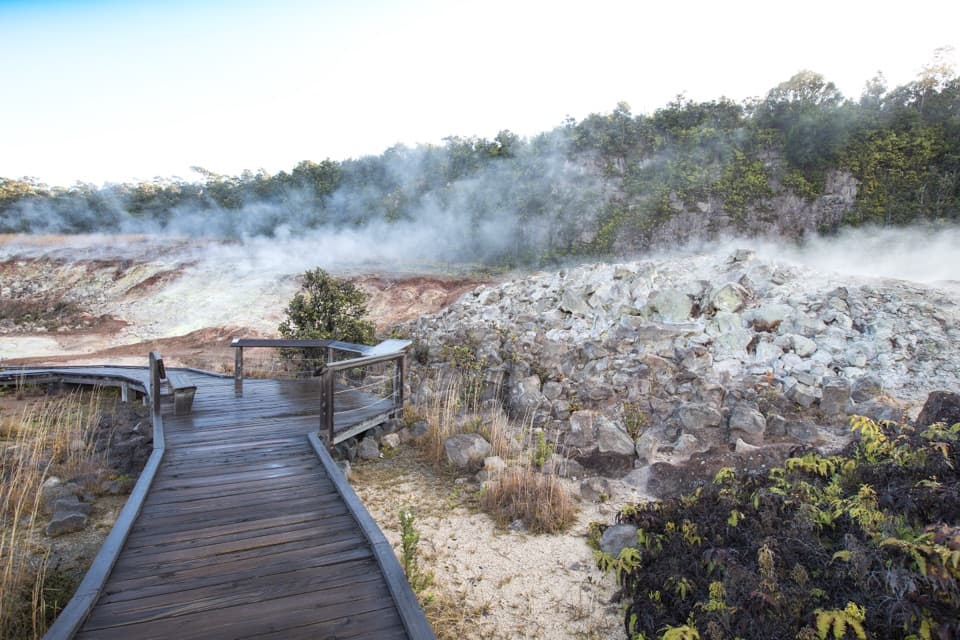 EasyHaʻakulamanu (Sulphur Banks) Trail1.2 mi · 36 min · 2.2 mi awayA short boardwalk walk past yellow sulfur and rising steam.
 Sight · 0.1 mi awayNāhuku Lava TubeA rainforest walk opens into a lava tunnel.
 Sight · 0.3 mi awayKīlauea Iki OverlookA quick rim stop above the crater of 1959's towering lava fountains.
 Sight · 0.8 mi awayPuʻupuaʻi OverlookSee Kīlauea Iki from beside the cone its eruption built.
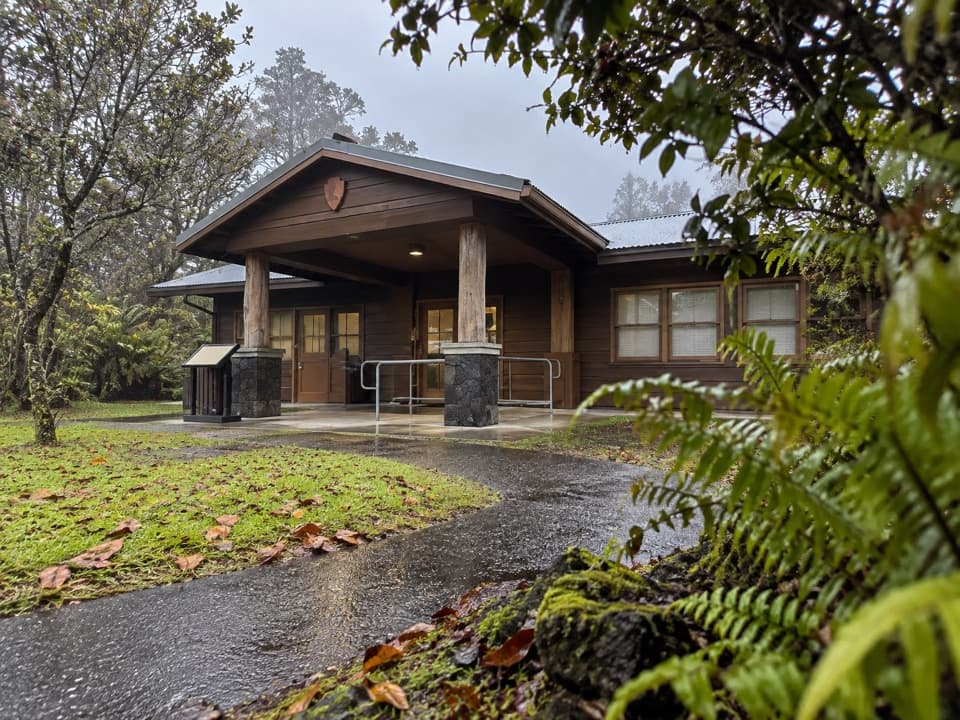 Ranger station · 1.3 mi awayBackcountry Permit OfficeThe stop for backcountry permits and a ranger safety briefing.Sight · 1.3 mi awayKūpinaʻi Pali (Waldron Ledge)A broad Kaluapele view along the cracked, abandoned Crater Rim road.
 Sight · 1.4 mi awayLuamanu and July 1974 FlowA crater holds the mark of lava that later drained away.
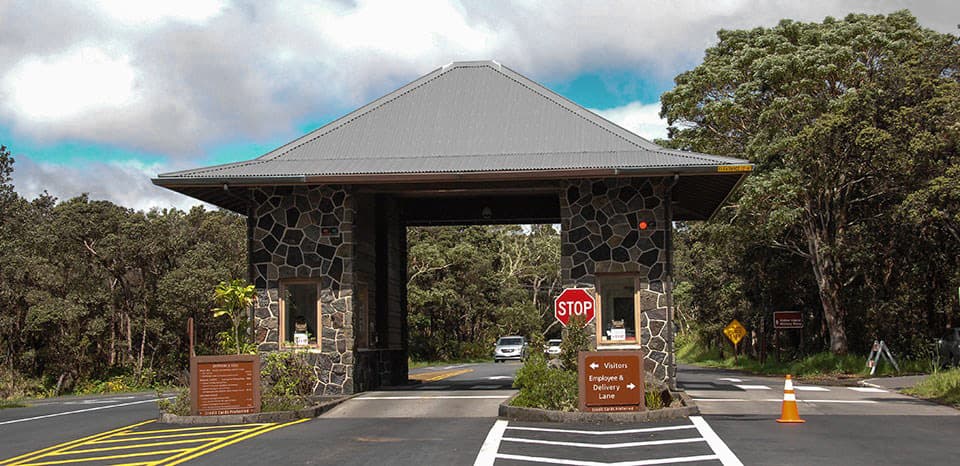 Entrance station · 1.5 mi awayHawaiʻi Volcanoes National Park Entrance StationSave your pass offline; reception is limited at the entrance.
 Sight · 1.6 mi awayPuhimau CraterA quick roadside look into one of Kīlauea's steep-walled pit craters.
Parkwolf’s Hawaiʻi Volcanoes ranking
The audio tour guide for the drive, plus offline maps, trails, and wildlife heatmaps for when the signal drops.