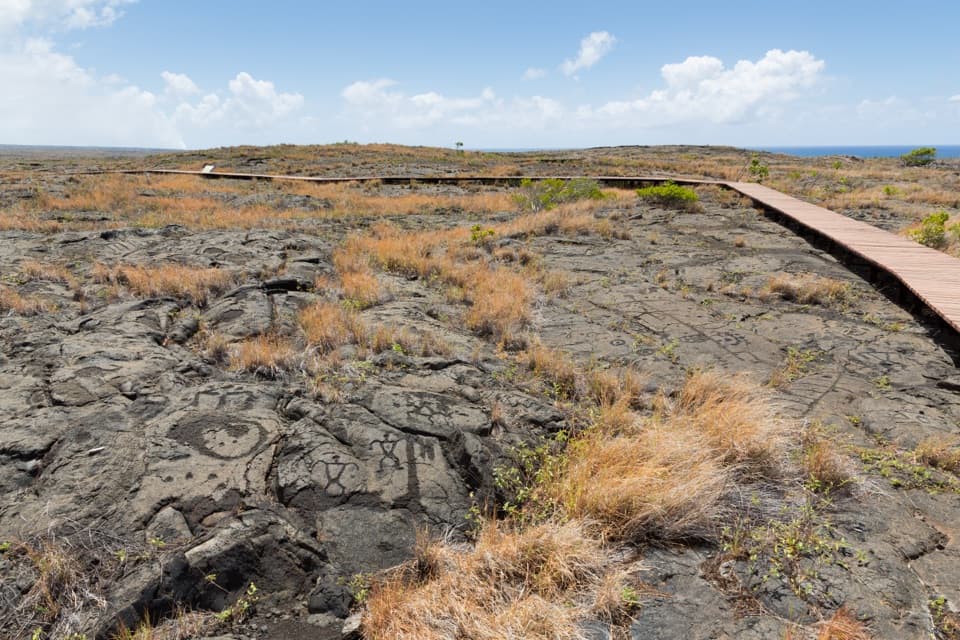
Parking
Start at Kīlauea Iki Overlook on Crater Rim Drive. Parking is extremely limited and can be full at peak times. Other NPS access points add miles; use the overlook for the 3.3-mile loop.
#1 of 33 trails in Hawaiʻi Volcanoes
Hawaiʻi Volcanoes National Park, HI
Cross a solidified lava lake beneath Puʻupuaʻi
Overview
Map & elevation
Plan your hike

The highest, rockiest slopes around here are a summer buffet for grizzly bears.
Hawaiʻi Volcanoes Tour Guide
Parkwolf is a GPS audio tour guide for Hawaiʻi Volcanoes National Park. As you drive, it chimes in with what’s ahead: hidden gems, upcoming stops, history, geology, and wildlife, right through your car’s speakers.
See the Hawaiʻi Volcanoes audio tourRecorded for this trailhead
Kīlauea Iki: Above the Lava Lake“You're coming up on Kīlauea Iki Overlook, where you can look into an old lava lake without hiking down to it. Make the quick stop even if you're staying on the rim.”
Plays as you drive up to this trailhead in the Parkwolf Hawaiʻi Volcanoes Tour Guide.
More stories near here in the app
“Fantastic app with many points of information… It’s great to just turn on while you’re driving and it gives you an audio tour of the national Park. We love it!!!!”


Trail guide
Kīlauea Iki Trail is a 3.3-mile loop from Kīlauea Iki Overlook, dropping from rainforest to the solidified lava lake on the crater floor, then climbing out again. Plan two to three hours for roughly 400 feet of steep, rocky descent and ascent. It is one of the park’s most distinctive walks if you want to get inside the landscape instead of seeing it only from the rim. Current park route information lists 3.3 miles; an older printed guide says 4 miles. This entry follows the current overlook-loop figure, so check the current park map if you are planning from an older brochure.
Start at Kīlauea Iki Overlook and go counterclockwise, the direction recommended by the park. The path follows the rim through dense rainforest, then drops steeply toward the crater floor on steps and switchbacks. Where the trees open, Puʻupuaʻi rises across the crater. The route across the floor feels like a different hike: broad, bare and exposed. After the lava crossing, climb out through rough rock and steps, then follow the rim path back to the overlook. This 3.3-mile figure is for the overlook loop only; starts at the visitor center, Devastation Trailhead or Puʻupuaʻi add access miles.
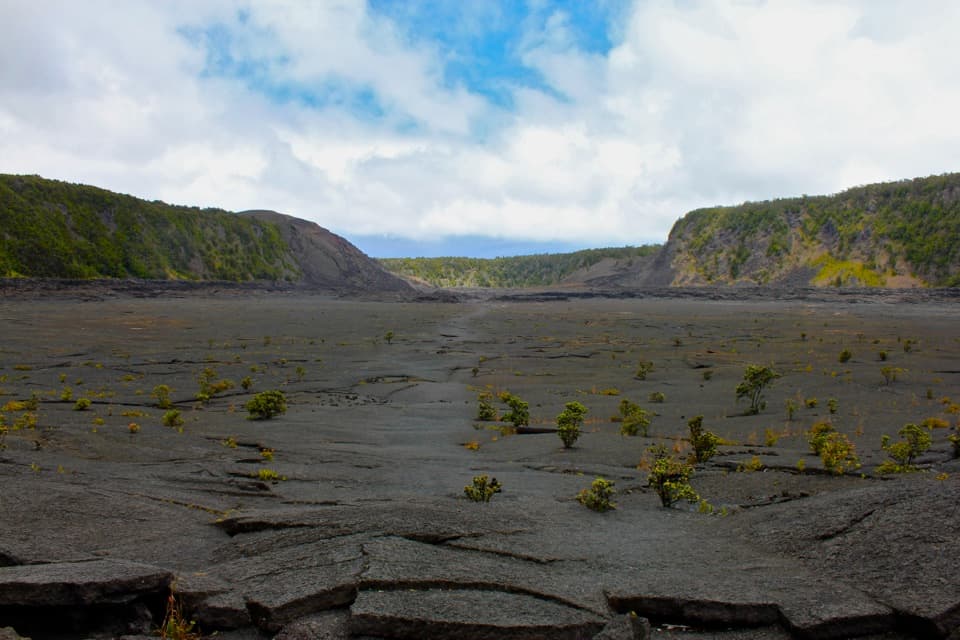
The crater floor is a wide stretch of fractured, tilted lava with cracks and loose, sharp edges. Ground markers and ahu (stacked stones) keep you on the route. Stay on the marked line and keep away from cracks; the rocks are uneven and unstable, and the lava can cut. The crossing has little shade, so it can feel hot under the sun. Visitors often recommend starting earlier when possible and carrying water, a hat and sunscreen; bring rain gear too because conditions can turn wet or windy.
The eruption began on November 14, 1959, and sent fountains from the crater for five weeks in 17 episodes. The highest fountain reached 1,900 feet. Puʻupuaʻi means “gushing hill”: the cinder-and-spatter cone grew during that eruption, with the former vent at its base. Look for a dark bathtub-ring line around the crater walls, a mark left by the lava lake. As the molten lake drained, its crust sagged and broke, leaving the rough surface you cross today.
The cooling lake became a rare field laboratory. Scientists drilled into it and studied how lava solidified; an old Jeep powered a trolley that carried heavy equipment across the crater on a suspended steel cable. The loop passes the vent and fractured floor that made that research possible, so the route is a close-up of both the eruption and what geologists learned afterward.
On the rim, look for ʻapapane honeycreepers in ʻōhiʻa trees and paʻiniu, a native lily. The park guide also notes kāhili ginger, an invasive plant with fragrant yellow flowers in late summer. The abrupt change from wet forest to open lava, and back again, is the hike’s main contrast; the bird and plant details reward a slower pace on the shaded sections.
The correct start is Kīlauea Iki Overlook on Crater Rim Drive. Its parking is extremely limited and can be full during peak hours, so do not count on finding a space at the busiest times. Carry your own food and water. Pets are not allowed on park trails. Nāhuku (Thurston Lava Tube) is nearby and can be added as a separate stop, but it is not part of this 3.3-mile loop.
At the overlook, frame Puʻupuaʻi across the crater; on the floor, put a slab of fractured lava in the foreground with the forested rim behind it. That pairing shows the scale of the lake better than a close view of the rocks alone.
Wildlife
 600 sightingsHawaiian Goose (Nēnē)Most seen around 5 PMSighting map
 35 sightingsGreen Sea TurtleMost seen around 11 AMSighting map
 36 sightingsHawaiian Hawk ('Io)Most seen around 11 AMSighting map
 41 sightingsBlack NoddyMost seen around 5 PMSighting map
 96 sightingsWhite-tailed TropicbirdMost seen around noonSighting map
 24 sightingsHawai'i 'ElepaioMost seen around 8 AMSighting map
Sighting maps show where each species has been reported across Hawaiʻi Volcanoes. Wildlife moves, so no sighting is guaranteed.
Keep exploring
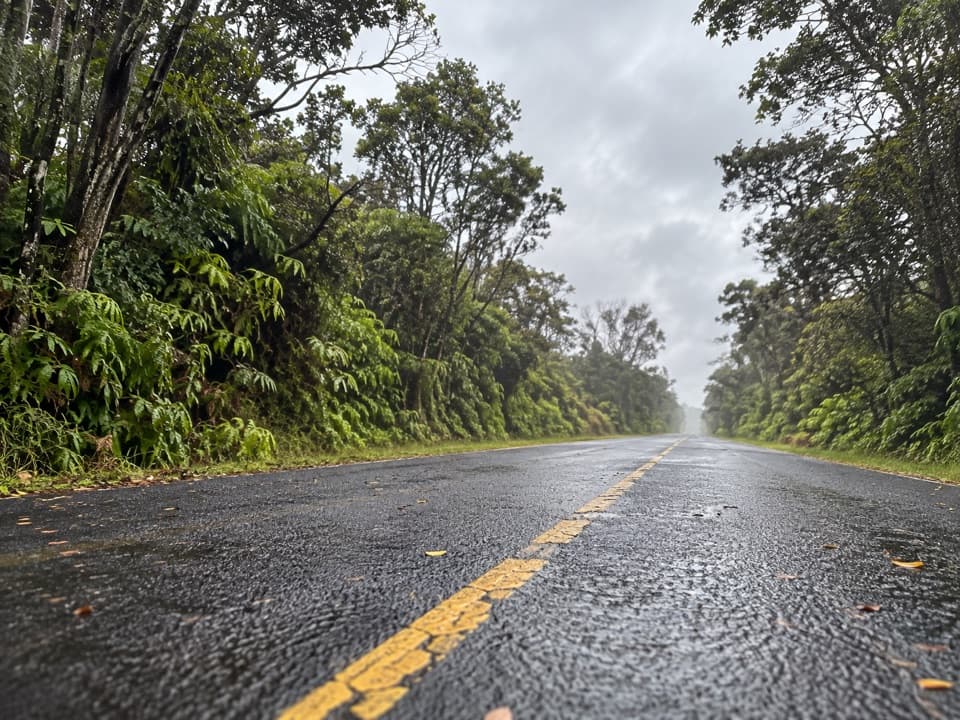 EasyEscape Road Trail3.8 mi · 2 hr · 0.3 mi awayA gentle forest descent from Nāhuku toward Mauna Ulu.
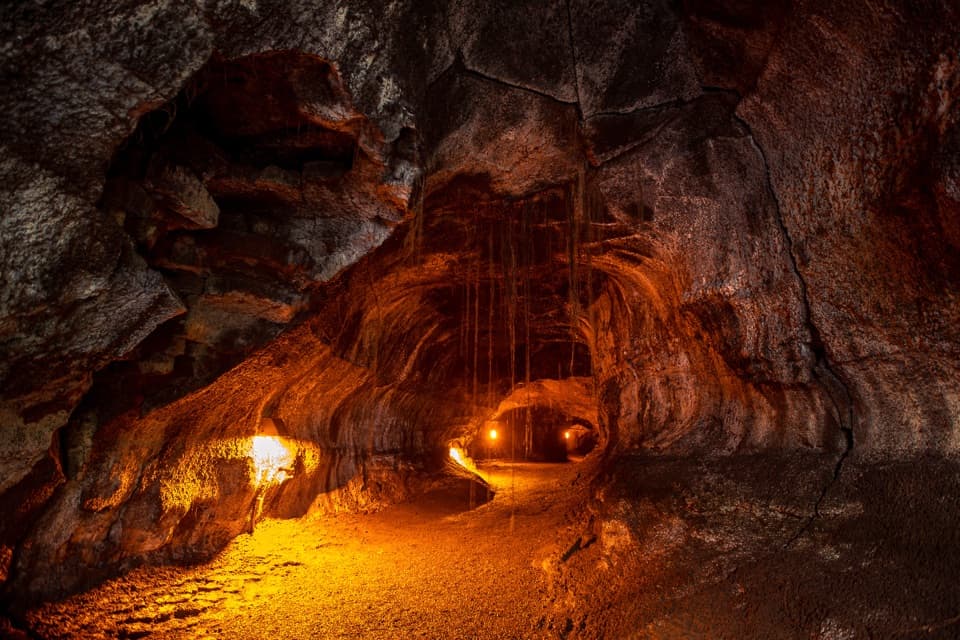 EasyNāhuku (Thurston Lava Tube) Trail0.4 mi · 30 min · 0.3 mi awayA short ferny walk leads into a 500-year-old lava tube.
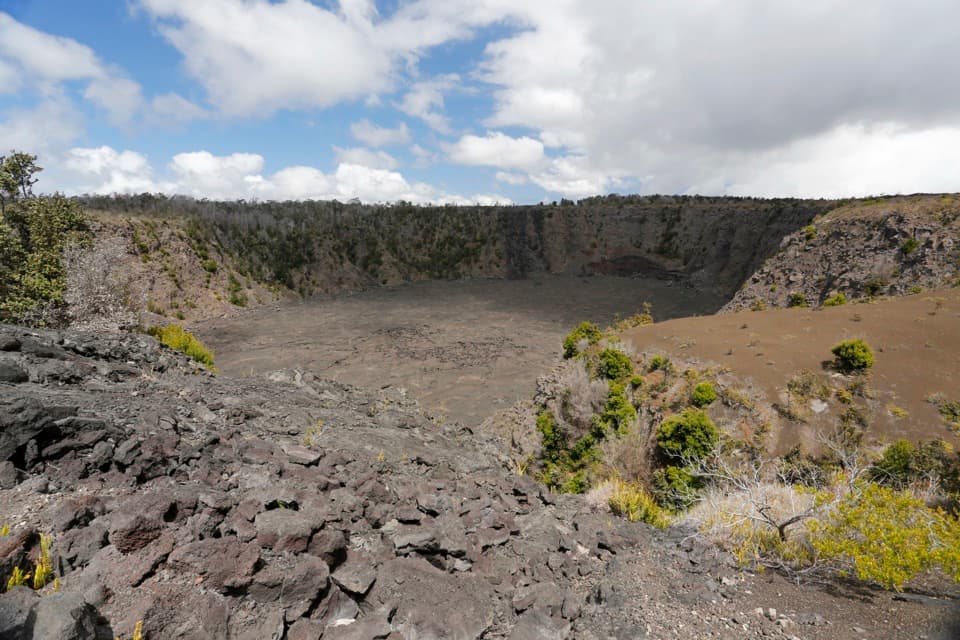 EasyKeanakākoʻi Crater Trail2 mi · 1.3 hr · 0.9 mi awayAn easy walk on a former road reaches a 115-foot crater.
 ModerateUēaloha (Byron Ledge) Trail2.2 mi · 1.5 hr · 0.9 mi awayOpen cinder, forested ledge, and views of Puʻupuaʻi.
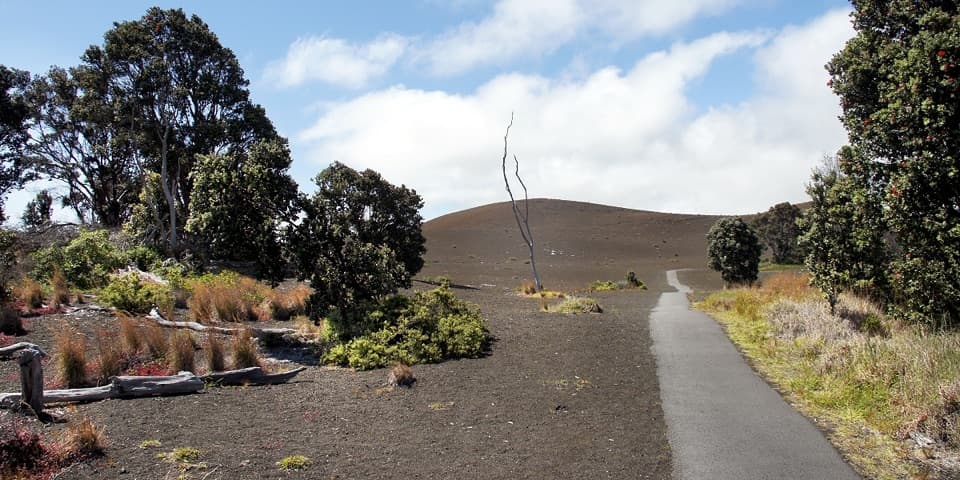 EasyDevastation Trail1 mi · 1 hr · 1 mi awayA short paved walk through cinder from Kīlauea Iki’s 1959 eruption.
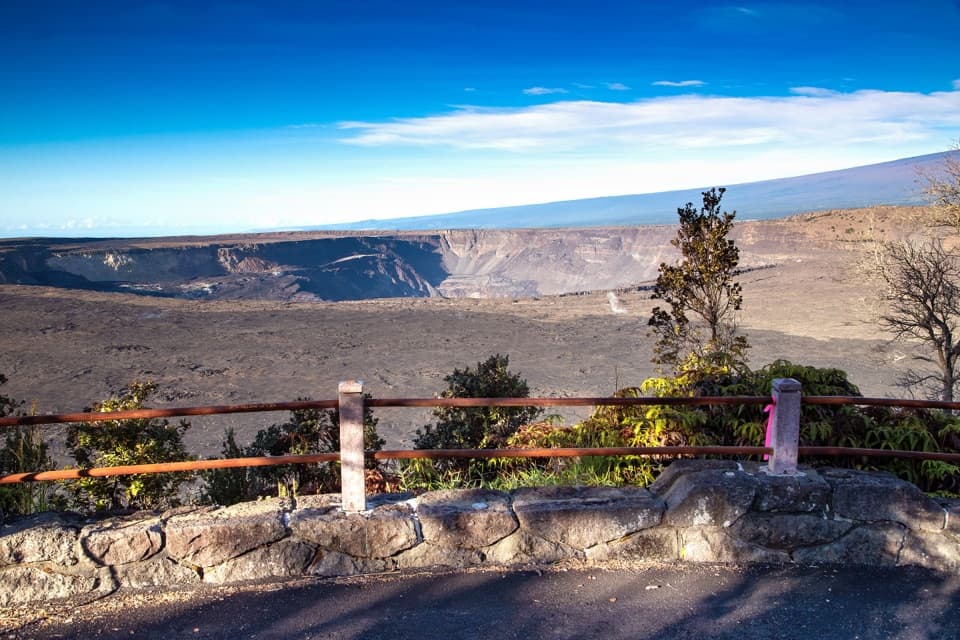 EasyKūpinaʻi Pali (Waldron Ledge) Trail1.2 mi · 54 min · 1.4 mi awayA short paved route to a broad caldera view
 ModerateHalemaʻumaʻu Trail1.6 mi · 1.5 hr · 1.4 mi awayA short rainforest descent opens onto Kīlauea’s caldera floor.
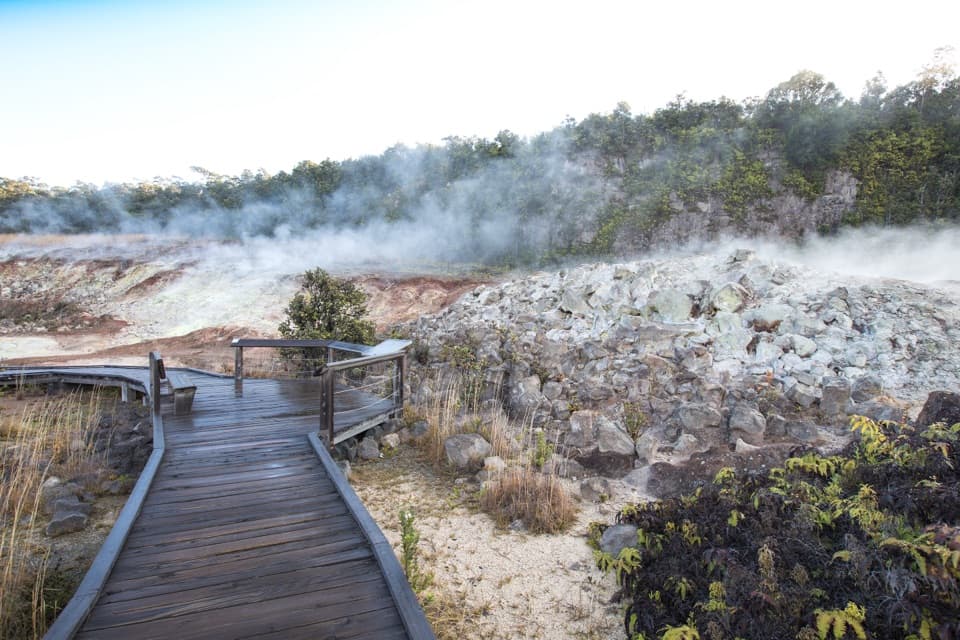 EasyHaʻakulamanu (Sulphur Banks) Trail1.2 mi · 36 min · 1.9 mi awayA short boardwalk walk past yellow sulfur and rising steam.
 Sight · 0.1 mi awayKīlauea Iki OverlookA quick rim stop above the crater of 1959's towering lava fountains.
 Sight · 0.4 mi awayNāhuku Lava TubeA rainforest walk opens into a lava tunnel.
 Sight · 0.6 mi awayPuʻupuaʻi OverlookSee Kīlauea Iki from beside the cone its eruption built.
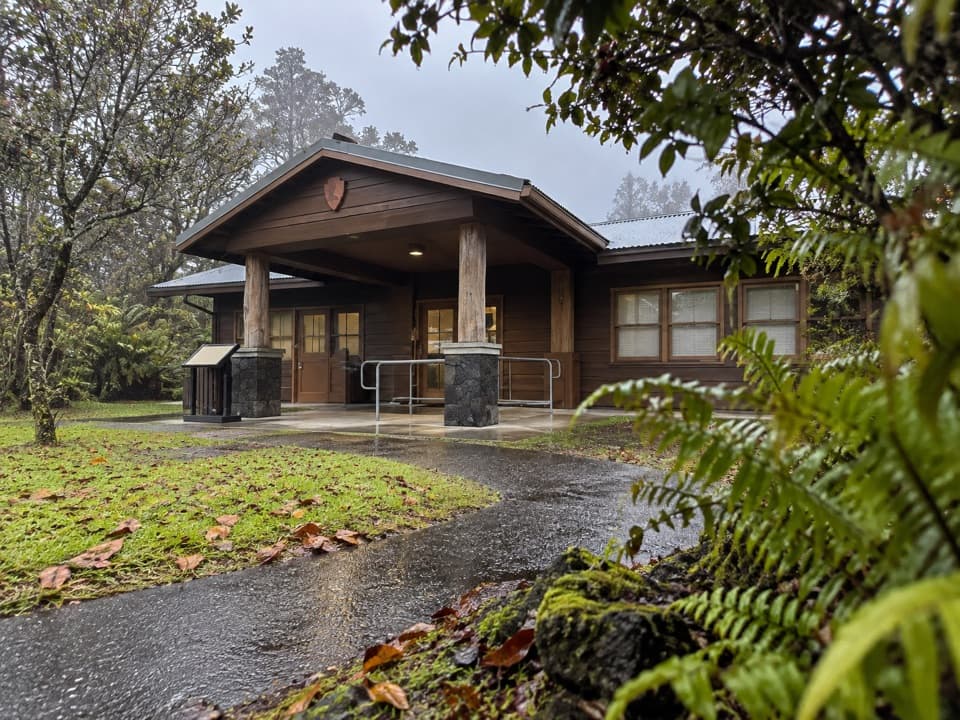 Ranger station · 1 mi awayBackcountry Permit OfficeThe stop for backcountry permits and a ranger safety briefing.Sight · 1 mi awayKūpinaʻi Pali (Waldron Ledge)A broad Kaluapele view along the cracked, abandoned Crater Rim road.
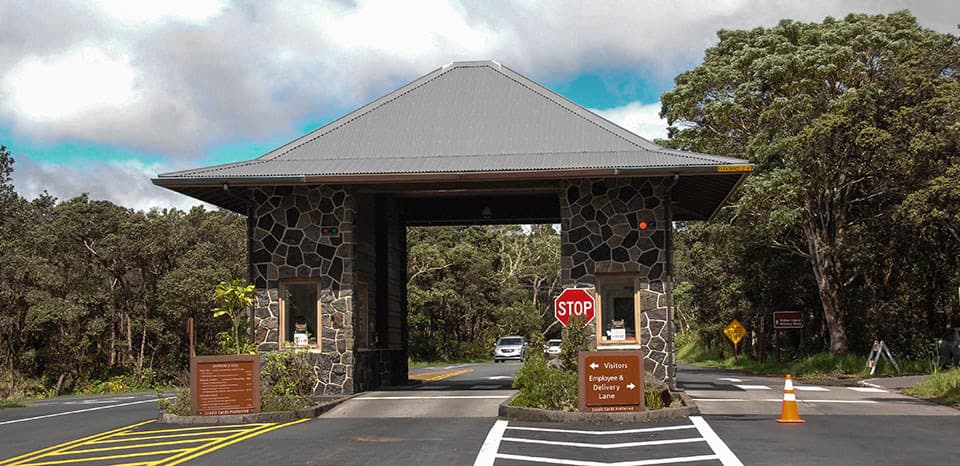 Entrance station · 1.1 mi awayHawaiʻi Volcanoes National Park Entrance StationSave your pass offline; reception is limited at the entrance.
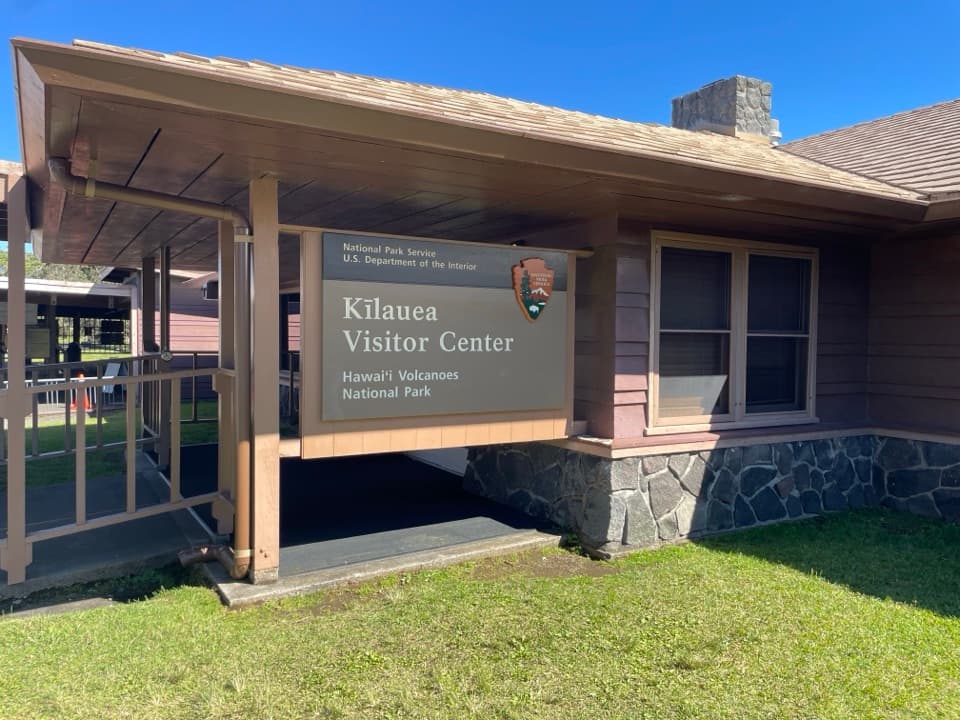 Visitor center · 1.3 mi awayKīlauea Visitor CenterStart here to plan a day around Kīlauea summit.
 Lodging · 1.3 mi awayVolcano HouseA historic hotel on Kīlauea’s rim, with the caldera at the table.
Parkwolf’s Hawaiʻi Volcanoes ranking

The audio tour guide for the drive, plus offline maps, trails, and wildlife heatmaps for when the signal drops.