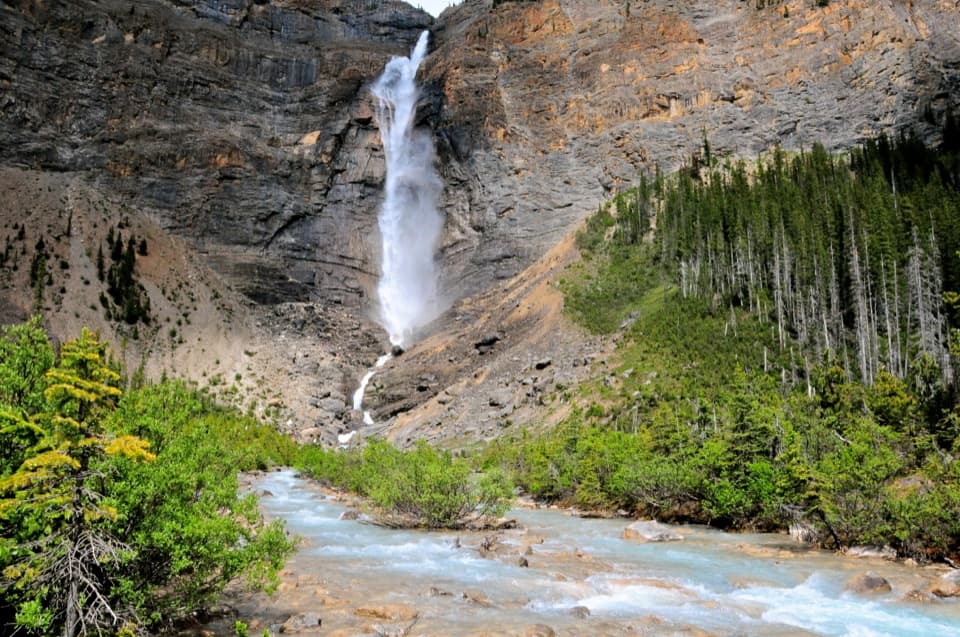
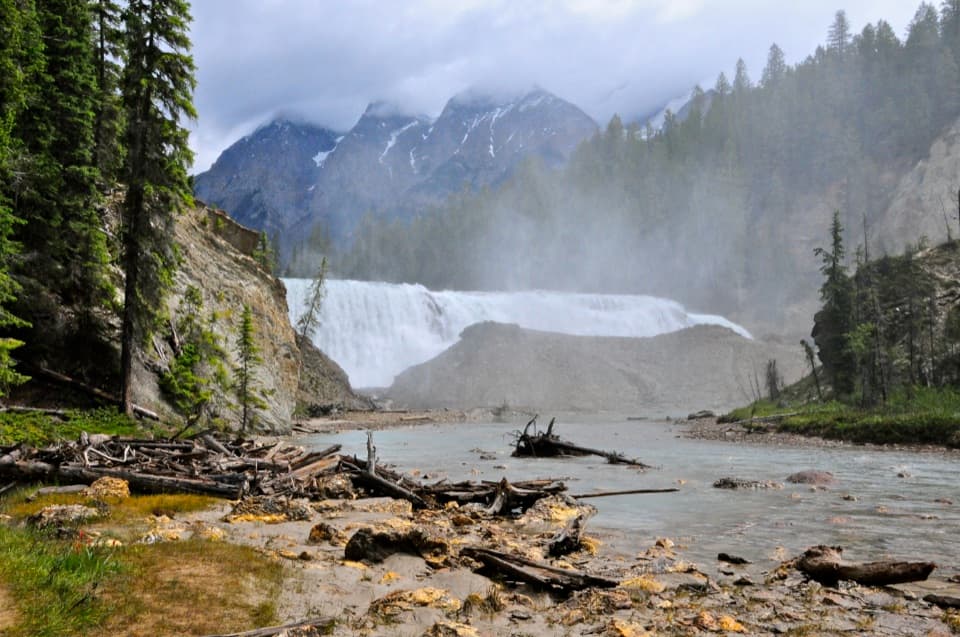
Wapta Falls

A huge, thundering waterfall with big payoff for a short walk
Wapta Falls, Yoho National Park
InsideYoho National Park

Overview

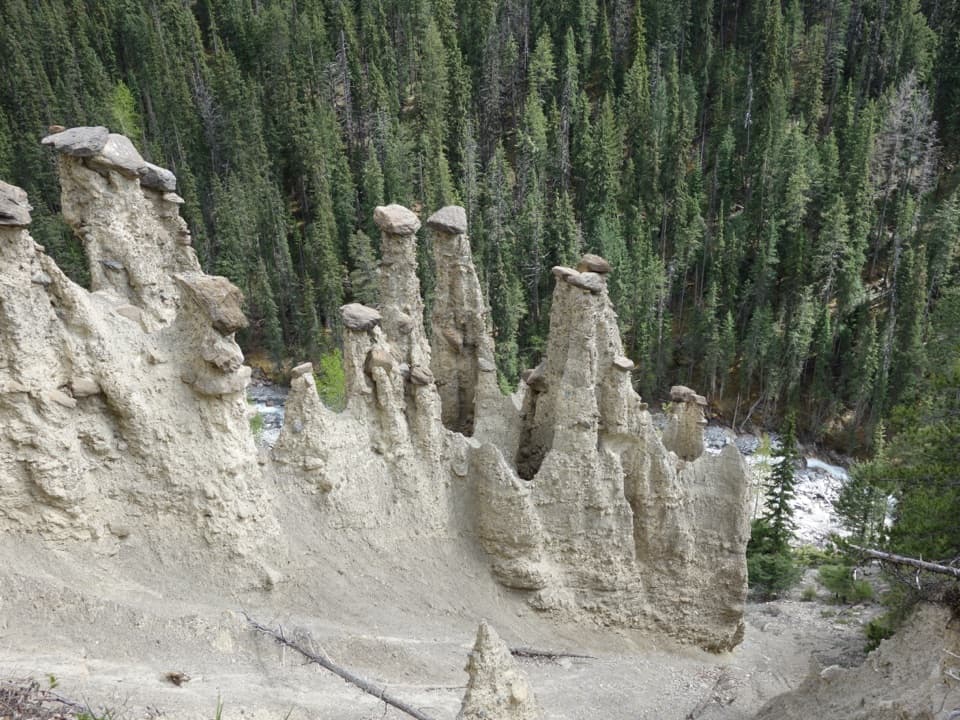
Wapta Falls is all about raw power: a broad, block-style curtain of water dropping about 18 m and stretching roughly 107 m across the Kicking Horse River. It’s one of the biggest by volume in the Canadian Rockies, and you’ll hear it rumbling through the forest before you see it. A distinctive mound of eroded debris sits in front of the falls, adding drama and unique photo angles.

The Hike

The approach is a straightforward forest walk to upper viewpoints before a steeper, often muddy spur leads down to the base. Plan on about 4.6 km round-trip, roughly 50 m of elevation, and around 1.5 hours if you linger. The payoff is huge for the effort—panoramic overlooks up top and a misty, immersive experience down low.

Why It’s Special

Compared to Emerald Lake or Takakkaw Falls, Wapta sees fewer people thanks to its western location. The falls’ width and spray cloud are the stars, and in the right light you can catch rainbows arcing through the mist. Glacial silt gives the river its color, and that big debris island in front of the drop makes the scene feel otherworldly.

Practicalities

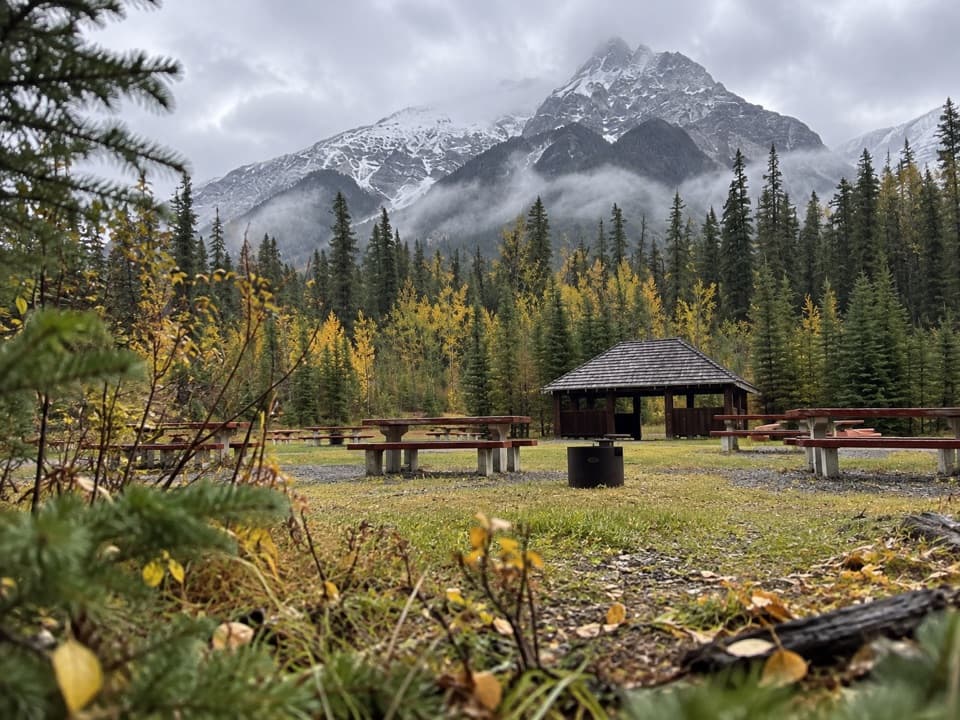
Access is via a short dirt road off the Trans‑Canada Highway. Expect potholes and bumps, especially after rain. There’s a marked trailhead with a parking lot and a pit/vault toilet. No food, water, or other services here—bring what you need. A valid Parks Canada pass is required.

Photography

Morning light is kindest here—soft on the falls and often prime for rainbows when the sun hits the mist just right. Bring a lens cloth and some protection for your camera; spray near the base is no joke. Upper viewpoints give clean compositions; the base delivers mood and motion.

Wildlife

This is mixed forest habitat, so you may spot songbirds or small mammals en route. Larger wildlife is possible but not a highlight. Standard mountain-country precautions apply; carry bear spray and know how to use it.

Conditions and Seasonality

The final descent can be muddy and slick year‑round, and downright icy in winter—traction helps. In shoulder season, the gate to the lot may be closed, adding a road walk before the actual trail. Mosquitoes can be thick in warmer months.

Best Time to Visit

  • Time of day: Early morning for softer light, potential rainbows, and fewer people.
  • Day of week: Weekdays are quieter than weekends.
  • Season: Late spring through fall offers the easiest access; winter visits are possible with traction and caution.
  • Weather: After rain, expect mud and an even bigger wall of mist.

Pros

  • Short, mostly flat hike to a massive, thundering waterfall
  • Multiple vantage points including a thrilling, spray-soaked base view
  • Often less crowded than the park’s headline stops

Cons

  • Rough, potholed gravel access road to the trailhead
  • Final descent is muddy and slick; spray can soak you and your gear

Tips

  • Use the signed Main Trail parking lot; some apps route you onto a rough alternate road.
  • Bring bug spray—mosquitoes can be thick along the forested trail.
  • Protect your camera and wear a shell if heading to the spray-soaked base.
  • Early morning offers the best light and fewer people, with possible rainbows.
  • In shoulder season the parking lot gate may be closed, adding a walk to the trailhead.
The Parkwolf tour guide sitting on a phone mounted in a car

Parkwolf Tour Guide

Like a tour guide in your car.

Save the places you found around Yoho, then let Parkwolf guide the drive between them.Download Parkwolf on the App Store