Parking
Enter Vidae Falls Picnic Area from East Rim Drive, 3 miles east of park headquarters. Park in the first three spaces on the right by the Crater Peak trailhead sign.

Crater Lake National Park, OR
A forested climb to a volcanic summit above the Klamath Basin.
Overview
Map & elevation
Plan your hike

The highest, rockiest slopes around here are a summer buffet for grizzly bears.
Crater Lake Tour Guide
Parkwolf is a GPS audio tour guide for Crater Lake National Park. As you drive, it chimes in with what’s ahead: hidden gems, upcoming stops, history, geology, and wildlife, right through your car’s speakers.
See the Crater Lake audio tourRecorded for this trailhead
Vidae Falls Picnic Area and Crater Peak“Vidae Falls Picnic Area is coming up, a small stop reached by a short access road from East Rim Drive. Use this for a picnic break; the waterfall pullout is a separate stop.”
Plays as you drive up to this trailhead in the Parkwolf Crater Lake Tour Guide.
More stories near here in the app
“Fantastic app with many points of information… It’s great to just turn on while you’re driving and it gives you an audio tour of the national Park. We love it!!!!”


Trail guide
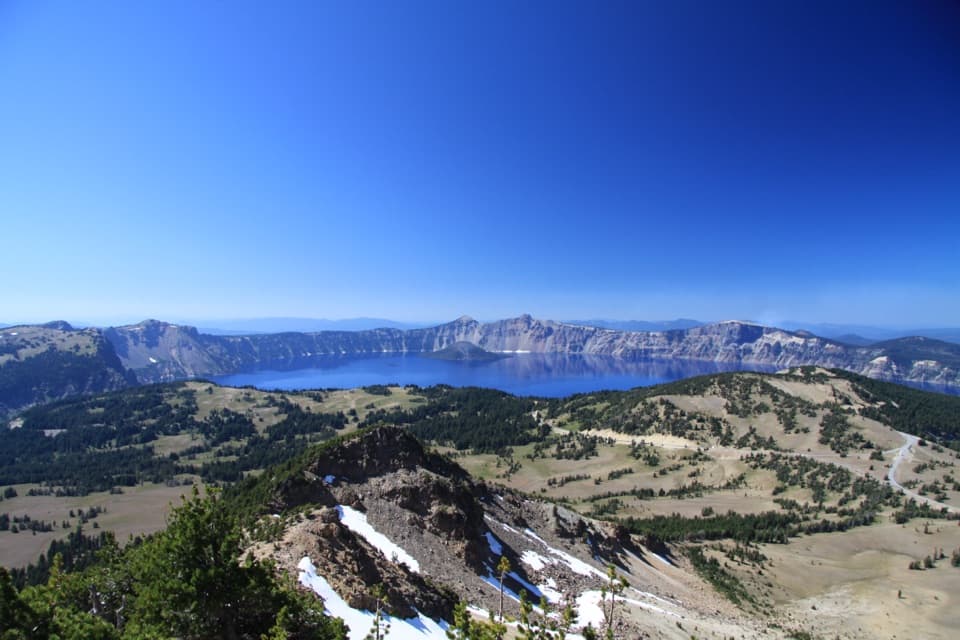
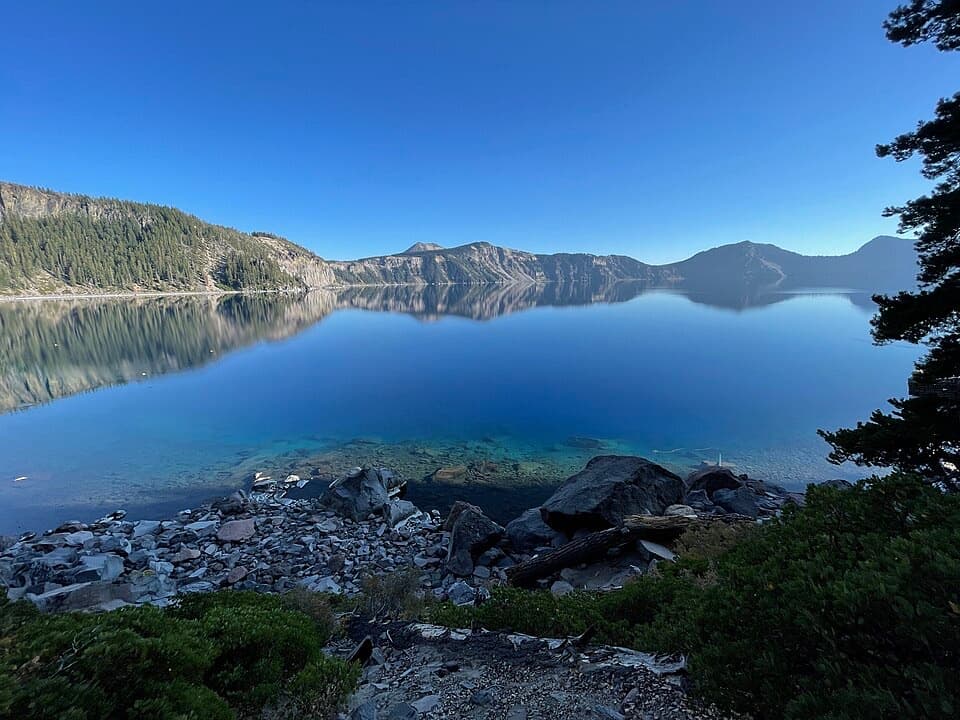
Crater Peak is a 6.5-mile out-and-back from Vidae Falls Picnic Area to the summit of a small shield volcano. Plan on about 3½ hours; the park classifies it moderate to strenuous and lists 765 feet of gain. This is not a steady climb: the route drops along Vidae Ridge before it rises toward the summit. Choose it for a volcanic high point and southern park views, not for Crater Lake—the lake is not visible from the top.
For about two miles, the trail descends through mountain hemlock and Shasta red fir. Forest gives way to waving grassland as you continue, and the return makes you climb out of the low section before the summit push. Keep energy for that later rise rather than spending it all on the first miles.
The final climb winds steeply toward Crater Peak. Whitebark pines appear in scattered stands higher on the route, while the summit opens toward the Klamath Basin and Union Peak. The top is a small shield volcano, and the open summit is known for wildflowers; the park does not name species in its trail description. If your main goal is a Crater Lake view, choose a rim-side walk instead.
Wildlife
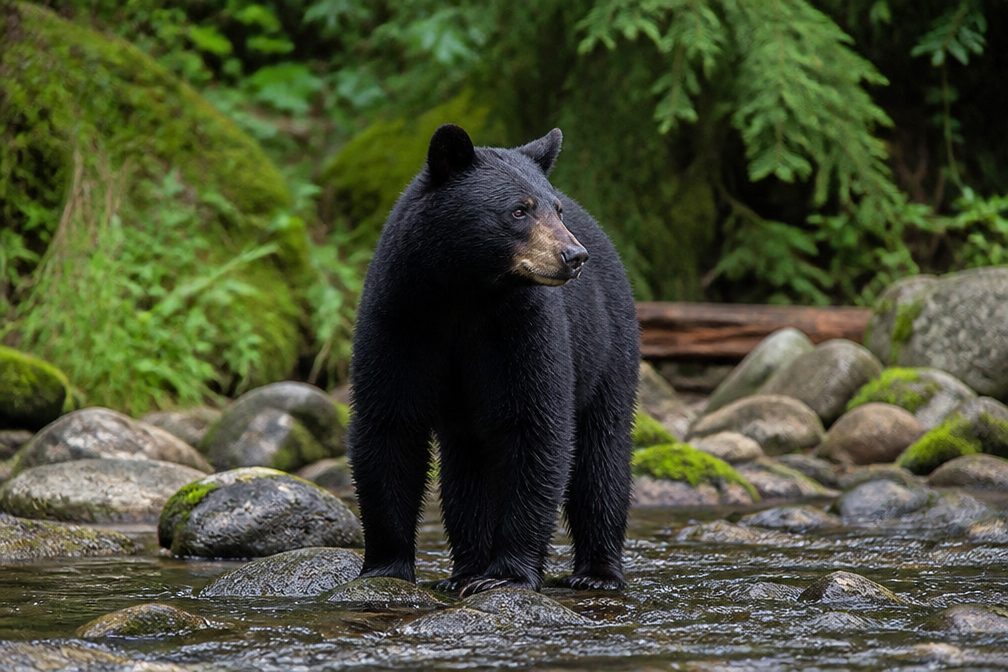 16 sightingsBlack BearMost seen around 8 PMSighting map
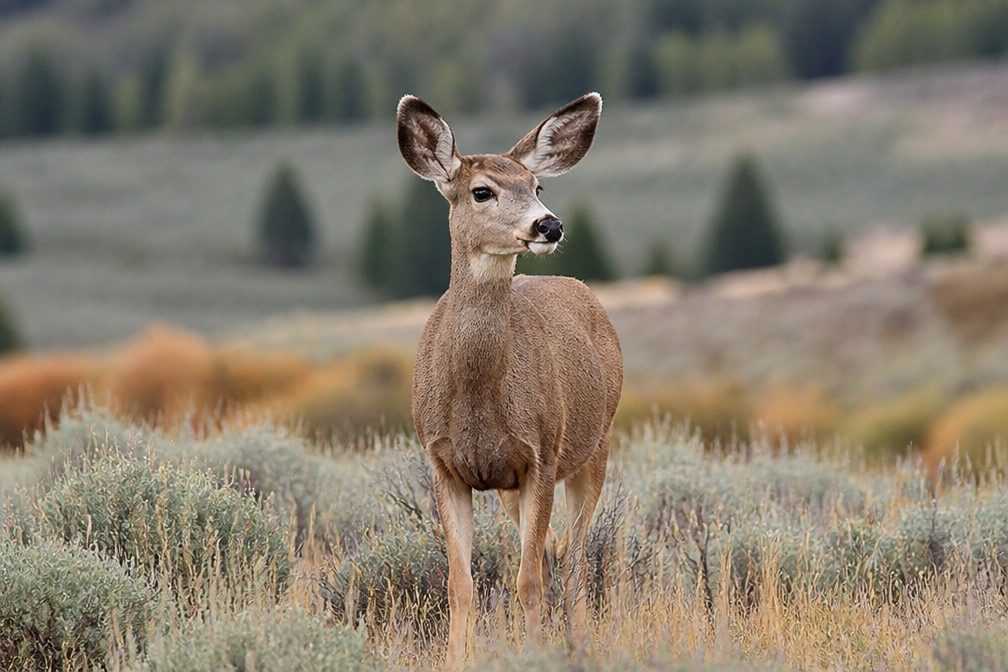 178 sightingsMule DeerMost seen around 7 PMSighting map
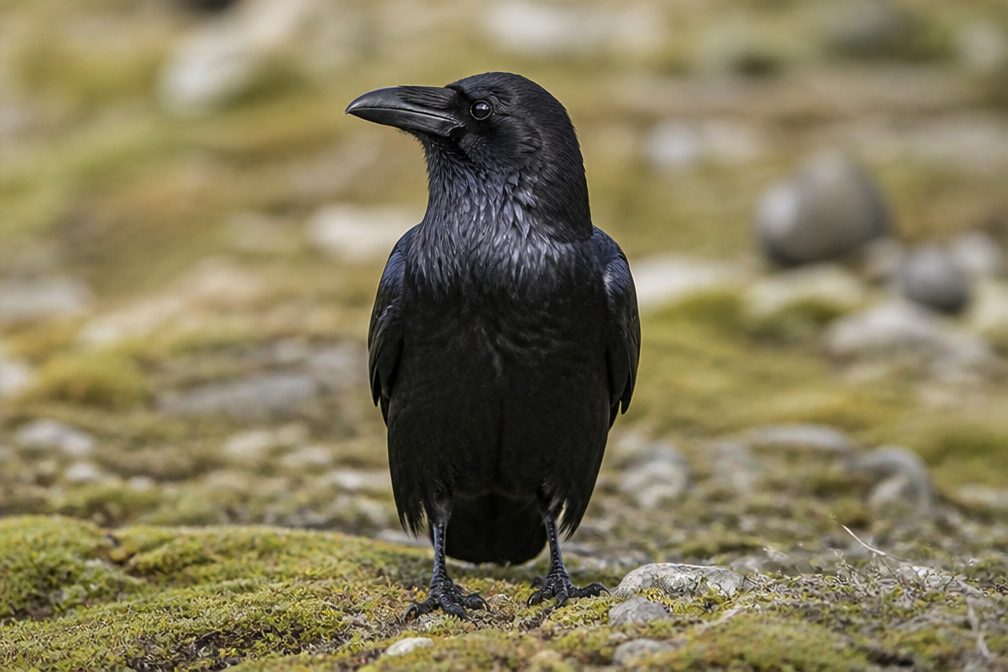 26 sightingsCommon RavenMost seen around 9 AMSighting map
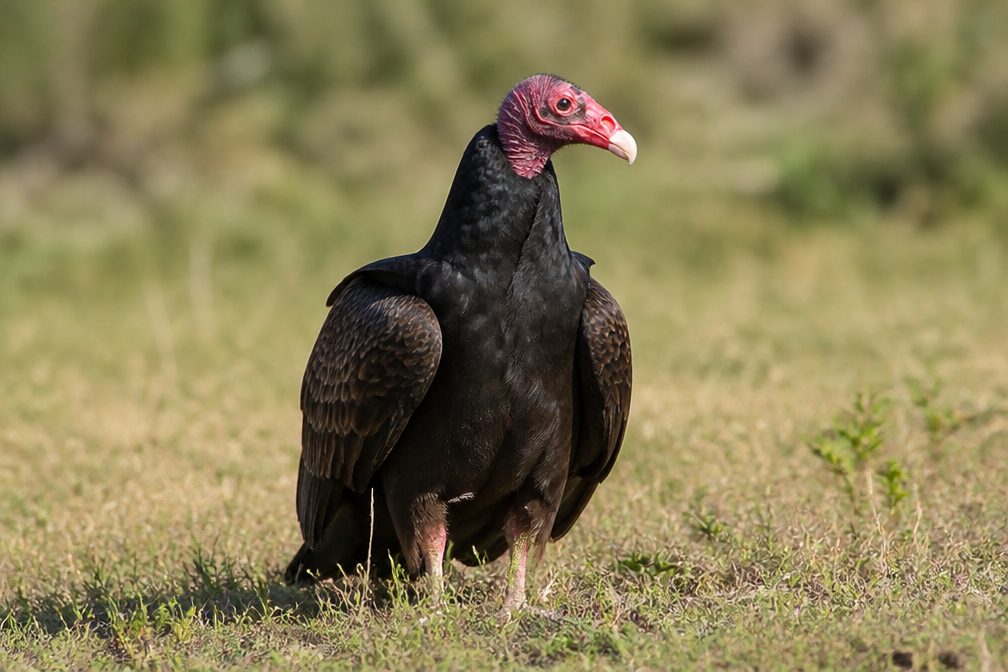 33 sightingsTurkey VultureMost seen around 1 PMSighting map
 47 sightingsRed-tailed HawkMost seen around 11 AMSighting map
 71 sightingsCascades FrogMost seen around 5 PMSighting map
Sighting maps show where each species has been reported across Crater Lake. Wildlife moves, so no sighting is guaranteed.
Keep exploring
 ModerateGrayback Road8 mi · 4 hr · At the trailheadA broad, quiet forest walk along an old rim road
 EasySun Notch Trail0.8 mi · 36 min · 1.2 mi awayA short loop through a pumice meadow to Phantom Ship.
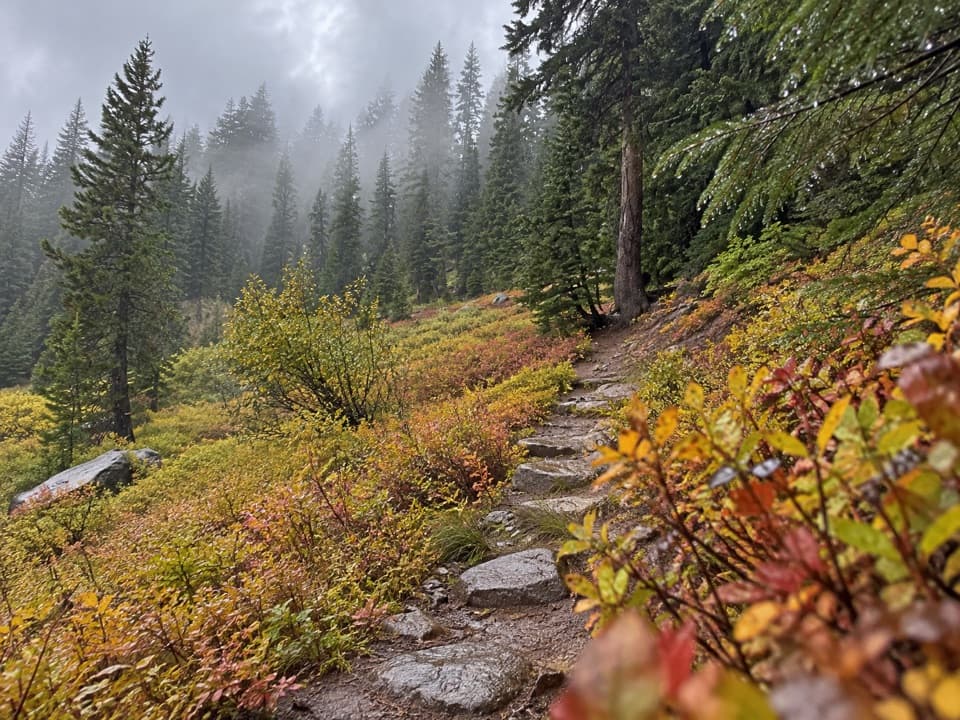 EasyCastle Crest Trail0.5 mi · 36 min · 1.8 mi awayA short loop around a spring-fed wildflower meadow.
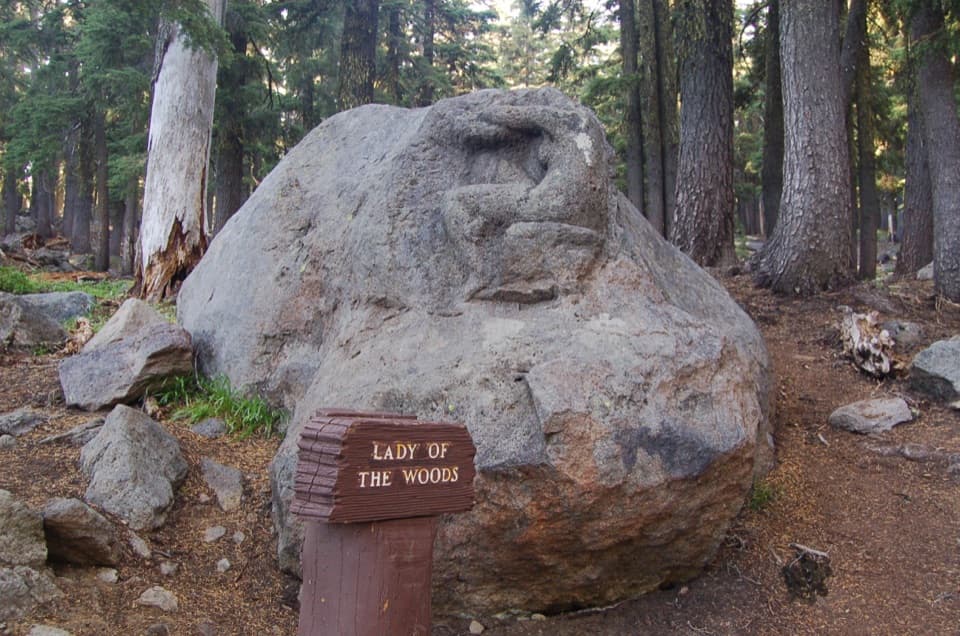 EasyLady of the Woods Trail0.7 mi · 36 min · 2.1 mi awayA short history loop to a weathered forest carving.
 ModerateRaven Trail2 mi · 2.5 hr · 2.1 mi awayA marked winter climb to the caldera rim.
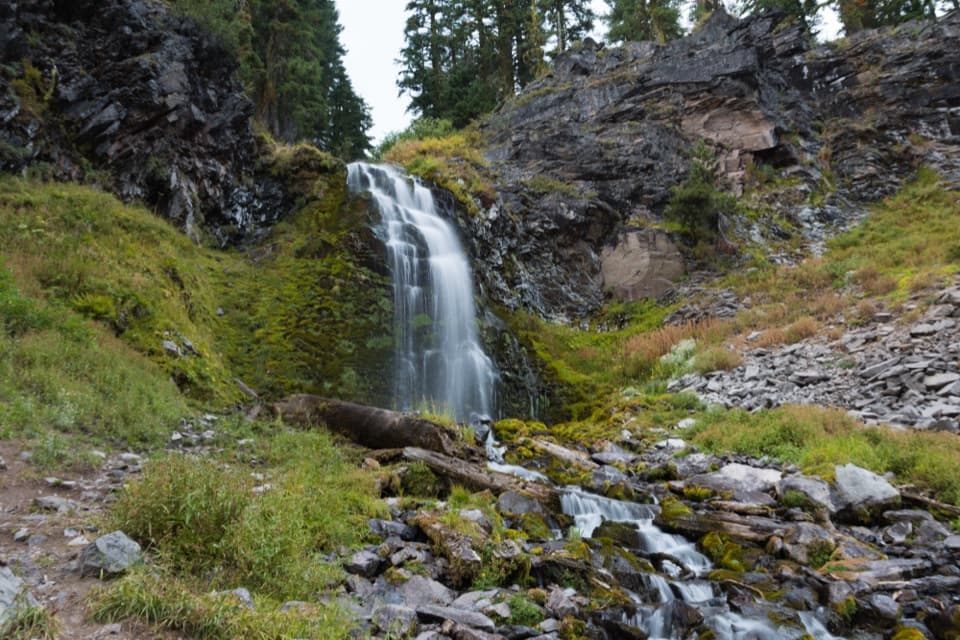 EasyPlaikni Falls Trail2 mi · 1 hr · 2.3 mi awayA gentle forest walk to a waterfall, with a brief final climb.
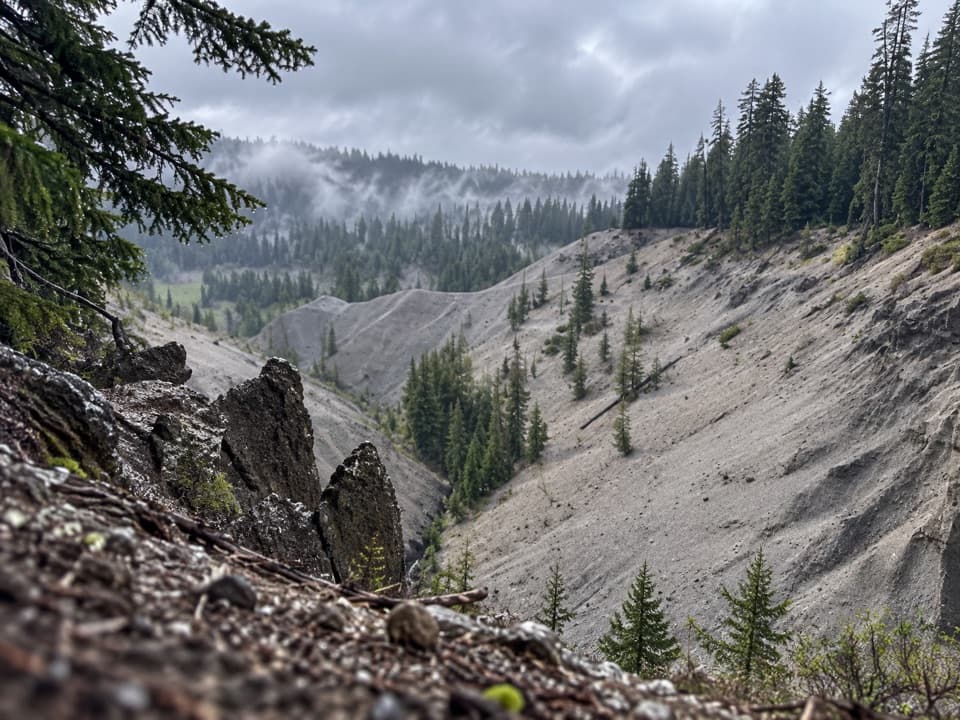 EasyGodfrey Glen Trail1.1 mi · 30 min · 2.7 mi awayA short, accessible loop with canyon views and volcanic spires.
 ModerateGarfield Peak Trail3.6 mi · 2.5 hr · 2.9 mi awayA steady climb earns broad views from Crater Lake’s rim.
 Picnic area · At the trailheadVidae Falls Picnic AreaA picnic stop doubles as Crater Peak's creekside trailhead.
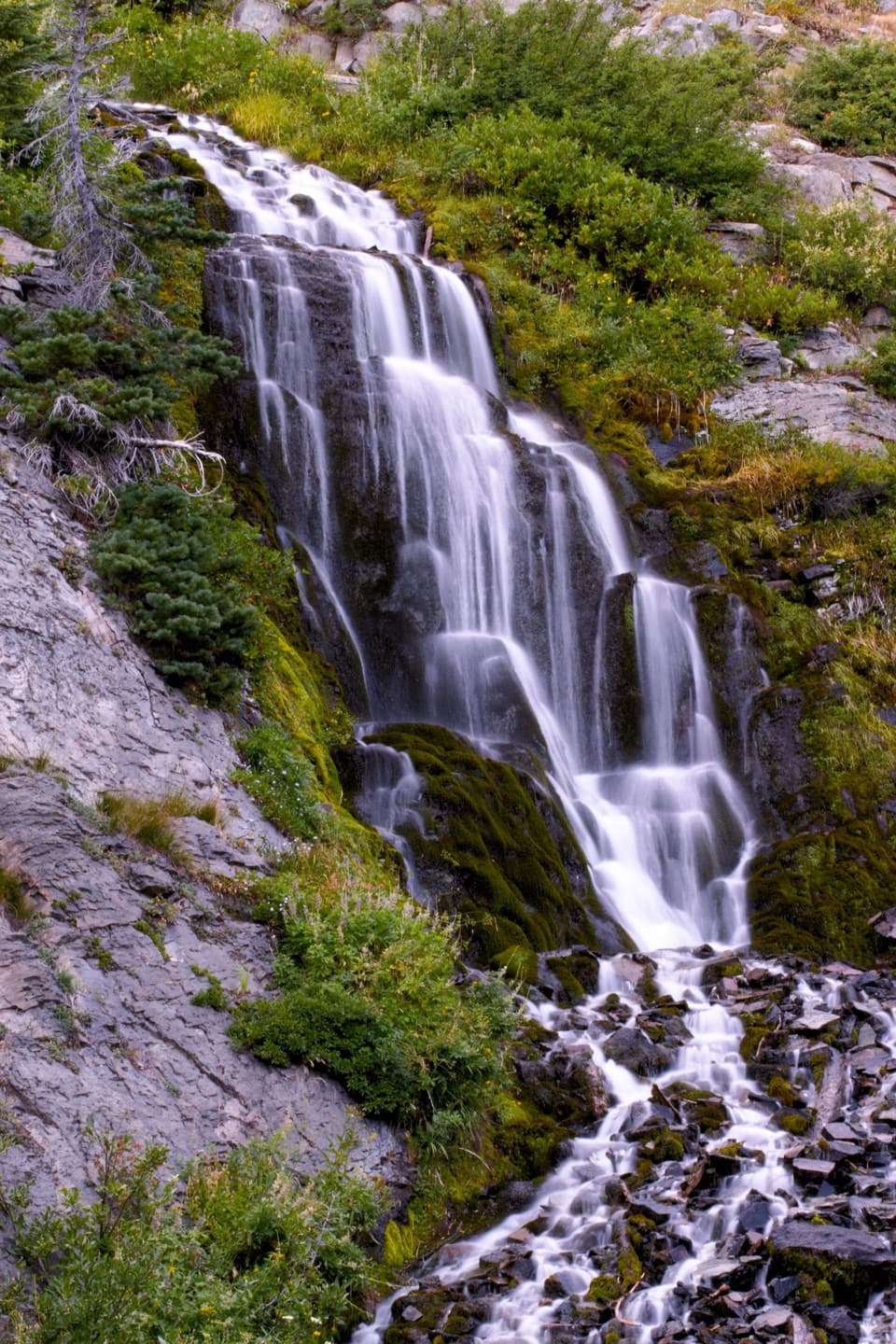 Sight · 0.2 mi awayVidae FallsA spring-fed cascade right off East Rim Drive.
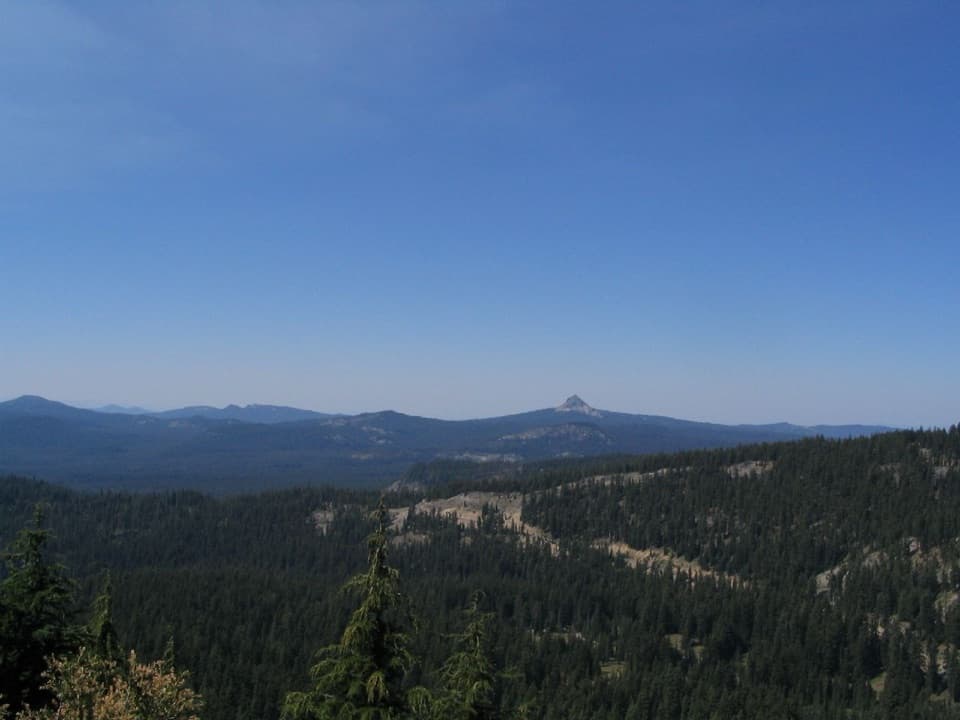 Scenic pullout · 0.8 mi awayDutton Ridge PulloutAn east-facing stop for the Klamath Basin beyond the rim.
 Sight · 1.4 mi awaySun Notch OverlookAn uphill walk reaches Phantom Ship from several rim angles.
 Visitor center · 2.1 mi awaySteel Information CenterA practical first stop for ranger advice and Crater Lake context.Sight · 2.2 mi awayLady of the WoodsA half-finished 1917 carving tucked into the forest.
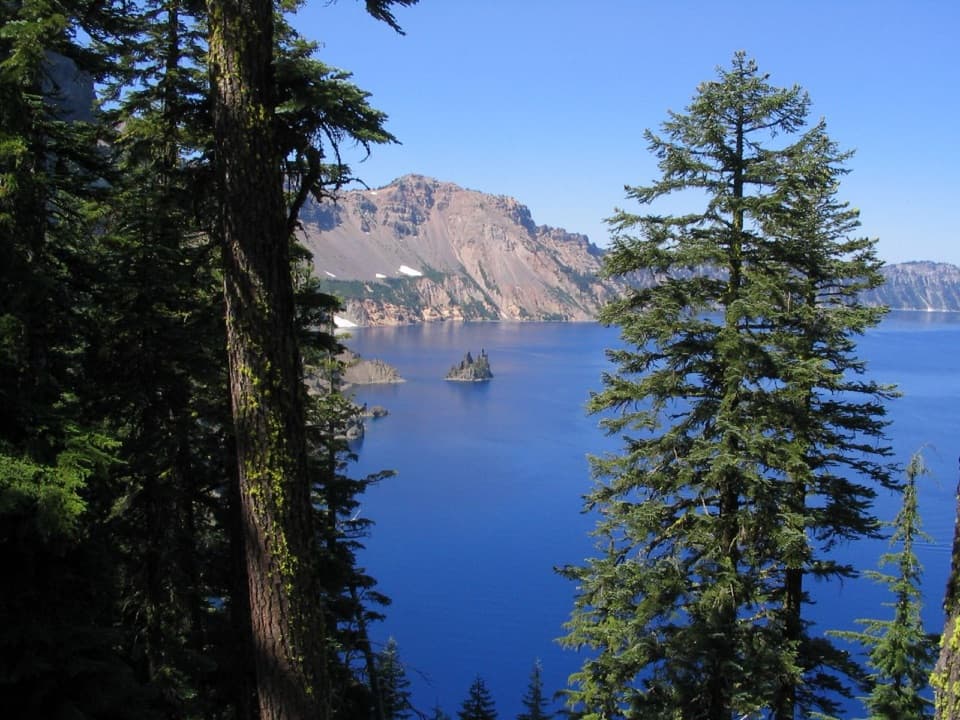 Sight · 2.6 mi awayPhantom Ship OverlookA jagged volcanic island that wears a ship's shape in fog.
 Lodging · 2.9 mi awayCrater Lake LodgeA historic rim lodge with a lake-view porch and big stone fireplace.
Parkwolf’s Crater Lake ranking

The audio tour guide for the drive, plus offline maps, trails, and wildlife heatmaps for when the signal drops.