Parking
Start at Pit Crater Trailhead on Kahuku Road, just above Upper Palm Trailhead. Check current road status and vehicle recommendations before driving the upper road.
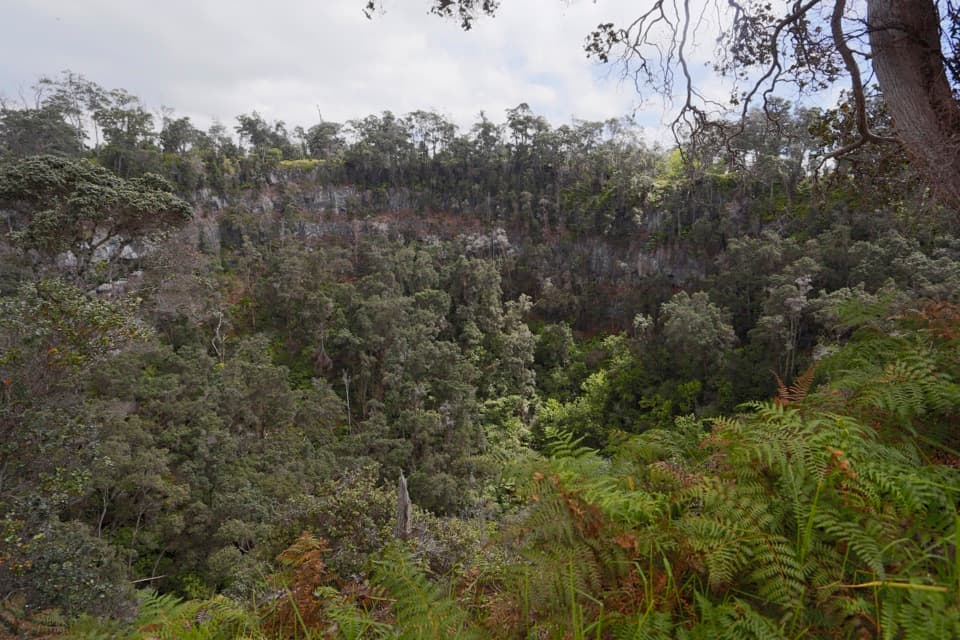
Hawaiʻi Volcanoes National Park, HI
A steep climb through koa pasture to a forest-filled crater.
Overview
Map & elevation
Plan your hike

The highest, rockiest slopes around here are a summer buffet for grizzly bears.
Hawaiʻi Volcanoes Tour Guide
Parkwolf is a GPS audio tour guide for Hawaiʻi Volcanoes National Park. As you drive, it chimes in with what’s ahead: hidden gems, upcoming stops, history, geology, and wildlife, right through your car’s speakers.
See the Hawaiʻi Volcanoes audio tourRecorded for this trailhead
Forested Pit Crater: A Hike to the Rim“You're approaching Kahuku's Pit Crater Trailhead, the start of a strenuous hike to Forested Pit Crater. Allow three to six hours for the almost five-mile round trip, with a steep climb of more than eleven hundred feet.”
Plays as you drive up to this trailhead in the Parkwolf Hawaiʻi Volcanoes Tour Guide.
More stories near here in the app
“Fantastic app with many points of information… It’s great to just turn on while you’re driving and it gives you an audio tour of the national Park. We love it!!!!”


Trail guide
Pit Crater Trail is a 4.8-mile out-and-back, round trip, from Pit Crater Trailhead to the rim of Forested Pit Crater. The trail gains 1,165 feet and is strenuous; allow 3 to 6 hours. This is the direct, steep route. Starting from Pali o Kaʻeo adds 2.4 miles round trip, while The Glover Trail is a different approach to the same crater.
Kahuku Unit has limited opening days and hours, so check its schedule before you drive out. No reservation or activity fee is listed, though the park entrance fee may apply. Bring water and snacks, and be ready for sun, rain, heat or cold. Dogs aren't allowed. Spray your shoe soles with the provided rubbing alcohol at the Rapid ʻŌhiʻa Death station. At the crater, keep well back from the edge.
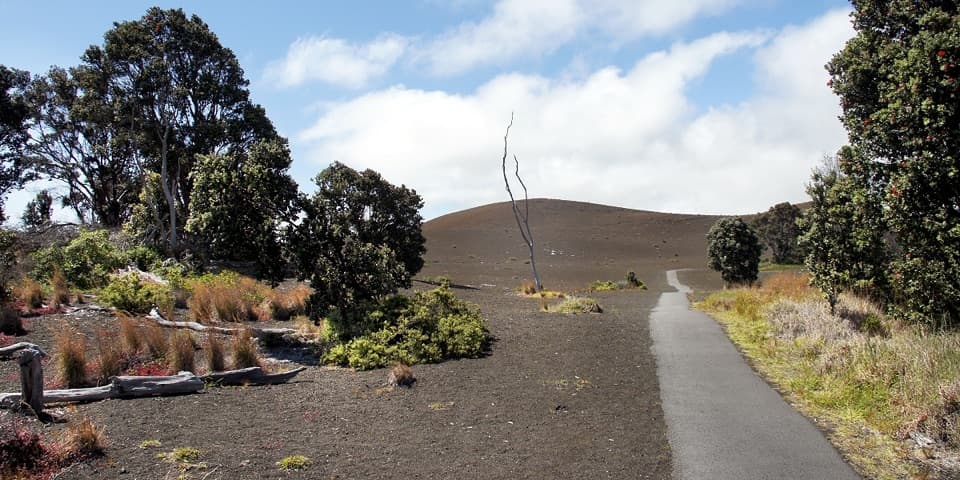
The climb starts very steeply on an old pasture road, crossing uneven grass before passing koa and ʻōhiʻa lehua. The open slopes make weather part of the effort, and grass can be slick when wet. Take your time on the way back down, when tired legs meet that same steep start.
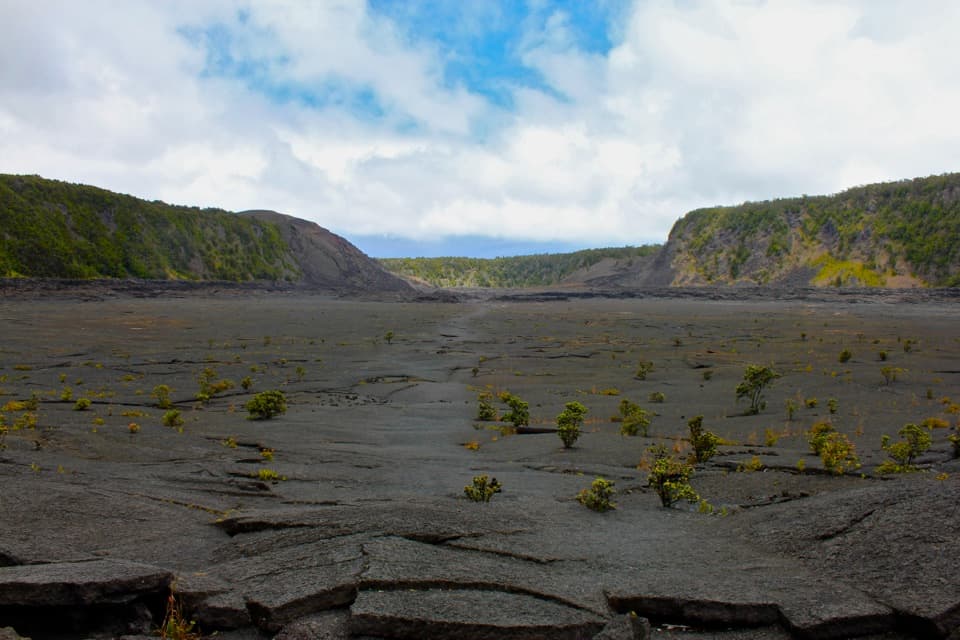
The destination is a collapsed crater with 250-foot walls and a dense native rainforest below. The canopy hides much of the interior, so expect a close look at trees and steep walls rather than an open view to the bottom. The walls helped protect this forest from cattle, pigs and people; many Hawaiian species remain inside, including some that are rare or endangered. Look and listen for native ʻamakihi and ʻapapane. From the established overlook, frame the rim wall with the treetops to show the bowl's depth, and stay behind the railing.
The walk crosses Kahuku, once one of Hawaiʻi's largest ranches, where cattle ranching and volcanic activity shaped the land together. The ranch produced beef and hides for more than 150 years. In 1868, an eruption and earthquakes destroyed ranch owner Capt. Robert Brown's home, just two years after he bought the property.
Wildlife
 600 sightingsHawaiian Goose (Nēnē)Most seen around 5 PMSighting map
 35 sightingsGreen Sea TurtleMost seen around 11 AMSighting map
 36 sightingsHawaiian Hawk ('Io)Most seen around 11 AMSighting map
 41 sightingsBlack NoddyMost seen around 5 PMSighting map
 96 sightingsWhite-tailed TropicbirdMost seen around noonSighting map
 24 sightingsHawai'i 'ElepaioMost seen around 8 AMSighting map
Sighting maps show where each species has been reported across Hawaiʻi Volcanoes. Wildlife moves, so no sighting is guaranteed.
Keep exploring
 ChallengingKona Trail7 mi · 4 hr · 0.7 mi awayA full 7-mile outing through Kahuku pasture and 1887 lava.
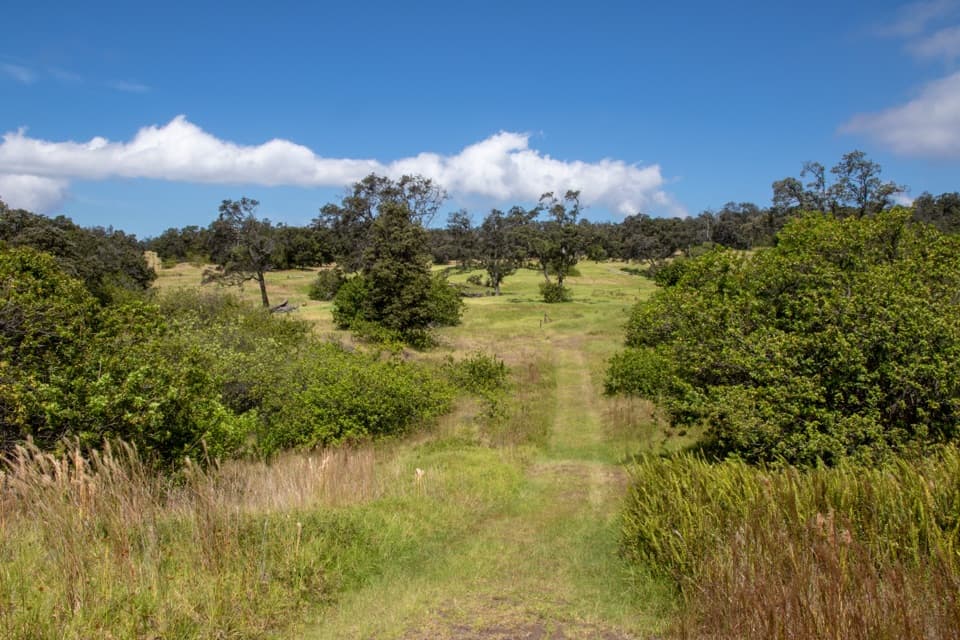 ModeratePalm Trail2.6 mi · 1.5 hr · 1.2 mi awayFollow an 1868 lava fissure through old ranchland and open pasture.ModerateThe Glover Trail3.2 mi · 2.5 hr · 1.9 mi awayPasture paths end at a rainforest tucked inside a crater.
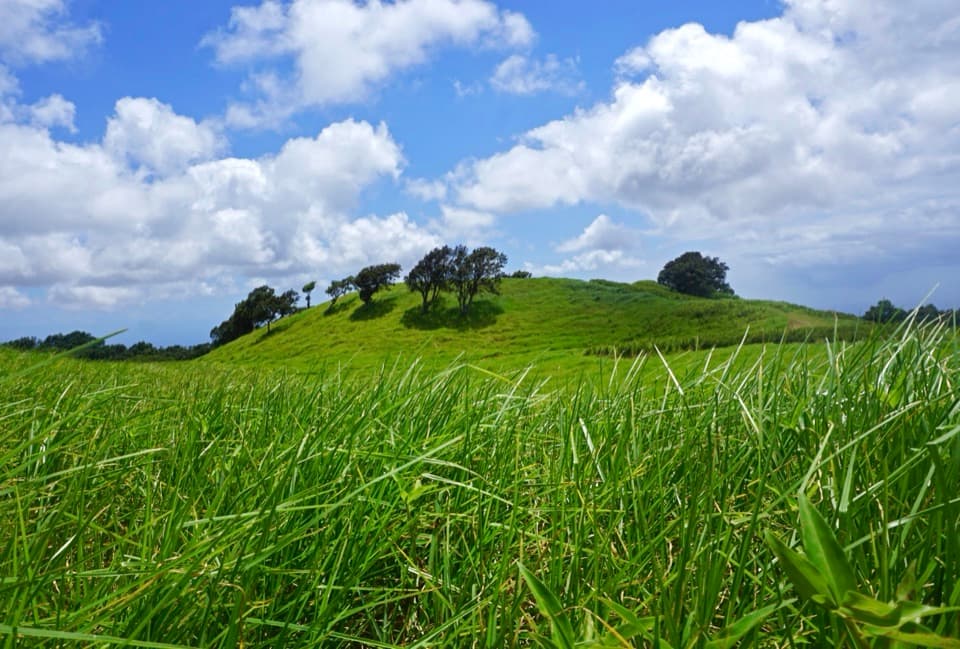 EasyKamakapaʻa Trail0.5 mi · 25 min · 2.2 mi awayA grassy half-mile loop to a small cone and wide Kaʻū views
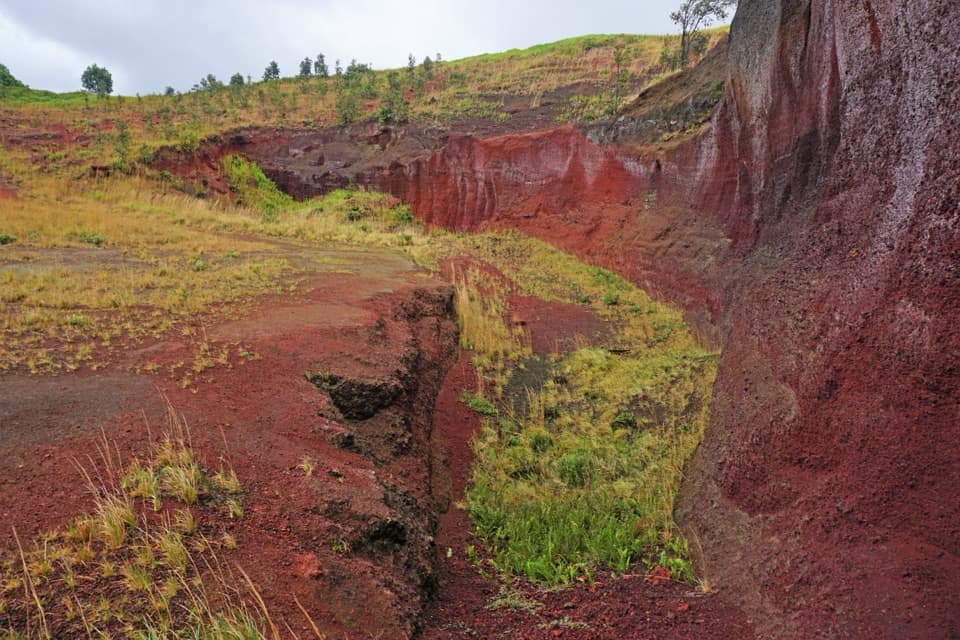 ModeratePuʻu o Lokuana Trail2 mi · 1.5 hr · 2.6 mi awayA ranch-road loop through a green kīpuka and red cinder cone.
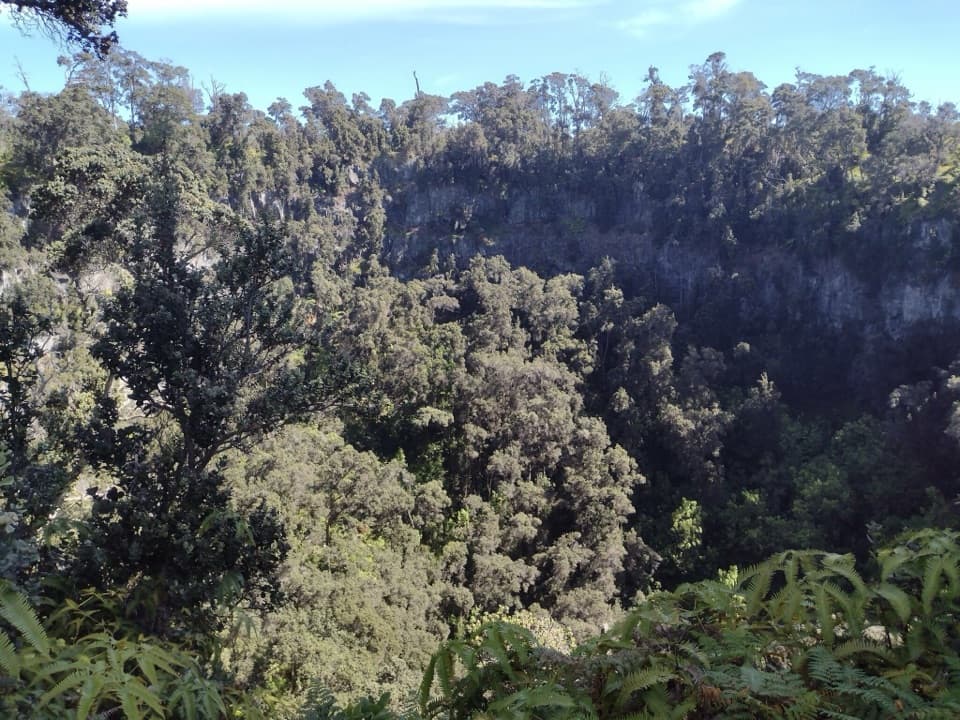 Sight · 2.2 mi awayForested Pit CraterA long hike to the forest sheltered inside a steep crater.
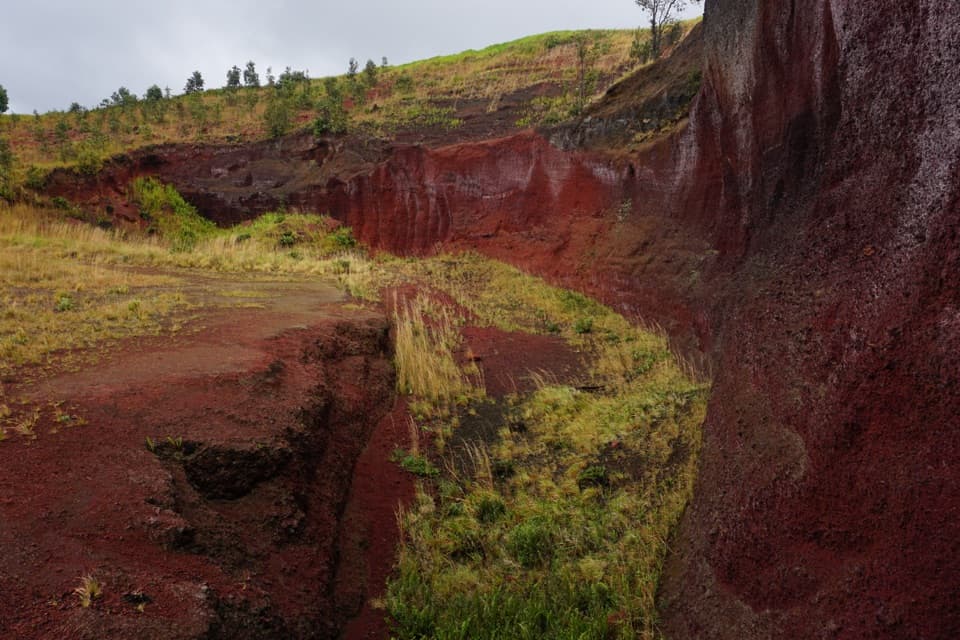 Sight · 2.7 mi awayPuʻu o LokuanaA steep little climb to red cinders and the Kaʻū coast.
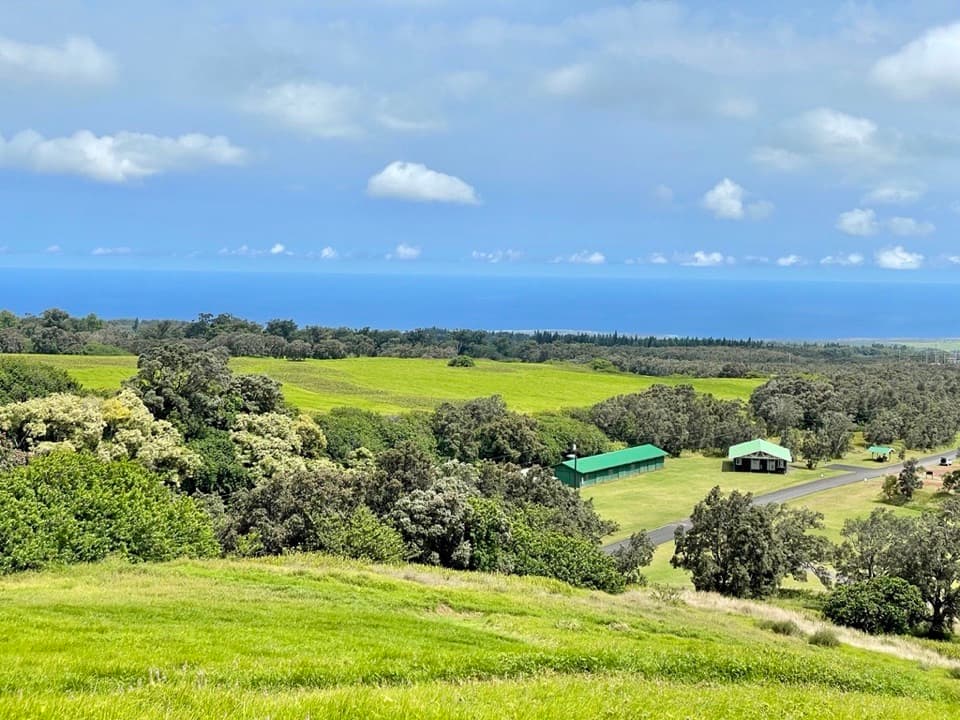 Visitor center · 2.7 mi awayKahuku Visitor Contact StationA useful stop before Kahuku's fields, ranchland and volcanic trails.
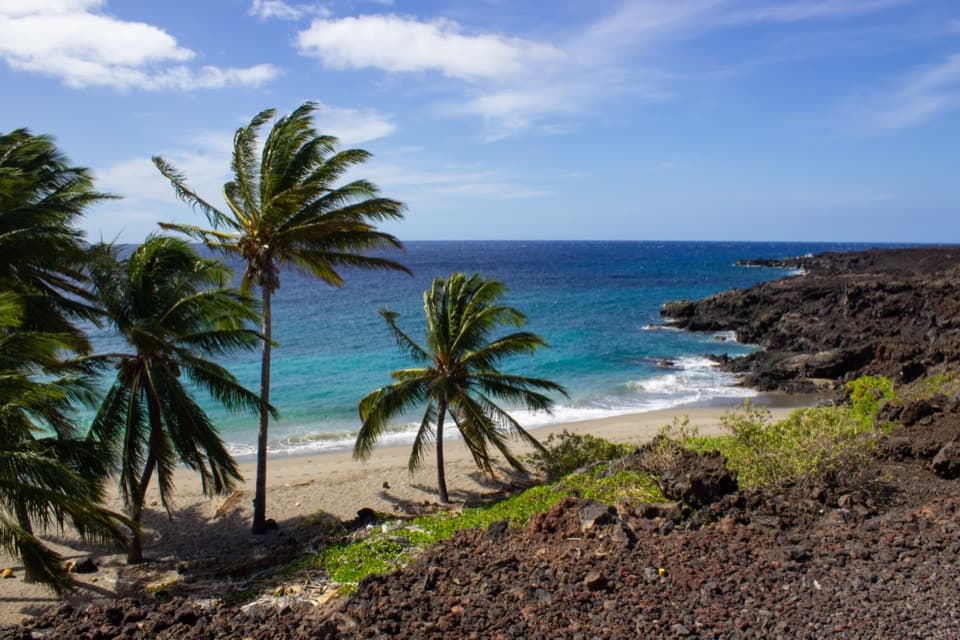 Sight · 9.8 mi awayPōhue BayAn ancient coast preserved for its archaeology and endemic wildlife.
Parkwolf’s Hawaiʻi Volcanoes ranking

The audio tour guide for the drive, plus offline maps, trails, and wildlife heatmaps for when the signal drops.